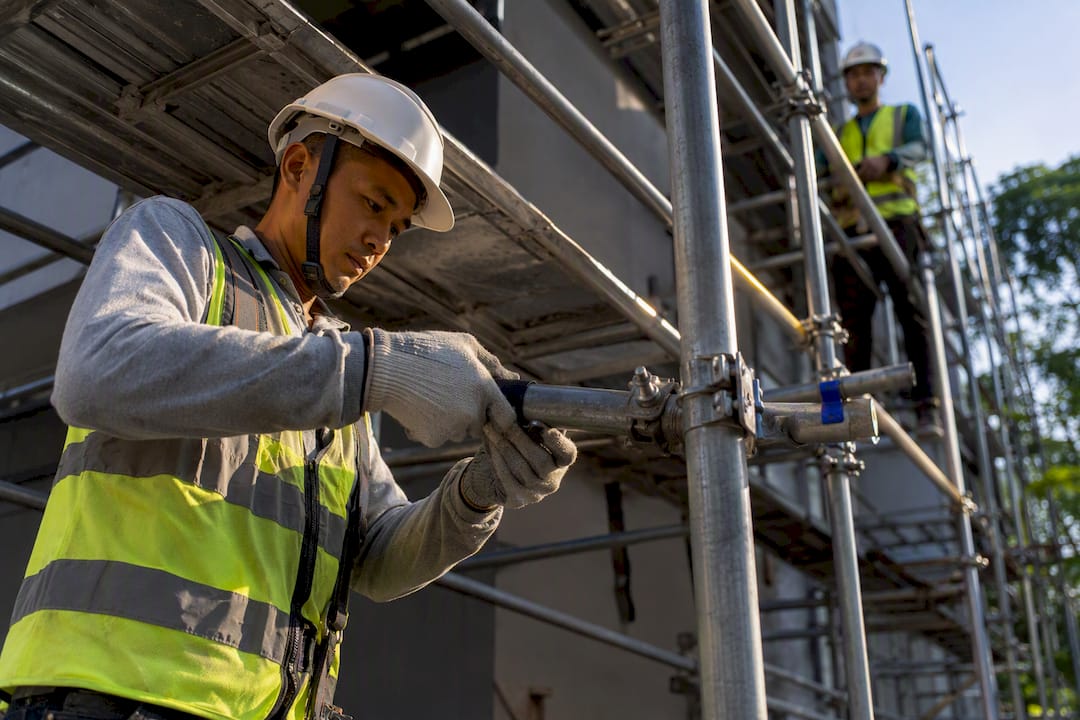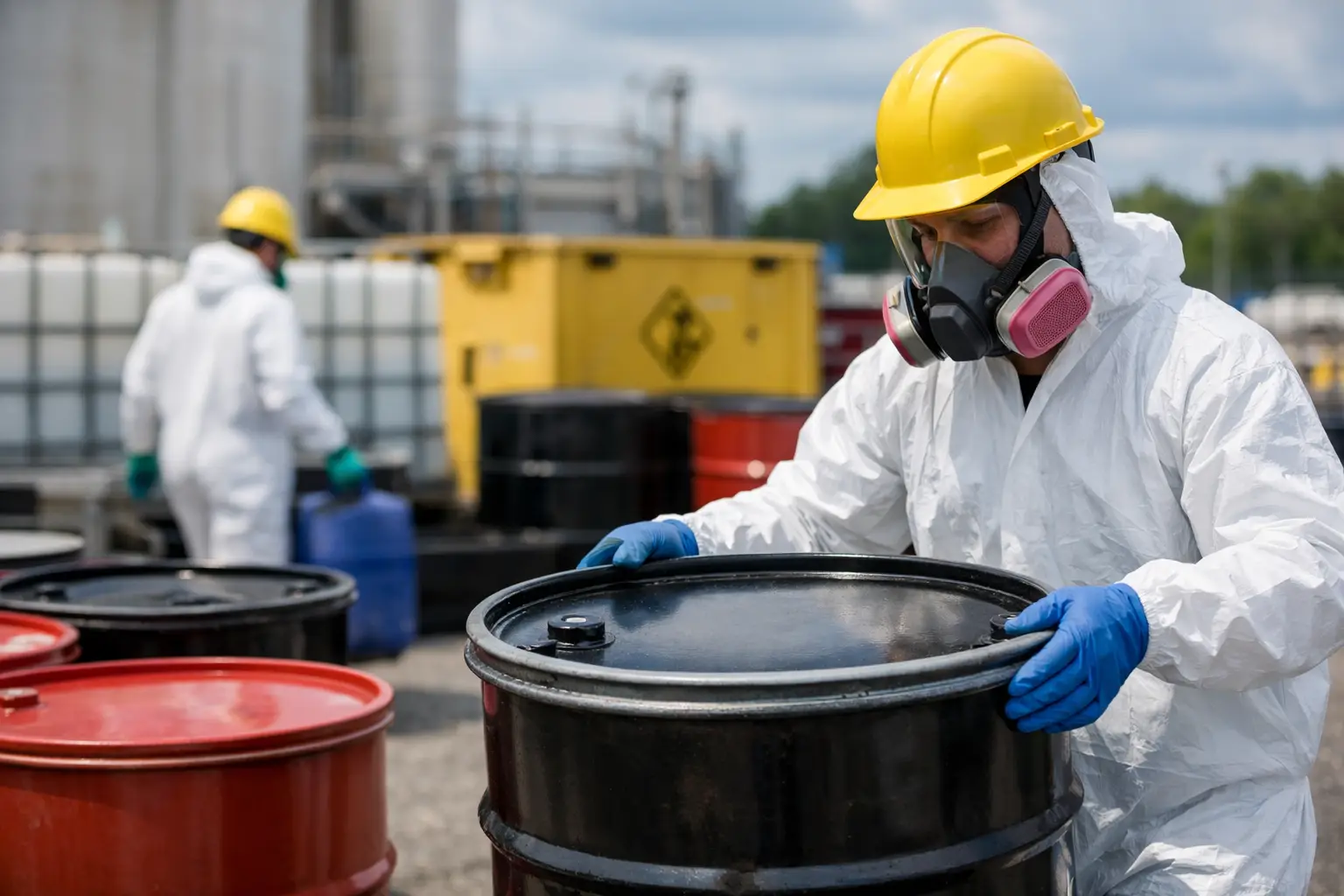
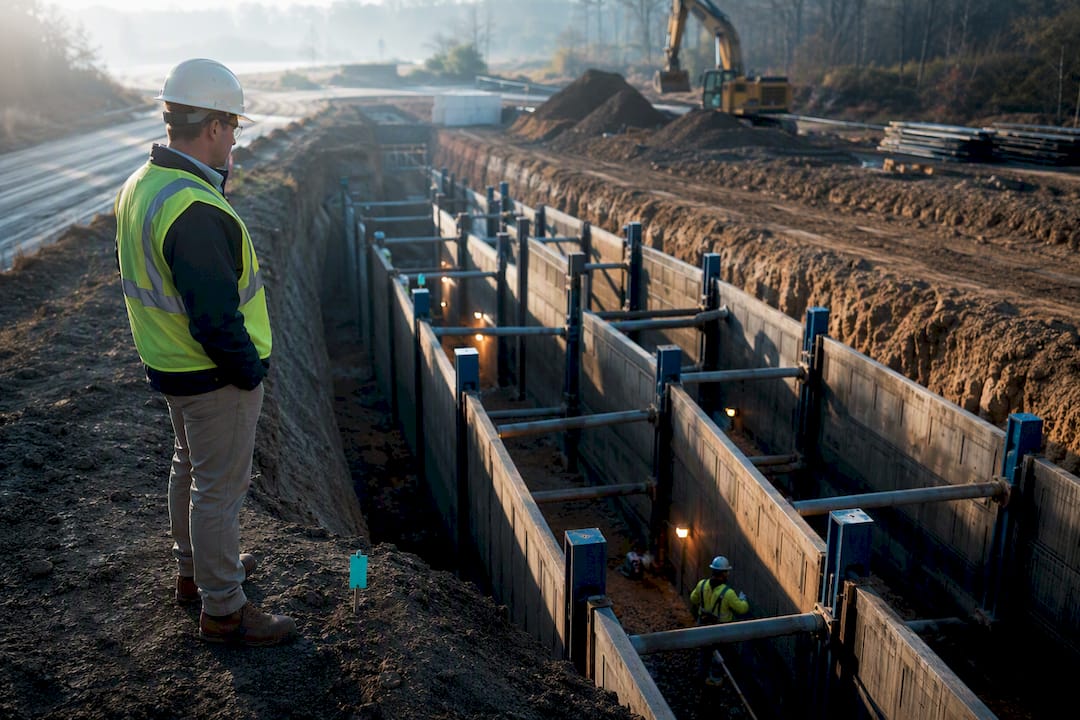
The hierarchy of controls ranks hazard-mitigation measures from most to least effective: Elimination, Substitution, Engineering controls, Administrative controls, then Personal Protective Equipment (PPE). The core principle is straightforward: prioritize measures that remove hazards or reduce reliance on human behavior over measures that depend on workers acting correctly every time. In practice, safety managers rarely deploy one level alone. Feasibility assessments and layered combinations are the norm, not the exception.
TL;DR:
- Eliminating hazards during design or planning is the most effective control, but it becomes less feasible once construction is underway.
- Substitution reduces risk by replacing hazardous materials or methods with safer alternatives but can inadvertently introduce new hazards if not carefully evaluated.
- Engineering controls are more reliable because they physically isolate or protect workers from hazards and require regular maintenance to stay effective.
- Administrative controls and PPE depend heavily on human compliance, making them the least dependable and only suitable as interim or supplementary measures.
- Implementing higher-level controls early, with ongoing maintenance and verification, significantly reduces hazard exposure and often lowers long-term costs.
Table of Contents
- Why the Hierarchy of Controls Exists
- What Is Elimination in the Hierarchy of Controls?
- How Does Substitution Differ From Elimination?
- What Are Engineering Controls and Why Are They More Reliable?
- What Role Do Administrative Controls Play?
- When Should You Rely on Personal Protective Equipment?
- How Do You Apply the Hierarchy in Practice?
- How MOSAIC Applies the Hierarchy on Construction Projects
- An Editorial Take on Where Programs Actually Fail
- Get Help Implementing Higher-Order Controls
- Sources
Why the Hierarchy of Controls Exists
The National Institute for Occupational Safety and Health (NIOSH) developed the hierarchy to answer a persistent question: when multiple options exist to manage a hazard, which one actually works? NIOSH found that higher-level controls, meaning elimination, substitution, and engineering, control exposures without significant human interaction, while lower-level controls depend on people making the right choice repeatedly. That distinction is now written directly into international practice: ISO 45001 Clause 8.1.2 requires organizations to eliminate hazards and reduce occupational health and safety risks by applying controls in this exact ranked order.
Picture it as an inverted pyramid. The widest, most effective band sits at the top; the narrowest, least dependable band sits at the bottom. During hazard identification and control planning, apply the hierarchy at these points:
- Design review, before a task method or piece of equipment is finalized
- Risk assessment updates, whenever a new hazard is identified or a process changes
- Incident investigation follow-up, to check whether the original control selection was too low on the ladder
What Is Elimination in the Hierarchy of Controls?
Elimination means physically removing the hazard from the work environment, and it is the most effective control because there is nothing left to be exposed to. No training program, no supervision schedule, and no PPE compliance rate can fail if the hazard simply is not there anymore.
On construction sites, elimination usually happens at the design or planning stage, before crews mobilize. Common examples include:
- Redesigning a structural connection so workers never need to work at height
- Prefabricating components off-site to remove high-exposure tasks from the live site entirely
- Automating a hazardous task, such as robotic rebar tying, instead of assigning it to a person
- Removing a hazardous chemical process from the project scope altogether
Feasibility depends on how early you engage; using Structural Steel Estimating and Bid Software during the design phase can help identify opportunities for elimination or substitution before procurement decisions lock in. A Design for Safety review conducted during schematic design can shift tasks off-site and convert high-exposure work into a controlled factory process, which is elimination by another name. Wait until the framework is already up, and elimination stops being realistic; you’re left negotiating with substitution and engineering instead.
Pro Tip: Run your Design for Safety review before procurement locks in materials and methods. Once a subcontractor has priced a task, removing it becomes a cost conversation instead of a safety decision.
How Does Substitution Differ From Elimination?
Substitution replaces a hazard with something less dangerous rather than removing the task altogether. You still pour concrete, cut steel, or apply a coating. You just do it with a material, tool, or method that carries lower risk.
The catch: substitution can quietly introduce a new hazard while solving the old one. A safety manager evaluating a replacement should run through a short checklist before signing off:
- Does the substitute have lower toxicity, flammability, or noise output than the original?
- Does it perform equivalently, or does reduced performance create a secondary risk (more passes, longer exposure time)?
- Does the substitute introduce a hazard the original didn’t have, such as a different chemical sensitization risk?
- Is the supply chain reliable enough that workers won’t revert to the original under schedule pressure?
Typical construction examples include swapping a solvent-based adhesive for a water-based one, replacing a petrol-powered saw with an electric model to cut exhaust exposure, or specifying a lighter-weight panel system to reduce manual handling loads. None of these eliminate risk. They shrink it, which still ranks well above anything that depends on behavior.
What Are Engineering Controls and Why Are They More Reliable?
Engineering controls isolate people from a hazard using physical means, and they sit above administrative measures and PPE because they control hazards at the source rather than at the point of human decision-making. A guard doesn’t need to remember to protect you. It just does.
The main categories safety managers deploy on construction sites:
- Isolation and barriers — physical separation between workers and moving equipment, excavations, or edges
- Guarding — fixed or interlocked guards on saws, mixers, and rotating machinery
- Ventilation and local exhaust — dust extraction at cutting and grinding stations, general ventilation in enclosed pours
- Interlocks and automatic shutoffs — equipment that stops operating when a guard is opened or a zone is breached
Engineering controls only stay reliable if someone maintains them. A ventilation system with a clogged filter or a guard that’s been wedged open no longer functions as an engineering control at all; it’s just an inconvenience workers route around. Build in scheduled inspections, preventive maintenance intervals, and periodic verification testing (airflow readings, interlock function checks) rather than treating installation as the finish line. Machine guarding and barrier systems that get inspected quarterly outperform far more sophisticated systems that get installed once and forgotten.
Pro Tip: Log every engineering control’s maintenance date alongside its risk assessment reference. When an incident investigation happens, “when was this last checked” should have a one-line answer, not a scramble through maintenance binders.
What Role Do Administrative Controls Play?
Administrative controls change how people work rather than changing the hazard itself. They include safe work procedures, permit-to-work systems, toolbox talks, job rotation to limit exposure duration, and warning signage.
They rank below engineering controls because they depend entirely on consistent human compliance, and humans have off days, language barriers, fatigue, and shortcuts under deadline pressure. That’s not a criticism of workers; it’s a documented limit on system reliability that applies to anyone doing repetitive, high-pressure work.
Used correctly, administrative controls supplement higher-order measures rather than replace them:
- Track procedure compliance through spot audits, not just sign-off sheets
- Rotate high-exposure tasks (noise, vibration, heat) rather than assigning one crew indefinitely
- Refresh permit systems and toolbox talks when task scope changes, not on a fixed calendar regardless of relevance
- Treat signage as a reminder for a control that already exists, never as the control itself
When Should You Rely on Personal Protective Equipment?
PPE is the last line of defense, and it ranks lowest because its effectiveness depends entirely on correct selection, proper fit, consistent use, and ongoing maintenance. If a respirator seal fails or a harness is worn incorrectly, protection drops toward zero with no backup layer underneath it.
A functioning PPE program needs more than a supply closet:
- Selection matched to the specific hazard, not a generic standard issue
- Fit testing for respirators and harnesses, repeated when equipment or personnel change
- Training on donning, doffing, and inspection, not a one-time induction slide
- Defined replacement schedules and visible wear checks before each shift
Watch for over-reliance, where PPE gets treated as the primary control instead of the backup, along with compliance fatigue and heat stress from extended equipment use in tropical conditions. PPE is acceptable as an interim measure while higher-order controls are being designed or installed, never as the permanent answer when elimination or engineering was actually achievable.
How Do You Apply the Hierarchy in Practice?
Selecting a control isn’t a one-time decision; it’s a sequence you work through and then verify. OSHA’s guidance on hazard prevention and control recommends a formal hazard control plan, worker involvement at each step, and interim controls while permanent solutions are built out. A practical stepwise flow looks like this:
- Identify the hazard and confirm it through a site walk or design review, not assumption
- Evaluate elimination and substitution first, documenting why either was or wasn’t feasible
- Design and specify engineering controls where removal isn’t possible
- Layer administrative controls and PPE as supplements, not substitutes, for what’s above them
Run every option through a feasibility checklist covering technical fit (does the control work with existing plant and methods), operational fit (does it survive real site conditions), and economic fit (is the cost proportionate to the risk reduction). Bring subcontractors and frontline workers into that conversation early; they usually spot the practical failure points before an assessment does.
Verification is where many programs quietly fail. Inspection frequency, performance testing, and documented change-control triggers matter as much as the initial selection. OSHA’s Hierarchy of Controls worksheet gives a structured format for recording that decision trail, which becomes essential during audits or incident reviews.
How MOSAIC Applies the Hierarchy on Construction Projects
Removing a hazard is almost always cheaper and safer when it happens on paper rather than on site. That’s the operating premise behind Design for Safety reviews: catching a fall risk, a confined-space entry, or a heavy-lift sequence during design lets a project team convert it into a prefabricated element or an automated process before the first worker ever faces it.
Where elimination isn’t fully achievable, MOSAIC’s practitioner work focuses on making engineering controls verifiable rather than assumed:
- Maintenance schedules for barriers, guarding, and dust extraction get tied directly into audit outcomes, including ConSASS assessments
- Control plans document not just what was installed, but the inspection cadence that keeps it functioning
- Site reviews flag construction hazard patterns, like the ones detailed in this breakdown of common Singapore site hazards, before they turn into incidents
Complex control decisions, particularly ones involving structural redesign or process elimination, benefit from external technical review before commitments get locked into procurement.
An Editorial Take on Where Programs Actually Fail
. Most hierarchy-of-controls failures aren’t a knowledge gap; teams can recite the five levels fine. The failure is timing: elimination and substitution get evaluated too late to matter, after design is frozen, so programs default to administrative controls and PPE by circumstance rather than choice… When a control decision touches structural design or process elimination, bring in outside technical review before procurement, not after.
— Aman
Get Help Implementing Higher-Order Controls
Com is the practical route to higher-order controls when your project needs more than a checklist. Rather than leaving elimination and substitution as theoretical best practice, Com’s Design for Safety advisory and ConSASS assessments turn those decisions into documented, auditable outcomes tied to your actual project scope.

A typical engagement maps directly to what this article covers: a site review to identify where elimination or substitution is still realistic, a control plan that specifies engineering measures with a maintenance schedule attached, and training that supports (rather than substitutes for) the controls above it. If your project has hazards that administrative measures and PPE have been carrying alone for too long, request a regulatory compliance and control plan review and get a concrete assessment of where your program sits on the hierarchy today.
Sources
- Hierarchy of Controls | NIOSH (CDC)
- Safety Management – Hazard Prevention and Control | OSHA
- Hazard and Risk – Hierarchy of Controls | CCOHS