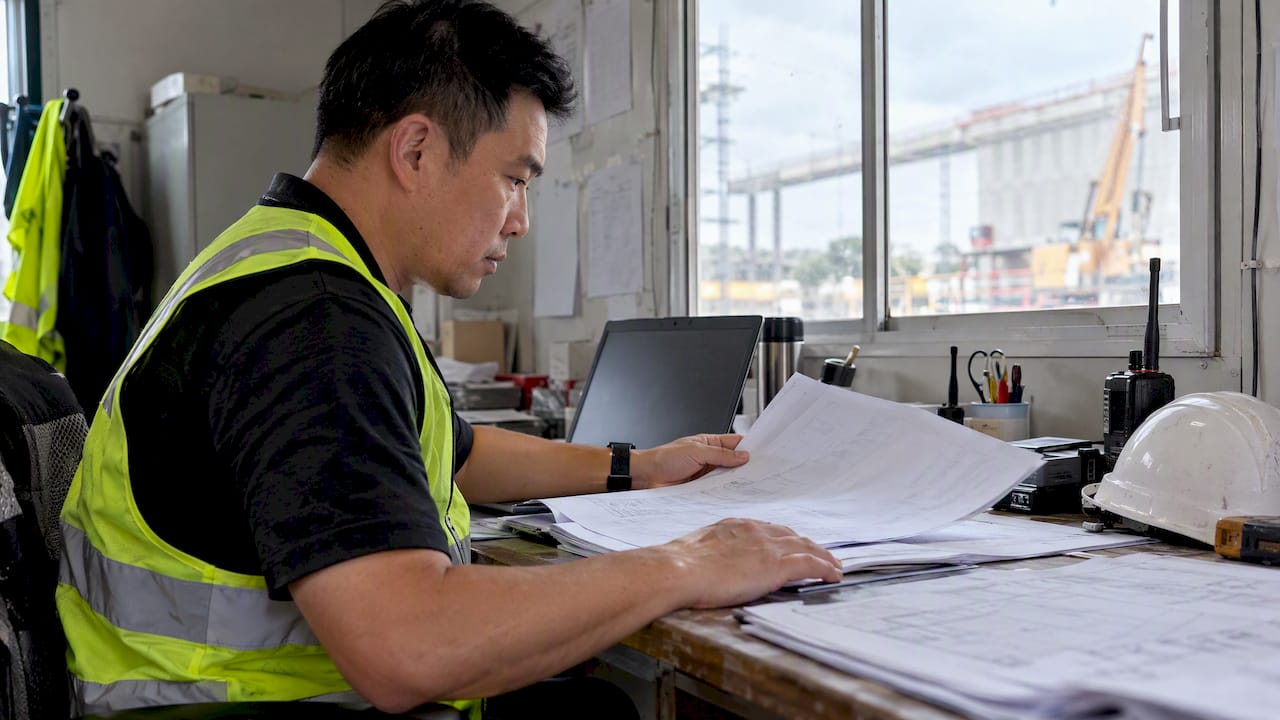

A certification audit rarely fails because a company has no procedures at all. It fails because the procedures, site practices, records, and management decisions do not tell the same story. This ISO readiness improvement case study examines how a mid-sized construction contractor moved from inconsistent controls to a more reliable, auditable management system before certification.
The example is representative and anonymized, but the challenges will be familiar to many construction and industrial leaders. The contractor had experienced supervisors, established safety expectations, and a growing portfolio of client work. What it lacked was a disciplined system for proving that its quality, environmental, and safety controls were consistently planned, applied, checked, and improved.
The Starting Point: Capable Teams, Uneven Evidence
The contractor was preparing for certification against an integrated ISO management system covering quality, environmental, and occupational health and safety requirements. Its leadership had already invested in templates, policies, and training. On paper, the business appeared close to readiness.
An initial gap assessment showed a different picture. Project teams managed risks well when experienced managers were present, but the approach varied between sites. One project maintained detailed inspection records and toolbox attendance; another used outdated forms. Environmental controls were understood by site personnel but were not always supported by documented inspections. Corrective actions were raised after issues occurred, yet root-cause analysis and closure verification were inconsistent.
The central issue was not a lack of effort. It was a lack of control over how work was translated into objective evidence. For ISO certification, an auditor needs to see more than a policy statement or a completed checklist. They need confidence that the organization has identified its risks, assigned responsibilities, maintained current information, monitored performance, and acted when controls were not effective.
ISO Readiness Improvement Case Study: The Gap Assessment
The readiness review began with interviews, document sampling, and site observations. This approach was important because a document-only review could have missed the gap between written procedures and operational reality.
The review focused on the full management system cycle: leadership commitment, planning, operational control, competence, communication, performance evaluation, internal auditing, corrective action, and management review. It also tested whether project-level records could be traced back to corporate procedures and whether those procedures reflected actual site practice.
Four priorities emerged.
- Document control needed stronger ownership. Teams were using multiple versions of forms, and withdrawn documents were still accessible in project folders.
- Risk assessments needed clearer links to work activities, inspection regimes, and control measures. Some assessments were generic and did not reflect changing site conditions.
- Internal audits were occurring, but findings often described the immediate issue without identifying why the control failed or how recurrence would be prevented.
- Management review meetings addressed commercial and project matters, but ISO performance indicators, audit outcomes, compliance obligations, and improvement actions were not consistently captured.
These findings mattered because they created audit risk in several clauses at once. For example, poor document control can affect operational planning, competence records, emergency preparedness, inspections, and corrective actions. Treating each issue as an isolated nonconformity would have created unnecessary rework. The improvement plan instead addressed the underlying system weaknesses.
Building Controls That Work on Site
The contractor did not need a large volume of new paperwork. It needed practical controls that supervisors could use without slowing down construction activity. The implementation team therefore simplified the document structure and aligned forms with the daily rhythm of project operations.
A controlled document register was established with clear document owners, revision dates, approval status, and distribution rules. Site teams were given access to current templates through a single controlled location. Superseded forms were removed from active folders, reducing the risk of staff completing records that no longer reflected company requirements.
Risk management was also redesigned around actual work. Rather than relying on one broad assessment for an entire project, the contractor connected task risk assessments to high-risk activities, work sequencing, environmental aspects, inspection schedules, and emergency arrangements. This made the documents more useful to supervisors and easier for auditors to follow.
Training was treated as an operational control, not merely an attendance exercise. Supervisors received coaching on how to explain changes in procedures, verify worker understanding, and escalate concerns. The focus was on observable competence: Can the person identify the relevant control, apply it in the field, and respond appropriately when conditions change?
This distinction is significant. A signed attendance sheet may demonstrate that training occurred, but it does not always demonstrate that the organization has evaluated competence. For higher-risk roles, the contractor introduced practical verification through site observations, brief knowledge checks, and supervisor sign-off.
Turning Internal Audits Into Improvement Tools
Before the readiness work, internal audits were mostly compliance checks. Auditors would identify missing records, report the finding, and request closure. That process had value, but it did not consistently improve the system.
The revised audit program used a risk-based schedule. High-risk work areas, projects with recurring issues, and recently revised processes were audited more frequently. Auditors also reviewed evidence across the process rather than checking one record in isolation. A finding related to an incomplete equipment inspection, for instance, led auditors to examine training, form availability, supervisor checks, maintenance planning, and action tracking.
Corrective action reports were updated to require a clear problem statement, immediate correction, root cause, corrective action, responsible owner, target date, and effectiveness review. Leaders were trained to avoid weak root-cause statements such as “human error” or “carelessness.” Those descriptions may explain what happened, but they rarely identify the condition that allowed it to happen.
The change produced better conversations. If workers repeatedly missed an inspection requirement, the question became whether the form was accessible, the requirement was understood, adequate time was allowed, and supervisors had a method for verification. Corrective actions then addressed the process instead of simply instructing employees to be more careful.
Management Review: From Meeting Notes to Leadership Evidence
Management review is often underestimated during certification preparation. It should not be a ceremonial meeting held because the standard requires one. It is where leaders demonstrate that they understand system performance and are making informed decisions about risks, resources, and improvement.
The contractor introduced a structured management review agenda that included internal and external issues, interested-party requirements, legal and client obligations, audit findings, incident trends, objectives, resource needs, supplier performance, and improvement opportunities. Each action was assigned to an owner and tracked to closure.
For a construction organization, this was especially useful because leadership could compare performance across projects. Trends in near misses, waste management, subcontractor compliance, inspection completion, and corrective action aging became visible. The business could then direct support to sites that needed it rather than treating every project as if it carried the same level of risk.
Results Before the Certification Audit
By the time the certification audit approached, the contractor had not created a perfect system. No organization should expect perfection, particularly when projects, subcontractors, and site conditions change frequently. It had, however, created a system that was controlled, understood, and capable of identifying its own weaknesses.
The audit preparation produced measurable operational improvements. Current document use increased because teams had one approved source. Internal audit findings became more meaningful, with stronger root-cause analysis and follow-up. Management review actions were traceable, allowing leadership to show that performance data influenced decisions. Supervisors also reported less uncertainty about which records were required and when they needed to be completed.
The certification audit resulted in only minor findings, all of which had clear owners and closure plans. More importantly, the organization was better positioned to maintain certification after the external audit. This is the real test of ISO readiness. A company can prepare intensively for an audit date, but if the controls are too complicated or disconnected from site work, they will weaken once external pressure is removed.
What Construction Leaders Can Apply
The strongest lesson from this case is that ISO readiness is not primarily a documentation project. Documentation matters, but it must reflect real decisions and real work. A well-written procedure that no supervisor uses is an audit vulnerability. A practical site control with no evidence trail can be equally difficult to defend.
The right level of preparation depends on the organization’s size, risk profile, project complexity, and current maturity. A small specialist contractor may need a leaner system than a multi-site industrial operator. However, both need clear accountability, current controlled information, evidence of competence, meaningful audits, corrective action discipline, and leadership review.
MOSAIC Ecoconstruction Solutions supports organizations that need this balance: systems that meet certification expectations while remaining practical for construction and industrial operations. The most valuable readiness work does not simply help a company pass an audit. It gives project teams a clearer way to manage risk, demonstrate control, and improve before small gaps become costly failures.