Introduction
Singapore government grants can fund LLM-powered ISO audit automation projects for heavy industry companies – but only if you match the right grant to the right project structure and follow strict application rules. The Enterprise Development Grant (EDG) and the Productivity Solutions Grant (PSG) each serve different project profiles, and choosing incorrectly can mean months of wasted effort or outright disqualification.
This guide is written for HSE managers, compliance officers, and operations directors at construction, manufacturing, chemical processing, and other heavy industry companies in Singapore, including teams strengthening their business strategy around compliance automation. If you manage multi-site ISO 9001, ISO 14001, or ISO 45001 audits and want to automate them using large language model (LLM) technology – while offsetting costs through government funding – this article maps the entire process from grant selection to implementation.
The direct answer: The EDG grant, under the enterprise development grant EDG, supports custom LLM audit automation systems with up to 50% funding for SMEs (no fixed cap), while the productivity solutions grant PSG covers pre-approved audit software solutions up to S$30,000. For most heavy industry LLM projects involving custom development, EDG is the appropriate grant. PSG suits simpler, off-the-shelf digital solutions.
By the end of this article, you will understand:
-
How to determine whether EDG or PSG fits your ISO audit automation project
-
Eligibility requirements, funding levels, and which eligible businesses can apply for each grant
-
What technology components qualify for grant support
-
The complete application timeline and critical compliance rules
-
Implementation strategy for grant-funded LLM audit automation across multiple sites

Understanding Singapore Government Grants for ISO Audit Automation
Both EDG and PSG are administered by Enterprise Singapore through the Business Grants Portal (BGP). These schemes exist because the grant supports projects that upgrade capabilities, improve productivity, and drive digital transformation. For heavy industry firms facing increasingly complex ISO compliance requirements – across workplace safety, environmental management, and quality systems – these grants can substantially reduce the financial burden of adopting AI-powered audit tools.
It is worth noting that the current funding landscape in Singapore includes the impending introduction of the EDGE Grant in 2H 2026, which will merge EDG, PSG, and the market readiness assistance (MRA) grant into a single unified scheme, which also matters for companies considering overseas expansion as part of broader grant planning. Until then, the existing EDG and PSG frameworks remain the primary pathways for grant-funded automation solutions.
Productivity Solutions Grant (PSG) for Audit Software
The productivity solutions grant PSG supports pre-approved IT solutions to enhance productivity. PSG provides up to S$30,000 funding for digital solutions, making it suited for companies that need standardized ISO audit management software without heavy customization.
PSG is designed for fast, low-friction digital adoption. For PSG, applicants must ensure their IT solution is listed among the pre-approved vendor solutions in the GoBusiness portal. PSG applications are processed within 4–8 weeks after submission, making it ideal for companies that need immediate audit digitization. The psg grant support covers software licenses, implementation fees, and basic training from pre approved vendors.
PSG funding is capped at S$30,000 per project, which limits its applicability for complex LLM-powered systems. It works well for standard ISO 9001, 14001, or 45001 compliance tracking tools – particularly pre approved digital solutions that handle checklist management, document control, and basic audit report generation across construction sites or manufacturing facilities.
Enterprise Development Grant (EDG) for Custom LLM Solutions
The Enterprise Development Grant (EDG) supports custom transformation projects in Singapore. EDG supports deeper business transformation initiatives compared to PSG, making it the natural fit for companies building or deploying LLM-powered audit automation platforms.
EDG funds up to 50% of eligible project costs for SMEs, with no fixed cap on the EDG funding amount. From April 2023, sustainability projects can receive up to 70% support – a relevant consideration for companies whose ISO 14001 and environmental compliance programs qualify under this category. Non-SMEs receive up to 30% support. EDG has no revenue or headcount ceiling for applicants, meaning even large heavy industry firms can apply.
EDG supports projects in Core Capabilities, Innovation, and Market Access, and core capability work can include strengthening business foundations. For LLM-powered audit automation, the core capabilities and innovation categories are most relevant – covering custom AI model development, natural language processing integration, automated report generation, and complex systems integration across multiple sites, with some EDG-supported transformations also refining the business model around audit operations and compliance workflows.
Third-party consultancy fees can be covered under EDG funding for qualifying projects, including consultants offering technical advice on system architecture, regulatory mapping, change management, and human capital development tied to adoption. EDG applications take approximately 8–12 weeks to process and require a detailed project proposal for application.
Key Differences for Heavy Industry Applications
The distinction between PSG and EDG matters significantly for heavy industry companies. Heavy industries often involve compliance with rigorous standards such as ISO 9001, ISO 14001, and ISO 45001, and the audit systems supporting them must handle complex regulatory overlays from MOM, NEA, and sector-specific codes.
|
Criterion |
PSG |
EDG |
|---|---|---|
|
Funding Level |
Up to S$30,000 (capped) |
Up to 50% of qualifying project costs (no cap) |
|
Solution Type |
Pre-approved, off-the-shelf |
Custom development, LLM, AI integration |
|
Approval Timeline |
4–8 weeks |
8–12 weeks |
|
Project Completion |
Weeks to months |
12–18 months typical |
|
Typical Budget Range |
Under S$30,000 |
S$200,000–S$700,000 for heavy industry |
|
Vendor Requirement |
PSG pre approved vendor from GoBusiness list |
Demonstrated capability in LLM + compliance |
|
Customization |
Minimal |
Extensive – fine-tuning, integration, training |
|
Company Size Limit |
SME only (≤200 employees or ≤S$100M revenue) |
EDG has no company size limit for eligibility |
For most heavy industry LLM audit automation projects, EDG’s flexibility and higher funding make it the clear choice. PSG suits standardized audit processes where a pre-approved solution already exists.
LLM-Powered ISO Audit Automation in Heavy Industry Context
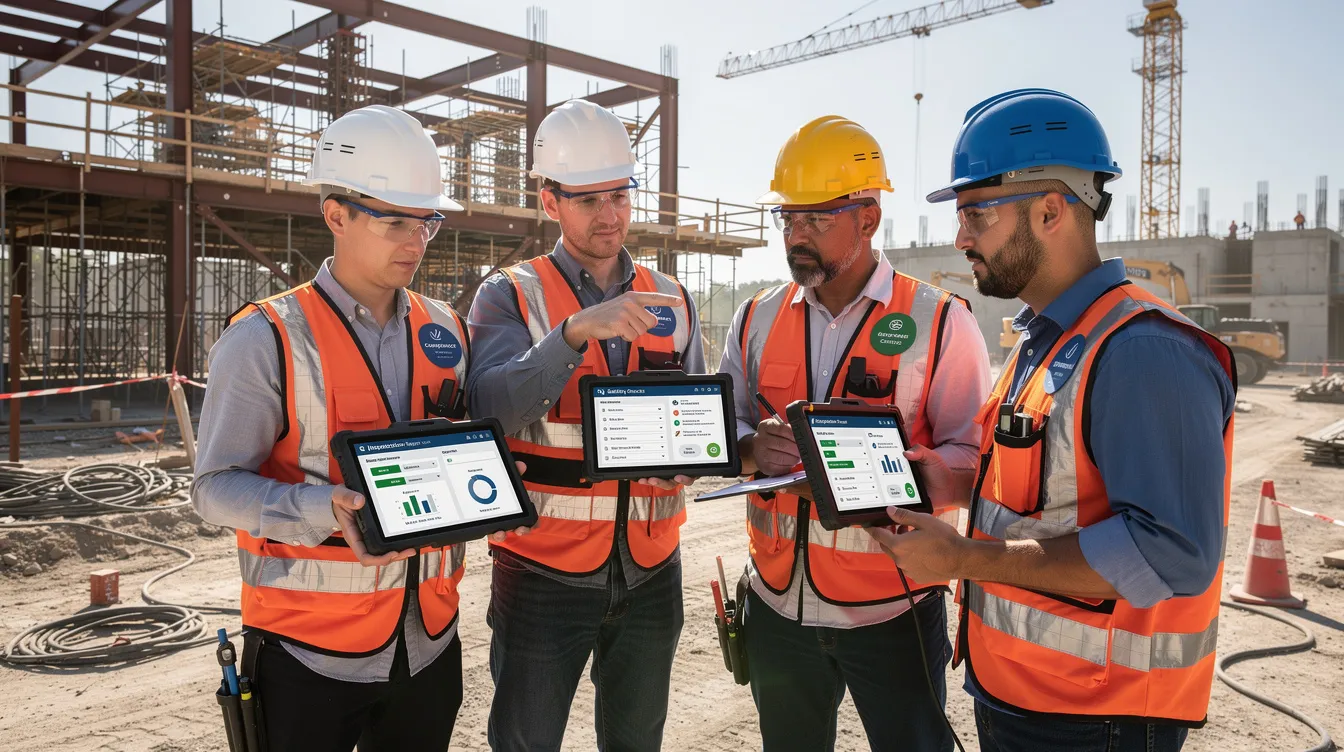
Standard audit software handles checklists and document storage. Heavy industry demands far more – multi-site coordination, hazard-specific terminology, real-time regulatory cross-referencing, and integration with sensor networks. This is where LLM-powered automation creates genuine operational value and where the project scope typically exceeds PSG parameters.
Industry-Specific Audit Challenges
Heavy industry audits carry complexity that off-the-shelf tools rarely address. Multi-site compliance tracking across construction projects, chemical plants, or manufacturing facilities requires coordinating audit schedules, evidence collection, and non-conformance follow-ups across geographically dispersed teams.
Under the Workplace Safety and Health Act and its auditing regulations, certain high-risk workplaces must appoint certified auditors, conduct safety and health management system audits, and implement findings on mandated schedules. NEA’s safety audit guidelines add further requirements for chemical handling industries, requiring audits every two years with documented follow-up action plans.
These regulatory layers – MOM’s WSH requirements, NEA’s environmental regulations, and ISO clause-by-clause compliance – create massive documentation volumes. Manual processes result in inconsistent audit reports, delayed corrective actions, and missed clause references. A single chemical processing facility might generate thousands of evidence items per audit cycle.
LLM Automation Capabilities
LLM-powered systems address these challenges through several specific capabilities:
-
Natural language processing for automated non-conformance report generation: LLMs can draft audit findings with references to specific ISO clauses, WSH regulations, and Environmental Protection and Management Act requirements – reducing hours of manual report writing to minutes
-
Predictive compliance analytics: By analyzing historical audit data and incident records, LLMs identify likely failure points before audits occur, enabling proactive corrective actions
-
Automated regulatory cross-referencing: Real-time mapping of audit items against Singapore’s WSH Act, NEA guidelines, and ISO standards ensures no regulatory requirement is overlooked
-
Integration with IoT sensors: Environmental parameters (noise levels, chemical exposure, emissions data) from field sensors feed directly into audit evidence repositories, with LLM analysis flagging exceedances against regulatory limits
Research published on arxiv.org describes a “Smart Audit System Empowered by LLM” that demonstrates how large language models can summarize evidence and auto-generate audit findings. In Singapore, the Imagenz case study shows an AI compliance agent automating document follow-ups, tracking audit readiness across perpetual cycles, and managing post-audit tasks – demonstrating practical feasibility for compliance-heavy environments.
Grant-Eligible Technology Components
For EDG applications, the following technology components are typically eligible as qualifying project costs:
-
Custom LLM model development: Fine-tuning base models on industrial safety, environmental, and quality management terminology
-
Software platform development: Building the audit automation platform including dashboards, workflow engines, and user interfaces
-
Systems integration: Connecting the LLM platform with legacy QMS, safety management systems, ERP systems, and IoT sensor networks
-
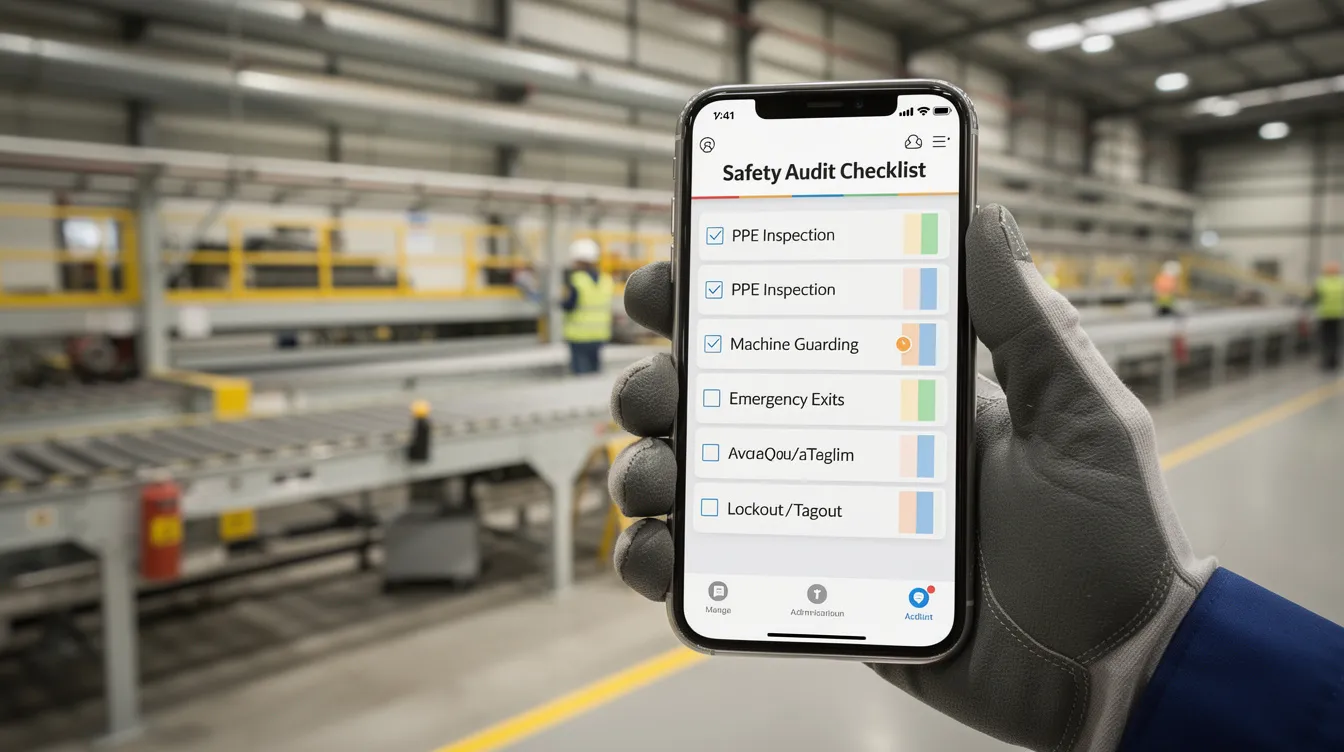
Mobile applications: Field auditor tools with offline LLM capabilities for sites without reliable connectivity
-
Internal incremental manpower: Staff time directly allocated to building, testing, and training the system
-
Management consultancy services: External experts mapping regulatory requirements and validating system outputs against SAC auditor expectations
HTA compliance and auditing often require specialized, custom-built software solutions, which are better supported by EDG. PSG eligible costs are more limited – typically covering software licenses and basic implementation fees from solutions vendors on the pre-approved list.
Grant Selection and Application Strategy for Heavy Industry
Choosing the wrong grant wastes months. This section provides a structured decision framework and detailed application preparation guidance for heavy industry companies seeking to fund LLM-powered ISO audit automation.
Project Scoping and Grant Selection Process
Start by assessing your current audit processes – the number of sites, audit frequency, document flow, non-conformance types, time per audit, and delay in corrective actions. This gap analysis determines whether you need a pre-approved tool (PSG) or custom development (EDG).
Use this decision framework:
-
Is the solution available as a pre-approved digital solution on GoBusiness? If yes and it meets your needs, PSG is faster and simpler.
-
Does the project involve custom LLM training, AI model development, or complex integration? If yes, EDG is required – PSG does not support custom builds.
-
Will total project costs exceed S$30,000? If yes, PSG cannot cover the full scope. Typical custom AI audit automation projects run S$200,000–S$700,000 for heavy industry at scale.
-
Is your company an SME (≤200 employees or ≤S$100M group revenue)? SMEs access EDG at 50% funding; non-SMEs at 30%. PSG is only available to SMEs.
-
Does the project qualify as a sustainability project? If so, EDG may provide up to 70% support through March 2026.
Map the project to the appropriate EDG project category – Core Capabilities for operational upgrades such as service excellence, or Innovation & Productivity for advanced AI and automation solutions. EDG supports projects that demonstrate a systematic upgrade in operational capability, so your individual project proposals must clearly articulate how the LLM system transforms audit operations.
Application Preparation Timeline
PSG application timeline:
-
Vendor selection and quotation gathering: 2–4 weeks
-
Application submission with complete documents via the business grants portal: 1 week
-
Approval processing: 4–8 weeks
-
Implementation: weeks to months depending on solution complexity
EDG application timeline:
-
Internal gap analysis and project scope definition: 4–8 weeks
-
Vendor selection and technical design: 4–6 weeks
-
Project proposal development with business plans and ROI projections: 4–6 weeks, though some market access or overseas market entry projects may also need different supporting analysis
-
Submission via the Business Grants Portal: 1 week
-
EDG applications take 8 to 12 weeks to process
-
Implementation: 12–18 months to project completion
Critical rule: Projects must not have commenced before applying for EDG. This includes signing contracts, making payments, or beginning any development work. Violating this rule results in automatic rejection – a common and costly mistake among applicant companies. All deliverables and claims must also fall within the project qualifying period.
Both EDG and PSG require a financial assessment to confirm the applicant’s ability to fund the project upfront. Companies must be in a financially viable position to cover costs before reimbursement, supported by audited financial statements and bank statements.
Vendor Selection Requirements
For PSG, solutions vendors must be Enterprise Singapore pre-approved. Check the GoBusiness portal for listed audit software providers.
For EDG, vendor requirements are more nuanced. EDG applications assess service-provider competence as a critical component of the project proposal. Vendors need demonstrated LLM development expertise, Singapore business registration, and ideally proven experience in heavy industry compliance contexts. EDG prioritizes projects that involve certified external consultants or specialists, including qualified singapore business advisors where relevant.
Consultants for EDG-related projects typically need relevant certifications such as TR 43 or SS 680 from the Singapore Accreditation Council. Management consultants providing business process consulting, regulatory mapping, or safety audit guidance should hold appropriate credentials, and screening can also take into account standards associated with the consultants council.
Cost Structure and Documentation
Understanding which project costs qualify under each grant prevents budget surprises:
PSG eligible costs:
-
Software license fees from pre approved vendors
-
Basic implementation and configuration
-
Standard user training
-
Total capped at S$30,000
EDG eligible costs:
-
Custom LLM development and AI model training
-
Software and platform development
-
Hardware and cloud infrastructure
-
Third party consultancy fees for regulatory mapping and technical architecture
-
Internal incremental manpower (staff working directly on the project)
-
Management consultancy costs for change management and process redesign
-
Certification and testing costs
Documentation for grant applications must include verified financial statements and proposals from qualified vendors. Prepare a project proposal detailing business plans for EDG, including technical specifications, data flow architecture, integration points, and ROI projections. EnterpriseSG emphasizes tangible outcomes in grant proposals, such as efficiency improvements and productivity metrics.
Submit EDG applications via the Business Grants Portal. EDG claims must be submitted within six months post-project, accompanied by claim documents, invoices, project deliverables, and a project summary report.
|
Cost Component |
Typical Range |
Grant Coverage |
|---|---|---|
|
LLM model development & training |
S$80,000–S$200,000 |
EDG only |
|
Audit platform software development |
S$60,000–S$150,000 |
EDG only |
|
Systems integration (QMS, IoT, ERP) |
S$30,000–S$100,000 |
EDG only |
|
Mobile/field audit application |
S$20,000–S$60,000 |
EDG only |
|
Consultancy & regulatory mapping |
S$30,000–S$80,000 |
EDG (third party) |
|
Off-the-shelf audit software |
S$5,000–S$30,000 |
PSG or EDG |

Common Challenges and Solutions in Grant Applications
Heavy industry grant applications face specific hurdles beyond standard business development submissions. Addressing these proactively strengthens your application and accelerates grant approval.
Technical Complexity Documentation
EDG requires detailed project proposals that outline the business problem and measurable outcomes for automation projects. Many heavy industry companies struggle to articulate LLM architecture in terms evaluators understand.
Solution: Provide a clear technical architecture document showing how the LLM integrates with your existing WSHMS and audit systems. Include data flow diagrams, integration points with legacy systems, and specific compliance outcomes – such as “automated non-conformance report generation mapped to ISO 45001 Clause 10.2” or “real-time WSH Act compliance checking across 12 construction sites.” Keep the project scope well-defined with measurable project outcomes.
ROI Justification for Advanced AI Solutions
Enterprise Singapore evaluates whether the investment produces tangible business growth and operational improvement, and evaluators may also expect the case to support the company’s broader business direction rather than only isolated automation gains. Abstract AI benefits do not satisfy this requirement.
Solution: Quantify audit time savings, compliance cost reductions, and risk mitigation benefits using concrete benchmarks. For example, case studies show that standardized audit toolkits can achieve 41% faster audit preparation across multiple sites, while AI-powered compliance tracking has demonstrated 30% reduction in corrective action closure times. Calculate staff hours reallocated, regulatory penalties avoided, insurance cost impacts, and faster project completion for audit cycles, then tie those gains to a stronger strategic brand in regulated heavy industry tenders and client assurance discussions.
Regulatory Compliance Alignment
LLM outputs must satisfy Singapore’s regulatory framework – not just ISO standards. Evaluators will question whether automated findings meet statutory requirements.
Solution: Explicitly map LLM capabilities to specific Singapore regulations including the WSH Act, Environmental Protection and Management Act, NEA chemical safety audit guidelines, and BCA codes. Show how the system maintains regulatory knowledge bases that are updated when laws change, and how outputs conform to the format expected by SAC-accredited auditors and MOM inspectors.
Multi-Site Implementation Challenges
Heavy industry companies often operate across dozens of sites. Grant evaluators want confidence that the project is achievable and measurable at scale.
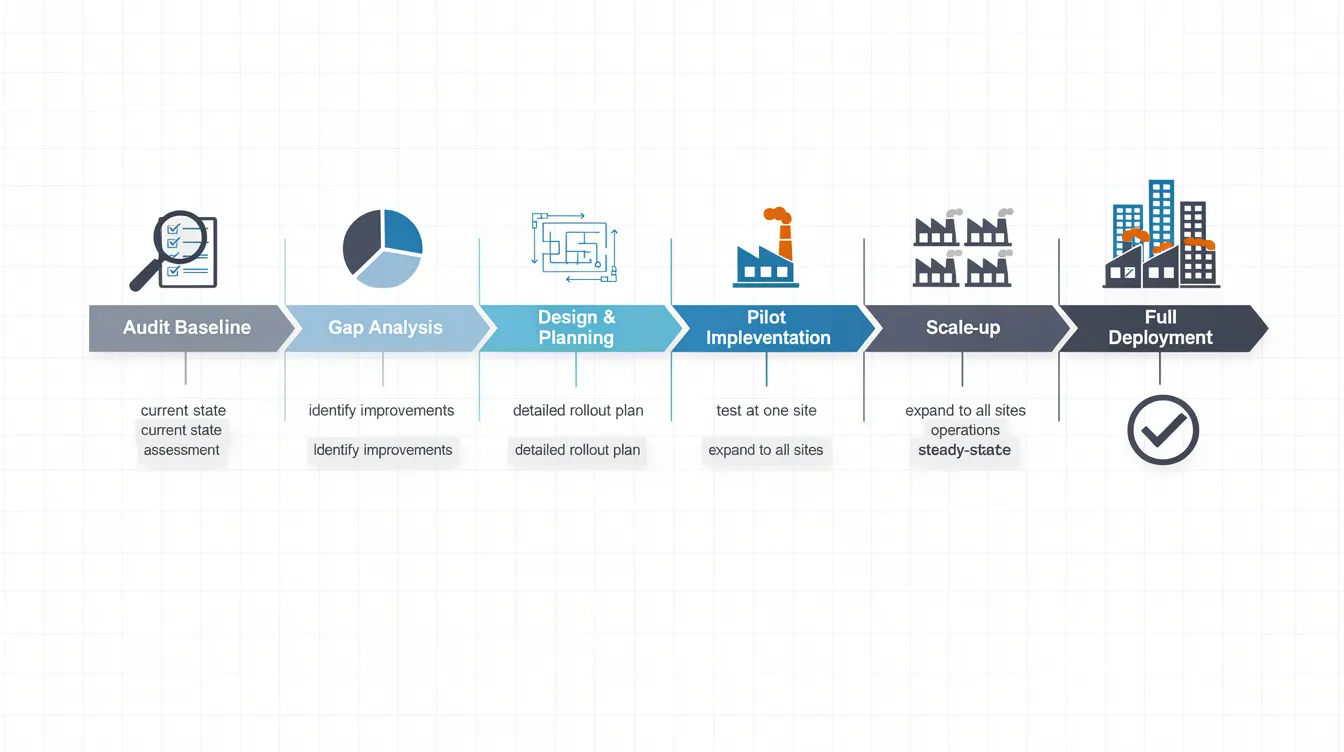
Solution: Phase implementation with clear milestones. Start with a pilot site to validate LLM accuracy against human auditor findings, measure baseline improvements, then define rollout milestones with measurable compliance improvements at each location. This phased approach also reduces technical risk – a factor evaluators weigh in project management assessment.
Vendor Capability Assessment
The National AI Impact Programme aims to support enterprises in advancing AI adoption and transformation in Singapore, but the market for vendors combining LLM expertise with heavy industry compliance knowledge remains thin.
Solution: Select vendors with a proven track record in both LLM development and Singapore compliance requirements. Evaluate their experience with digital transformation projects in regulated industries. For EDG, ensure third party companies providing consultancy have TR 43 or SS 680 certification. Document vendor qualifications thoroughly in the application – this is a critical evaluation criterion.
Implementation Timeline and Success Factors
A grant-funded LLM audit automation project for heavy industry typically spans 12–18 months from EDG approval to project completion. Success depends on disciplined phasing and continuous alignment with both grant requirements and regulatory expectations.
Recommended implementation sequence:
-
Internal audit and process mapping (Months 1–2): Baseline current audit workflows, document volumes, non-conformance rates, and time metrics across all sites. This establishes the measurement framework for demonstrating project outcomes to Enterprise Singapore.
-
Technical design and vendor engagement (Months 2–4): Finalize LLM architecture, data ingestion pipelines, integration specifications, and mobile/offline capabilities. Confirm vendor certifications and capabilities align with EDG requirements.
-
Pilot site implementation and validation (Months 4–8): Deploy the system at a single site or business entity. Test LLM accuracy against human auditor outputs for safety audit processes. Validate that automated findings correctly reference ISO clauses and Singapore regulations. Iterate based on results.
-
Full deployment across all sites (Months 8–14): Roll out to remaining sites with site-specific configuration. Train field auditors on mobile data capture tools. Integrate with IoT sensors and existing safety management systems.
-
Monitoring, retraining, and regulatory update alignment (Months 14–18): Establish processes for ongoing LLM retraining as regulations change. Confirm system outputs remain compliant with SAC auditor expectations and NEA/MOM requirements.
-
Grant claim process (Post-project completion): Compile all claim documents including invoices, evidence of project deliverables, financial management records, and the project summary report. Submit claims within six months. EDG may require an independent audit report before disbursement. Ensure all approved claim documentation is complete and verifiable.
Key success factors:
-
Maintain meticulous financial records – both EDG and PSG require auditable documentation of all project costs
-
Never commence work or make payments before grant approval
-
Engage management consultants with relevant certifications early in the process
-
Build regulatory update mechanisms into the LLM system from day one – Singapore Standard revisions and WSH regulatory changes are ongoing
-
Ensure data privacy compliance under PDPA for sensitive industrial process data stored in cloud systems
Next Steps for Heavy Industry Companies
If your company manages ISO audit processes across multiple heavy industry sites and wants to explore grant-funded LLM automation, these are your immediate action items:
-
Conduct an internal audit process assessment: Map current audit workflows, identify bottlenecks in evidence collection and non-conformance reporting, and calculate time and cost per audit cycle. This forms the foundation of your EDG project proposal.
-
Determine grant eligibility: Confirm your company meets the requirements – Singapore-registered and operating, at least 30% local shareholding, and financially ready to complete the project. Classify whether you are an SME for higher funding rates.
-
Schedule a consultation for grant eligibility evaluation: Work with certified compliance advisors who understand both the EDG application process and heavy industry regulatory requirements. MOSAIC Ecoconstruction Solutions provides expertise in ISO certification, WSH compliance, and regulatory mapping – critical components of a strong grant application.
-
Prepare financial documentation: Gather audited financial statements, bank statements, and evidence of your financially viable position for upfront project funding.
-
Engage qualified LLM development vendors: Begin preliminary discussions and collect quotations, but do not sign contracts or make payments before grant approval. Projects must be new and not generating revenue at application. If you may venture overseas later, prioritize vendors and system designs that can scale across jurisdictions.
Related topics to explore:bizSAFE certification integration with digital audit systems, environmental management system automation, and WSH risk assessment digitization as complementary digital transformation journey initiatives.
Frequently Asked Questions
Can we combine PSG and EDG funding for the same LLM audit project?
No. Grants cannot fund the same expense twice. You cannot use PSG for a project and simultaneously use EDG for the same components. You must choose which grant covers which expense. In practice, most heavy industry LLM audit automation projects exceed PSG’s S$30,000 cap and customization limits, making EDG the sole applicable grant. If you have separate, non-overlapping needs – such as off-the-shelf accounting software under PSG and custom LLM development under EDG – they can be treated as distinct projects with individual project proposals.
What happens if our company exceeds PSG size limits during project implementation?
Eligibility is determined at application time based on your group-level employee count and revenue. If your company qualifies as an SME when you apply, the approved funding rate holds for that project. However, if you grow past the threshold before applying for a new grant, you would lose SME rate privileges for future applications. For EDG, this is less of a concern since EDG has no company size limit for eligibility.
How do we demonstrate ROI for AI-powered audit systems to Enterprise Singapore?
EnterpriseSG expects tangible, measurable project outcomes. Quantify audit hours saved per cycle, reduction in corrective action closure times, compliance cost reductions, regulatory penalties avoided, and staff hours reallocated to higher-value work. Use industry benchmarks where available – for instance, standardized audit toolkits have demonstrated 41% faster audit preparation across multi-site operations. Include baseline metrics from your current audit processes and projected improvements with specific timelines.
Can foreign subsidiaries of Singapore companies apply for grants?
Yes, provided the business entity is registered and operating in Singapore with at least 30% local shareholding by Singapore Citizens or Permanent Residents. Group turnover and employment size are assessed at the group level for SME classification. Foreign parent companies with qualifying Singapore subsidiaries can apply, but the project must benefit Singapore operations.
What certification requirements apply to LLM audit solutions under Singapore regulations?
The LLM system itself does not require certification, but its outputs must satisfy expectations of SAC-accredited auditors and regulatory bodies. Under WSH auditing regulations, appointed auditors must hold appropriate registration and qualifications. Automated audit findings, non-conformance reports, and corrective action documentation must conform to the format and standards that ISO certification bodies, MOM inspectors, and NEA auditors expect. For EDG consultancy components, management consultants typically need TR 43 or SS 680 certification.
How long does grant claims processing take after project completion?
After project completion, EDG claim submission requires compiling invoices, evidence of deliverables, and financial documentation. EDG claims must be submitted within six months post-project. Processing typically takes several weeks to months, and complex claims may require an independent audit before disbursement. PSG claims are simpler with lighter documentation requirements, though high-value claims may still need verification. Ensure all claim documents are complete and organized to avoid processing delays. Enterprise Singapore administers grant applications through the Business Grants Portal (BGP), where you can reach enterprise singapore for status updates.