
Introduction
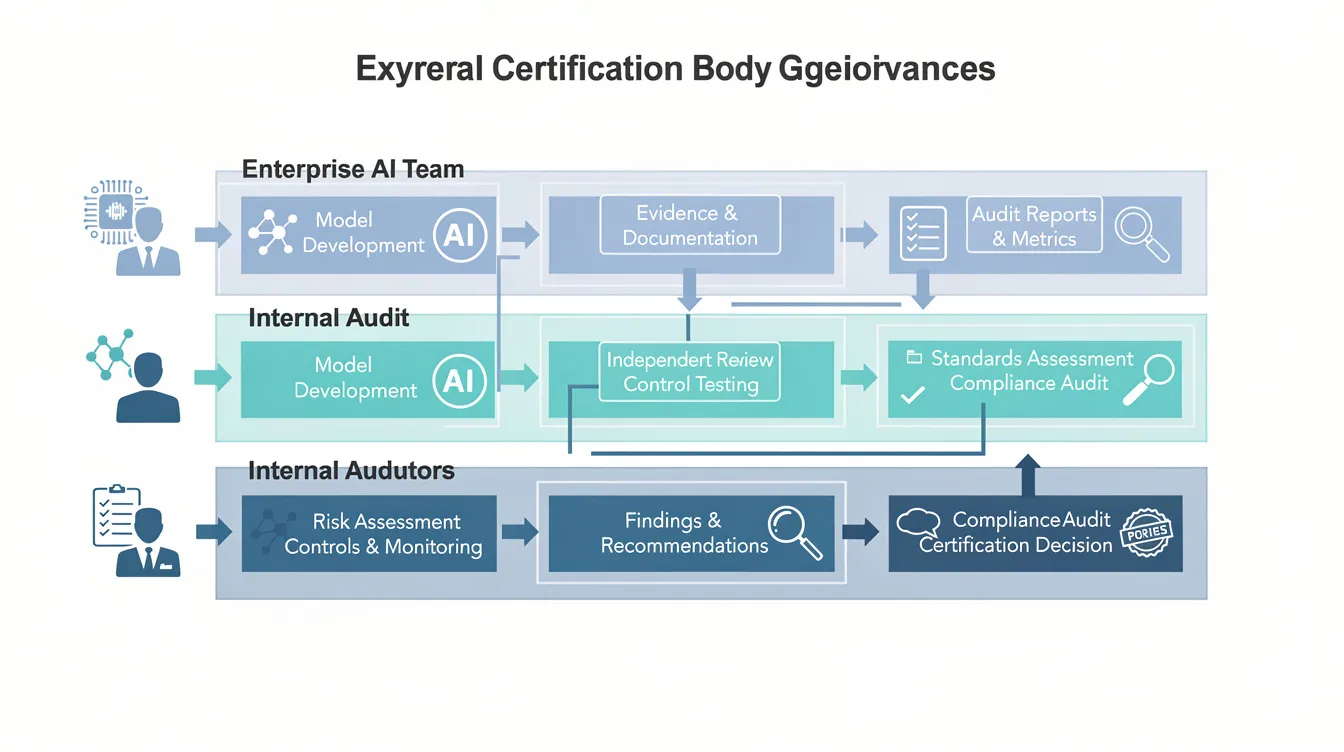
Enterprises deploying large language models in Singapore face a layered governance challenge: it is not enough to audit your AI systems – you must also audit the auditors who verify your compliance. For organisations implementing ISO/IEC 42001 AI Management Systems, auditing the auditor means putting rigorous oversight around every party – internal audit teams, second-party vendor assessors, and third-party certification bodies – to ensure they are competent, impartial, and able to test conformity to the AIMS standard with evidence rather than assumption. This oversight layer is what makes AI assurance credible for enterprise LLM deployments in Singapore.
This article covers the full scope of auditor oversight for enterprise LLM systems in Singapore: from second-party audits of AI solution vendors, through internal audit processes that verify day-to-day compliance, to the accreditation and performance of third-party certification bodies operating under the Singapore Accreditation Council (SAC). It is written for compliance officers, internal auditors, risk managers, and AI governance leads in organisations planning or operating LLM deployments within Singapore’s regulatory environment, especially where vendor risk, model behaviour, and accountability need to be tested in a structured way. It stays focused on how to govern and verify the audit function around LLM deployment under ISO/IEC 42001, rather than serving as a general primer on AI regulation or LLM engineering.
Why does this matter now? Singapore’s AI governance landscape is evolving rapidly – with the PDPC Advisory Guidelines on personal data in GenAI issued as recently as August 2026, the Model AI Governance Framework for Agentic AI launched in January 2026, and the SAC’s AIMS accreditation programme live since February 2025. LLMs can introduce unique risks such as hallucinations and data privacy leakages, and certifications only carry weight when the auditing bodies and processes behind them are robust. Independent audit verification ensures that ISO/IEC 42001 implementation functions as a living, continually improving AI management system rather than a checkbox exercise, while helping enterprises build trust with regulators, customers, and business partners.
By the end of this article, you will understand:
-
How to establish a structured framework for auditing auditor competence and impartiality in LLM contexts
-
Methods for compliance verification aligned with Singapore’s PDPA, Model AI Governance Framework, and emerging AI regulations
-
Practical audit execution processes, including evidence collection specific to enterprise LLM life cycle stages
-
Strategies for continuous monitoring and how to drive continual improvement in your AI audit programme
-
Solutions for the most common challenges enterprises encounter when implementing ISO/IEC 42001
Understanding ISO/IEC 42001 for Enterprise LLM Systems
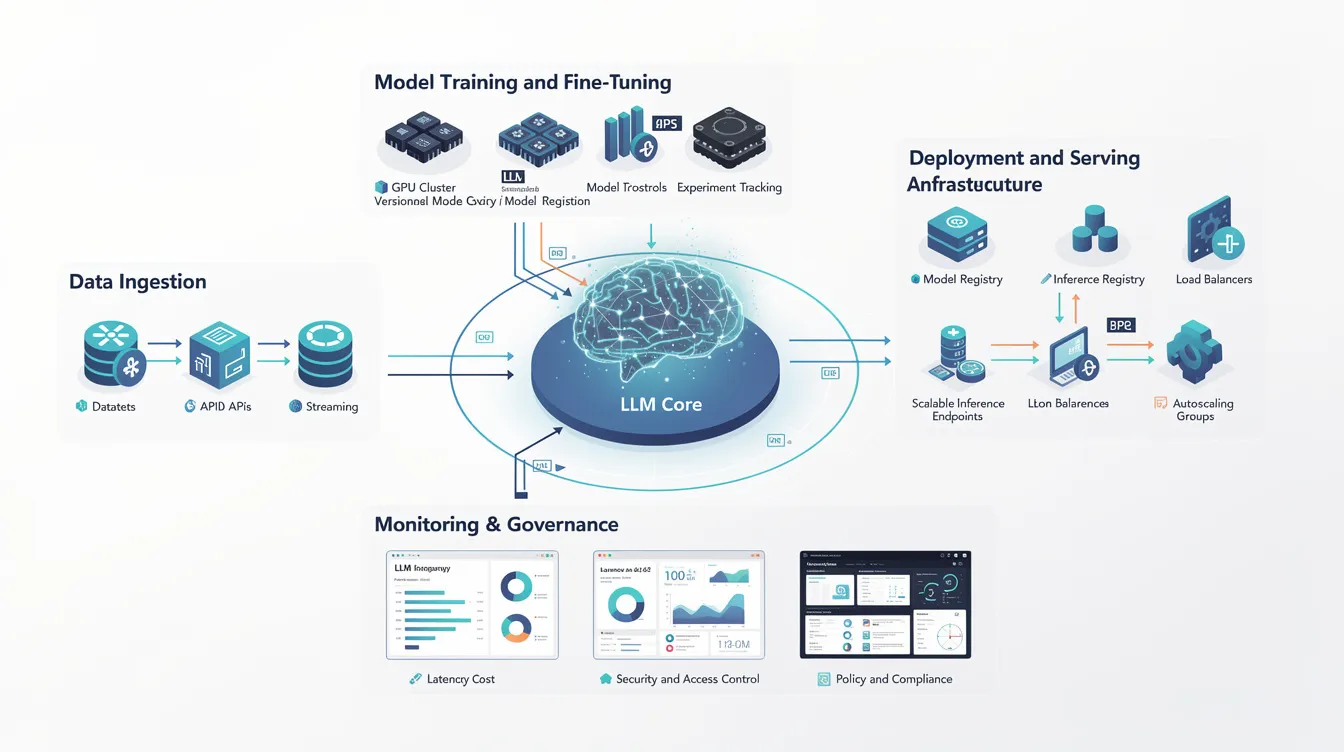
ISO/IEC 42001 is the first international standard for AI management systems, published internationally in 2023 by the International Organization for Standardization and the International Electrotechnical Commission. It has been adopted in Singapore as SS ISO/IEC 42001:2024. This global standard specifies requirements for establishing, implementing, maintaining, and continually improving an AI management system within any organisation, regardless of size or type of AI usage. For enterprises deploying LLMs – among the most complex and opaque AI technologies in production today – the standard provides a structured framework that addresses AI-specific risks across the full life cycle: data ingestion, model training, fine-tuning, inference, deployment, monitoring, and retirement.
The standard requires compliance with 38 distinct controls across 9 objectives for AI governance. These controls span governance and accountability, data governance, risk assessment, model transparency, fairness, security, and continuous improvement. For LLM deployments specifically, this means establishing version control protocols, output monitoring systems, bias detection mechanisms, and explicit human oversight at critical decision-making points. ISO/IEC 42001 certification follows a 3-year cycle with surveillance audits, and the certification process itself includes a two-stage audit lasting 1–3 weeks.
Core AIMS Requirements for LLM Deployments
The AI management system objectives for enterprise LLM use cases centre on ensuring that artificial intelligence is developed, deployed, and governed responsibly throughout its life cycle. Lifecycles for AI deployment should include design, development, deployment, and retirement stages – and the AIMS must cover each phase with documented policies, defined roles, and measurable business objectives.
Governance frameworks required under ISO/IEC 42001 include AI policies endorsed by top management, clear assignment of accountability for AI outcomes, and structured risk management processes. ISO/IEC 42001 requires formal risk assessments across data, model bias, and privacy. For LLMs, this translates into specific obligations: documenting model architecture and data lineage, implementing prompt engineering governance, quantifying fairness metrics across demographic segments, and establishing mechanisms to detect and mitigate hallucination. An AI system inventory should include roles, responsibilities, and risk classifications for every deployed model. ISO/IEC 42001 emphasises the need for documented policies and procedures for AI systems, and performance evaluations must include ongoing audits and reviews of AI systems.
Critically, ISO/IEC 42001 includes AI-specific controls for governance that go beyond what traditional management system standards address. While ISO/IEC 27001 addresses information security management systems and focuses on protecting information assets, ISO/IEC 42001 complements ISO/IEC 27001 rather than competes with it – the two standards work together to protect both information assets and the ethical, transparent operation of AI models. Operational performance metrics should include safety, fairness, and efficacy of AI systems.
Singapore Regulatory Context for AI Systems
Singapore’s AI governance ecosystem is one of the most developed in the Asia-Pacific region. The Model AI Governance Framework (MGF), first published in 2019 and updated in 2020, provides guidance on explainability, transparency, fairness, and human-centric decision making for private sector organisations. In 2024, the MGF for Generative AI (MGF-GenAI) was launched to address risks specific to generative AI models, identifying nine governance dimensions including accountability, data governance, trusted development and deployment, incident reporting, testing and assurance, security, content provenance, and safety alignment.
In January 2026, Singapore launched the Model AI Governance Framework for Agentic AI, addressing AI systems that act autonomously – including LLMs with external interaction capabilities. This framework introduces guidance for deployment monitoring, technical and non-technical controls, and human accountability. Most recently, the PDPC issued Advisory Guidelines on the use of personal data in GenAI on 5 August 2026, establishing distinct responsibilities for model providers, system providers, and system deployers.
The relationship between ISO/IEC 42001 and these local regulatory expectations is complementary: the international standard provides a certifiable management system framework, while Singapore’s governance frameworks and AI regulations provide specific ethical considerations and compliance requirements. AI Verify provides standardized testing for transparency and explainability in AI systems, further supporting the audit and assurance ecosystem. Organisations should establish AI governance through leadership commitment and accountability – a requirement shared by both ISO/IEC 42001 and Singapore’s frameworks. This convergence of international and local requirements is precisely why independent auditing becomes essential: enterprises need assurance that their AI management system satisfies both the standard’s requirements and Singapore’s evolving regulatory expectations.
Singapore Enterprise LLM Audit Requirements
With Singapore’s regulatory environment setting high expectations for responsible AI deployment, the audit requirements for enterprise LLM systems extend well beyond traditional information technology management system assessments. Auditors must evaluate data governance practices against the PDPA, assess model fairness in one of the world’s most multicultural business environments, and verify operational risk management for systems that often depend on cross-border cloud infrastructure and third-party AI providers.
Data Governance and Privacy Compliance
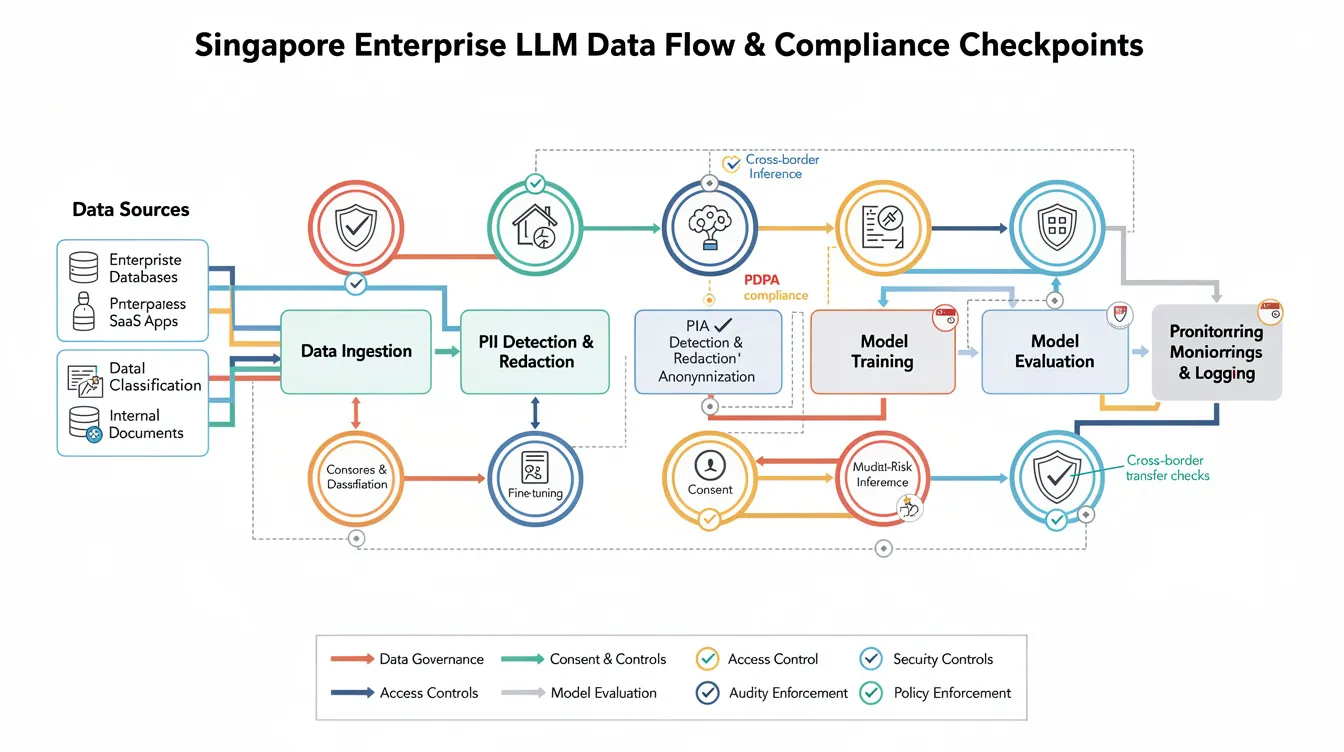
Compliance with Singapore’s Personal Data Protection Act is required in AI systems handling personal data, and this obligation extends through every stage of the LLM life cycle – from training data collection through inference and output generation. The PDPC’s August 2026 Advisory Guidelines mandate “AI-specific notifications” that inform individuals of the scope and types of personal data used, the purposes of AI usage, and individuals’ rights to access, correct, and withdraw their data even after it has been used in generative AI systems. Auditors must verify that these notifications are implemented and that data minimisation and retention limitation policies are enforced.
Cross-border data transfer auditing is particularly critical for multinational enterprises operating from Singapore. LLM training frequently relies on globally sourced datasets, and model providers may process data in multiple jurisdictions. The audit process must map all data flows, verify that cross-border transfers comply with PDPA’s transfer rules (including standard contractual clauses or adequacy arrangements), and confirm that anonymisation or pseudonymisation is applied where appropriate. Registration of supplier requirements is crucial for organisations utilising third-party AI providers – auditors should verify contracts, SLAs, and evidence of vendor compliance with both PDPA and ISO/IEC 42001. Much like choosing an ISO certification body in Singapore, selecting and overseeing third-party AI vendors requires structured due diligence.
Model Performance and Bias Assessment
Auditing procedures for LLM performance must go beyond standard accuracy metrics to encompass safety, fairness, and robustness measurements. Key metrics include precision, recall, F1 scores, and perplexity, but also hallucination rates, susceptibility to adversarial inputs and prompt injection, and fairness metrics such as demographic parity and equal opportunity. In higher-stakes enterprise use cases such as fraud detection, LLM performance, false positives and negatives, and fairness need especially close audit review. Singapore’s multicultural context – with ethnic Chinese, Malay, Indian, and other communities – makes bias assessment especially important. Audits should evaluate whether LLM outputs exhibit unwanted stereotyping or discriminatory patterns across race, religion, and gender dimensions.
Ongoing monitoring and assessment of model outputs is a standard’s requirement that directly supports responsible AI practices. Organisations should perform ongoing monitoring and incident management for deployed AI systems, logging outputs, tracking user complaints, and conducting post-hoc evaluations after model updates. Red teaming exercises, prompt testing, and user feedback loops should be documented and available as audit evidence. Training on AI policies and procedures is necessary for ensuring compliance and operational effectiveness among the teams responsible for model evaluation.
Operational Risk Management
The audit framework for business continuity and disaster recovery must account for LLM-specific dependencies: cloud infrastructure, GPU availability, third-party APIs, and vendor lock-in. Auditors need to verify redundancy, backup procedures for both models and data, and incident response plans that address AI-specific scenarios such as model poisoning or prompt leakage. Security vulnerabilities particular to LLM deployments – including prompt injection attacks, data exfiltration through model outputs, and adversarial manipulation – must be assessed against established information security controls.
Operational risks also encompass supply chain dependencies. If an enterprise relies on external model providers or data vendors, the external audit must review those third parties’ governance frameworks, contractual obligations, and ability to provide conformity evidence. This is analogous to contractor safety management principles applied to AI supply chains: accountability does not end at organisational boundaries.
Audit Framework and Implementation Process
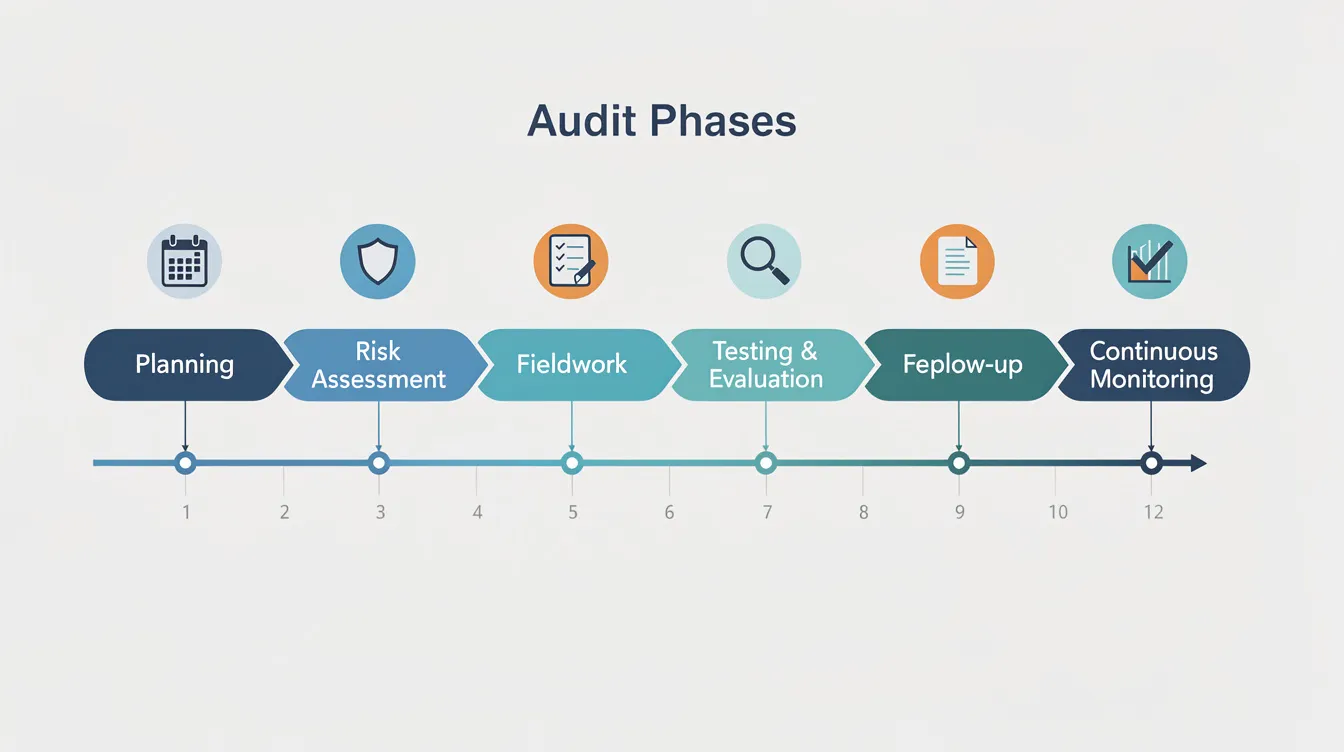
Implementing a comprehensive audit methodology for ISO/IEC 42001 in enterprise LLM environments requires a risk-based approach aligned with ISO 19011 principles. The audit cycle spans pre-audit planning (2–4 weeks), execution through on-site and remote assessments (2–3 weeks), reporting and corrective action development (2–4 weeks), and ongoing follow-up and continuous monitoring. The precise timeline depends on the scale of LLM deployment and maturity of the existing AI management system.
Pre-Audit Assessment and Planning
Before any audit commences, the enterprise and auditing body must verify that the conditions for a rigorous, competent assessment are in place. This is where “auditing the auditor” starts in practice.
-
Auditor competency verification for AI systems knowledge: Auditors must demonstrate understanding of ISO/IEC 42001 clauses, normative references such as ISO/IEC 22989:2023 (foundational AI concepts), and technical literacy in LLM architectures, prompt pipelines, model evaluation methodologies, and data privacy in machine learning contexts. Lead Auditor training equips professionals for ISO/IEC 42001 audits – training options in Singapore include BSI’s 3-day internal auditor practitioner course and SGS’s 5-day lead auditor programme. Pairing management system auditors with AI technical specialists (data scientists, ML engineers) strengthens audit team competency.
-
Audit scope definition for enterprise LLM environments: The scope must specify which LLMs are included (foundation models, fine-tuned models, inference-only deployments), which life cycle stages are covered, geographic and regulatory boundaries (including cross-border data flows), and which departments (IT, legal, data science, procurement) are involved. Impact assessments should inform scope prioritisation.
-
Risk-based audit planning methodology: Identify and rank key potential risks – data privacy breaches, bias and fairness failures, model misuse, regulatory non-conformance. Prioritise high risk AI systems such as those handling sensitive personal data, autonomous agents, or user-facing LLM applications. Determine sample sizes, evaluation frequency, and audit intensity proportional to risk classification.
-
Stakeholder interview preparation and documentation review: Plan interviews with top management, data protection officers, AI/ML engineers, model deployers, and vendors. Assemble documentation for review: data source inventories, model design documents, test reports, AI policies, vendor contracts, and incident logs. This preparation parallels the thorough pre-audit readiness process used in other management system certifications.
Audit Execution and Evidence Collection
ISO/IEC 42001 audits assess AI management system effectiveness across multiple dimensions. The following table maps key audit criteria to LLM-specific evidence requirements and Singapore compliance factors:
|
Audit Criteria (ISO/IEC 42001 Clause) |
LLM-Specific Evidence Required |
Singapore Compliance Factor |
|---|---|---|
|
Governance, policy, and objectives |
Documented AI policy; management meeting minutes; roles/responsibilities matrix; model version control records |
Alignment with MGF and MGF-GenAI; Agentic AI framework accountability requirements |
|
Data governance, privacy, and security |
Data lineage documentation; anonymisation/pseudonymisation records; security controls evidence; cross-border transfer contracts |
PDPA advisory guidelines; AI-specific notification implementation; transfer rule compliance |
|
Fairness, bias, explainability, and transparency |
Bias testing results disaggregated by demographic group; interpretability reports; red-teaming logs; explanation/output tracing records |
Singapore’s multicultural context; MGF-GenAI dimensions; PDPC/IMDA expectations for responsible use |
|
Model performance, safety, and robustness |
Evaluation metrics with quantitative thresholds; adversarial testing results; incident logs; response plans; fallback control documentation |
AI Verify testing; MGF evaluation catalogue; Agentic AI risk management expectations |
|
Supplier/vendor management |
Vendor contracts and SLAs; third-party audit reports; evidence of supply chain conformity with ISO 42001 |
Vendor PDPA compliance; local regulatory alignment; AI solutions provider governance verification |
|
Monitoring and continuous improvement |
Post-deployment monitoring logs; feedback mechanisms; model drift analysis; corrective action records; audit trail documentation |
MGF-GenAI incident reporting requirements; Agentic AI human oversight obligations |
Evidence sufficiency and quality standards demand that all audit evidence be timely, reliable, and reproducible. Logs must be unaltered, metrics must carry defined quantitative thresholds, and audits must avoid overreliance on self-reported material. Sample outputs, model traces, and code reviews should complement documentation review. Enterprises must conduct internal audits against ISO/IEC 42001 clauses for continual improvement – these internal audit records themselves become evidence for external audit review.
Audit Reporting and Follow-up
Reporting requirements for Singapore enterprise governance expect audit reports to include findings, nonconformities classified by severity (low, medium, high), observations, evidence references, and quantitative results such as fairness measures and safety metrics. Reports should present management responses and a corrective action plan with assigned responsibility and deadlines. AI governance is crucial for maintaining customer trust and compliance, and transparent reporting reinforces that trust with stakeholders.
Corrective action verification requires follow-up audits – either internal or external – to confirm that nonconformities have been addressed. Corrective actions may involve retraining models, improving data collection practices, amending vendor contracts, or enhancing monitoring dashboards. ISO/IEC 42001 certification is valid for three years with annual surveillance audits, meaning that the audit cycle provides regular checkpoints for verifying sustained compliance.
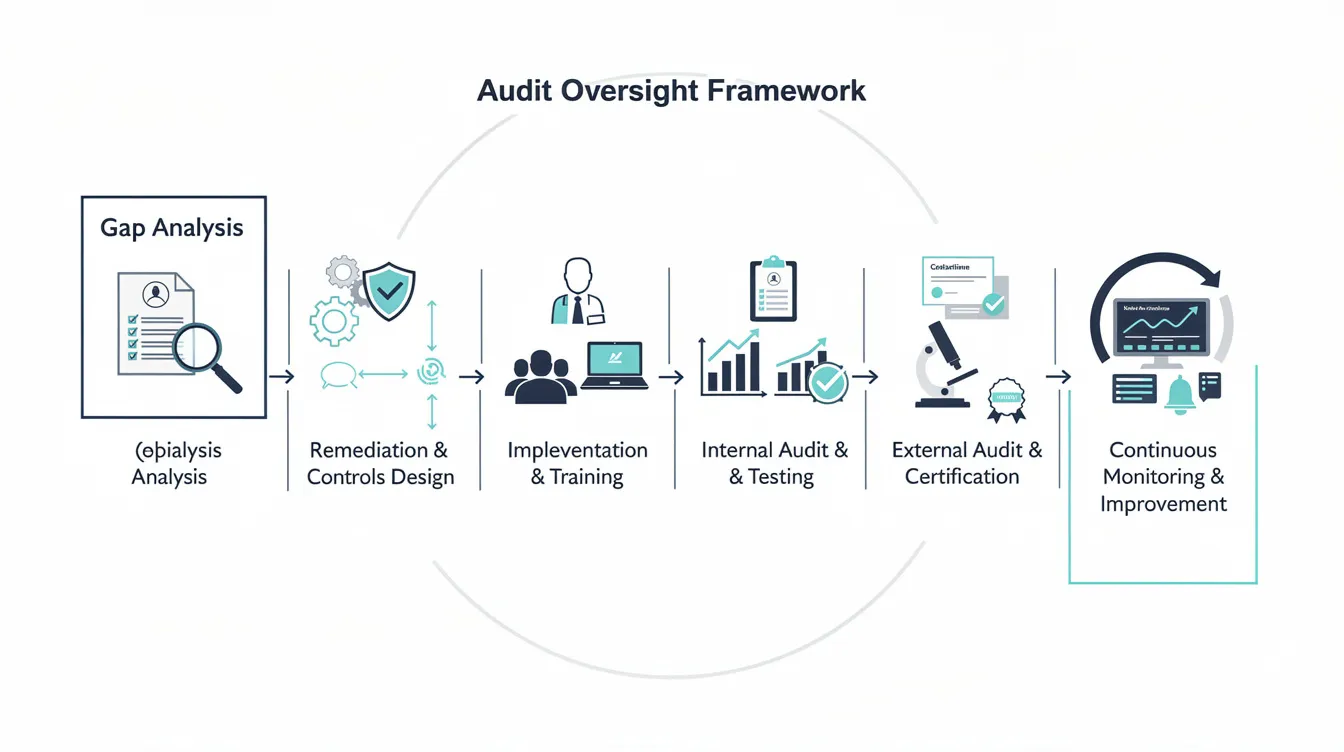
Continuous monitoring requirements prevent the audit from being a purely retrospective exercise. For LLMs, model version updates, prompt drift, and data drift all necessitate periodic re-evaluation. Embedding the internal audit function into the AI system life cycle – triggering reviews at major deployments, version changes, and feedback-driven updates – ensures that the AIMS remains a living system that supports responsible AI practices rather than a static compliance artefact. The philosophy mirrors continuous improvement in safety applied to AI governance contexts.
Common Challenges and Solutions
Singapore enterprises implementing ISO/IEC 42001 for LLM deployments face several recurring challenges that can undermine audit quality if left unaddressed. Recognising and solving these issues early is essential for building trust in the audit programme and achieving meaningful certification outcomes.
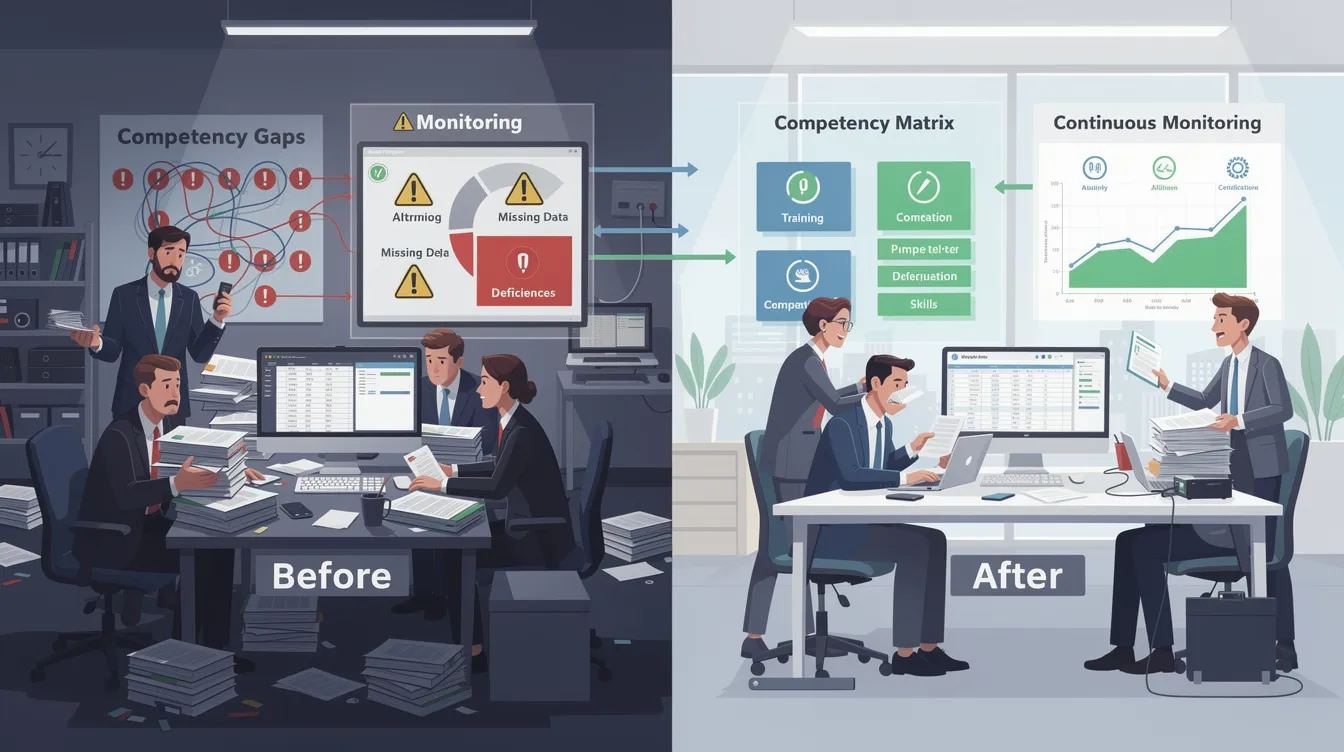
Auditor Technical Competency Gaps
The most frequently cited challenge is the gap between traditional management system audit expertise and the technical depth required for AI systems auditing. Auditors may understand ISO management system structures but lack fluency in LLM architectures, prompt engineering, bias drift, or hallucination risks. ISO/IEC 42001 is the first international AI management system standard, so the pool of experienced auditors remains limited.
The solution involves multiple reinforcing strategies. First, invest in formal training: Lead Auditor and internal auditor courses from providers such as SGS and BSI are now available in Singapore, with course fees from SQI ranging from approximately S$684.52 (members) to S$758.64 (non-members). Second, structure audit teams to pair management system auditors with AI technical specialists – data scientists, ML engineers, or information security professionals with AI expertise. Third, require auditors to demonstrate familiarity with normative references including ISO/IEC 22989:2023 on foundational AI concepts. Fourth, implement continuous professional development through peer reviews, case studies of LLM audits, and regular competency assessments. ISO/IEC 42001 helps organizations manage AI risks systematically, but only when auditors themselves possess the technical competence to evaluate those risks.
Cross-Border Data Flow Compliance
LLM training and deployment frequently involve data sourced, stored, and processed across multiple jurisdictions. Multinational enterprises operating from Singapore must navigate PDPA transfer rules alongside privacy regulations in other countries – and increasingly alongside the EU AI Act requirements that affect cross-border AI solutions. The complexity multiplies when third-party model providers are involved, as proprietary model architectures may limit an auditor’s ability to obtain detailed evidence.
Actionable solutions include: comprehensive mapping of all data flows with an inventory of datasets, storage locations, and processing jurisdictions; risk assessment for each cross-border transfer; use of legally binding contracts and standard contractual clauses approved under PDPA; anonymisation or de-identification of data before transfer; and supply chain audits requiring vendors to demonstrate that their data governance and AI governance practices align with Singapore law. For enterprises with regional operations, establishing clear protocols for data governance across jurisdictions prevents audit findings from cascading into regulatory non-compliance.
Continuous Monitoring Integration
Traditional audits provide point-in-time assessments, but LLMs evolve continuously – through fine-tuning, prompt updates, new training data, and shifting usage patterns. A static annual audit cannot capture the dynamic risk profile of a live LLM deployment.
The solution is to establish KPIs and metrics for ongoing operational monitoring: bias drift indicators, performance degradation thresholds, error rates, security incident counts, and user complaint volumes. Automated or semi-automated monitoring dashboards with alerting capabilities enable near-real-time oversight. Periodic review cycles should be triggered not only by calendar schedules but by model change events – major architecture updates, new training runs, fine-tuning iterations, or significant shifts in usage context. Integrating internal audit schedules with AI system life cycle events ensures that audits remain relevant and that the organisation can drive continual improvement rather than merely documenting past states.
Conclusion and Next Steps
Robust auditor oversight is the foundation that makes ISO/IEC 42001 certification meaningful for enterprise LLM deployments in Singapore. Without it, even well-designed AI management systems risk becoming compliance artefacts rather than functional governance mechanisms. ISO/IEC 42001 promotes ethical and responsible AI management practices, but that promise is only realised when every layer of the audit ecosystem – internal auditors, external audit teams, and certification bodies – meets the competence, independence, and rigour standards that high-risk AI systems demand.
Enterprises should take the following immediate steps to establish effective audit oversight:
-
Conduct a gap analysis of current AI governance practices against ISO/IEC 42001’s 38 controls, Singapore’s MGF-GenAI dimensions, PDPA requirements, and the Agentic AI framework obligations.
-
Verify and upskill auditing personnel – both internal auditors and external audit partners – in AI technical domains, LLM-specific risks, and Singapore’s regulatory landscape.
-
Establish a risk-based audit plan with scope covering all LLM life cycle stages, relevant stakeholders, cross-border data flows, and supply chain dependencies.
-
Engage SAC-accredited certification bodies for ISO/IEC 42001 certification, and integrate audit outputs into enterprise governance reporting and board-level accountability structures.
Looking ahead, Singapore’s AI regulations will continue to evolve. The PDPC’s August 2026 Advisory Guidelines signal increasing specificity in personal data obligations for generative AI. International alignment pressures – crosswalks with the EU AI Act and NIST AI Risk Management Framework – will require enterprises to maintain audit programmes that satisfy multiple regulatory regimes simultaneously. The market for accredited certification bodies and AI-competent auditors in Singapore will grow, and audit automation tools for evidence collection, bias monitoring, and observability will become standard components of enterprise AI governance infrastructure.
Additional Resources
-
Singapore Model AI Governance Framework: The PDPC’s Model AI Governance Framework provides foundational guidance on ethical considerations, transparency, and accountability for AI deployments in the public sector and private sector alike.
-
SAC AIMS Accreditation Programme: The Singapore Accreditation Council’s ISO/IEC 42001 accreditation programme lists accredited certification bodies and provides details on the accreditation process for organisations seeking third-party certification.
-
Professional development: SGS offers a 5-day Lead Auditor course for ISO/IEC 42001 in Singapore; BSI provides a 3-day internal auditor practitioner qualification. Both support the competency building essential for credible AI systems auditing.
-
ISO 42001 Audit Toolkit: The GSDC ISO 42001 AI Audit Toolkit/Checklist Template supports pre-audit self-assessment and helps organisations align their governance frameworks with the standard’s requirements before formal audit engagement.