
Introduction
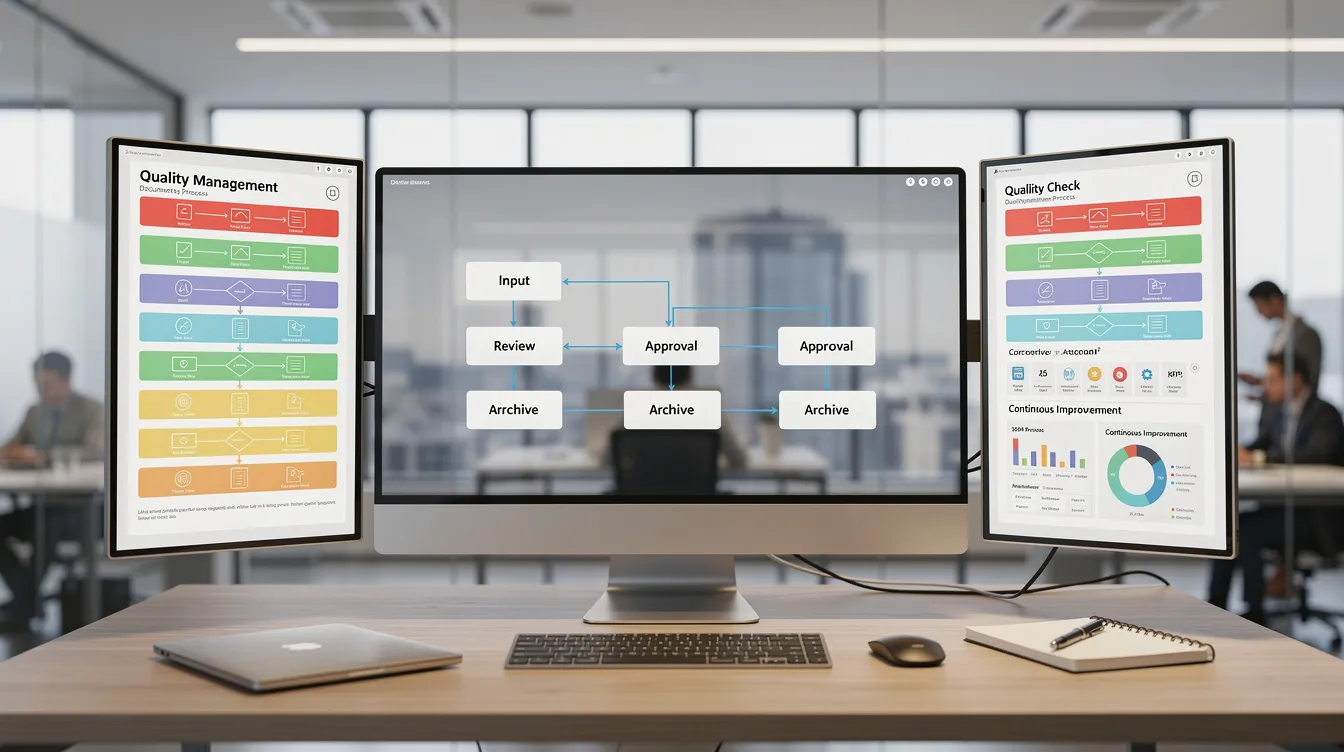
A retrieval augmented generation (RAG) system built for Integrated Management Systems (IMS) under ISO 9001 can reduce document search time by 60–80% and raise answer accuracy above 95%, transforming how organizations handle quality, safety, and environmental documentation. Building a Retrieval-Augmented Generation system for ISO-certified Integrated Management Systems requires precision-both in the technical architecture and in how the system aligns with the strict documentation controls that ISO 9001 demands.
This article covers the full life cycle of designing, deploying, and maintaining a RAG system purpose-built for IMS environments. It addresses technical architecture decisions, phased implementation strategies, cost-benefit considerations, and compliance requirements-with particular attention to Singapore-based organizations operating under the Personal Data Protection Act (PDPA). The target audience includes quality managers, IT leaders, compliance officers, and consultants driving digital transformation in quality management systems. Topics outside the scope-such as general-purpose chatbot design or non-ISO document workflows-are not covered here.
The core takeaway: RAG systems enable real-time, intelligent access to ISO 9001 documentation and procedures, improving compliance efficiency and decision-making accuracy by grounding every generated response in your organization’s actual, version-controlled documents. RAG reduces AI hallucinations by grounding responses in factual data, which is non-negotiable in regulated environments where a single incorrect procedure reference can trigger audit nonconformities.
By the end of this article, you will gain:
-
A clear technical architecture for integrating RAG with IMS documentation hierarchies
-
A phased implementation roadmap from pilot to enterprise-wide deployment
-
A cost-benefit framework comparing open-source, enterprise, and hybrid solutions
-
Security and compliance strategies aligned with PDPA and ISO 27001
-
Practical solutions for the most common challenges in RAG-powered quality management
Understanding RAG Systems and ISO 9001 Integration
Retrieval augmented generation merges the precision of information retrieval with the flexibility of large language models, creating an AI system for answering questions by first gathering relevant information from your actual documentation, then generating a natural-language response based on that retrieved data. For quality management systems governed by ISO 9001, this means every answer traces back to a controlled, versioned source document-not to the probabilistic guesses of a standalone language model, which makes RAG especially useful for compliance-focused chat applications.
RAG System Fundamentals for Quality Management
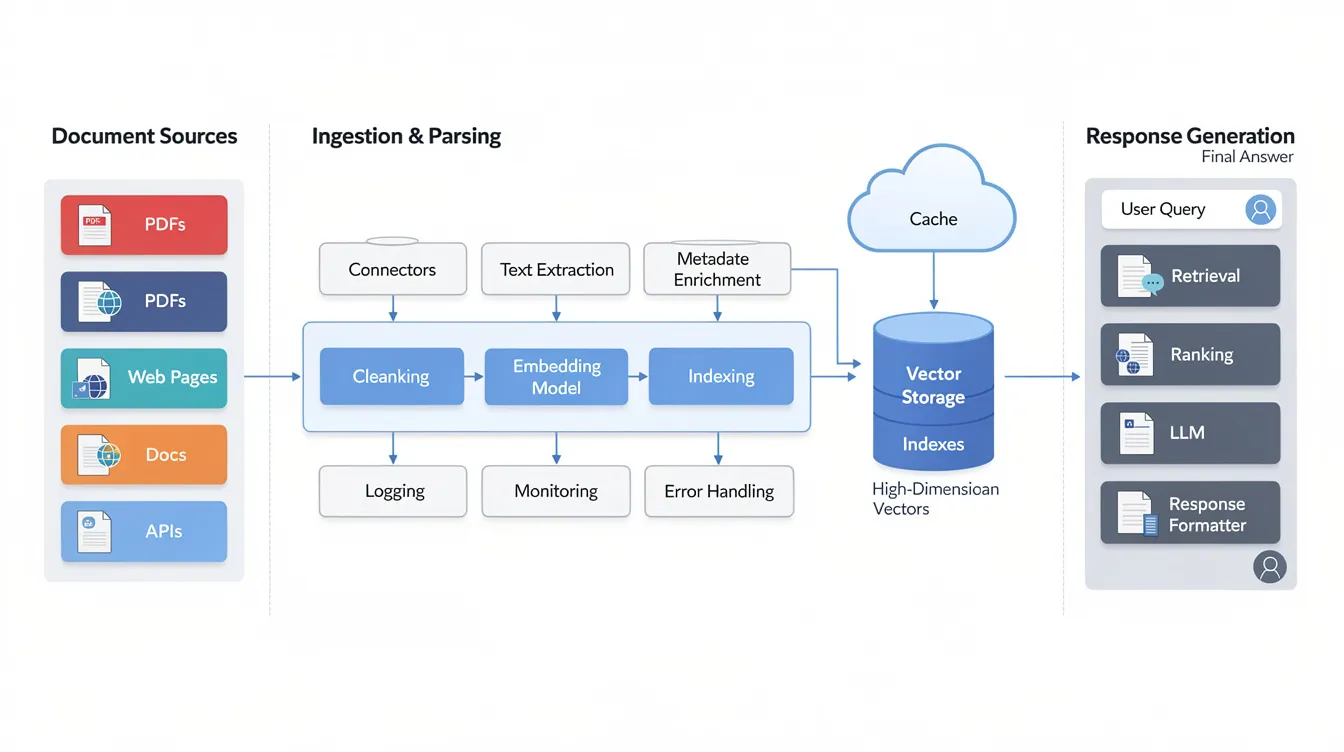
A RAG system comprises several core components working in sequence. First, an information retrieval component ingests your quality documentation-procedures, work instructions, audit reports, corrective action records-and processes them through an embedding model that converts plain text into numerical representations, creating a vector representation of each chunk. These vectors are stored in a vector database optimized for semantic search, enabling the system to retrieve relevant documents based on meaning rather than exact keyword matches.
When a user submits a query, the retrieval process identifies the most contextually appropriate document chunks, passes them as an augmented prompt to the generation engine (typically large language models like GPT-4, Claude, or self-hosted alternatives), and the LLM generates a response based on the retrieved information. The RAG process includes data retrieval, augmentation, and generation-three distinct stages that each require careful configuration for compliance-sensitive environments.
This approach differs fundamentally from traditional document management systems. Conventional QMS platforms provide storage, version control, and keyword-based search. But compliance queries use a mix of formal standards terminology and colloquial employee phrasing-a quality engineer might search for “what to do when a supplier delivers defective materials” rather than “clause 8.4 supplier nonconformity procedure.” Semantic search bridges this gap, dramatically improving recall rates and reducing the cognitive load of manual document hunting.
RAG enhances chatbot capabilities with real-time data access, meaning quality teams get instant, cited answers rather than spending time navigating folder structures. This directly supports the continual improvement principles embedded in ISO 9001 by making historical corrective actions, lessons learned, and risk assessments immediately accessible for business decisions.

ISO 9001 IMS Documentation Structure
ISO 9001 requires documented information management as part of Quality Management Systems. The international standard mandates a structured hierarchy of documentation: quality manuals defining organizational scope and policy, procedures detailing process execution, work instructions providing step-by-step operational guidance, and records serving as evidence of conformity. ISO documents have a strict hierarchy that needs to be preserved during processing-a RAG system must understand that a work instruction sits beneath a procedure, which sits beneath a policy.
When organizations integrate multiple management systems-combining ISO 9001 (Quality) with ISO 14001 (Environment) and ISO 45001 (Occupational Health and Safety)-the documentation volume multiplies. Environmental management systems introduce environmental policy documents, impact assessments, and environmental performance monitoring records. Occupational health and safety standards add risk registers, emergency planning procedures, and incident reports. The Annex SL high-level structure across these ISO management systems makes integration feasible by standardizing clause numbering, but the sheer volume of cross-referenced documentation makes manual retrieval increasingly impractical for complex organisations.
ISO 14001 has been recognized since 1996 and remains the only certifiable standard in the ISO 14000 family, with recent updates placing added emphasis on climate change within environmental management expectations. ISO 14001 certification is valid for three years and requires annual surveillance audits-meaning organizations must maintain constant readiness to produce relevant documents on demand. A RAG system designed for IMS environments must handle these cross-standard relationships, enabling a quality officer to query across safety, environmental, and quality domains simultaneously while the system retrieves from multiple data sources.
This documentation complexity sets the stage for understanding the technical architecture required to serve Singapore-based organizations, where regulatory vocabulary includes terms from WSH Act, bizSAFE, NEA, and MOM frameworks alongside ISO terminology.
Technical Architecture and Integration Strategies
Moving from conceptual understanding to practical system design, the architecture of a RAG system for IMS must address three interconnected layers: data source integration, embedding and storage infrastructure, and a security framework that satisfies both ISO requirements and local data protection legislation.
Data Source Integration
The foundation of any effective RAG system is its data sources. For an IMS context, these include quality management documents across all integrated standards, audit reports from internal audits and external certification assessments, corrective action and preventive action (CAPA) records, training materials, management review minutes, and customer feedback documentation. RAG systems retrieve data from multiple sources for complex queries, so the ingestion architecture must often process vast amounts of documentation across integrated standards.
A well-defined ingestion process is essential for maintaining data quality in compliance systems. The document processing pipeline must handle various formats-PDFs, Word documents, spreadsheets, scanned images requiring OCR-and convert them into consistently structured chunks. Metadata enrichment involves tagging chunks with relevant fields for effective retrieval: document type, process owner, revision date, publication date, applicable standard (ISO 9001, 14001, 45001), and access classification level.
Integration with existing QMS software requires API bridges that synchronize in real time. When a new version of a procedure is approved in your document control system, the RAG pipeline must automatically re-ingest, re-embed, and replace the outdated chunks. This ensures the system never retrieves superseded procedures-a scenario that could cause compliance failures during audits.
Embedding and Vector Database Setup
Selecting the right embedding model determines how effectively the system can use machine learning to match user queries to relevant data. For IMS environments in Singapore, the model must handle technical quality management terminology, safety and environmental management vocabulary, Singapore English conventions, and ideally support multilingual queries in Mandarin and Malay. Embedding models convert data into numerical representations for RAG, creating vector representations that capture semantic meaning rather than surface-level word matching. This also lets teams adapt to domain-specific content without full fine-tuning of the underlying foundation models.
RAG systems use vector databases to store numerical data representations. The choice of vector database significantly impacts performance, scalability, and compliance posture, especially because retraining or heavily customizing models can be resource-intensive for many organizations:
-
FAISS: High-performance open-source option from Meta, excellent for large-scale similarity search but requires manual implementation of access controls and metadata filtering
-
Weaviate: Supports hybrid search combining dense and sparse retrieval techniques to improve accuracy, includes built-in RBAC, and handles multi-tenancy well
-
Chroma: Lightweight and fast for prototyping with smaller corpora, but performance can decline at millions of vectors unless carefully optimized
-
Qdrant: Strong filtering capabilities on metadata, good latency characteristics, supports on-premises deployment
Chunk size configuration matters significantly. Too large, and retrieval loses precision-returning entire sections when only a paragraph is relevant. Too small, and context is lost. For ISO documentation, a chunk size of 500–1,000 tokens with 100–200 token overlap typically balances precision and more context preservation. Each chunk should inherit its parent document’s metadata so the retrieval process can filter by standard, department, or revision status.
Implementing hybrid retrieval strategies can mitigate retrieval failures in compliance systems. Combining BM25 keyword matching with dense vector search ensures that exact terminology matches (like specific clause numbers) are captured alongside semantically similar content. A reranker layer further refines search results before the generation stage.
Security and Compliance Framework
Any RAG system processing IMS documentation in Singapore must comply with the PDPA, which governs collection, use, disclosure, and retention of personal data. When using cloud providers or external databases for hosting vector databases or calling embedding APIs, organizations must ensure those providers hold ISO/IEC 27001 certification and comply with data transfer obligations.
Key security requirements include:
-
Role-Based Access Control (RBAC): Safety incident reports and environmental nonconformity records may contain sensitive information requiring restricted access. The RAG system must enforce the same access permissions as your existing document control system
-
Encryption: Data at rest (stored embeddings, original data, metadata) and in transit must be encrypted to meet both PDPA Protection Obligation and ISO 27001 controls
-
Audit Logging: Every query, retrieval event, and generated response must be logged with timestamps and user identification-essential for demonstrating compliance during certification audits
-
Data Residency: For organizations with strict data sovereignty requirements, on-premises or air-gapped RAG deployments keep all data within controlled perimeters
RAG architectures should be designed to prioritize compliance and audit readiness. Precise retrieval is critical to prevent compliance failures during audits-if an auditor asks for evidence of a corrective action and the system retrieves an outdated or incorrect document, the consequences can be severe.
Implementation Process and Best Practices
With the technical architecture established, the practical question becomes: how do you actually deploy a RAG system for IMS without disrupting existing quality operations? The answer lies in a disciplined, phased approach that builds confidence incrementally.
Phased Implementation Approach
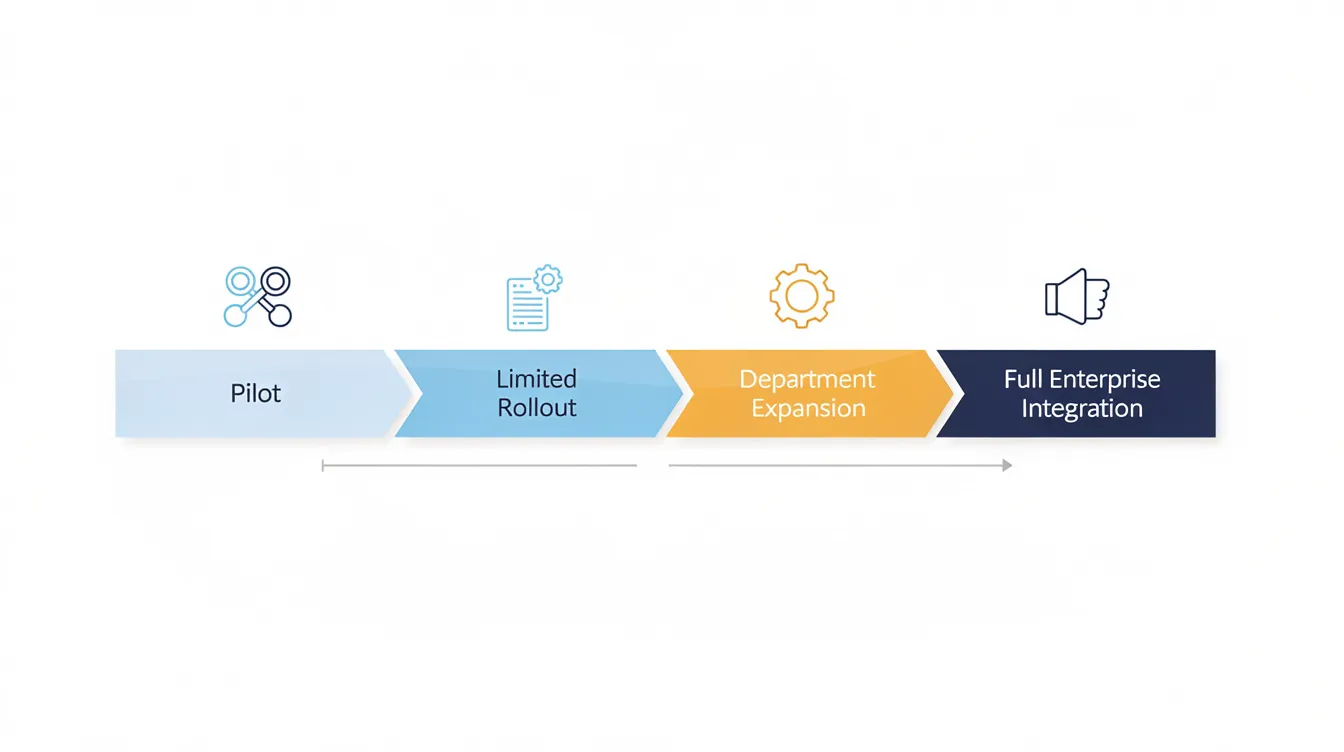
A phased rollout reduces risk and allows teams to validate the system against real compliance scenarios before full deployment.
Phase 1: Pilot with Critical Procedures (Weeks 1–6) Select 50–100 of your most frequently accessed documents-corrective action procedures, key work instructions, and recent audit reports. Configure the embedding pipeline, vector database, and a basic chat interface. Test with a small group of quality officers to evaluate the system’s performance in answering questions from real users and accurately retrieving relevant information for common user queries. Measure retrieval accuracy, response latency, and user satisfaction. Strict prompt engineering is necessary to ensure accurate answers from language models during this validation phase.
Phase 2: Expand to Full Documentation (Months 2–6) Extend ingestion to your complete ISO 9001 documentation suite, plus integrated ISO 14001 and ISO 45001 documentation. Add training data from onboarding materials and safety briefings. Refine chunk size, embedding model selection, and retrieval parameters based on Phase 1 feedback. Better retrieval quality creates more value from existing IMS documentation because teams can reuse approved knowledge faster. Improving safety culture and compliance often involves training and advisory services-integrate these materials into the knowledge base.
Phase 3: Integration with Audit and Improvement Processes (Months 6–12) Connect the RAG system with your audit management workflow so that auditors can query the system directly during internal audits. Feed nonconformity and CAPA data as new data enters the system. RAG systems can improve market analysis and product development-and similarly, they can surface patterns in recurring quality issues that manual review would miss.
Phase 4: Advanced Analytics and Predictive Insights (Month 12+) Layer predictive analytics on top of the RAG infrastructure. Use historical audit findings and nonconformity trends to flag potential risks before they become audit findings. RAG models can generate client-specific reports for financial analysts-the same capability can produce management review summaries, trend analyses, and certification readiness assessments tailored to specific domains within your IMS.
Regular monitoring and evaluation of the system are necessary to maintain compliance standards throughout every phase. Establish KPIs at the outset: search latency targets (under 3 seconds), retrieval precision benchmarks, document version accuracy rates, and user adoption metrics.
Technology Stack Comparison
The choice between open-source, enterprise, and hybrid solutions depends on organizational size, budget, internal technical capability, and compliance requirements.
|
Criterion |
Open-Source (LangChain + Chroma) |
Enterprise (Azure AI / AWS Bedrock) |
Hybrid Solution |
|---|---|---|---|
|
Initial Cost |
Low ($5,000–15,000) |
High ($50,000–150,000) |
Medium ($20,000–60,000) |
|
Customization |
High flexibility, full control over chunk size, embedding model, retrieval logic |
Limited customization within platform constraints |
Balanced-core open-source with managed services for specific domains |
|
Support |
Community-based; requires internal engineering expertise |
24/7 enterprise support with SLAs |
Mixed support model |
|
Compliance |
Manual RBAC, encryption, audit log configuration |
Built-in compliance tools, certifications |
Configurable compliance with vendor-backed security |
|
Scalability |
Requires deliberate optimization at scale |
Designed for enterprise-scale from day one |
Scales incrementally |
|
Time to Deploy |
4–8 weeks with experienced team |
2–4 weeks with vendor support |
6–10 weeks |
Open-source stacks using LangChain for orchestration, SentenceTransformers for embeddings, and Weaviate or Qdrant for vector storage provide maximum flexibility and are often more viable for SMEs and contractors with lighter IT budgets. Enterprise platforms offer faster deployment and built-in compliance but at significantly higher cost and with less control over individual components.
For Singapore-based organizations pursuing ISO certification, the hybrid approach often delivers the most value: open-source retrieval and generation components paired with a managed, certified cloud infrastructure that satisfies PDPA and ISO 27001 requirements without requiring a full DevOps team.
Cost-benefit evidence: A pharmaceutical organization that deployed a RAG chatbot over SOPs, policies, and compliance documents achieved 75% reduction in search time, 95% answer accuracy, 40% faster onboarding, and full investment payback in 8 months-with zero security incidents over 18 months.
Common Challenges and Solutions
Deploying generative AI models within compliance-governed environments introduces specific challenges that differ from general-purpose AI applications. Singapore organizations implementing RAG for quality management consistently encounter these obstacles.
Document Quality and Standardization Issues
The problem: Legacy IMS documentation often exists in inconsistent formats-some procedures in Word, others as scanned PDFs, some as handwritten checklists. Inconsistent terminology across departments (one team’s “inspection record” is another’s “quality check form”) degrades embedding quality and retrieval accuracy.
The solution: Before any RAG deployment, conduct a document standardization audit. Create unified templates for procedures and work instructions with consistent section headings, terminology, and metadata fields. Process scanned documents through OCR with human verification. Tag every document with structured metadata: applicable standard, process owner, revision date, access level. This preprocessing investment directly determines whether the context retrieval layer can deliver high quality outputs. ISO 14001 certification can enhance business sustainability-and the same discipline applied to environmental documentation ensures the RAG system handles environmental management content as reliably as quality documentation.
User Adoption and Change Management
The problem: Quality officers and safety managers accustomed to manual folder navigation may resist or distrust AI-generated answers—especially in environments where incorrect information carries compliance consequences, and they may hesitate to rely on the system for accurate responses in compliance scenarios. Hallucinations in RAG systems can lead to compliance risks and inaccuracies, making trust a legitimate concern.
The solution: RAG reduces AI hallucinations by anchoring responses in factual data, but this must be demonstrated, not just claimed. Start with super-users-experienced quality professionals who can validate the system’s responses generated against their domain knowledge. Require mandatory citations in every generated response so users can verify sources. Build dashboards showing measurable improvements: “average time to find a procedure dropped from 8 minutes to 45 seconds.” When the system can empower employees to answer questions faster and with documented accuracy, adoption follows. This transition process works best when supported by gradual rollout and visible success metrics.
Integration with Legacy QMS Systems
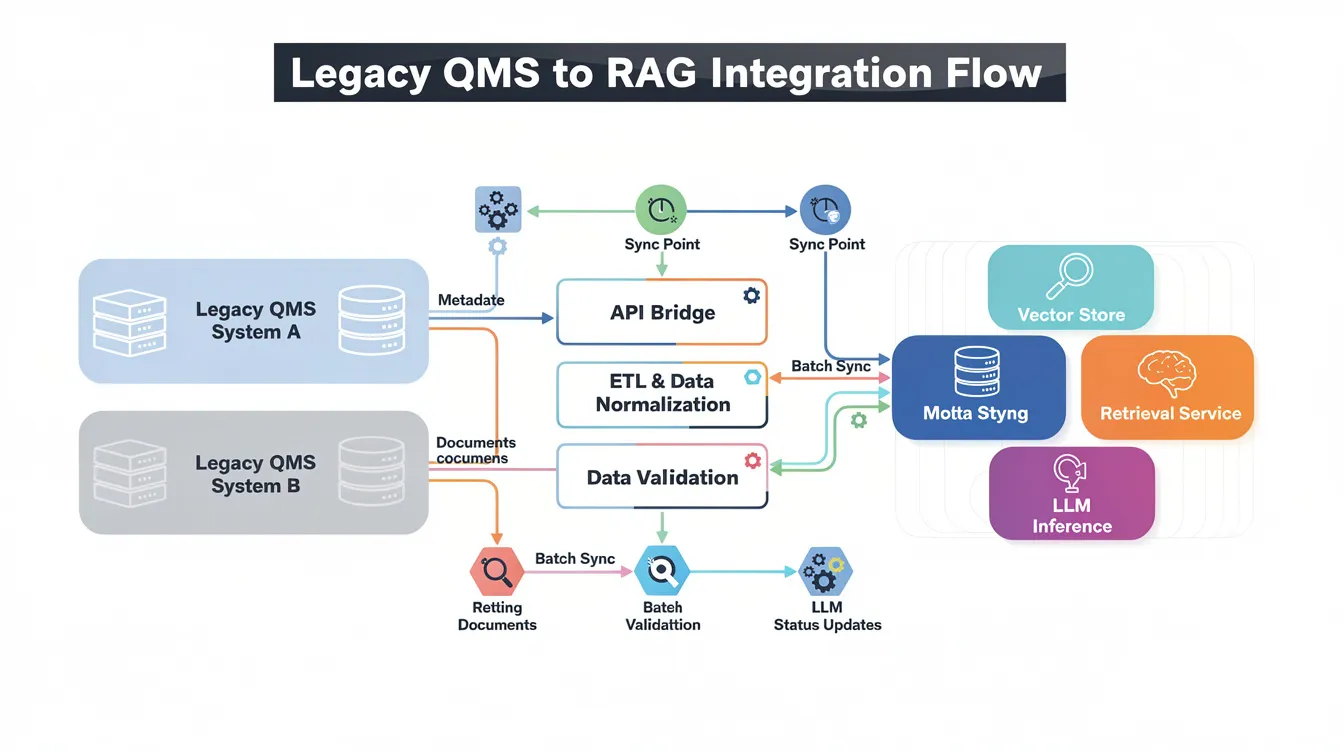
The problem: Most organizations already run established QMS platforms with years of historical data, audit trails, and approval workflows. A RAG system that operates in isolation creates a parallel information environment, defeating the purpose of integrated management systems.
The solution: Design API bridges that treat your existing QMS as the authoritative source. The RAG system should pull from-not replace-your document control platform. When external data enters the QMS (a new version of a procedure is approved, a corrective action is closed), automated triggers re-ingest affected documents into the RAG pipeline. Historical audit trails and version histories must migrate intact. For organizations using established safety management systems, the RAG layer adds intelligent retrieval on top of existing workflows rather than replacing them.
RAG systems connect models with real-time external data, but the synchronization mechanism must be robust enough that the system never serves stale content. Version-aware metadata filtering ensures that only current, approved documents appear in retrieval results-a critical safeguard for the certification process.
Conclusion and Next Steps
A RAG system transforms ISO 9001 compliance from reactive document searching into proactive knowledge management. By combining semantic search with generative AI models grounded in your actual IMS documentation, organizations gain the ability to surface relevant responses in seconds, maintain continually improving compliance postures, and support internal audits with instantly verifiable, cited evidence. The technology is mature enough for production deployment, the cost-benefit case is proven across industries, and the architecture patterns for compliance-sensitive environments are well established.
To move forward:
-
Conduct a document audit and readiness assessment. Inventory your IMS documentation across ISO 9001, 14001, and 45001. Identify format inconsistencies, legacy documents requiring OCR, and metadata gaps. ISO 14001 aims to reduce environmental impacts effectively-ensure your environmental documentation is as retrieval-ready as your quality documentation.
-
Define success metrics with stakeholders. Establish measurable targets for search latency, retrieval accuracy, onboarding time reduction, and audit response time. Use these to justify investment and track progress.
-
Select a pilot scope. Choose 50–100 critical documents spanning quality procedures, safety protocols, and environmental records. Deploy a minimal RAG pipeline and validate against real user queries from quality officers and auditors.
-
Engage qualified consultants for architecture design. The intersection of RAG technology with ISO compliance requirements demands expertise in both specific domains. Architectural decisions made early-embedding model selection, vector database configuration, security framework-determine long-term system viability.
Related topics worth exploring include integration with other ISO standards through unified IMS frameworks, AI-powered audit preparation workflows, predictive quality analytics using historical nonconformity data, and the emerging trend of graph-based retrieval (GraphRAG) for mapping relationships between processes, standards, and improvement actions across your entire management systems landscape.
Additional Resources
-
Singapore SME budgeting guide for ISO certification (9001, 14001, 45001)
-
ISO management system standards overview and integration guidance
-
ROI calculation templates based on documented case studies showing 75% search time reduction and 8-month payback periods
-
Technical framework comparisons for open-source RAG stacks and enterprise platforms suited to compliance-driven environments