
Introduction
Automating ISO 27001 information security audits across converged Operational Technology (OT) and Information Technology (IT) environments is now a critical priority for Singapore’s industrial operators. As manufacturing plants, utilities, ports, and building management systems merge their traditionally isolated OT networks with enterprise IT infrastructure, the attack surface expands dramatically-and manual audit processes cannot keep pace. Automated ISO 27001 auditing in OT-IT environments reduces manual audit time by 60–75% while enabling continuous compliance monitoring across Singapore’s diverse industrial landscape.
This article covers the full scope of automating ISO 27001 compliance in converged OT-IT settings: from understanding why Singapore’s infrastructure convergence demands new approaches, through the technical capabilities of automation tools, to a phased implementation framework tailored for local regulatory requirements. It is written for facility managers, IT security officers, compliance professionals, and industrial safety consultants responsible for information security management systems in sectors like manufacturing, construction, utilities, and critical infrastructure.
ISO 27001 requires comprehensive documentation and regular reviews, and auditors expect evidence of operational controls, not just documentation. Automation bridges this gap by delivering continuous control monitoring, automated evidence collection, and real-time compliance dashboards-replacing weeks of spreadsheet-based preparation with always-on audit readiness.
After reading this article, you will understand:
-
How OT-IT convergence in Singapore creates specific ISO 27001 compliance challenges
-
What key capabilities automated audit platforms deliver for industrial environments
-
A structured framework for deploying compliance automation across Singapore facilities
-
Practical solutions to legacy integration, operational disruption, and skills gap challenges
-
Quantitative benchmarks for cost savings, time reduction, and security posture improvement
Understanding OT-IT Convergence in Singapore Infrastructure
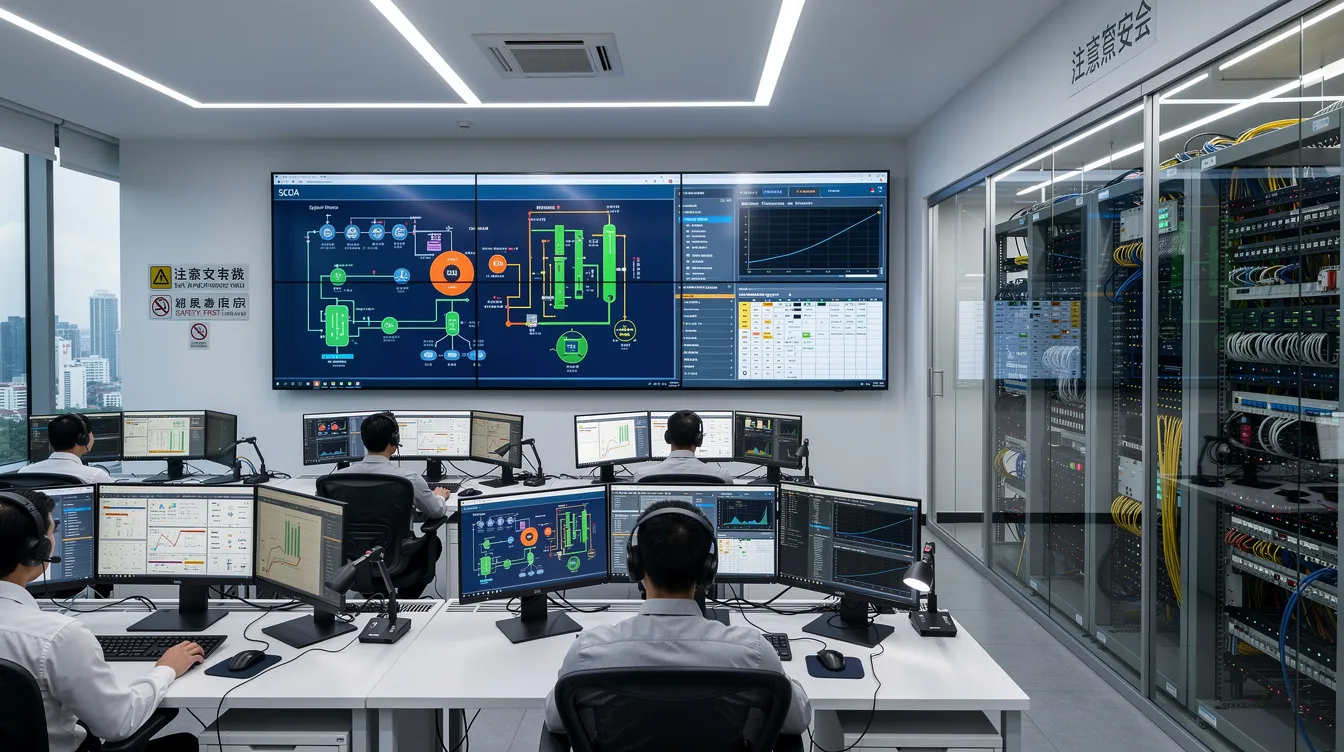
Operational Technology refers to the hardware and software that monitors or controls physical devices and industrial processes-SCADA systems, programmable logic controllers (PLCs), sensors, human-machine interfaces (HMIs), and industrial controllers. Information Technology encompasses the business-side systems: servers, enterprise applications, analytics platforms, and corporate networks. In Singapore’s industrial context, these domains were historically air-gapped. OT systems ran proprietary protocols on isolated networks, while IT operated in standard enterprise environments. Industry 4.0 initiatives have fundamentally merged these worlds, connecting factory floor controllers to cloud infrastructure, feeding sensor data into enterprise analytics, and enabling remote management of physical systems across distributed teams.
Singapore’s Critical Infrastructure Landscape
Singapore’s Smart Nation initiative has accelerated OT-IT integration across every major infrastructure sector. Manufacturing facilities now connect production lines directly to enterprise resource planning systems. Building Management Systems control HVAC, lighting, and fire detection, and BMS integrates these subsystems into a single management interface-often accessible via corporate IT networks. Utilities link water treatment SCADA systems and power grid controllers to centralized monitoring platforms. Ports and logistics hubs connect container handling equipment to global digital services.
The Cyber Security Agency of Singapore (CSA) released its OT Cybersecurity Masterplan 2024, mandating secure-by-deployment principles across OT system lifecycles-from design through deployment, maintenance, and decommissioning. Singapore’s Cyber Security Agency provides guidance for Critical Information Infrastructure cybersecurity practices, and operators designated under the Cybersecurity Act face mandatory reporting, incident response, and audit obligations. The OT Cybersecurity Competency Framework (OTCCF) identifies security monitoring and assessment as a core competency area, meaning continuous assessment must be embedded into operational roles. Aligning automation efforts with Singapore’s Health, Safety, and Environment regulations is crucial for compliance across these sectors.
Unique Challenges in Converged Environments
Legacy OT systems present fundamental security challenges. Many were designed decades ago without cybersecurity considerations: weak or no encryption, limited patchability, and reliance on insecure protocols like Modbus, which are commonly used in BMS and industrial control environments. Legacy BMS often lack modern cybersecurity features entirely. Real-time operational requirements conflict with traditional IT security practices-you cannot run aggressive vulnerability scans on a PLC controlling a water treatment process without risking operational disruption. Operational Technology systems prioritize availability and safety over data confidentiality, creating a fundamentally different risk profile than standard IT environments.
Manual auditing approaches fail in these complex environments for several reasons. OT devices often lack accessible logging, configuration data is stored in proprietary formats, and physical access to industrial sites is time-intensive. Internal audits that rely on spreadsheets and periodic site visits cannot detect configuration drift between audit cycles, miss unmanaged or shadow devices, and produce evidence that may be stale by the time a certification body reviews it. With 70,200 systems compromised in Singapore in 2023 alone, the threat landscape demands real-time visibility, not point-in-time snapshots.
Automated Audit Processes for ISO 27001 in OT-IT Systems
The challenges of converged OT-IT environments make automation not just desirable but necessary for maintaining ISO 27001 compliance. Automation tools provide continuous monitoring to detect misconfigurations, streamline evidence collection and monitoring, and deliver the real-time visibility that manual processes cannot achieve. ISO 27001 automation tools streamline compliance tasks and reduce errors across both domains.
Continuous Monitoring Capabilities
Continuous monitoring ensures real-time visibility of control effectiveness across both OT and IT networks. Best-in-class automation platforms use passive monitoring of network traffic in OT zones to identify assets-including unmanaged or legacy devices-establish behavioral baselines, and detect protocol misconfigurations. Continuous monitoring in IT/OT environments should involve non-intrusive mechanisms that do not disrupt critical systems. This means tools must respect safety and availability constraints: monitoring SCADA systems, PLCs, and industrial control networks without introducing latency or instability.
Automated evidence collection spans both OT protocols (Modbus, DNP3, BACnet) and standard IT systems, pulling configuration snapshots, access control records, security events, and change logs into a centralized evidence management platform. Continuous monitoring detects misconfigurations in real time and alerts users to control deviations immediately, enabling rapid corrective actions rather than discovering gaps weeks before an audit. Real-time alerts from continuous monitoring improve risk management by ensuring that information security risks are identified and addressed continuously. ISO 27001 requires continuous monitoring of implemented controls, and automation makes this feasible even across geographically distributed business units.
Evidence collection should remain separate from evidence modification to maintain integrity-a critical principle for audit credibility. Platforms that enforce this separation provide tamper-evident audit trails that external auditors trust.
Risk Assessment Automation
Automated vulnerability scanning across OT-IT boundaries requires careful design. Scanning must respect OT constraints-polling frequency limits, non-intrusive protocols, and vendor guidance-while still providing comprehensive coverage. Dynamic risk scoring based on operational criticality and threat intelligence helps security professionals prioritize remediation: a vulnerability on a PLC controlling chemical processes scores differently than the same CVE on an office workstation.
Risk assessments should consider whether an asset is reachable from external networks or only locally accessible, factoring in network segmentation effectiveness. Automated risk register updates capture new vulnerabilities, track remediation progress, and maintain the living documentation that ISO 27001 demands. Risk treatment plans are generated and tracked automatically, with approval workflows ensuring control owners review and accept residual operational risk. Regular security assessments improve BMS resilience against cyber threats, and automation ensures these assessments happen continuously rather than annually.
Compliance Documentation and Reporting
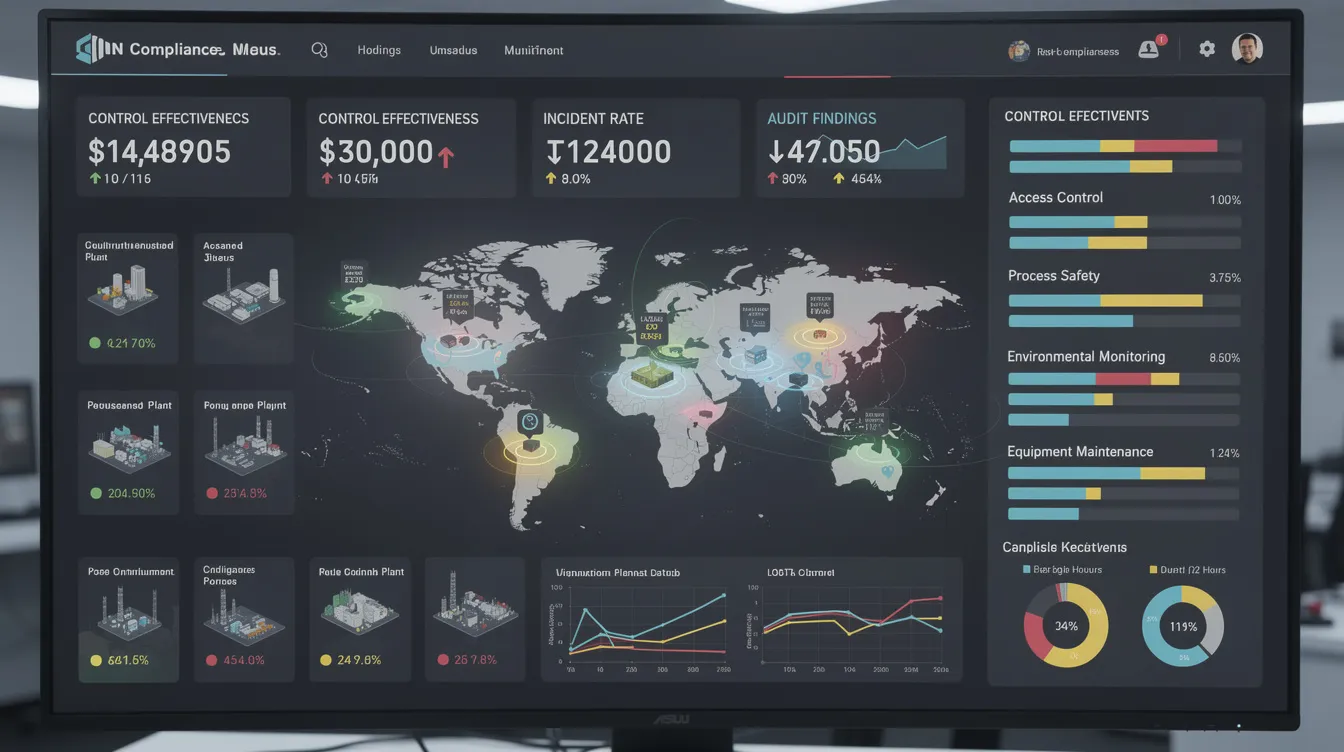
ISO 27001 implementation often faces documentation overload challenges. Automation addresses this directly through automated generation of audit trails and evidence packages mapped to specific controls in Annex A. Real-time dashboards highlight compliance gaps for rapid remediation, showing control effectiveness across all facilities in a single view. ISO 27001 automation tools provide real-time dashboards for compliance status, eliminating the manual effort of aggregating spreadsheets before each audit cycle.
ISO 27001 audits require precise mapping of controls to local regulations and standards in Singapore. Mapping evidence for ISO 27001 controls must account for specific features of both IT and OT environments-a platform that maps control evidence to ISO 27001, IEC 62443, and Singapore’s CSA Codes of Practice simultaneously saves significant duplication. ISO 27001 requires maintaining a Statement of Applicability (SoA), and automation tools can dynamically update the SoA as the control environment changes. Automation tools provide built-in policy templates for faster compliance, giving organizations a clear starting point for policy distribution and documentation.
Cross-functional coordination is essential for ISO 27001 compliance, and automated platforms facilitate this by providing shared dashboards, enabling teams to assign tasks, and tracking task management across OT engineers, IT security staff, and compliance professionals.
Implementation Framework for Singapore Industrial Environments
Moving from understanding automation capabilities to deploying them requires a structured framework that accounts for Singapore’s regulatory environment, the diversity of industrial OT systems, and the practical realities of existing systems in operational facilities. Automated tools can achieve ISO 27001 readiness in 4–5 months when following a phased approach.
Phase 1: Assessment and Planning
Begin with a comprehensive OT-IT asset inventory across all relevant facilities-manufacturing plants, utility stations, building BMS installations, port infrastructure. This inventory must capture all networked devices, legacy systems, software dependencies, and network architecture including segmentation boundaries. Singapore’s OT Expert Panel guidance recommends including security policies, architecture documentation, physical security measures, and access controls in the assessment scope.
Conduct a gap analysis comparing current state against ISO 27001:2022 requirements, paying particular attention to clauses around ISMS context, risk management, operational controls, and performance evaluation as they apply to OT environments. Map findings against Singapore-specific requirements: CSA Codes of Practice, Critical Information Infrastructure (CII) obligations under the Cybersecurity Act, and sector-specific guidelines from regulators like PUB and EMA.
Develop an automation roadmap that classifies controls into three categories: fully automatable (configuration monitoring, vulnerability management, access control logging), partially automatable (incident response procedures, business continuity testing), and necessarily manual (management reviews, security awareness training delivery, physical security inspections). Prioritize controls with safety or uptime implications. Automated workflows in auditing should include exception management to address non-compliance risks appropriately.
Phase 2: Tool Selection and Integration
Evaluation criteria for automation platforms must address OT-specific requirements: agent-less capabilities (many OT devices cannot support installed agents), protocol support across Modbus, DNP3, OPC UA, and BACnet, ability to function in air-gapped or heavily segmented networks, and compliance with Singapore’s data sovereignty regulations. Automated control validation should respect safety and availability needs specific to Operational Technology environments.
Integration planning must account for connections to existing SCADA systems, manufacturing execution systems (MES), and ERP platforms without introducing risk. Pilot implementation should begin in non-critical OT zones to verify that continuous monitoring tools do not cause interference, unexpected latency, or operational disruption. Staff training is critical-automating ISO 27001 audits in Operational Technology and Information Technology requires bridging different operational cultures between OT operators and IT security teams. Change management must secure buy-in from engineers, operations staff, safety personnel, and compliance leadership. Maintaining training records throughout this process supports ISO 27001 evidence requirements.
When choosing an ISO certification body in Singapore, ensure they have experience auditing OT-IT converged environments and understand the automated evidence formats your platform produces.
Phase 3: Deployment and Optimization
Staged rollout proceeds by facility, OT zone, or asset class-whichever segmentation reduces risk most effectively. Configure automated monitoring for 24/7 continuous compliance tracking across all enrolled systems. Establish alert thresholds calibrated to minimize false positives while catching genuine control deviations. Define response procedures specifying which triggers escalate to operations teams, security professionals, or external regulators.
Automation can cut audit preparation time by weeks once fully deployed. Monitor performance metrics: audit findings trends, time for audit preparation, staff hours consumed, frequency of exceptions or non-conformities. Use dashboards showing control health across all sites and build feedback loops to refine monitoring baselines, tune alert sensitivity, and drive continuous improvement. Certification readiness becomes a persistent state rather than a periodic scramble.
Technology Stack Comparison
Selecting the right tech stack depends on your organization’s OT maturity, compliance frameworks, and deployment constraints. The following comparison provides a clear starting point:
|
Platform Type |
OT Integration |
Singapore Compliance |
Deployment Complexity |
Cost Range |
|---|---|---|---|---|
|
Enterprise GRC |
Limited |
High |
Medium |
SGD 50k–200k |
|
Specialized OT Security |
High |
Medium |
High |
SGD 80k–300k |
|
Hybrid Solutions |
High |
High |
Medium |
SGD 60k–250k |
Enterprise GRC platforms offer strong regulatory compliance mapping and policy distribution but often lack native OT protocol support-requiring additional integration layers. Specialized OT security platforms like Armis Centrix and Industrial Defender excel at asset discovery, continuous monitoring, and anomaly detection in industrial networks but may require supplementary compliance frameworks mapping. Hybrid solutions balance both domains and often provide the strongest fit for organizations managing converged environments. Cost estimates should include operational overhead: staff training, maintenance, and potential retrofit of legacy equipment. Organizations should factor in whether their cloud environments or on-premises deployments affect licensing and data sovereignty compliance.

Common Challenges and Solutions in Singapore Context
Deploying compliance automation in OT-IT environments surfaces predictable challenges. Understanding these in advance-and having proven solutions-prevents costly delays and ensures security measures deliver value rather than creating new problems. For broader context on preparing for safety audits in Singapore industrial settings, organizations should consider both cybersecurity and physical safety dimensions.
Legacy OT System Integration
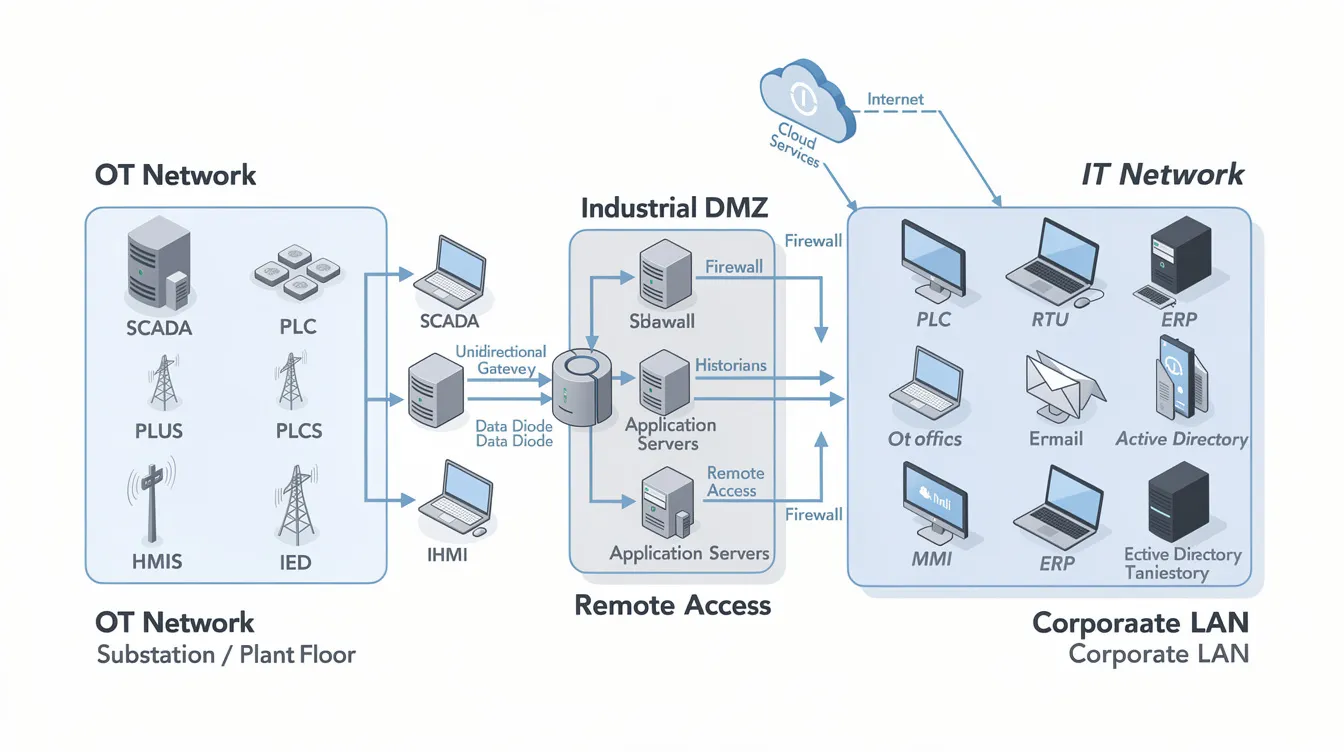
Many OT systems were never designed for monitoring, remote configuration, or integration with modern information security management systems. The solution lies in implementing network segmentation and protocol gateways that surface monitoring data without modifying the underlying devices. Industrial DMZ zones create secure boundaries between OT and IT networks. Passive network taps or span ports capture traffic for analysis without touching operational data flows. Secure remote access solutions with session recording replace shared local administrator credentials, creating audit trails while maintaining minimal disruption to existing operations.
Operational Disruption Concerns
Active vulnerability scanning or patching in OT environments can risk unintended shutdowns affecting safety and production. The solution involves passive monitoring approaches for day-to-day visibility and scheduling active scans exclusively during planned maintenance windows. Testing in secure lab environments before applying changes to production systems reduces risk. Fail-safe procedures and rollback capabilities ensure that any automated action can be reversed without impacting operations. This approach maintains the availability and safety priorities that define OT environments while still delivering the vulnerability management data ISO 27001 demands.
Regulatory Compliance Complexity
Singapore’s regulatory landscape includes overlapping requirements: ISO 27001 (often voluntary but increasingly expected), CII obligations under the Cybersecurity Act, CSA Codes of Practice, and sector-specific regulations. The solution is deploying automation tools that map multiple compliance frameworks simultaneously, generating unified control evidence that satisfies ISO 27001, local cybersecurity regulations, and sector guidelines from a single evidence base. Pre-configured compliance templates tuned to Singapore laws-including notification requirements, incident response timelines, and reporting formats-reduce manual overhead significantly. Organizations pursuing the Singapore Cyber Trust Mark can leverage the same evidence base to demonstrate their security posture.
Skills Gap and Resource Constraints
OT cybersecurity expertise remains scarce in Singapore despite the OTCCF framework’s efforts to build local workforce capacity. Smaller manufacturing or construction firms often lack dedicated security staff entirely. The solution involves partnering with specialized consultancies for expert guidance on implementation, audit preparation, and ongoing support. Managed service options enable smaller industrial facilities to access continuous compliance capabilities without building internal teams. Upskilling existing engineers and safety staff through structured security awareness training programs builds long-term organizational capability. For organizations in the construction sector, understanding broader safety management systems creates synergies between physical safety and cyber risks management.
Addressing these challenges systematically positions organizations not just for certification readiness but for genuine operational excellence in managing information security across converged environments.
Conclusion and Next Steps
Automating ISO 27001 audits transforms information security management in OT-IT environments from a reactive, resource-intensive exercise into a proactive, continuous compliance capability. For Singapore’s industrial operators-navigating Smart Nation digitalization, expanding cyber threats, and increasingly stringent regulatory requirements-this shift is not optional. Automation delivers measurable key benefits: case studies report audit preparation time reductions from 12 weeks to 3.5 weeks, compliance gap elimination between successive audits, and annual labor cost reductions of 50–70%. Organizations adopting OT device security with built-in automation report up to USD 3.8 million in economic impact over five years, including USD 1.1 million in operational savings from reduced manual work and tool consolidation. Continuous monitoring helps identify vulnerabilities before audits, keeping organizations audit ready at all times. Protecting sensitive information, intellectual property, and operational continuity depends on maintaining a strong, continuously verified security posture.
To begin implementing automated ISO 27001 auditing across your OT-IT environment:
-
Conduct an OT-IT asset inventory and risk assessment – Document all networked devices, legacy systems, and network architecture to establish your comprehensive framework for ISO 27001 compliance scope
-
Evaluate automation platforms against Singapore regulatory requirements – Assess tools for OT protocol support, agent-less deployment, data security compliance, and multi-framework mapping capabilities
-
Develop a phased implementation plan with pilot facility selection – Start with non-critical OT zones, validate that monitoring tools operate without disruption, and establish baselines before scaling
-
Engage with experienced consultancies for specialized OT security expertise – Organizations like MOSAIC Ecoconstruction Solutions provide advisory, auditing, and certification support tailored to Singapore’s industrial environments, helping bridge the gap between IT security standards and OT operational realities
Related topics worth exploring include industrial cybersecurity frameworks such as IEC 62443, Singapore Smart Nation security initiatives, and operational resilience planning. Understanding how these areas intersect with ISO 27001 compliance automation provides a foundation for comprehensive data breaches prevention and long-term information security strategy across Singapore’s critical infrastructure.
Additional Resources
-
Singapore Cybersecurity Agency (CSA) – OT Cybersecurity Masterplan 2024 for guidelines on critical infrastructure protection and secure-by-deployment principles
-
ISO 27001:2022 control mapping templates – Available through automation platforms that align Annex A controls with OT-specific security standards and Singapore regulatory requirements
-
Industry-specific implementation checklists – For manufacturing and construction sectors, covering both physical safety and cybersecurity compliance requirements
-
Professional consultation services – For OT security audit automation, implementation advisory, and ongoing managed compliance support from specialized Singapore-based consultancies