Introduction
AI-driven ISO 9001 internal audits offer Singapore’s precision engineering firms a practical way to convert messy, unstructured workshop logs into structured, audit-ready compliance evidence – typically within 2–4 weeks of pilot deployment. With approximately 2,800 precision engineering firms operating across Singapore and the sector contributing S$55.0 billion in output, the volume of handwritten maintenance records, free-text operator notes, and scattered non-conformance reports generated daily is staggering. Structuring this unstructured data is no longer optional – it is a competitive and regulatory necessity.
This article is written for quality managers, internal auditors, audit managers, and compliance officers working in Singapore’s precision engineering sector. If your team spends days combing through paper logs and inconsistent digital records to prepare for ISO 9001 internal audits, this content addresses your exact pain point. It covers the AI technologies, implementation frameworks, Singapore-specific regulatory considerations, and practical challenges involved in transforming workshop logs into compliant, traceable documentation.
Using artificial intelligence AI, tools can automatically classify workshop records against ISO clauses to structure compliance data, and AI can process large text datasets quickly during audits – enabling internal audit teams to cut report drafting and evidence assembly time by 50–70%. AI can be employed to automatically generate audit packs containing pertinent findings before audits, fundamentally changing how audit planning and reporting work in precision engineering.
Here are the key outcomes you will gain from this article:
- Enhanced audit efficiency: Understand how AI automates repetitive tasks in evidence gathering, supports risk detection, and speeds up report drafting
- Improved compliance documentation: Learn how NLP and machine learning convert unstructured logs into ISO 9001-compliant records
- Reduced manual data processing: See how AI reduces time spent on manual data reviews by 30–40%
- Strengthened quality management systems: Discover how pattern recognition and continuous monitoring surface recurring issues for corrective action
Understanding AI-Driven ISO 9001 Internal Audit Processes
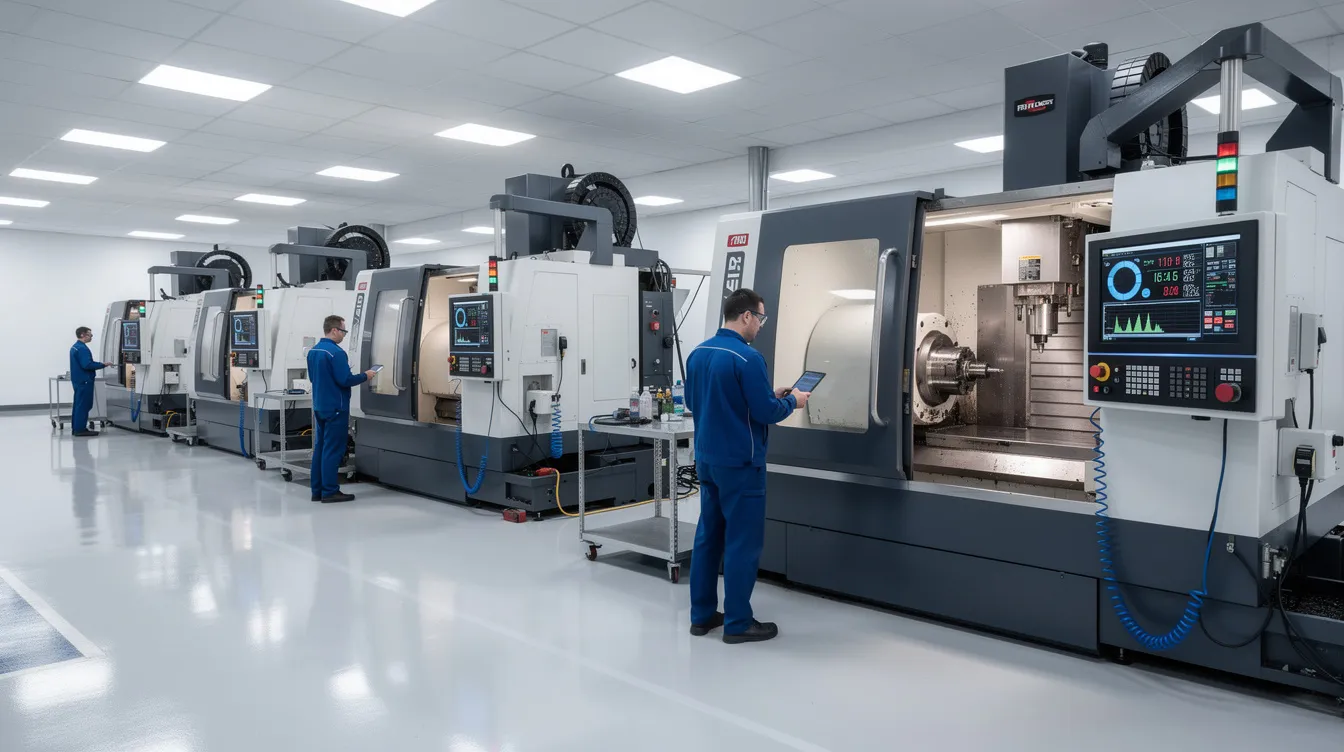
An AI-driven internal audit uses artificial intelligence – including natural language processing, machine learning, and large language model cognitive assistants – to assist human auditors in gathering evidence, classifying findings, mapping nonconformities to specific ISO 9001:2015 clauses, and generating audit reports; in more advanced setups, some tools can evolve toward agentic ai for limited multi-step audit support, but human oversight remains essential. ISO 9001 emphasizes process approach and evidence-based decision making, and effective adoption means understanding how AI outputs are produced, checked, and interpreted so they can support both reliably. For Singapore’s precision engineering sector, worth approximately S$16.8 billion in value-added and employing roughly 86,295 workers, these capabilities address a critical role: maintaining rigorous quality management systems despite rising business costs, labour shortages, and increasing customer demand for customization.
Core Components and AI Tools of AI-Enhanced Audit Systems
The technical backbone of an AI-enhanced audit function consists of three interconnected layers:
Natural Language Processing (NLP) handles the parsing and classification of free-text workshop logs. This includes named entity recognition for equipment IDs, failure modes, operator names, and corrective actions. NLP models should be tuned to engineering terminology – terms like “tool wear,” “spindle runout,” and “micron tolerance deviation” must be recognized accurately. Companies like Arkitekt AI have demonstrated that turning free-text technician notes into labeled, searchable datasets enables root-cause analysis that was previously invisible.
Machine learning algorithms power pattern recognition across large datasets of quality records. AI can detect recurrence patterns in workshop logs to highlight potential issues, and machine learning achieves 85% fraud detection accuracy in audits – a capability directly transferable to detecting anomalies in quality data. AI analyzes unstructured data for consistency and gaps, identifying missing fields, contradictory entries, and systematic process deviations.
Audit trail generation ensures every AI output links back to source documents, timestamps, and model versions. Data ingestion and processing must maintain clear tracking to ensure audit trails are verifiable. The ISO Auditing Practices Group guidance on digital processes specifically requires auditors to collect evidence on model type, training data, validation methods, and human fallback mechanisms.
Integration with Singapore’s Smart Nation Initiative
Singapore’s Precision Engineering Industry Digital Plan (IDP) under the SMEs Go Digital programme provides a structured pathway for firms to adopt digital tools, sensors, and data analytics. The Industry Transformation Map for precision engineering actively supports smart factory deployment and Industry 4.0 technology adoption – creating the digital infrastructure on which AI-driven audit processes depend. Government grants and technical assistance through agencies like A*STAR and SIMTech lower the barrier for smaller firms.
AI adoption in audits is projected to grow at 27.9% CAGR, yet currently only 39% of auditors currently use AI in their processes. This gap represents both an opportunity and urgency for Singapore’s precision engineering sector, which faces competition from regional peers across the Asia Pacific and must maintain its quality edge. Understanding these foundational concepts prepares us to examine the practical challenge at the heart of this transformation: structuring the workshop logs themselves.

Structuring Unstructured Workshop Logs for Compliance
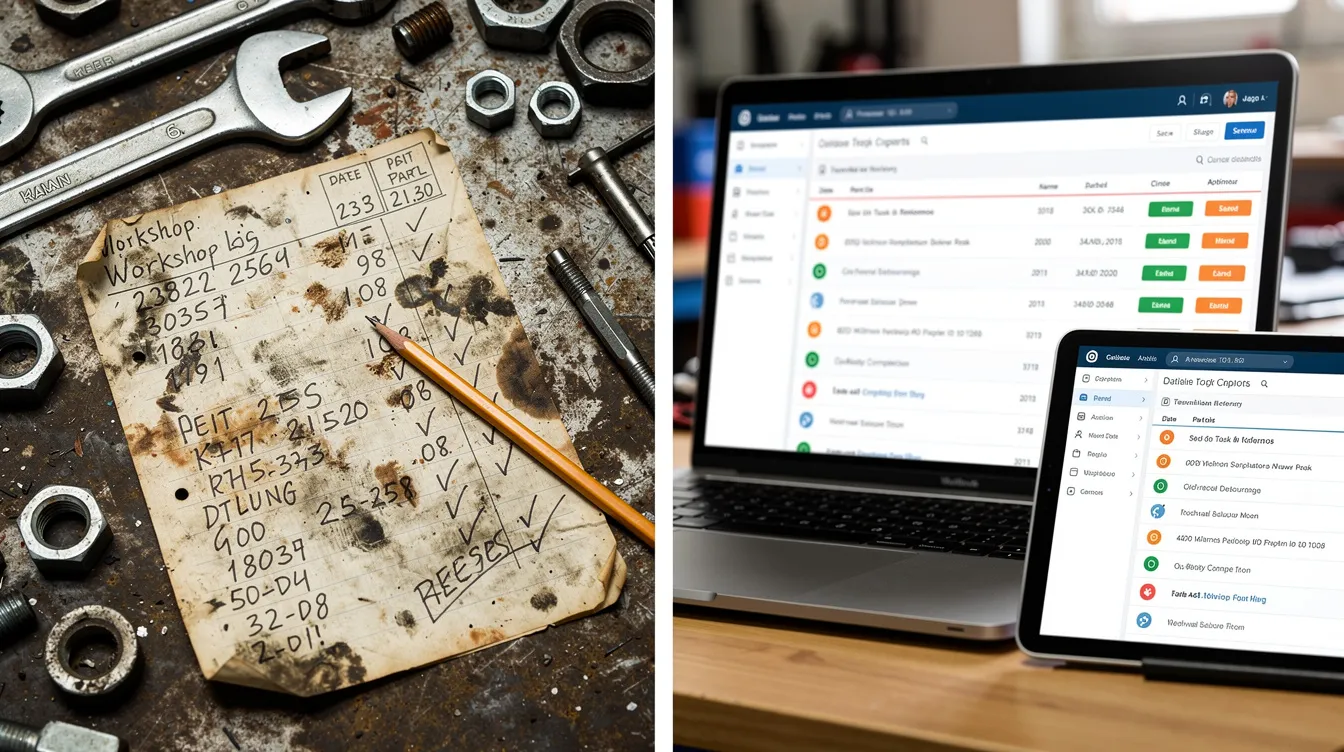
Moving from concepts to practice, the central operational challenge is converting the chaotic reality of workshop floor documentation into structured, auditable compliance evidence. In a typical Singapore precision engineering facility – whether in Jurong, Tuas, or Seletar – workshop logs exist in multiple formats, languages, and levels of completeness. AI tools can analyze large unstructured data sets quickly, but the path from raw logs to ISO 9001-compliant documents requires careful design.
Common Workshop Log, Financial and Operational Data Types
Precision engineering workshops generate diverse documentation that internal auditors must evaluate:
- Handwritten maintenance records: Technician notes on machine breakdowns, repairs performed, parts replaced – often with abbreviations, shorthand, and inconsistent terminology
- Digital sensor readings: Vibration data, temperature logs, spindle speed records from CNC machines and coordinate measuring machines
- Operator shift notes: Free-text entries recording production volumes, quality observations, and equipment issues
- Non-conformance reports: Documentation of out-of-tolerance parts, scrap rates, and rework actions from CNC and EDM operations
- Inspection and measurement logs: Dimensional data, surface finish measurements, and calibration records requiring micron-level traceability
ISO 9001 includes clauses related to control of nonconforming outputs and internal audit (clauses 8.7 and 9.2), and these log types form the evidence base auditors evaluate. Precision engineering requires strict micron-level traceability and tool-life tracking – meaning even small gaps in documentation can trigger audit findings. Traceability for supply chain assurance is important in the precision engineering sector, particularly for firms serving aerospace and medical device customers.
AI Classification and Tagging Systems
AI-powered tools bring structure to this documentation chaos through automated classification:
Automated categorization sorts log entries by process type (machining, grinding, EDM, assembly), equipment identifier, shift period, and compliance relevance. AI can automatically classify workshop records against ISO clauses to structure compliance data, enabling auditors to locate specific evidence in seconds rather than hours. Maintaining data lineage and contextual metadata tagging is crucial for audit compliance – each classified entry must trace back to its original source.
Real-time quality indicator extraction enables continuous monitoring of quality trends. AI tools can identify anomalies in unstructured data sets, flagging entries that indicate emerging quality problems before they become systemic and helping auditors assess risk earlier. AI enhances audit efficiency by automating data analysis, and when combined with operational data from sensors, the system can detect anomalies that pure text analysis might miss.
Integration with existing MES and ERP systems common in Singapore manufacturing ensures that classified log data flows into enterprise-wide quality management platforms. This is where AI can enhance productivity in quality management by automating data handling and structuring, connecting workshop-floor reality to management-level quality management documentation.
Data Standardization and Formatting
The final structuring step converts classified data into ISO 9001-compliant documentation formats. This includes:
- Generating standardized non-conformance reports with complete fields (equipment, defect type, severity, corrective action, responsible person, closure date)
- Producing audit evidence packages that map directly to ISO 9001 clause requirements – particularly clauses 7 (documented information), 9 (performance evaluation), and 10 (improvement)
- Creating trend analysis reports that surface recurring root causes, enabling data-driven decision making for continuous improvement
AI improves accuracy by analyzing 100% of transaction data, whereas manual auditors typically sample a fraction. AI enables continuous data-driven analysis across 100% of transactions, transforming how internal audit functions approach evidence evaluation.
Implementation Framework for Singapore Precision Engineering
Building on the log structuring foundation, implementing an AI-driven audit system requires a phased approach calibrated to the realities of Singapore’s precision engineering firms – from SMEs in Tuas industrial estates to larger operations in Seletar Aerospace Park.
Phased Implementation Methodology
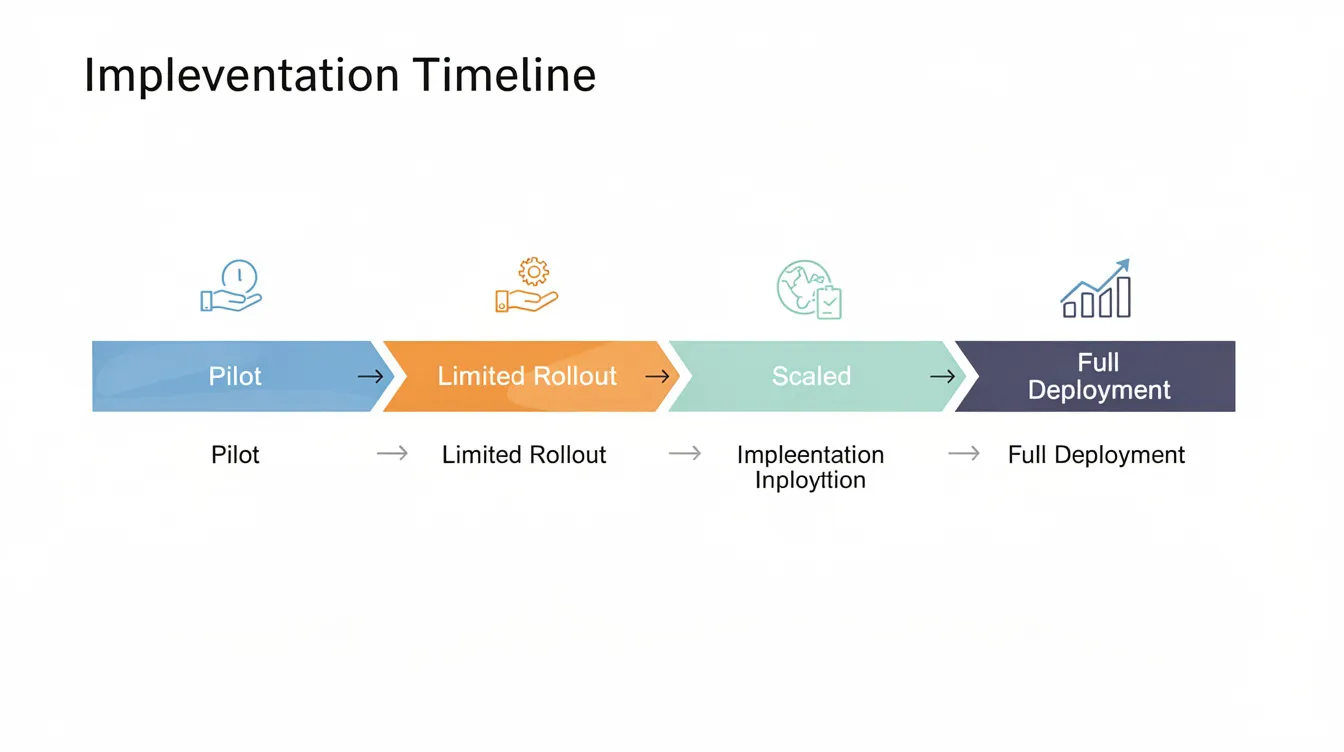
Precision engineering companies should adopt AI audit systems when their workshop log volume exceeds what manual review can reliably cover, or when internal audit preparation consistently takes weeks rather than days. The following phased methodology reflects best practices observed across Singapore manufacturing:
- Discovery & Pilot (Weeks 1–4): Deploy across 2–3 critical production lines and workshop areas. Collect historical workshop log samples – 12 months preferred – across different formats (maintenance tickets, QC records, sensor logs). Identify specific pain points: where are logs inadequate for traceability? Where do internal auditors spend the most time? Avimac, a PE SME in Seletar Aerospace Park, experienced exactly this transition – before digitalisation, experienced technicians spent excessive time checking handwritten records during machine breakdowns.
- Taxonomy & Standardization (Weeks 3–6): Define standard vocabularies and failure mode taxonomies aligned to PE operational processes. Map taxonomy categories to ISO 9001 clause requirements. Establish fields to tag: equipment ID, operator, shift, defect type, severity, corrective action. This phase is where domain expertise meets AI design – and where internal audit leaders must be involved.
- AI Model Training & Testing (Weeks 5–8): Deploy the OCR/NLP pipeline over sample logs. Fine-tune models using labeled historical data. Test AI tools’ ability to extract, categorize, and generate preliminary audit findings; when teams use large language model assistants to extract or summarize audit evidence, effective use also depends on prompt engineering. Evaluate precision and recall rates. A 2025 study identified approximately 84 requirements for integrating LLM cognitive assistants in QMS aligned with ISO 9001:2015, mapping to human, technology, and organization dimensions – a useful reference framework during this phase.
- Integration & Full Deployment (Weeks 9–16): Connect the AI pipeline to existing MES, ERP, and CMMS systems for real-time or near-real-time data capture. Embed AI tools into audit workflows so internal audit teams use them for audit planning, evidence collection, and report drafting. Expand progressively to all production facilities. JEP Precision Engineering’s smart factory under Singapore’s PE Industry Transformation Map demonstrates the end-state where workshop logs, performance data, and quality records flow seamlessly into structured systems.
Technology Stack Comparison
Selecting the right deployment model is a critical early decision. Singapore’s precision engineering firms must weigh data sovereignty, cost, and scalability:
| Criterion | Local Deployment | Cloud-Based Solution |
|---|---|---|
| Data Security | Full control; aligns with Singapore PDPA and IP protection | Vendor-managed; compliance dependent on provider |
| Implementation Cost | Higher initial investment in hardware and setup | Lower upfront cost; subscription-based pricing |
| Scalability | Limited by on-premises hardware capacity | Elastic scaling for growing data volumes |
| Latency | Low latency; critical for real-time shop floor use | Network-dependent; may not suit offline workshops |
| Maintenance | Internal IT team required for updates and support | Vendor-supported; automatic updates |
| Data Sovereignty | Full on-site control of proprietary engineering data | Requires careful contractual protections |
For most Singapore PE SMEs, a hybrid architecture often proves optimal: edge deployment for real-time log capture and initial processing on the workshop floor, with cloud-based analytics for aggregate trend analysis and audit reporting. InsightDLM offers fine-tuned models for maintenance logs and SOPs with pilot timelines of 4–8 weeks, supporting localized jargon and multilingual workforce needs. Flexmech Engineering in Tuas demonstrated a related approach by collaborating with Bosch Rexroth to retrofit legacy machines with acoustic and vibration sensors, converting analog machine behavior into digital data streams.
Understanding the technology landscape prepares us for the practical challenges firms will encounter.
Common Challenges and Solutions in Singapore’s Precision Engineering Sector
Every AI implementation encounters friction. For Singapore’s precision engineering firms, these challenges have sector-specific dimensions that demand targeted solutions.
Legacy System Integration Complexities
Many PE firms still operate paper-based or disconnected digital systems. Integrating AI audit tools with older MES, ERP, and CMMS platforms requires API-based middleware solutions. AI implementation costs can be significant and complex, particularly when legacy equipment lacks digital interfaces.
Solution: Deploy lightweight API connectors and adopt a gradual data migration strategy. Start by digitizing logs at source using tablets or mobile devices on the workshop floor, creating a digital data stream before attempting full system integration. Firms pursuing ISO 9001 certification should treat this as part of their broader quality system upgrade.
Multilingual Workshop Documentation
Singapore’s multilingual workforce produces logs in English interspersed with Mandarin, Malay, and localized technical terms. This code-mixing challenges standard NLP models and can cause misclassification.
Solution: Utilize multilingual NLP models trained specifically on engineering terminology across relevant languages. Establish standardized terminology databases – a controlled vocabulary of equipment names, failure modes, and process types – that serve as the AI system’s reference lexicon. This focus on clear communication standards also improves audit quality even before AI processes the data.
Ensuring AI Governance and Model Explainability
Establishing governance controls around AI is vital for protecting sensitive information. ISO auditors expect transparency about how AI tools reach their conclusions – black-box outputs without human oversight may be rejected outright. 40–60% of AI adoption efforts fail without proper governance, and AI hallucinations can lead to incorrect outputs in audits.
Solution: Implement a comprehensive AI governance framework that includes model versioning, decision logging, confidence scoring, and mandatory human validation checkpoints. AI should support human decision-making rather than making autonomous audit conclusions. Internal auditors must maintain professional skepticism and professional judgment – using AI outputs as inputs to their critical thinking, not replacements for it. Best practices include aligning AI with national governance frameworks for transparency and security. Firms managing multiple certifications should reference comprehensive budgeting approaches that account for AI governance costs.
Data Privacy and Regulatory Compliance
Data privacy is a major concern when using AI tools. Compliance with Singapore’s Personal Data Protection Act is necessary when handling proprietary data. Workshop logs may contain employee identifiers, proprietary process parameters, and customer-specific manufacturing details.
Solution: Implement data encryption at rest and in transit, role-based access controls, and contractual data protection clauses with any third-party AI service providers. Ensure data retention policies align with both regulatory compliance requirements and the Singapore Accreditation Council’s expectations for documented information and traceability.
Workforce Adaptation and Change Management for Internal Auditors
Operators and quality auditors must be trained to interpret AI outputs, configure taxonomies, and provide feedback that improves model performance. Resistance to change is common in firms with long traditions of manual processes – and without hands-on experience with the tools, adoption stalls.
Solution: Invest in structured training programmes with clear learning objectives. Start with audit teams and quality managers, then extend to workshop operators. Frame AI as enabling auditors to focus on higher-value activities – risk assessment, root cause analysis, and corrective action design – rather than replacing them. Challenge assumptions that AI diminishes the auditor’s role; real AI deployment elevates it.
Conclusion and Next Steps
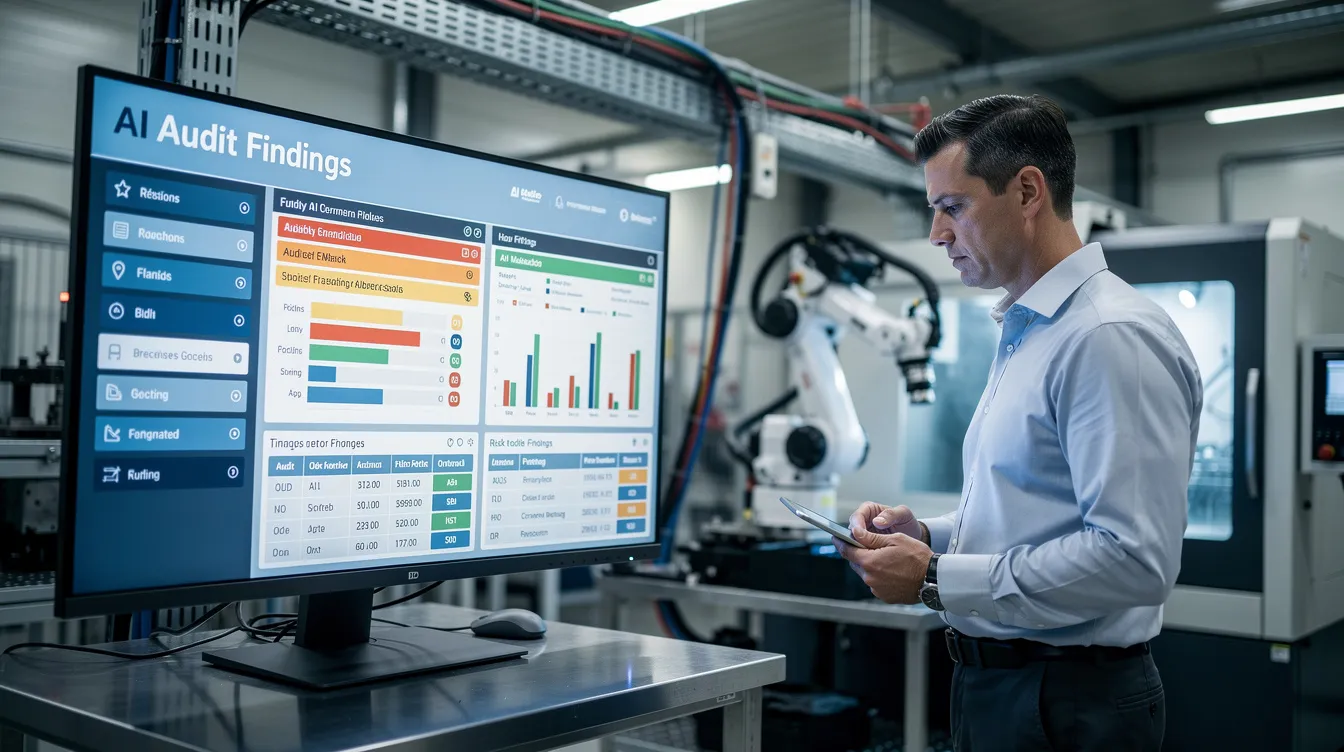
AI-driven ISO 9001 internal audits represent a measurable step forward for Singapore’s precision engineering sector. By structuring unstructured workshop logs through NLP, machine learning, and intelligent classification systems, firms can achieve 50–70% reductions in audit preparation time and substantially improved documentation accuracy. AI can automate repetitive audit tasks, saving significant time, while AI tools streamline audit planning and expedite reporting – freeing internal audit teams and audit leaders to apply critical thinking and professional judgment where they matter most.
The precision engineering sector’s projected growth – from S$5.4 billion in precision component output in 2023 to an estimated S$7.3 billion by 2028 – will only intensify the documentation and audit burden. Leading organizations that invest now in AI-powered audit infrastructure will build a durable competitive advantage in audit quality, regulatory compliance, and continuous improvement.
Immediate action steps:
- Assess your current workshop log volumes, formats, and pain points – where do auditors spend the most time, and where are documentation gaps most common?
- Identify 2–3 pilot production lines with the highest log volume and audit relevance
- Evaluate technology options using the local vs. cloud comparison framework, considering your firm’s data sovereignty needs and PDPA obligations
- Engage implementation partners – A*STAR/SIMTech for technical capability, and specialized ISO compliance consultants for audit framework alignment
- Establish AI governance protocols from day one, including human-in-loop validation, model documentation, and clear communication of AI limitations to all stakeholders
Related topics worth exploring: AI-enhanced risk management in manufacturing, workplace safety technology integration across Singapore industries, and the emerging ISO/IEC 42001 standard for AI management systems that will increasingly shape how audit functions deploy and govern AI agents.
Additional Resources
- Singapore Precision Engineering Industry Digital Plan (IDP): Government-supported roadmap for digital transformation with funding schemes for manufacturing digitization
- ISO 9001:2015 Auditing Practices Group guidance on digital processes: Essential reading for auditors evaluating AI-enhanced QMS implementations
- Enterprise Singapore SMEs Go Digital programme: Grants and technical assistance for deploying AI tools, sensors, and data analytics platforms
- Singapore Accreditation Council (SAC): Certification and accreditation guidance specific to precision engineering and Industry 4.0
- MOSAIC Safety consulting services: EHS advisory and documentation support for firms integrating AI into their quality and safety management systems