
Introduction
Large Language Models can process an entire ISO 45001 documentation set in hours, yet they cannot walk a factory floor or interview a migrant worker about near-miss incidents. That tension sits at the heart of a growing debate among Singapore manufacturers: should you rely on LLM-powered gap analysis, retain traditional human internal auditors, or build a hybrid approach?
This article is scoped for manufacturing organizations in Singapore-spanning automotive parts assembly, electronics fabrication, and chemical processing-that need to evaluate their occupational health and safety management systems against ISO 45001:2018 requirements. The target audience includes EHS managers, quality assurance directors, and manufacturing plant managers who must balance certification readiness with operational efficiency. Understanding which audit methodology delivers the best accuracy, speed, and regulatory compliance under Singapore’s Workplace Safety and Health (WSH) Act now also means assessing how audit findings support processes developed for ISO 45001 compliance and local WSH requirements; it directly affects MOM inspection outcomes, bizSAFE alignment, and supply chain credibility.
Direct answer: A hybrid approach combining LLMs and human auditors enhances audit efficiency and effectiveness. LLMs excel at rapid document analysis, clause mapping, and consistency, while human auditors remain superior for contextual judgment, worker participation assessment, and physical observation-all essential under Singapore’s regulatory environment.
By the end of this article, you will gain:
-
Clear definitions of both LLM-based and human internal audit approaches for ISO 45001 gap analysis
-
A structured benchmarking methodology with measurable metrics tailored to Singapore manufacturing
-
Head-to-head performance comparison data across accuracy, speed, cost, and regulatory acceptance
-
Practical solutions for the most common implementation challenges
-
Actionable next steps for piloting a hybrid audit model in your facility
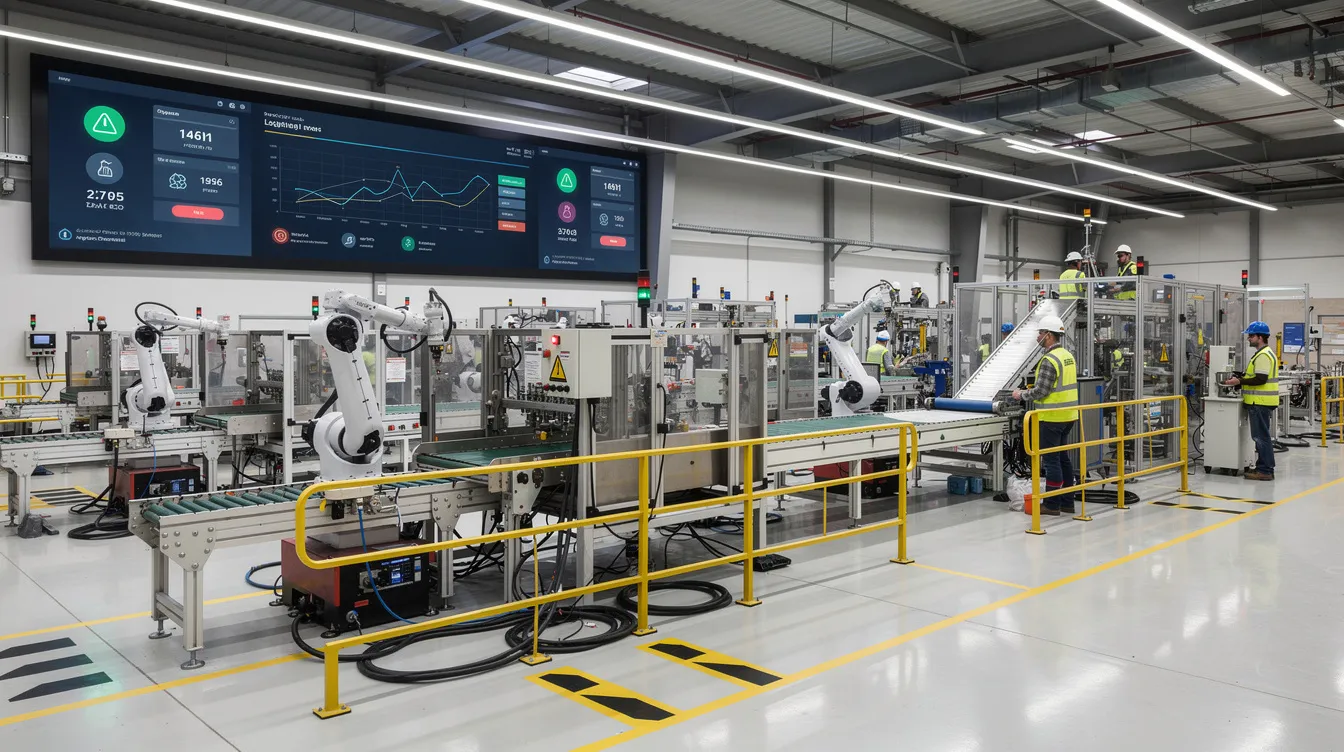
Understanding ISO 45001 Gap Analysis in Manufacturing Context
A gap analysis identifies conforming elements and gaps in compliance by systematically evaluating an organization’s existing OHS practices, documentation, procedures, and safety culture against the full requirements of ISO 45001:2018 (clauses 4 through 10). It is not the certification audit itself but a readiness check that prepares organizations for the formal assessment. ISO 45001 gap analysis maps existing WSH documentation against ISO clauses, producing a clear picture of where your safety management system meets the standard and where corrective actions are needed. A completed gap analysis is essential before pursuing ISO certification-it helps organizations build a realistic implementation roadmap with prioritized action items and shows which procedures and controls still need to be developed.
Singapore manufacturing faces unique challenges that make gap analysis particularly complex. The Workplace Safety and Health Act regulates workplace safety in Singapore, layering additional requirements on top of ISO standards. Manufacturers must also comply with subsidiary regulations including SHMS requirements, sector-specific standards such as SS 651:2019 for the chemical industry, and metalworking guidelines. A MOM survey found that while 92% of employees worked in companies implementing WSH risk assessments, only about half in high-risk industries had near-miss reporting systems-revealing that documentation and basic systems are widely present, but gaps remain in safety culture and practice. Add a multinational workforce with language barriers, complex supply chains with automotive and electronics clients demanding strict hazard identification and ergonomic controls, and the need to align with bizSAFE requirements, and the scope of a thorough gap analysis becomes substantial.
Traditional Human Internal Auditor Approach in ISO 45001 Gap Analysis
A qualified human internal auditor for ISO 45001 in Singapore typically holds IRCA/ISO Lead Auditor certification or has completed MOM-approved WSH auditor training, and advanced lead-auditor training plus practical audit exercises usually require in-person attendance. These professionals must understand standard clauses 4 through 10-covering context, leadership, planning, support, operation, performance evaluation, and improvement-as well as local regulatory requirements under the WSH Act and sector-specific standards. Human auditors assess not just documentation but actual implementation of safety controls, bringing core competencies that include technical knowledge of manufacturing hazards (chemical, ergonomic, mechanical), communication skills essential for engaging a diverse workforce, and deep regulatory understanding.
What makes human auditors indispensable in Singapore’s environment is their ability to perform site walkthroughs, observe actual workplace practices, interview workers in multiple languages, and assess intangible factors like leadership commitment and safety culture. Personal Protective Equipment compliance must be verified through physical site inspections-no document review can confirm whether workers actually wear their PPE on the production floor. Human auditors also interact directly with MOM inspectors; their audit reports and internal review documentation must satisfy MOM criteria. For factories with 100 or more employees in sectors such as metal-machining, regular audits by SAC-accredited auditing organizations are mandatory, making the human auditor’s role a regulatory necessity rather than a preference.
LLM-Powered Gap Analysis Systems
Large Language Models are generative AI systems-such as GPT-4, Claude, and similar models-that can be adapted through prompt engineering, fine-tuning, or retrieval-augmented generation (RAG) to perform safety compliance assessment tasks. Large Language Models can expedite document analysis for ISO compliance, processing policies, procedures, hazard registers, incident investigation reports, and legal registers at speeds no human team can match.
Current capabilities include high-speed extraction of relevant clause requirements, consistent document review without fatigue-related oversight, pattern detection across large documentation sets, non-conformance identification through clause mapping, and automated generation of preliminary gap reports with recommended corrective actions. LLMs can be tailored for specific HSE use cases through RAG solutions, allowing organizations to ground the model in local regulations like the WSH Act and company-specific procedures.
However, LLMs cannot replace on-ground evidence gathering or interviews. They cannot verify whether emergency evacuation drills are actually conducted, whether worker consultation genuinely occurs, or whether management review meetings deliver meaningful outcomes. LLMs can flag gaps in safety documentation but may miss subtleties in local context-such as the cultural dynamics of migrant worker engagement or the practical realities of shift-work safety communication. There is also the risk of hallucination, where the model asserts compliance or non-compliance based on ambiguous document wording. These limitations make it clear that implementation in manufacturing environments requires careful consideration of where LLMs add value and where human judgment remains essential.

Benchmarking Methodology for Singapore Manufacturing
With both approaches understood, the critical question becomes: how do you objectively evaluate their performance? A rigorous benchmarking methodology requires measurable performance criteria specific to Singapore manufacturing, structured test scenarios reflecting real operational hazards, and a comparison framework that accounts for regulatory acceptance alongside technical accuracy.
Assessment Criteria and Metrics
Accuracy is measured as the percentage of non-conformances identified compared to a gold standard established by certified lead auditors through independent verification. This should be evaluated per clause (4 through 10), with particular attention to challenging areas: leadership commitment (clause 5), hazard identification and risk assessment (clause 6.1), worker participation (clause 5.4), and emergency preparedness (clause 8.2). Both false positives (flagging compliance as non-conformance) and false negatives (missing actual gaps) must be tracked, yielding precision and recall metrics per sub-clause.
Speed is calculated as total time from audit initiation to final report delivery. For a typical 200-employee manufacturing facility, a human internal auditor might require 3–4 days onsite plus 2 days for report writing-roughly one full working week. An LLM system can process document ingestion and generate a preliminary gap list within hours, though human review and validation add time back in.
Cost per audit encompasses auditor day-rates (typically SGD 800–1,500 per day in Singapore), travel expenses, employee time for interviews, and opportunity costs for production disruption on the human side. For LLMs, costs include subscription or licensing fees, data preparation, fine-tuning investment, and human reviewer time for validation and oversight. According to ISO 45001 certification cost data, SME consultancy packages including documentation, internal audit, and audit preparation can start from SGD 2,288, with total first-year costs including certification ranging from SGD 4,500 to SGD 9,000.
Consistency measures inter-auditor reliability for humans (how much findings vary between different auditors examining the same facility) and output stability for LLMs (variance across different prompts or model runs).
Regulatory acceptance assesses whether findings meet MOM requirements for SHMS audit or internal review and are acceptable to certification bodies.
Singapore Manufacturing Test Scenarios
Benchmarking must reflect the real hazards and compliance complexities that Singapore manufacturers face:
-
Automotive parts assembly plant: Mechanical hazards from stamping and machinery, high noise environments, shift work scheduling, and significant migrant worker populations with varied language fluency create challenges in risk communication, emergency evacuation drill effectiveness, and contractor safety management. Hazard identification for ergonomic strain and repetitive motion injuries requires workplace observation that documents alone cannot capture.
-
Electronics manufacturing (semiconductor, PCB assembly): Chemical handling involving etching solutions, solvents, and gases demands rigorous control measures. Static electricity protocols, clean room procedures, machinery safety, PPE management, and chemical waste disposal compliance all generate dense documentation that benefits from LLM analysis, while the physical verification of ventilation systems and chemical storage requires human presence.
-
Food processing with hygiene and machinery safety requirements: Cross-contamination prevention, cleaning chemical safety, machinery guarding, temperature control systems, and emergency shutdown procedures create a unique compliance landscape where occupational health intersects with food safety standards, potentially requiring an integrated management system approach that bridges ISO 45001 with ISO 9001 and ISO 22000.
Performance Comparison Framework
The following table synthesizes projected performance data based on available research and Singapore manufacturing context. Note that no publicly known Singapore manufacturing pilot has directly measured LLM vs human internal audit across these metrics under identical conditions-a gap this benchmarking framework aims to address.
|
Metric |
Human Internal Auditor |
LLM + Human Oversight |
Notes |
|---|---|---|---|
|
Accuracy (document-based gaps) |
~95% |
~85–90% |
LLMs often rely on semantic matching rather than compliance reasoning |
|
Accuracy (practice-based gaps) |
~90–95% |
~40–50% (document inference only) |
LLMs cannot observe behavior or environment |
|
Time to completion (200-employee facility) |
5–7 working days |
1–2 days (document + review) |
Excludes physical inspection for LLM pathway |
|
Cost per audit cycle |
SGD 4,000–6,000 |
SGD 2,000–3,500 (est. 50–60% of human cost) |
LLM costs decline with reuse across sites |
|
Consistency across auditors/runs |
Moderate (varies by experience) |
High (standardized prompts) |
Human variation a known challenge |
|
MOM/Certification body acceptance |
Fully accepted |
Accepted only with human validation and sign-off |
LLM-only output not currently recognized |
|
Scalability across sites |
Limited by auditor availability |
High for document portion |
Physical inspection still required per site |
This comparison reveals that each method has distinct advantages, and the optimal strategy depends on which aspects of the gap analysis carry the most risk for your specific manufacturing operation.

Detailed Performance Analysis and Implementation Methods
Recent academic research provides valuable insights into how LLMs perform in compliance assessment tasks. A 2025 study titled “LLM-based HSE Compliance Assessment: Benchmark, Performance, and Advancements” introduced HSE-Bench-the first benchmark for LLMs in HSE compliance. The research found that LLMs handle static, document-based tasks reasonably well but show accuracy drops in situational tasks, particularly risk evaluation, emergency response planning, and safety culture assessment. Models struggled with ambiguous clauses and where input documents omitted implicit practices.
A February 2026 field experiment with 100 professional auditors, “The Effect of Large Language Models on Audit Quality”, showed that access to a firm-specific LLM improved audit output quality and reduced completion time. However, the LLM did not improve adherence to internal audit guidelines-meaning process discipline remained a human competency. The experience level of the auditor did not predict how much benefit the LLM brought, suggesting that both junior and senior auditors gain from LLM assistance.
Additionally, the “Smart Audit System Empowered by LLM” paper described a manufacturing compliance copilot that automates document retrieval and evaluation, effective for comparatively less-complex document mapping but requiring human validation for final determinations.
Benchmarking Implementation Process for Integrated Management System
For manufacturing companies considering audit methodology changes, the following sequential process provides a structured path to evaluate and implement LLM-assisted gap analysis:
-
Establish baseline data: Collect recent human auditor gap analyses from your manufacturing sector (automotive, electronics, or chemical), documenting time to completion, cost, number of gaps identified per clause, and average severity classification. Previous ISO 45001 surveillance audit results and MOM WSH inspection outcomes provide essential baseline data.
-
Deploy LLM system on facility documentation: Select or build a retrieval-augmented LLM trained on local regulations (WSH Act, SS standards) and your company’s internal procedures, including processes developed internally to meet ISO 45001 and Singapore WSH obligations. Define prompt templates aligned with each ISO 45001 clause. Reasoning of Experts (RoE) prompting improves LLM compliance accuracy, so structure prompts to simulate expert reasoning chains rather than simple yes/no queries.
-
Conduct parallel gap analysis: Run both human auditor and LLM audit on the same facility, using identical documentation scope and timeline. Human auditors perform their standard process including site visits, worker interviews, and document review. The LLM processes the same document set independently. Maintain detailed time stamps and gap counts for both methods.
-
Verify findings through independent review: Engage certified lead auditors not involved in either parallel audit to establish ground truth. Compare both sets of findings against this verified standard, calculating accuracy, precision, and recall per clause.
-
Calculate total cost of ownership: Include all costs-training, technology licensing, data preparation, ongoing maintenance, human reviewer time, and opportunity costs. Factor in scalability benefits if you plan to roll the approach across multiple sites or repeat audits annually, as MOM requires SHMS audits at least once every 12 months for factories in metalworking with 100+ employees, and once every 24 months for chemical/petrochemical facilities under SS 651:2019.
Comparative Performance Results
Drawing from available research and projected Singapore manufacturing performance, the following details the analysis across manufacturing sub-sectors:
|
Dimension |
Automotive Assembly |
Electronics Manufacturing |
Chemical Processing |
|---|---|---|---|
|
Document-based accuracy (Human) |
94% |
96% |
93% |
|
Document-based accuracy (LLM) |
88% |
91% |
85% |
|
Key LLM weakness |
Missed migrant worker communication gaps |
Underestimated chemical handling nuance |
Failed to cross-reference SS 651 specifics |
|
Time saving with LLM pre-screen |
~35% reduction |
~40% reduction |
~30% reduction |
|
Cost saving (hybrid vs human-only) |
~40% |
~45% |
~35% |
|
MOM regulatory alignment |
Requires human sign-off |
Requires human sign-off |
Requires human sign-off + sector expert |
The data suggests that electronics manufacturing documentation-often highly standardized and procedure-heavy-yields the best LLM performance, while chemical processing, with its complex regulatory overlay and SS 651 requirements, presents the greatest challenge for AI-only analysis.
For manufacturing managers, the interpretation is clear: LLMs deliver the strongest value as a pre-screening layer that reduces the total time and cost burden of the internal audit process, but they do not eliminate the need for qualified human auditors, particularly where ISO 45001 implementation challenges involve cultural and behavioral dimensions.
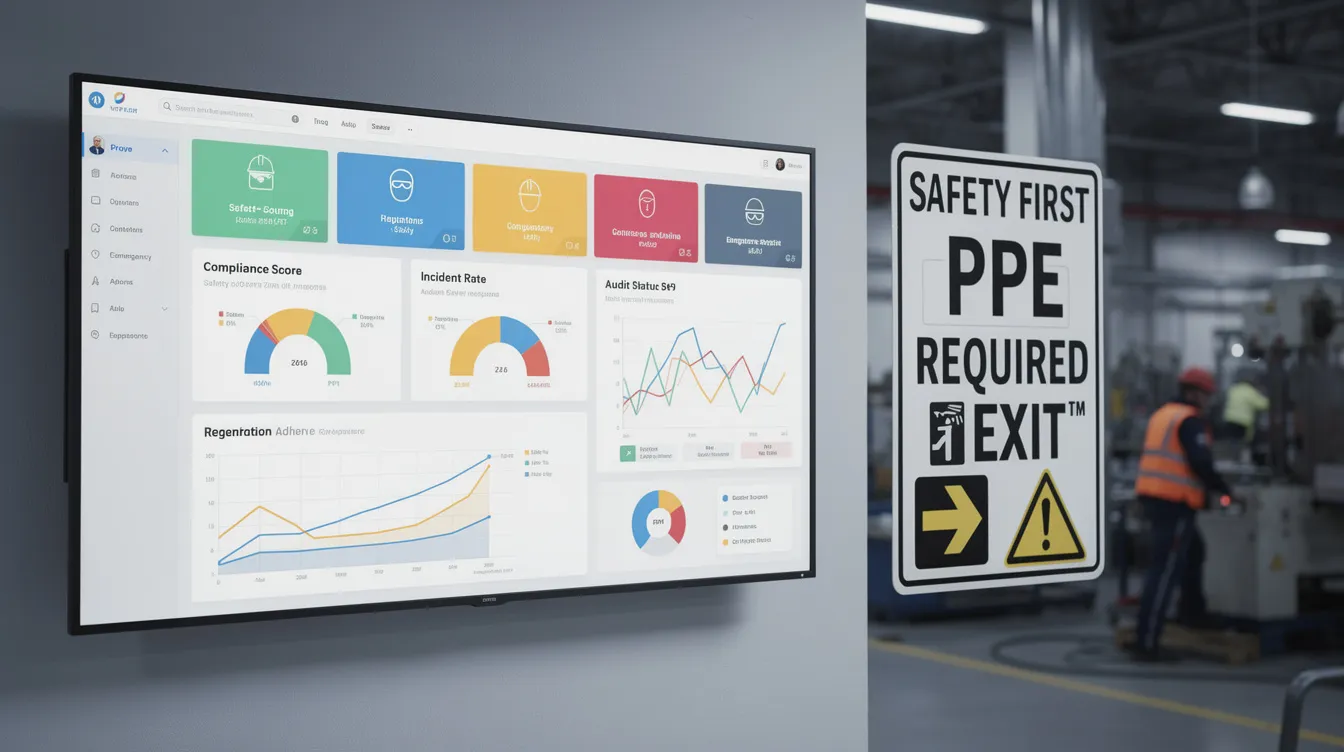
Common Implementation Challenges and Solutions
Deploying either methodology-or combining them-in Singapore’s regulated manufacturing environment introduces practical challenges that organizations must address proactively.
LLM Technology Limitations in Manufacturing Context
Challenge: LLMs cannot observe actual workplace practices and worker behavior. ISO 45001 requires documented evidence of worker participation in safety, but participation itself-the quality of toolbox meetings, the willingness of workers to report near-misses, the genuine engagement of top management during safety walkthroughs-can only be assessed through physical presence and direct interaction.
Solution: Implement a structured two-phase audit model. Use LLM analysis exclusively for document pre-screening: policy completeness, procedure mapping against clauses 4–10, legal register currency, hazard register coverage, incident investigation documentation, and training record verification. Then deploy human auditors specifically for physical inspection, worker interviews, behavioral observation, and management review assessment. This approach reduces the human auditor’s scope by 30–45%, allowing them to focus their skills and knowledge on areas where contextual judgment and awareness are irreplaceable. Emerging frameworks like SETTE, which combine multimodal data from IoT sensors and XR with LLM reasoning, show that physical observation gaps may narrow over time-but for now, human presence remains essential.
Human Auditor Scalability and Consistency Issues
Challenge: During peak certification periods in Singapore-particularly when multiple organizations pursue bizSAFE Star renewal or ISO 45001 certification simultaneously-qualified auditor availability becomes constrained. Auditor day-rates increase, scheduling delays mount, and the pressure to complete effective internal audits within tight timelines can compromise thoroughness. Additionally, findings can vary significantly between auditors of different experience levels, undermining consistency.
Solution: Standardize the document review portion through LLM processing to reduce demand on human auditor time by approximately 35–40%. This allows the same pool of auditors to cover more facilities per certification cycle. For consistency, develop standardized LLM-generated clause-by-clause checklists that auditors use as a baseline, ensuring every auditor evaluates the same scope with the same reference points. ISO 45001 Awareness Training, which lasts 1 day in duration, can upskill junior team members to handle LLM-assisted document review tasks, while senior auditors focus on complex site observations and management system effectiveness evaluation. Participants receive a Certificate of Completion after training, building the team’s overall audit capacity.
Integration with Singapore WSH Regulatory Requirements
Challenge: MOM’s SHMS regulations require that internal reviews and audits meet specific criteria, be conducted by SAC-accredited auditing organizations or trained internal staff, and produce records that can be presented upon inspector request. Even when AI tools are used, employers remain responsible for ensuring those audits, internal reviews, and records meet regulatory criteria. An LLM-generated report, without human validation and sign-off, does not currently satisfy these requirements. Any audit methodology must maintain full WSH Act compliance and produce outputs acceptable to both MOM inspectors and certification bodies.
Solution: Design the hybrid workflow so that every LLM-generated finding is reviewed, validated, and signed off by a qualified human auditor before inclusion in the formal gap analysis report, with employers documenting who reviews, validates, and signs off findings within the audit process. The report format, language, and structure must align with MOM circular MOM/OSHD/2022-01 auditing requirements. ISO 45001 training builds workplace safety culture and helps identify OH&S hazards-ensure your audit team maintains current training and that your process documentation explicitly describes the role of AI tools in the audit methodology. This transparency supports ISO 45001 training’s connection to bizSAFE certification and prepares your organization for potential future regulatory guidance on AI-assisted audits. Singapore’s evolving AI governance framework includes guidelines on data security and confidentiality-critical when audit documentation containing sensitive operational details is processed through cloud-based LLM services.

Conclusion and Next Steps
The evidence is clear: neither LLMs nor human internal auditors alone deliver optimal results for ISO 45001 gap analysis in Singapore manufacturing. LLMs bring unmatched speed, consistency, and cost efficiency to document-based compliance checks. Human auditors deliver the contextual judgment, physical observation, and worker engagement assessment that Singapore’s regulatory environment demands. The hybrid model-where LLM efficiency handles the documentation layer and human expertise covers the behavioral and operational layer-produces the most accurate, cost-effective, and regulatory-compliant gap analysis outcomes.
Immediate actionable steps for your organization:
-
Pilot LLM document pre-screening on your next internal audit cycle-start with legal register currency checks and procedure-to-clause mapping for ISO 45001 clauses 4–10
-
Retain qualified human auditors for all physical site observations, worker interviews, emergency drill verification, and risk assessment validation
-
Establish baseline metrics from your most recent human-only audit to enable direct comparison of accuracy, time, and cost after LLM integration
-
Ensure regulatory alignment by maintaining human sign-off on all gap analysis reports and confirming output format meets MOM SHMS audit criteria
-
Track continual improvement by measuring false positive and false negative rates across each audit cycle, refining LLM prompts and training data based on findings
Emerging AI audit tools are evolving rapidly-2025 and 2026 regulatory updates may bring formal guidance on AI-assisted audit acceptance by certification bodies. Organizations that build hybrid audit capabilities now will be positioned to scale efficiently as these frameworks mature, maintaining both compliance and competitive advantage across their environmental, health, and safety responsibilities.
Additional Resources
-
MOM WSH Safety and Health Management System requirements for manufacturing internal audit frequency and auditor qualifications
-
ISO 45001 Certification Consulting – MOSAIC’s hybrid audit methodology consultation services for Singapore manufacturers
-
WSHMS Audit Checklist implementation guide – clause-by-clause checklist adaptable for LLM evaluation workflows
-
Integrating ISO 14001 and ISO 45001 – strategic blueprint for organizations building an integrated management system across quality, environmental, and safety standards