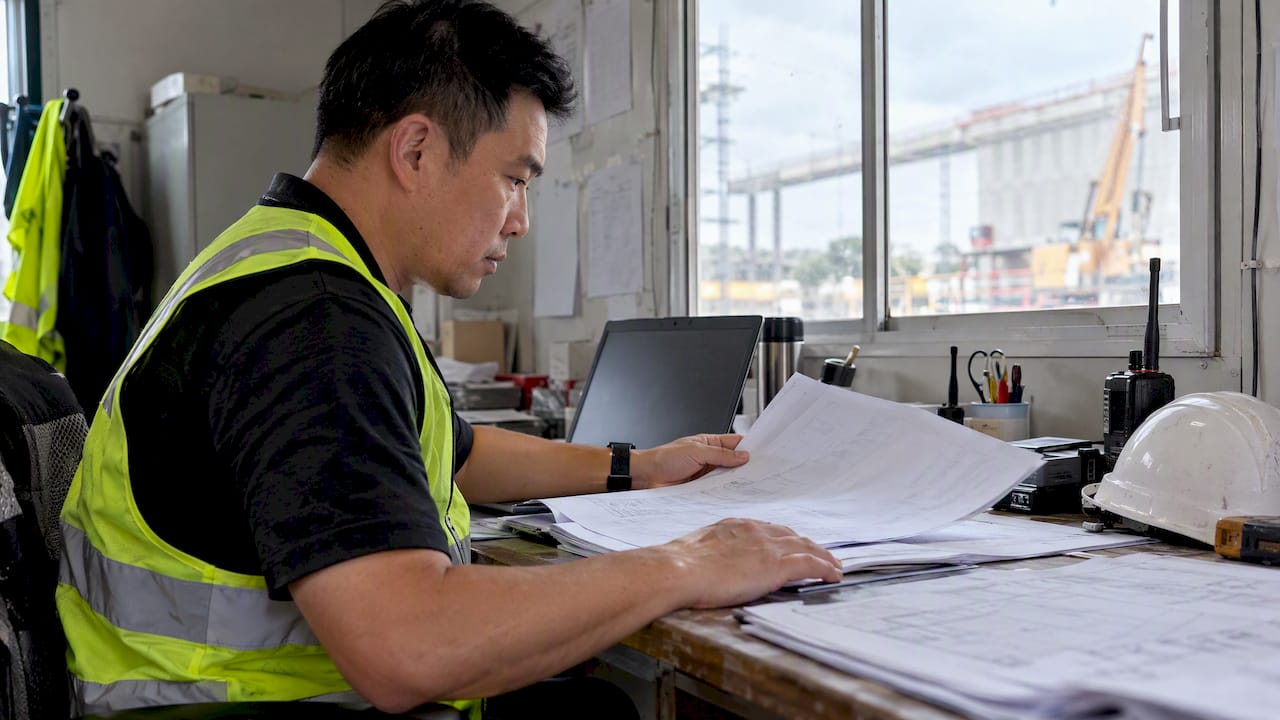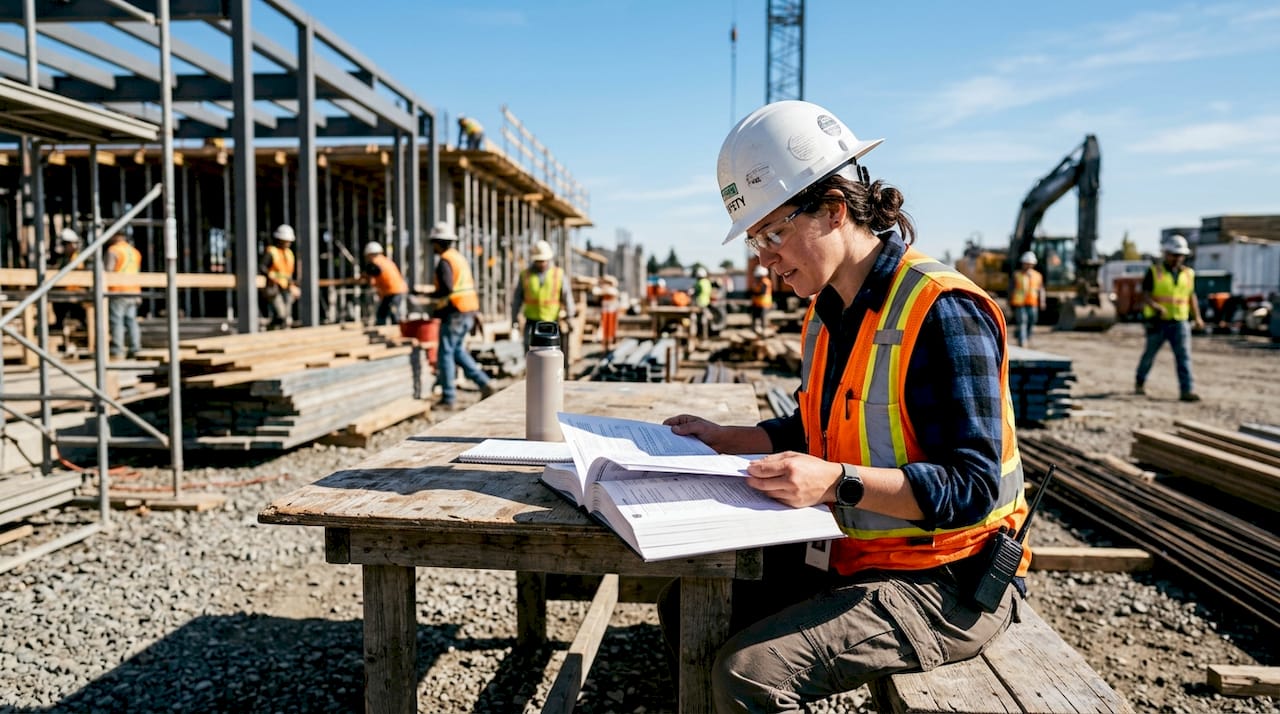
Total workplace safety is defined as the integrated management of all physical hazards, occupational health risks, and organizational safety culture to prevent injury, illness, and death at work. The term aligns closely with the recognized industry standard of Total Safety Management, or TSM, which frames safety not as a compliance checkbox but as a continuous operational discipline. The financial stakes are severe: work-related injuries cost/2.14%3A_Human_Resources_Management/2.14.05%3A_Why_It_Matters-_Safety_Health_and_Risk_Management) U.S. employers $161.5 billion in 2017 alone. That figure reflects not just medical costs but lost productivity, legal liability, and workforce disruption. Regulatory bodies including OSHA, the International Labour Organization, and the World Health Organization all frame workplace safety as a shared organizational responsibility, not a departmental function.
What is total workplace safety and what does it actually cover?
Total workplace safety covers every dimension of risk that workers face, from physical hazards on a construction site to psychosocial stressors in an office environment. The industry term for this integrated approach is Total Safety Management, and it differs from conventional safety programs in one critical way: it treats safety culture as the foundation, not the outcome. Physical controls, training programs, and compliance audits all depend on that cultural foundation to function.

The scope extends well beyond hard hats and guardrails. Occupational health, which includes chronic exposure to noise, chemicals, and ergonomic strain, falls within the framework. So does mental health. Overwork alone causes an estimated 745,000 deaths annually worldwide, making psychosocial risk one of the most consequential and least visible hazards in any workplace. Organizations that ignore this dimension operate with a significant blind spot.
The importance of workplace safety at this level of integration becomes clear when you map all risk categories together. A construction firm managing only fall protection while ignoring heat stress, fatigue, and contractor coordination gaps does not have a total safety program. It has a partial one. The gap between partial and total is where most serious incidents occur.

What components make up a total safety program?
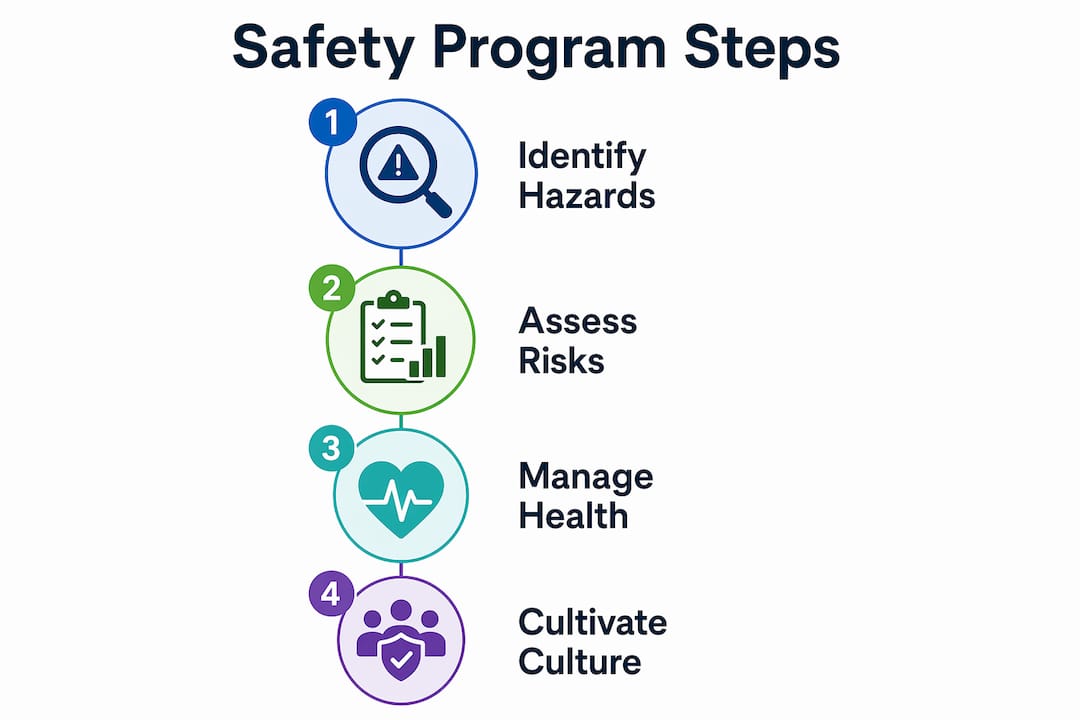
Four interconnected components define a complete workplace safety program: hazard identification and risk assessment, occupational health management, safety culture and leadership, and a structured hazard control framework.
Hazard identification and risk assessment
Hazard identification is the systematic process of locating, documenting, and evaluating every source of potential harm in a workplace. Effective programs use formal risk assessments, site inspections, job safety analyses, and worker input to build a complete hazard register. The water hazard identification process illustrates how even a single hazard category requires structured, compliance-grade methodology to manage correctly. Risk assessment then ranks each hazard by likelihood and severity, directing resources toward the highest-priority controls first.
Occupational health and psychosocial risk
Occupational health management addresses long-term exposures that do not produce immediate injuries but cause serious harm over time. Noise-induced hearing loss, musculoskeletal disorders, and chemical sensitization all fall here. Psychosocial risks, including excessive workload, poor management practices, and workplace conflict, carry equal weight. Integrating safety with occupational health/2.14%3A_Human_Resources_Management/2.14.05%3A_Why_It_Matters-_Safety_Health_and_Risk_Management) and wellness programs creates more complete protection for workers than physical hazard control alone.
Safety culture and leadership commitment
Safety culture is the collective set of values, behaviors, and norms that determine how seriously an organization treats risk. Leadership commitment is the single most reliable predictor of culture strength. When senior managers visibly participate in safety inspections, respond promptly to hazard reports, and allocate resources without hesitation, workers internalize safety as a genuine organizational priority. Organizations with strong safety cultures report measurable improvements in employee trust, retention, and engagement. Culture is not a soft metric; it drives hard outcomes.
The Hierarchy of Controls
The Hierarchy of Controls is the industry-standard framework for selecting hazard controls. It ranks five control types from most to least effective:
- Elimination: Remove the hazard entirely from the workplace
- Substitution: Replace the hazardous material or process with a safer alternative
- Engineering controls: Isolate workers from the hazard through physical barriers or ventilation
- Administrative controls: Change work procedures, schedules, or practices to reduce exposure
- Personal Protective Equipment (PPE): Provide protective gear as the last line of defense
The Hierarchy of Controls places PPE at the bottom because it does not remove the hazard. It only reduces exposure if worn correctly and consistently. Organizations that default to PPE as a primary control accept a higher residual risk than those that invest in elimination or engineering solutions.
| Control level | Example | Residual risk |
|---|---|---|
| Elimination | Remove a chemical from the process | Lowest |
| Substitution | Replace solvent with water-based alternative | Very low |
| Engineering | Install machine guarding or local exhaust ventilation | Low |
| Administrative | Rotate workers to limit exposure duration | Moderate |
| PPE | Provide respirators or hearing protection | Highest |
How does total safety management affect organizational performance?
The business case for total safety management is direct and quantifiable. Approximately 86% of work-related deaths/2.14%3A_Human_Resources_Management/2.14.05%3A_Why_It_Matters-_Safety_Health_and_Risk_Management) in the U.S. in 2017 were preventable. That statistic means the majority of fatalities represent organizational failures, not unavoidable accidents. Preventing them is both a moral obligation and a measurable financial opportunity.
Effective safety management/2.14%3A_Human_Resources_Management/2.14.05%3A_Why_It_Matters-_Safety_Health_and_Risk_Management) yields concrete business benefits beyond injury reduction. Organizations that invest proactively in safety report lower training and recruitment costs, reduced absenteeism, and higher worker productivity. These gains compound over time because a stable, healthy workforce builds institutional knowledge and reduces the disruption of turnover.
The connection between safety and employee engagement is equally significant. Workers who feel physically and psychologically safe at work show higher commitment to organizational goals. They report hazards rather than ignoring them, participate in safety programs rather than tolerating them, and stay with employers longer. The practical benefits of a strong safety culture include:
- Reduced workers’ compensation premiums and legal costs
- Lower incident investigation and remediation expenses
- Improved workforce morale and reduced presenteeism
- Stronger employer brand for attracting skilled workers
- Greater operational continuity with fewer unplanned stoppages
Pro Tip: Track near-miss events as a leading safety indicator. A rising near-miss report rate, when paired with a blame-free culture, signals that workers trust the system enough to speak up. That trust is the most reliable early warning mechanism available.
How to ensure workplace safety through practical implementation
Building a total workplace safety program requires a structured sequence of actions, not a single policy document. Successful programs view safety as a continuous process, not a one-time checklist, and engage all levels of the organization in its maintenance.
The implementation sequence follows six stages:
-
Baseline assessment: Conduct a formal hazard identification and risk assessment across all work areas, tasks, and roles. Document findings in a hazard register with assigned risk ratings. Review existing safety management systems for gaps before building new procedures.
-
Policy and objective setting: Draft a written safety policy signed by senior leadership. Set measurable safety objectives tied to incident rates, near-miss reports, and audit scores. Publish these objectives so all workers understand the targets.
-
Training and competency development: Deliver role-specific safety training that covers hazard recognition, emergency procedures, and correct use of controls. Training must be practical, not just classroom-based. Workers on construction sites face hazard profiles that require hands-on competency verification, not just attendance records.
-
Communication and reporting systems: Establish clear channels for hazard reporting, near-miss notification, and safety feedback. Near-miss reporting requires a low-friction, blame-free culture to be effective. If workers fear punishment for reporting, the system fails before it starts.
-
Monitoring and inspection: Schedule regular workplace inspections, safety audits, and management reviews. Use leading indicators such as training completion rates and hazard closure times alongside lagging indicators like injury frequency rates.
-
Review and continuous improvement: Analyze incident data, audit findings, and worker feedback to identify systemic weaknesses. Update procedures, controls, and training accordingly. Safety programs that do not evolve become obsolete as work processes, equipment, and workforce composition change.
Visible, continuous reinforcement of safety culture through posted evacuation maps, daily team safety huddles, and safety performance dashboards sustains program effectiveness between formal audit cycles. These visible signals communicate that safety is a non-negotiable daily value, not a periodic administrative exercise.
Pro Tip: Assign hazard closure deadlines and track them publicly on a shared safety dashboard. Unresolved hazards that sit in a register without action dates erode worker confidence faster than the original hazard itself.
What are the common obstacles in achieving total workplace safety?
The most persistent obstacle in workplace safety programs is the gap between documented procedures and actual worker behavior. Organizations frequently invest in policy development and training but underinvest in the cultural reinforcement that makes those policies stick. The result is a safety program that looks complete on paper but fails at the point of execution.
Common pitfalls that undermine total safety management include:
- Overreliance on PPE: Treating personal protective equipment as the primary control rather than the last resort shifts risk onto individual workers rather than eliminating it at the source.
- Safety as paperwork: When safety activities focus on completing forms rather than identifying and correcting real hazards, the program generates compliance artifacts without reducing risk.
- Underreporting of hazards and near-misses: Fear of blame, bureaucratic reporting processes, and lack of feedback on reported issues all suppress the hazard data that programs depend on to improve.
- Neglecting psychosocial hazards: Excessive workload, poor communication, and interpersonal conflict receive far less systematic attention than physical hazards, despite their documented contribution to serious harm.
- Static programs: Safety programs that do not adapt to changes in work processes, technology, or workforce composition become progressively less effective over time.
Improving contractor safety culture addresses several of these pitfalls simultaneously by embedding behavioral safety expectations into contractor management processes. Organizations that extend their safety culture requirements to subcontractors and suppliers close a significant vulnerability that compliance-only programs leave open.
Key Takeaways
Total workplace safety requires integrating hazard control, occupational health, and safety culture into a single continuous management system rather than treating each as a separate program.
| Point | Details |
|---|---|
| Definition and scope | Total workplace safety covers physical hazards, occupational health, and psychosocial risks under one management framework. |
| Hierarchy of Controls | Elimination and substitution reduce risk at the source; PPE is the last resort, not the primary control. |
| Business impact | Preventable incidents cost U.S. employers $161.5 billion in 2017; proactive safety programs reduce this burden directly. |
| Culture as foundation | Strong safety cultures drive measurable gains in worker trust, retention, and engagement beyond regulatory compliance. |
| Continuous improvement | Safety programs must evolve through near-miss reporting, regular audits, and leadership-driven reinforcement to remain effective. |
Why safety culture is the variable that most organizations underestimate
Working across construction and industrial safety environments, the pattern I see most consistently is this: organizations invest heavily in physical controls and documentation, then wonder why incidents keep occurring. The answer is almost always cultural. A worker who does not believe management will act on a hazard report will not file one. A supervisor who feels pressure to meet production targets will rationalize a shortcut. No procedure prevents that.
The organizations that achieve genuinely low incident rates share one characteristic: their leaders treat safety as a business performance metric with the same seriousness as cost and schedule. They review safety data in the same meetings where they review financial results. They hold managers accountable for safety outcomes, not just safety activities. That accountability structure changes behavior at every level of the organization.
The second underestimated variable is the psychosocial dimension. Physical hazard management has decades of established methodology behind it. Psychosocial risk management is newer, less standardized, and far more uncomfortable for organizations to address because it requires examining management practices, workload distribution, and organizational culture directly. The evidence is unambiguous: ignoring these risks produces harm at scale. The organizations that will lead on safety over the next decade are those that build the same systematic rigor around psychosocial hazards that they currently apply to fall protection and chemical exposure.
— Aman
How Com supports organizations building total safety programs
Organizations that recognize the gap between their current safety practices and a genuinely integrated total safety program need structured external support to close it efficiently.

Com provides safety audit services, training programs, and management system consultancy tailored to the construction sector and related industries. The safety audit process identifies specific compliance gaps and control deficiencies with the precision that internal reviews rarely achieve. For organizations building workforce competency, EHS training for employees delivers role-specific instruction grounded in current regulatory requirements and industry best practices. Continuous education is not a supplementary activity in a total safety program. It is the mechanism through which safety culture sustains itself across workforce changes, new projects, and evolving regulatory demands.
FAQ
What is total workplace safety in simple terms?
Total workplace safety is the integrated management of all hazards, health risks, and safety culture within an organization to prevent injury and illness. It goes beyond physical hazard control to include occupational health, psychosocial risk, and leadership-driven safety culture.
Why is the importance of workplace safety measured in financial terms?
Financial measurement makes safety investment decisions comparable to other business priorities. Work-related injuries cost U.S. employers $161.5 billion in 2017, a figure that captures medical costs, lost productivity, and legal liability in a single metric that executive decision-makers can act on.
What does the Hierarchy of Controls mean for workplace safety practices?
The Hierarchy of Controls is a ranked framework that directs organizations to eliminate or substitute hazards before relying on PPE. It means that personal protective equipment is the last resort, not the first response, when a hazard is identified.
How does near-miss reporting improve total safety management?
Near-miss reporting identifies hazards before they cause injury, giving organizations the opportunity to correct conditions proactively. The system only works when workers trust that reporting will produce action rather than blame.
What workplace safety standards apply to most industries?
OSHA standards apply across most U.S. industries, while ISO 45001 provides an internationally recognized framework for occupational health and safety management systems. Both require documented hazard assessment, worker participation, and continuous improvement processes.
Recommended
- Case Studies in Safety: Essential Lessons from Recent MOM WSH Alerts – MOSAIC Eco-construction Solutions Pte Ltd
- The Ultimate Guide to Risk Assessment in Singapore: Mastering WSH Compliance to Protect Your People and Your Business – MOSAIC Eco-construction Solutions Pte Ltd
- Demystifying Risk Assessment: Why Hire a WSH Consultant – MOSAIC Eco-construction Solutions Pte Ltd
- The Productivity Boost: 5 Ways a WSH Consultant Enhances Employee Efficiency and Morale – MOSAIC Eco-construction Solutions Pte Ltd