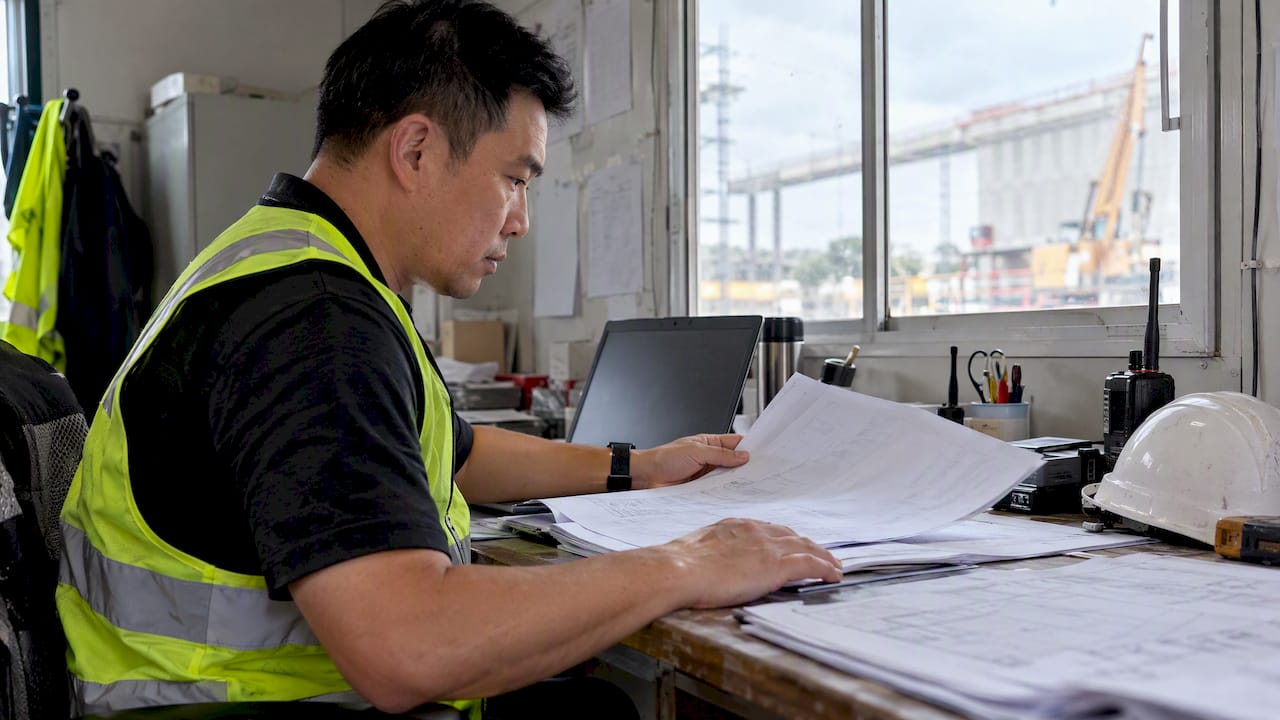

A superintendent gets a site inspection notice at 7:10 a.m. By 7:30, the team is pulling permits, training records, toolbox talk logs, equipment checklists, and subcontractor documents from three folders, two apps, and one inbox. That scramble is exactly why the future of construction safety compliance is changing. The next phase is not just about meeting requirements after the fact. It is about building systems that keep companies inspection-ready, contract-ready, and operationally in control every day.
For contractors, developers, and industrial operators, compliance is no longer a narrow safety function. It now sits at the intersection of regulation, procurement, project delivery, and reputation. Owners want proof of control before awarding work. Regulators expect documented implementation, not just policy statements. Clients increasingly look at safety performance as a proxy for management quality. That shift matters because companies that treat compliance as paperwork will struggle, while companies that treat it as a managed business process will be in a stronger position.
What the future of construction safety compliance looks like
The future of construction safety compliance will be more continuous, more evidence-based, and less tolerant of informal workarounds. In the past, many firms could rely on periodic file reviews, manual checklists, and the experience of a few key site leaders. That approach can still work on smaller, simpler projects, but it starts to break down when projects involve multiple subcontractors, tighter reporting requirements, and higher client expectations.
What is replacing it is a model built on visibility. Management teams want to know whether risk assessments are current, whether workers are trained for the tasks assigned, whether corrective actions are actually closed out, and whether site practices match the approved documentation. The emphasis is shifting from having documents to proving control.
That does not mean every company needs a fully digitized enterprise platform tomorrow. It does mean the direction is clear. Compliance systems will need to produce cleaner records, faster retrieval, and clearer accountability. If a company cannot show who did what, when, and how issues were corrected, it will face more pressure from regulators, clients, and internal stakeholders alike.
Why reactive compliance is losing ground
Reactive compliance has always been expensive. It consumes management time, creates project disruption, and often appears only after an incident, a failed audit, or a client escalation. What is changing now is the speed at which those consequences surface.
On many projects, prequalification requirements are tighter than they were a few years ago. General contractors and owners want assurance that subcontractors can manage safety obligations without constant intervention. A weak compliance setup can now affect bid competitiveness, onboarding speed, and contract retention, not just inspection outcomes.
There is also a workforce factor. Construction teams are dealing with labor shortages, compressed schedules, and more specialized work scopes. When experienced staff are stretched thin, undocumented practices and inconsistent supervision become more likely. That creates risk even before a regulator steps onto the site.
The practical answer is not more paperwork for its own sake. It is better system design. Companies need processes that fit field conditions, support supervisors, and create records as part of the work rather than as an afterthought.
Documentation will matter more, not less
Some firms assume technology will reduce the need for formal compliance documentation. In practice, it usually raises the standard. Digital records make it easier to collect evidence, but they also make gaps more visible. Missing inspections, overdue training, unsigned permits, and unresolved corrective actions stand out quickly when data is centralized.
That is a good thing if the company is prepared for it. Clean documentation supports audits, investigations, insurance discussions, tender submissions, and management review. Poor documentation does the opposite. It weakens otherwise solid field performance because the company cannot demonstrate control.
Technology is changing compliance, but it is not replacing judgment
Wearables, mobile inspections, digital permit systems, AI-assisted reporting, and connected equipment are all reshaping construction safety. These tools can improve visibility and reduce administrative delays. They can help identify patterns such as repeat near misses, high-risk work trends, or recurring subcontractor issues that might be missed in manual reviews.
Still, technology is only useful when it supports clear responsibilities and sound site leadership. A tablet-based inspection form does not improve safety if supervisors rush through it. A dashboard does not reduce risk if nobody acts on the findings. AI can help organize information, but it cannot replace competent risk assessment for a complex lift, a confined space entry, or a design-related hazard.
The companies that benefit most will be the ones that use technology to strengthen discipline, not to create the appearance of control. In other words, the system should make good compliance easier and weak compliance harder to hide.
The rise of integrated compliance systems
One of the biggest shifts ahead is the move away from isolated safety efforts. Construction compliance is increasingly connected to quality management, environmental controls, contractor management, training, and design review. That is especially true on projects with formal certification requirements, high client scrutiny, or complex stakeholder involvement.
An integrated system reduces duplication and improves traceability. For example, a recurring housekeeping issue may also signal supervision gaps, subcontractor onboarding weaknesses, or ineffective toolbox communication. Treating each issue separately often leads to repetitive correction without root-cause improvement.
This is where structured frameworks become valuable. Whether a company is aligning with client standards, preparing for external audits, or improving internal controls, the goal is the same: make compliance easier to manage across the full project lifecycle. Firms such as MOSAIC Ecoconstruction Solutions Pte Ltd are often engaged for exactly this reason – not just to advise on requirements, but to help build workable systems that stand up in real operating conditions.
Subcontractor management will become a bigger compliance test
Many compliance failures do not start with the main contractor’s written procedures. They start at the interface between companies. A subcontractor arrives with incomplete training records, unclear supervision, mismatched method statements, or poor understanding of site-specific controls. The documentation may look acceptable at onboarding, but implementation falls apart once the schedule tightens.
Future-ready compliance programs will put more structure around subcontractor selection, orientation, monitoring, and performance review. This does add effort upfront. But it usually saves time later by reducing rework, incident exposure, and corrective action churn.
For larger contractors, the challenge is scale. For smaller firms, the challenge is capacity. Either way, subcontractor governance is becoming a core part of safety compliance rather than a side issue.
Skills and culture will decide whether systems actually work
Even the best compliance framework can fail if site teams see it as detached from daily operations. That is why the future of construction safety compliance is not only digital or procedural. It is behavioral.
Supervisors need to understand more than the form they are completing. They need to know why a control matters, what good implementation looks like, and when conditions on site require escalation. Project managers need enough compliance literacy to make realistic decisions on sequencing, manpower, and subcontractor coordination. Senior leaders need reporting that is accurate enough to act on, not sanitized for presentation.
Training, then, has to move beyond one-time awareness sessions. It should be role-based, practical, and tied to actual site responsibilities. A permit issuer, a lifting supervisor, and a project director do not need the same depth of instruction, but all three influence compliance outcomes.
Culture matters too, although it is often discussed too vaguely. In practical terms, a strong culture shows up when workers report problems early, supervisors correct issues consistently, and management treats near misses as signals for improvement rather than inconvenience. That kind of environment does not happen through slogans. It comes from leadership behavior, clear standards, and follow-through.
What contractors should do now
The right next step depends on the maturity of the business. A smaller contractor may need to stabilize fundamentals first – document control, training records, inspection routines, and incident follow-up. A larger organization may need to focus on system integration, data quality, and subcontractor oversight.
Either way, companies should start by asking hard operational questions. Can we retrieve critical compliance records quickly? Are site practices consistent across projects? Do corrective actions close on time and stay closed? Are supervisors overloaded with admin that does not improve control? Those answers usually reveal where the real pressure points are.
It also helps to separate visible compliance from effective compliance. Passing an audit matters. So does preventing the underlying failures that lead to incidents, delays, and client concern. The strongest compliance programs do both.
The companies that will adapt best are not necessarily the ones with the biggest budgets. They are the ones willing to build disciplined, usable systems and keep improving them as project demands change. Construction will always involve risk, moving parts, and time pressure. But compliance is heading toward greater transparency, earlier intervention, and higher expectations. Firms that accept that shift now will be far better positioned when those expectations become the standard rather than the exception.