A serious site incident rarely ends when the area is cordoned off and the immediate hazard is controlled. For contractors, the harder work starts right after – preserving facts, managing reporting duties, interviewing the right people, and identifying what failed in the field, in supervision, or in the system. That is where contractor incident investigation support becomes critical. It helps organizations move from reaction to control, especially when time pressure, client scrutiny, and regulatory expectations all arrive at once.
In construction and industrial operations, incidents are rarely caused by one mistake. A worker may have missed a step, but the deeper issues often sit elsewhere: unclear permit conditions, weak supervision, poor sequencing, conflicting subcontractor activities, missing risk controls, or documentation that looked acceptable on paper but was not working on site. Treating an investigation as a blame exercise usually creates the wrong outcome. It may satisfy an immediate demand for answers, but it does little to prevent recurrence.
Why contractor incident investigation support matters
Many companies have capable project teams and safety personnel, but incident investigations create a different kind of pressure. Evidence can disappear within hours. Witness accounts change quickly. Supervisors are busy restoring operations. Senior management wants immediate facts. Clients may request reports before the full picture is available. If the organization does not have a structured investigation process, the findings can become incomplete, defensive, or inconsistent.
Professional contractor incident investigation support brings discipline to that process. It helps establish what happened, when it happened, and why controls failed. Just as importantly, it helps separate direct causes from root causes. That distinction matters because corrective actions based only on immediate errors tend to be weak. Retraining a worker may be necessary, but it will not solve an unsafe work sequence, poor contractor coordination, or a missing approval step.
For regulated industries, the investigation also has a compliance dimension. Employers and contractors may need to demonstrate that the incident was properly reviewed, findings were documented, and corrective actions were implemented and tracked. A poorly handled investigation can create exposure beyond the event itself. It may raise questions about management systems, competence, supervision, and due diligence.
What effective contractor incident investigation support includes
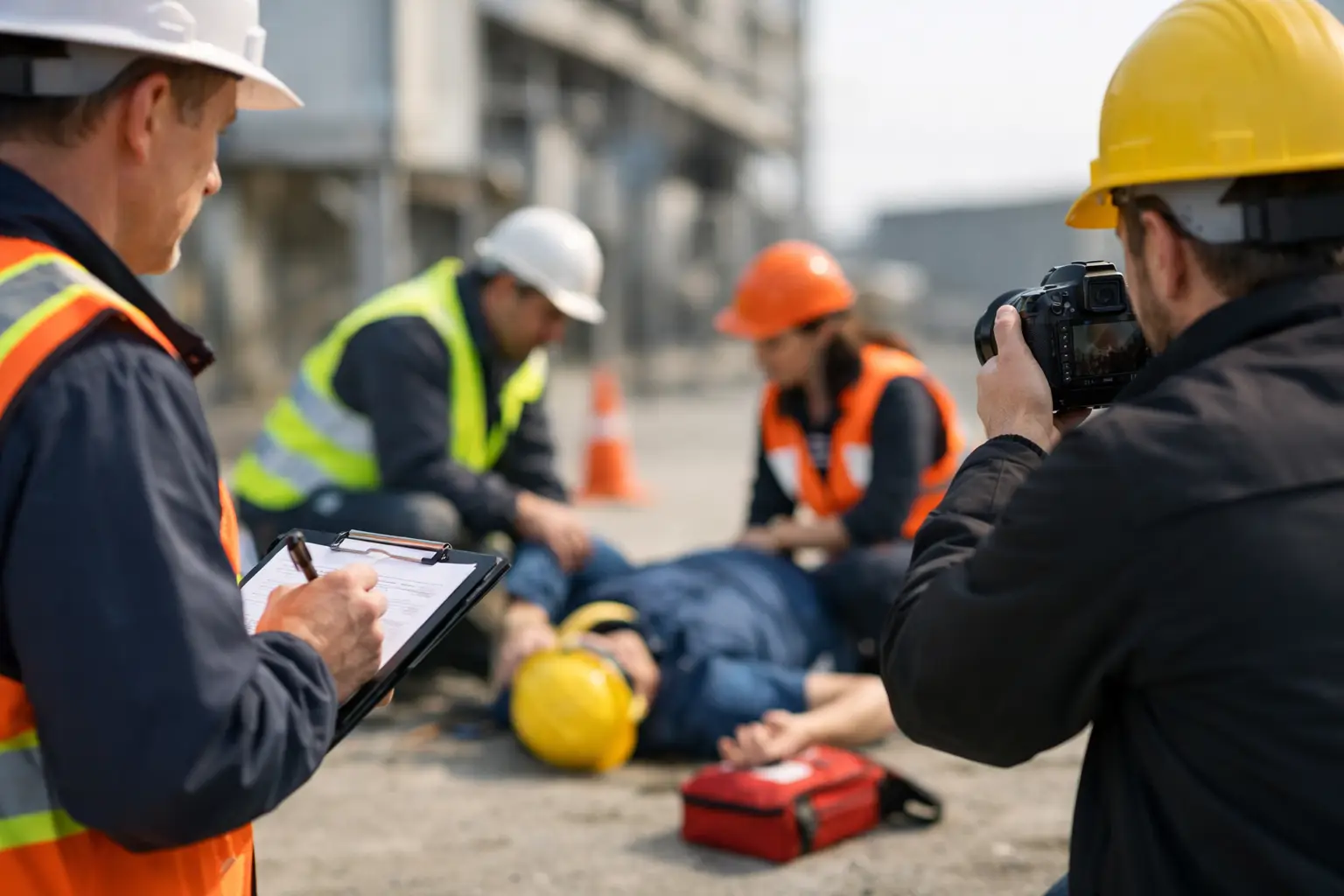
Effective support starts with fact control. The first objective is to stabilize the situation without contaminating evidence. Depending on the event, that may involve securing the area, preserving equipment condition, collecting photographs, obtaining permits and method statements, reviewing inspection records, and recording environmental or operational conditions at the time of the incident.
The next step is structured information gathering. This is more than taking statements. It means identifying who had decision-making authority, who set the work sequence, what instructions were issued, what changes occurred during the shift, and whether any temporary controls were introduced without formal review. In contractor environments, this can become complex because responsibility is often shared across the main contractor, subcontractors, supervisors, equipment operators, and client-side representatives.
A reliable investigation also tests the adequacy of existing systems. Were risk assessments current and task-specific? Did toolbox talks address the actual work conditions? Were permit controls understood by those carrying out the work? Was the supervision ratio suitable for the activity? Were workers competent for the task, or simply experienced in similar work? These questions often reveal the operational gaps that triggered the event.
From there, the investigation should lead to clear corrective and preventive actions. Strong actions improve controls, assign accountability, and set realistic completion dates. Weak actions stay vague. If the recommendation says only to “be more careful” or “brief all workers,” the organization is unlikely to achieve a meaningful reduction in repeat incidents.
Common failures in contractor incident investigations
One common failure is rushing to finalize the report before key facts are verified. Early reporting is often necessary, but early conclusions are risky. A preliminary account can support communication needs, while the full investigation remains open until evidence is properly reviewed.
Another issue is overreliance on witness statements. People remember events differently, especially under stress. Statements should be cross-checked against physical evidence, work records, equipment condition, and timeline data. Where available, access logs, lifting plans, inspection checklists, and permit records often tell a more complete story than recollection alone.
There is also the problem of narrow scope. Some investigations focus only on the injured person or the task team. In reality, root causes may sit upstream in procurement, planning, design coordination, maintenance, contractor onboarding, or unrealistic production pressure. If the scope is too narrow, the recommendations will be too small.
Finally, some organizations do not follow through. The investigation report gets submitted, but corrective actions are not validated in the field. This is a major weakness. Closing an action in a tracker is not the same as confirming that site conditions, behaviors, and management controls have actually improved.
How support helps contractors protect operations and compliance
The value of contractor incident investigation support is not limited to producing a report. It also helps protect business continuity. After a significant event, contractors may face work stoppages, client reviews, insurance queries, and internal concerns about whether similar conditions exist elsewhere on the project. A structured investigation helps management make decisions based on evidence rather than assumption.
This support is especially useful for firms that do not maintain a large in-house EHS team. Small and mid-sized contractors often have competent supervisors but limited capacity for formal investigations, documentation review, or root cause analysis. Bringing in experienced support can improve the quality of findings without overloading site leadership.
For larger organizations, external support can add independence. That matters when the incident may involve multiple parties, conflicting accounts, or contractual sensitivities. An objective review can help management assess systemic failures more clearly and present a defensible, well-documented response to clients and regulators.
What a good investigation process looks like in practice
A practical investigation process should be fast, structured, and proportionate to the severity of the event. Minor first-aid cases do not require the same depth as high-potential incidents, equipment failures, or serious injuries. Still, every investigation should follow a consistent logic.
Immediate response and evidence preservation
The first priority is emergency response and hazard control. Once the area is safe, evidence should be preserved before normal work resumes. This includes scene condition, equipment status, work materials, permits, and supervisory records.
Interviews and timeline reconstruction
Interviews should be conducted promptly and professionally, with attention to sequence, communication, and deviations from plan. Reconstructing the timeline often exposes where controls broke down, particularly when multiple subcontractors were working in parallel.
Root cause analysis and system review
A sound analysis does not stop at unsafe acts. It examines planning, risk assessment quality, training, supervision, equipment management, contractor coordination, and management oversight. Sometimes the root cause is straightforward. Often, it is layered.
Corrective action and verification
Corrective actions should be specific, measurable, and tied to accountable owners. More importantly, they should be verified after implementation. If a revised procedure is issued but not applied on site, the risk remains.
Choosing the right contractor incident investigation support
Not all support is equal. Contractors should look for providers that understand live site operations, not just reporting formats. The investigation team should be able to read construction realities accurately – shifting work fronts, subcontractor interfaces, temporary works, lifting operations, permit-to-work conflicts, and the difference between documented controls and actual field conditions.
Regulatory knowledge is equally important. A technically sound investigation that ignores reporting duties or documentation expectations may still leave the business exposed. The strongest support combines site-level practicality with compliance awareness, so findings can withstand review from clients, auditors, insurers, and authorities.
It also helps to work with a partner that can continue beyond the investigation itself. Sometimes the report identifies weaknesses in training, supervision, documentation, audits, or risk assessment methodology. In those cases, implementation support matters. A recommendation is only valuable if the organization can put it into practice consistently.
For companies operating in construction and industrial environments, this is where an integrated consultancy such as MOSAIC Ecoconstruction Solutions can add value – not just by investigating what went wrong, but by helping strengthen the management systems and site controls that prevent repeat events.
A well-supported investigation does more than explain an incident. It gives management a chance to correct weaknesses before the next near miss becomes a serious loss, and that is where real safety performance starts to improve.