
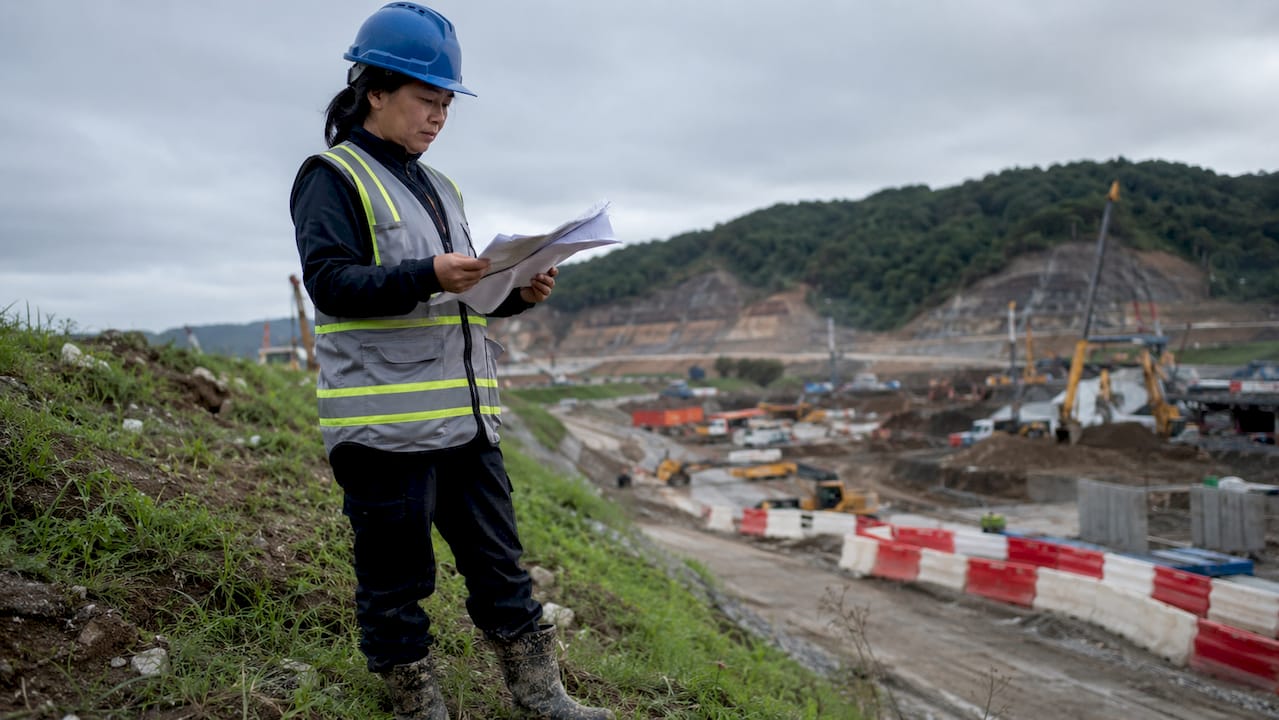
Construction environmental hazards are defined as the physical, chemical, biological, and ecological risk factors generated by construction activities that threaten worker health, surrounding ecosystems, and regulatory compliance. Safety managers, contractors, and compliance officers who treat these hazards as secondary concerns routinely face stop-work orders, EPA penalties, and irreversible site damage. This article covers construction environmental hazards explained in full, from air and water contamination to soil degradation and noise exposure, alongside the regulatory frameworks and practical management strategies that keep projects on schedule and out of violation. The Clean Water Act, OSHA Focus Four, and Phase I and II Environmental Site Assessments form the compliance backbone every construction professional must understand.
What are the common environmental hazards on construction sites?
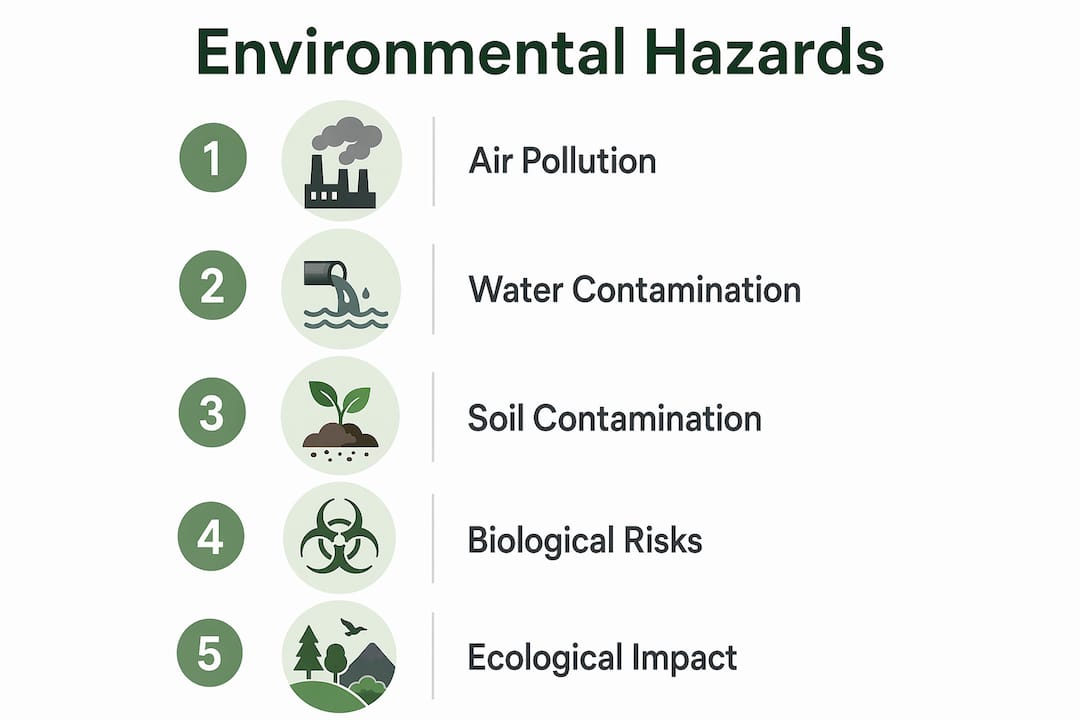
Construction site environmental hazards fall into five primary categories: air pollution, water contamination, soil degradation, noise and vibration, and hazardous material exposure. Each category carries distinct regulatory obligations and health consequences. Understanding all five is the baseline requirement for any credible construction hazard assessment.
Air quality and particulate matter
Construction site air is uniquely hazardous because it contains a mixture of silica dust, cement particles, and diesel exhaust that synergistically increase respiratory disease risk. These pollutants do not simply coexist. They interact chemically and physically, making the combined exposure more damaging than any single pollutant alone. Silica dust, released during concrete cutting, drilling, and demolition, causes silicosis, a progressive and irreversible lung disease. Diesel particulate matter from heavy equipment compounds the risk by lodging deep in lung tissue and triggering systemic inflammation.
Water contamination and stormwater runoff
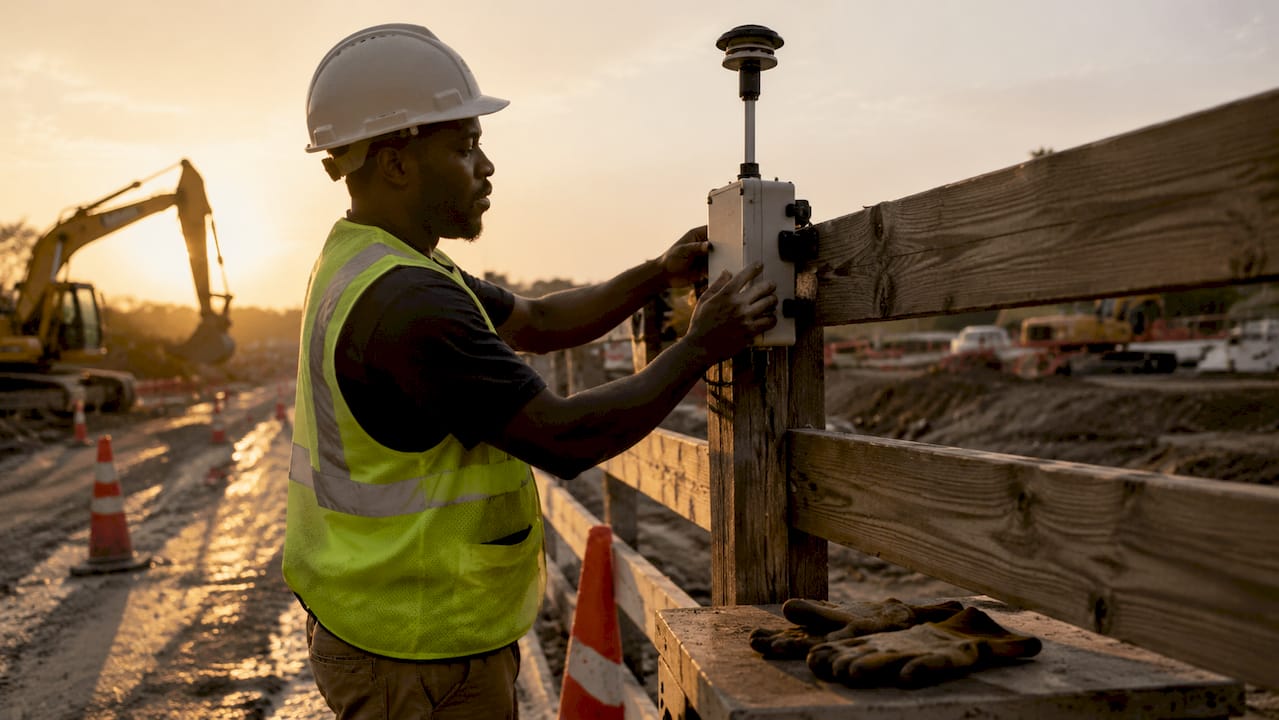
Construction sites account for over 30% of annual Clean Water Act violations, driven primarily by unmanaged stormwater and erosion control failures. That figure represents the single largest source of water quality violations across all regulated industries. Sediment-laden runoff carries construction chemicals, heavy metals, and petroleum products directly into storm drains and waterways. Without properly installed and maintained silt fences, sediment basins, and inlet protection, a single rain event can trigger a regulatory notice of violation.
Soil contamination and hazardous legacy materials
Soil contamination on construction sites frequently involves legacy hazardous materials, including asbestos in older building materials and lead paint in pre-1978 structures. These materials remain undetected until demolition begins, at which point disturbance releases fibers and particles that are immediately dangerous. The Comprehensive Environmental Response, Compensation, and Liability Act (CERCLA) assigns liability for contaminated soil remediation regardless of who originally deposited the contaminants. That statutory framework means a contractor who disturbs a contaminated site without prior testing can inherit cleanup costs that dwarf the original project value.
Noise, vibration, and broader site hazards
Common construction site environmental hazards also include:
- Noise pollution: Construction ranks among the highest-noise work environments across all industries, with sustained exposure causing permanent hearing loss in workers and measurable disturbance to neighboring communities.
- Ground vibration: Pile driving and compaction equipment transmit vibrations that damage adjacent structures and disrupt underground utilities.
- Chemical spills: Fuel, hydraulic fluid, and concrete admixtures stored or used on site create spill risk that contaminates soil and groundwater.
- Biological hazards: Disturbed soil can release Legionella bacteria, mold spores, and other pathogens, particularly on brownfield sites.
- Light pollution: Night construction generates artificial light that disrupts wildlife behavior and violates municipal ordinances in many jurisdictions.
How do environmental hazards impact workers and ecosystems?
The consequences of unmanaged construction environmental hazards operate on two parallel tracks: occupational health damage and ecological degradation. Both tracks carry legal liability, but the occupational track tends to produce faster and more visible consequences for site teams.
Respiratory and occupational health consequences
Silica dust exposure is the paramount occupational health risk in construction air quality. Silicosis, lung cancer, and chronic obstructive pulmonary disease are all documented outcomes of sustained silica exposure without adequate controls. Falls cause approximately 33% of all construction fatalities according to OSHA’s Focus Four framework, but respiratory diseases from dust and chemical exposure represent a slower and often underreported category of harm. The critical distinction is that respiratory damage accumulates invisibly over years, making it harder to attribute to a specific site or employer.
Ecological and community impacts
Water contamination from construction runoff directly harms aquatic ecosystems by increasing turbidity, reducing dissolved oxygen, and introducing toxic compounds into habitats. Sediment deposits smother spawning beds and destroy benthic communities that form the base of freshwater food chains. Noise pollution affects not only workers but also neighboring residential communities, with sustained construction noise linked to sleep disruption, cardiovascular stress, and reduced cognitive performance in children. Habitat destruction from site clearing eliminates vegetation buffers that filter runoff and support local biodiversity.
Pro Tip: Many of the most costly environmental violations originate from contaminants that were already present on site before construction began. Ordering a Phase II Environmental Site Assessment before mobilization is not optional risk management. It is the only way to establish baseline conditions and avoid inheriting pre-existing liability.
What are the best practices for managing construction environmental hazards?
Effective hazard management in construction follows a structured sequence that begins before mobilization and continues through project closeout. The Hierarchy of Controls applied to environmental hazards prioritizes elimination and substitution over engineering controls, administrative procedures, and personal protective equipment. That sequence matters because PPE is the least reliable control and the most commonly overused one.
Sequential steps for environmental hazard management
- Conduct Phase I and Phase II Environmental Site Assessments before breaking ground to identify legacy contamination, regulated materials, and sensitive receptors adjacent to the site.
- Develop a Stormwater Pollution Prevention Plan (SWPPP) that maps drainage patterns, identifies discharge points, and specifies best management practices for erosion and sediment control.
- Prepare a site-specific Environmental Management Plan (EMP) that addresses air quality controls, waste management, spill response, noise mitigation, and chemical storage requirements.
- Integrate environmental compliance milestones into the project critical path so that permit conditions and inspection requirements are treated as schedule constraints, not administrative afterthoughts.
- Establish a tiered inspection cadence consisting of daily walk-downs, weekly formal inspections, and monthly site audits to verify that controls remain functional and documentation is current.
- Embed environmental KPIs in production meetings so that erosion control status, waste disposal records, and air monitoring data are reviewed alongside schedule and cost metrics.
- Train all subcontractors on site-specific environmental requirements before they mobilize, with documented sign-off as a condition of site access.
Pro Tip: Environmental compliance failures most often result from operational lapses, such as missed inspections or unsigned permits, rather than from absent policies. Build your inspection schedule into the project management system as non-negotiable calendar items, not discretionary tasks.
The hazard identification process must also account for dynamic site conditions. A SWPPP that was accurate at mobilization may be inadequate after a major grading operation changes drainage patterns. Formal re-evaluation triggers should be written into the EMP from the outset.
Regulatory standards and compliance tools: a comparison
Construction professionals operate under multiple overlapping regulatory frameworks at the federal level. Understanding the scope and enforcement mechanism of each is a prerequisite for building a defensible compliance program.
| Regulatory Framework / Tool | Primary Scope | Enforcement Mechanism | Key Construction Obligation |
|---|---|---|---|
| Clean Water Act (CWA) | Stormwater and water quality | EPA and state agencies; penalties exceeding $70,000 per day | NPDES permit, SWPPP implementation and maintenance |
| Clean Air Act (CAA) | Air emissions and dust | EPA regional offices; permit conditions | Fugitive dust controls, diesel emission limits |
| RCRA (Resource Conservation and Recovery Act) | Hazardous waste generation and disposal | EPA; criminal liability for willful violations | Waste characterization, manifesting, licensed disposal |
| CERCLA (Superfund) | Contaminated site remediation | EPA; strict and retroactive liability | Phase I and II ESA before site disturbance |
| OSHA Construction Standards (29 CFR 1926) | Worker safety including hazardous materials | OSHA inspections; civil and criminal penalties | Silica standard, lead standard, asbestos standard |
| SWPPP | Operational stormwater management | Incorporated into NPDES permit conditions | Site-specific BMP installation, inspection, and documentation |
The most common compliance failure across all of these frameworks is not the absence of a permit or plan. Most violations stem from operational management failures such as missing inspection records, unmaintained erosion controls, or inadequate subcontractor oversight. A permit on file provides no protection if the site conditions it governs are not actively maintained.
Pro Tip: Integrating SWPPP inspection records, waste manifests, and air monitoring logs into a single digital compliance dashboard gives safety managers real-time visibility across all regulatory obligations. Tools like Procore, Fieldwire, or SmartQHSE can host these records and generate automated inspection reminders, reducing the operational lapses that trigger most violations.
For construction teams operating in Singapore, the environmental compliance framework adds National Environment Agency (NEA) requirements and BizSAFE certification obligations that run parallel to the project safety management system.
Key Takeaways
Effective management of construction environmental hazards requires early assessment, continuous operational monitoring, and full integration of compliance obligations into the project schedule and daily site routines.
| Point | Details |
|---|---|
| Early site assessment is non-negotiable | Phase I and II Environmental Site Assessments identify legacy contamination before mobilization, preventing inherited liability. |
| Air hazards are compounded by pollutant mixtures | Silica dust, cement particles, and diesel exhaust interact synergistically, making construction air more dangerous than any single pollutant alone. |
| Water violations are the most common regulatory failure | Construction sites generate over 30% of Clean Water Act violations, primarily from unmanaged stormwater and failed erosion controls. |
| Operational discipline drives compliance | Most EPA and OSHA violations result from missed inspections and poor documentation, not absent permits or policies. |
| Hierarchy of Controls must lead hazard management | Elimination and substitution controls outperform PPE-reliant approaches in both worker protection and ecological outcomes. |
Why environmental oversight is the most underestimated risk in construction
From my experience working across construction compliance programs, the pattern is consistent: environmental hazard management is treated as a documentation exercise rather than an operational discipline. Teams obtain the required permits, file the SWPPP, and then proceed to manage the site as if the paperwork were the control. It is not.
The sites that generate the most costly violations are rarely the ones that skipped the permitting process. They are the ones that permitted correctly and then failed to maintain the controls in the field. Erosion barriers get displaced by equipment and are not reset. Inspection records fall two weeks behind. A subcontractor stores fuel adjacent to a storm drain because no one briefed them on the site-specific requirements.
The environmental compliance guide for Singapore construction projects I have reviewed consistently show the same gap: the plan is adequate, but the operational integration is absent. Environmental KPIs need to sit in the same production meeting as schedule and cost. When a project manager reviews erosion control status every Monday morning alongside the weekly look-ahead schedule, the controls get maintained. When environmental compliance lives in a separate binder reviewed only during audits, it degrades.
The Hierarchy of Controls framework is the correct mental model here. Elimination and substitution controls do not require daily human intervention to remain effective. Engineering controls require maintenance but are more reliable than behavioral compliance. PPE is the last resort, not the first response. Construction teams that invert this hierarchy, reaching for dust masks before considering wet suppression or enclosed cabs, are accepting unnecessary risk and unnecessary liability.
— Aman
How Com supports construction environmental compliance
Construction environmental hazard management demands more than a checklist. It requires a structured compliance system embedded in every phase of project delivery.

Com, operating as MOSAIC Ecoconstruction Solutions, provides specialized safety consultancy for Singapore construction teams navigating the full spectrum of environmental and occupational safety obligations. Services include environmental management plan development, safety audit programs, BizSAFE and ISO certification support, and ConSASS compliance documentation. For construction companies seeking to build environmental compliance into their project critical path rather than manage it reactively, Com provides the technical expertise and operational frameworks to do so effectively. Contact the team to discuss your project’s specific compliance requirements.
FAQ
What are construction environmental hazards?
Construction environmental hazards are physical, chemical, biological, and ecological risks generated by construction activities that threaten worker health, surrounding ecosystems, and regulatory compliance. They include air pollution from silica dust and diesel exhaust, water contamination from stormwater runoff, soil degradation, noise exposure, and hazardous legacy materials such as asbestos and lead paint.
Why do construction sites generate so many Clean Water Act violations?
Construction sites account for over 30% of annual Clean Water Act violations because stormwater runoff from active grading and excavation carries sediment, chemicals, and heavy metals into waterways. Most violations result from failed or unmaintained erosion controls rather than the absence of a Stormwater Pollution Prevention Plan.
What is a Phase II Environmental Site Assessment?
A Phase II Environmental Site Assessment is a subsurface investigation that collects soil and groundwater samples to confirm or rule out contamination identified during a Phase I review. Skipping this step before mobilization exposes contractors to CERCLA liability for pre-existing contamination they disturb during construction.
How often should environmental inspections occur on a construction site?
The recommended cadence is daily walk-downs by site supervisors, weekly formal inspections by the safety officer, and monthly comprehensive audits by a qualified environmental professional. This tiered approach ensures that control failures are identified and corrected before they generate regulatory violations.
What are the EPA penalties for construction environmental violations?
EPA penalties for construction violations can exceed $70,000 per day, and they are most commonly triggered by permit maintenance failures such as missing inspection records or unmaintained erosion controls, not by the absence of required permits.