
The environmental audit process is a systematic, phased evaluation of an organization’s compliance with environmental regulations and its overall environmental management performance. Formally recognized under frameworks such as ISO 14001 and EPA voluntary disclosure programs, this process spans three defined phases: pre-audit, audit, and post-audit. For construction and industrial professionals, a well-executed environmental compliance assessment is not optional. Regulatory exposure, reputational risk, and the operational cost of non-compliance make structured auditing a core business function, not a periodic formality.
What are the key phases of the environmental audit process?
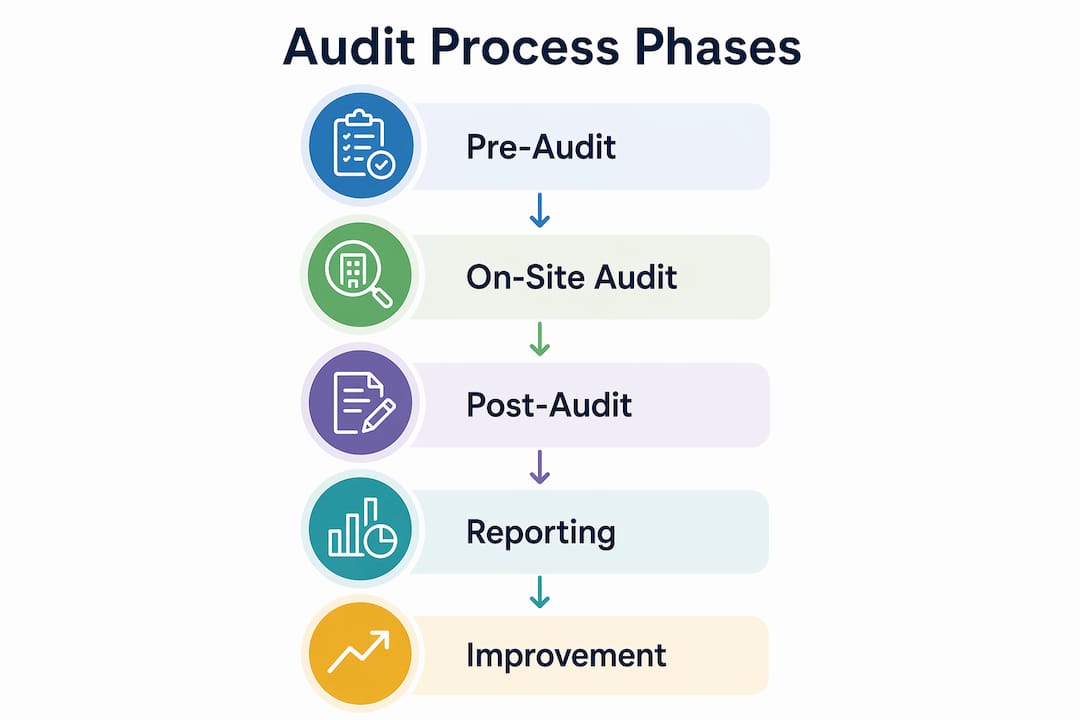
The three-phase structure of pre-audit, audit, and post-audit defines every credible environmental audit, regardless of site complexity or industry sector. Each phase carries distinct deliverables and failure points. Skipping or compressing any phase introduces compliance gaps that regulators and insurers will identify.
Phase 1: pre-audit preparation
Pre-audit work determines whether the audit itself will succeed or stall. This phase requires assembling a qualified team, defining the audit scope, gathering documentation, and securing executive management buy-in. Top-management commitment is not a formality. Without it, auditors encounter restricted site access, incomplete records, and staff reluctance to disclose operational realities.
The pre-audit documentation checklist typically includes:
- Environmental permits and discharge authorizations
- Site maps and drainage plans
- Chemical inventories and material safety data sheets
- Training records for environmental compliance staff
- Previous audit reports and corrective action logs
- Regulatory correspondence and inspection records
Phase 2: the on-site audit
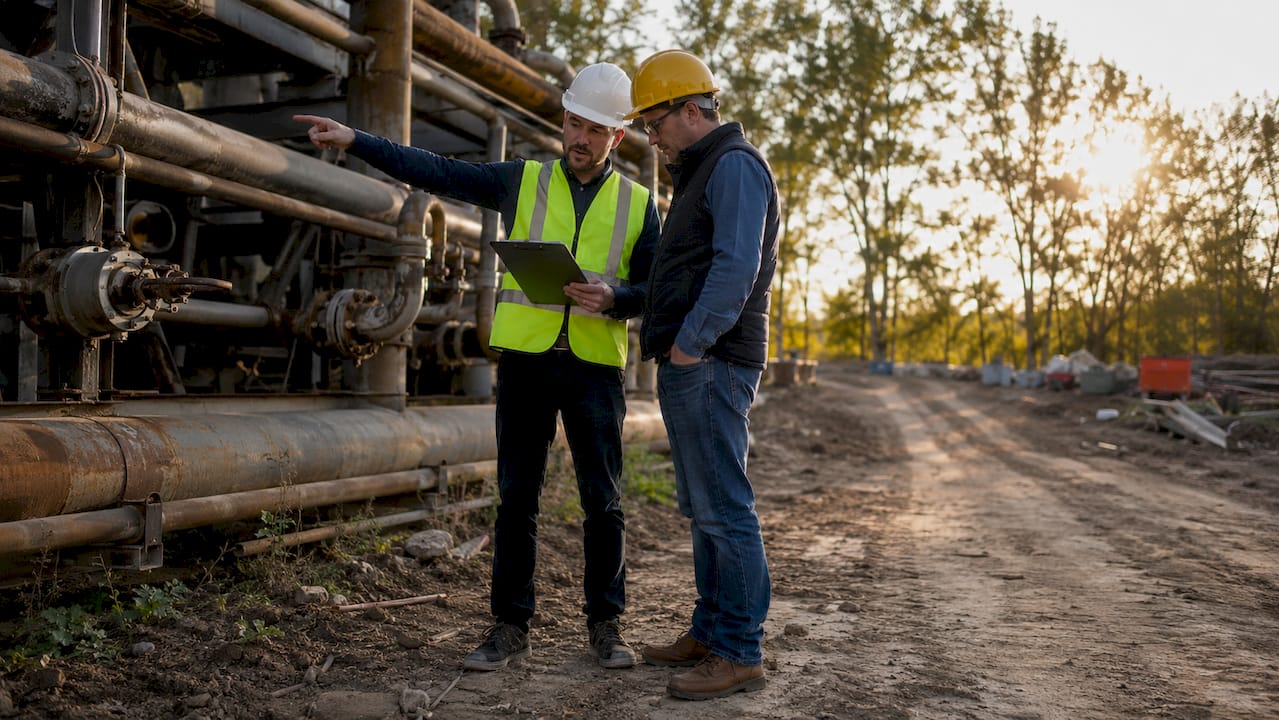
The audit phase opens with a formal meeting between the audit team and site management. This meeting establishes scope, confirms logistics, and sets expectations for daily debriefs. Site inspections follow, covering waste storage areas, stormwater controls, air emission sources, and chemical handling zones. Auditors conduct structured interviews with operations staff, not just supervisors, because frontline workers often hold the most accurate picture of day-to-day environmental practices.
Equipment checks and compliance verification run concurrently with interviews. Auditors cross-reference observed conditions against permit requirements, regulatory standards, and internal environmental management system documentation. Daily debriefs allow the team to flag emerging issues before the closing meeting, where preliminary findings are presented to site leadership.
Phase 3: post-audit actions
Post-audit work transforms raw findings into regulatory and operational value. Data analysis, formal report preparation, and corrective action plan development are the three core deliverables. The corrective action plan must assign clear ownership, define remediation timelines, and establish verification checkpoints. Effective audits improve not only regulatory compliance but also operational efficiency and measurable environmental performance.
Pro Tip: For large industrial sites, build a 30-day post-audit window into the project schedule specifically for corrective action plan development. Compressing this phase produces vague action items that no one owns.
What tools, documents, and team roles optimize an audit?
The quality of an environmental audit depends directly on the resources deployed. The table below maps critical documentation and tools to their audit function.
| Resource | Type | Purpose | Key Benefit |
|---|---|---|---|
| Environmental permits | Document | Verify regulatory authorization | Identifies permit gaps and expiration risks |
| Chemical inventory | Document | Confirm hazardous material compliance | Flags unreported substances |
| Audit checklist | Tool | Standardize inspection criteria | Reduces auditor-to-auditor variability |
| Digital audit software | Tool | Centralize data capture and reporting | Accelerates post-audit analysis |
| Sampling equipment | Tool | Measure emissions, effluents, and soil | Provides defensible quantitative data |
| Previous audit reports | Document | Establish baseline and track trends | Reveals recurring non-conformances |
| Training records | Document | Confirm staff competency | Supports due diligence defense |
Team composition is equally determinative. Internal environmental managers provide site-specific knowledge. External auditors, such as those specializing in industrial safety audits, bring regulatory objectivity and cross-sector benchmarking. Legal counsel is the role most frequently omitted and most consequential when omitted.
Pro Tip: Engage legal counsel before the audit begins, not after findings emerge. Directing the audit through counsel can establish attorney-client privilege, shielding sensitive findings from litigation discovery. This is a legally protective strategy that costs little to implement and can be invaluable if enforcement action follows.
Audit protocol design varies between prescriptive detailed checklists and flexible frameworks that rely on auditor expertise. Prescriptive protocols reduce variability but can miss site-specific risks. Flexible protocols demand more experienced auditors. Most construction and industrial sites benefit from a hybrid approach: standardized checklists for regulated activities, supplemented by auditor judgment for complex operational areas.
How do voluntary self-audits affect compliance and legal risk?
Voluntary self-audits represent one of the most strategically underutilized tools in construction and industrial environmental management. Voluntary disclosure under EPA and state audit policies can result in the elimination or significant reduction of civil penalties, provided corrective actions are implemented within regulatory timelines. That is a material financial and reputational benefit.
The legal architecture supporting voluntary audits includes two distinct protections:
- Attorney-client privilege: When legal counsel directs the audit, findings may be protected from discovery in civil litigation.
- Statutory audit privilege: Several U.S. states have enacted audit privilege statutes that provide independent protection for voluntary audit findings, separate from attorney-client privilege.
“Proactive environmental compliance management through voluntary self-audits positions construction and industrial organizations to correct violations before regulators identify them, preserving both civil penalty immunity and operational continuity.”
The risk calculus is straightforward. Organizations that identify and correct violations voluntarily operate under regulatory protection. Organizations that ignore or conceal environmental issues face enforcement actions, stop-work orders, and reputational damage that far exceeds the cost of the audit itself. External audits for small businesses typically cost between $5,000 and $20,000, with post-audit energy use reductions of 15–20% delivering measurable return on that investment.
What challenges arise during environmental audits?
Construction and industrial sites present audit challenges that office-based compliance programs do not. Understanding these obstacles in advance is the difference between a productive audit and a prolonged, expensive one.
The most common challenges include:
- Incomplete documentation: Missing permits, outdated chemical inventories, and disorganized training records are the primary drivers of audit cost overruns. Disorganized documentation can double the man-hours required for data gathering and analysis alone.
- Stakeholder resistance: Site supervisors and operations staff sometimes perceive audits as punitive rather than protective. Framing the audit as a compliance improvement tool, not an enforcement exercise, reduces resistance and improves data quality.
- Protocol rigidity versus site complexity: Prescriptive checklists work well for standard operations but can fail to capture risks in complex or non-standard industrial processes. Auditors must exercise judgment when checklists do not map cleanly to site conditions.
- Executive disengagement: When senior leadership treats the audit as a compliance checkbox, resource allocation suffers and findings receive inadequate follow-through. Management buy-in must be secured before the audit begins, not solicited after findings are delivered.
Pro Tip: Conduct a documentation readiness review 30 days before the scheduled audit. Assign a single point of contact to compile permits, maps, and records into a centralized repository. This one step eliminates the most common source of audit delays and cost overruns.
Effective communication with site workers requires deliberate planning. Auditors should conduct interviews in small groups or one-on-one settings, away from supervisors, to elicit candid responses. Workers who feel safe disclosing operational realities provide the most accurate picture of actual environmental performance versus documented procedures.
How do audit findings drive continuous improvement?
A completed audit report is the starting point for environmental performance improvement, not the endpoint. Construction and industrial organizations that treat audit findings as a compliance record rather than an operational improvement tool forfeit the most significant return on their audit investment.
The integration of audit findings into continuous improvement programs follows a defined sequence:
- Develop a prioritized corrective action plan. Rank findings by regulatory risk and operational impact. Assign ownership to specific individuals, not departments. Set completion deadlines with interim milestones.
- Implement corrective actions within regulatory timelines. For voluntary disclosures, EPA and state policies require prompt correction to qualify for penalty reduction. Delayed implementation eliminates the legal benefit of voluntary disclosure.
- Establish a monitoring schedule. ISO 14001 surveillance audits, conducted annually, provide the structured cadence required for sustained certification and continuous compliance verification.
- Leverage audit data for operational efficiency. Energy consumption data, waste generation metrics, and chemical usage records collected during audits identify reduction opportunities. Organizations that act on this data achieve the 15–20% energy use reductions documented in post-audit performance reviews.
- Use audit findings to prepare for regulatory inspections. Regulatory inspectors follow similar protocols to environmental auditors. Organizations with active corrective action programs and current documentation consistently perform better during unannounced inspections.
- Build a culture of transparency. Communicate audit outcomes and corrective action progress to site teams. Transparency converts the audit from a management exercise into a shared operational commitment.
The project risk assessment steps that precede construction activity align directly with environmental audit preparation. Organizations that integrate risk assessment and environmental auditing into a single compliance program reduce duplication and improve the quality of both processes.
Key takeaways
A structured environmental audit process, executed across pre-audit, audit, and post-audit phases with qualified teams and legal counsel, is the most defensible path to sustained regulatory compliance and measurable environmental performance improvement.
| Point | Details |
|---|---|
| Three-phase structure is non-negotiable | Pre-audit, audit, and post-audit phases each carry distinct deliverables that cannot be compressed without creating compliance gaps. |
| Management buy-in determines audit quality | Without executive commitment, audits face restricted access, incomplete records, and inadequate corrective action follow-through. |
| Legal counsel protects audit findings | Directing audits through legal counsel can establish attorney-client privilege, shielding sensitive findings from litigation discovery. |
| Voluntary disclosure reduces penalties | EPA and state policies can eliminate or significantly reduce civil penalties when violations are self-disclosed and corrected promptly. |
| Audit data drives operational savings | Post-audit corrective actions consistently deliver 15–20% energy use reductions, generating measurable return on audit investment. |
Why most environmental audits underdeliver (and how to fix that)
The pattern I observe most frequently in construction and industrial audit engagements is this: organizations invest in the audit itself but underinvest in everything that makes the audit useful. The pre-audit documentation review gets compressed. Legal counsel is not engaged until findings create exposure. The corrective action plan is drafted by the compliance team and then filed rather than executed.
The result is an audit report that satisfies a regulatory checkbox but produces no measurable improvement in environmental performance or legal protection. The organizations that extract genuine value from environmental audits share three characteristics. They secure executive commitment before the audit scope is defined. They build multidisciplinary teams that include legal counsel, external auditors, and internal operational experts. They treat the corrective action plan as a living document with assigned ownership and tracked milestones.
The legal dimension is consistently underweighted. Conducting an audit without legal counsel direction is a missed opportunity. The attorney-client protection available through counsel-directed audits costs almost nothing to establish and can be the difference between a manageable compliance correction and a protracted enforcement proceeding.
The energy and efficiency gains documented in post-audit performance data are real. Organizations that complete the full audit cycle, including rigorous corrective action implementation, consistently achieve the operational improvements that justify the audit investment many times over. The audit process is not a cost center. It is a risk management instrument and an operational improvement mechanism. Treat it accordingly.
— Aman
How Com supports your environmental audit program
Construction and industrial organizations that require structured support for environmental compliance assessment and audit execution can rely on Com’s QES consultancy services. Com’s team provides end-to-end audit support, from pre-audit documentation preparation and team assembly through corrective action planning and ISO 14001 surveillance audit coordination.

Com’s safety consultancy services are specifically structured for construction sector compliance requirements, including BizSAFE certification, ISO 14001 alignment, and regulatory inspection preparation. For organizations managing complex multi-site operations, Com’s outsourced safety manpower model provides qualified environmental and safety professionals on a flexible basis, reducing overhead while maintaining audit rigor and compliance continuity. Contact Com to discuss your next environmental audit engagement.
FAQ
What is the environmental audit process?
The environmental audit process is a systematic, three-phase evaluation covering pre-audit planning, on-site inspection and compliance verification, and post-audit reporting with corrective action planning. It assesses an organization’s adherence to environmental regulations and the effectiveness of its environmental management system.
How long does an environmental audit take?
Audit duration varies by site complexity, documentation quality, and regulatory scope. Simple single-site audits may require one to two weeks, while complex industrial facilities with multiple regulated activities can require several months from pre-audit preparation through corrective action plan finalization.
Why implement environmental audits proactively?
Voluntary self-audits can eliminate or significantly reduce civil penalties under EPA and state audit policies when violations are identified and corrected promptly. Proactive auditing also generates 15–20% energy use reductions and prepares organizations for unannounced regulatory inspections.
What documents are required for an environmental audit?
Core documentation includes environmental permits, site maps, chemical inventories, training records, previous audit reports, and regulatory correspondence. Incomplete or disorganized records are the leading cause of audit cost overruns and extended timelines.
How does ISO 14001 relate to environmental auditing?
ISO 14001 requires organizations to conduct periodic internal environmental audits and submit to annual surveillance audits to maintain certification. These audits verify that the environmental management system remains effective, compliant, and aligned with the organization’s stated environmental objectives.
Recommended
- 2026 Roadmap to bizSAFE STAR: A Step-by-Step Guide for Singapore SMEs – MOSAIC Eco-construction Solutions Pte Ltd
- Guide BizSafe : certification Niveaux 3, 4 et Star (Édition 2025) – MOSAIC Eco-construction Solutions Pte Ltd
- BizSafe 2025: The Ultimate Guide to Certification & ROI – MOSAIC Eco-construction Solutions Pte Ltd