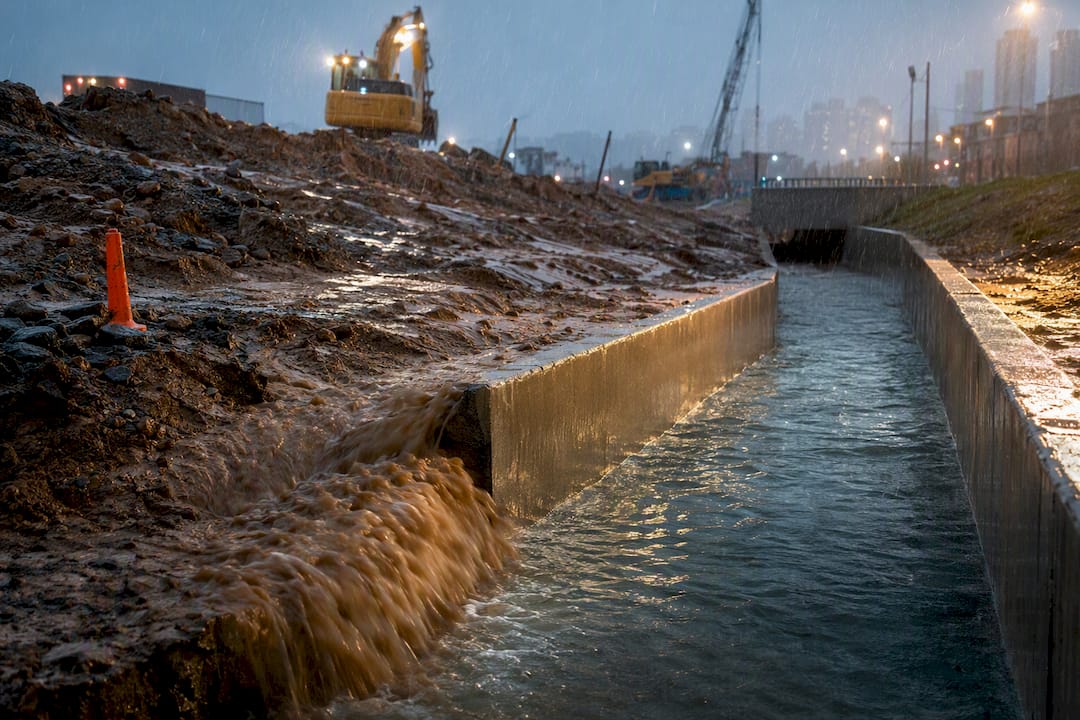

A construction environmental audit is a systematic, evidence-based review of a construction site’s adherence to environmental regulations, internal sustainability policies, and pollution prevention requirements across the full project lifecycle. Formally recognized under frameworks including the U.S. Environmental Protection Agency’s NPDES program, the Clean Water Act, and the Clean Air Act, these audits evaluate whether a project’s operational practices, documentation, and management systems meet statutory obligations. Construction sites contribute to over 30% of Clean Water Act violations annually, largely due to missed inspections and documentation failures. Non-compliance carries fines of up to $70,000 per day, making environmental audits one of the most consequential risk management tools available to construction firms.
What does a construction environmental audit consist of?
A construction environmental audit covers every operational domain where a site can generate pollution or regulatory exposure. The scope extends well beyond stormwater management, though that remains the most frequently cited area of non-compliance. Typical audits cover stormwater compliance, hazardous waste handling, air quality measures, and documentation requirements across all active work zones.
The core components of a standard construction environmental audit include:
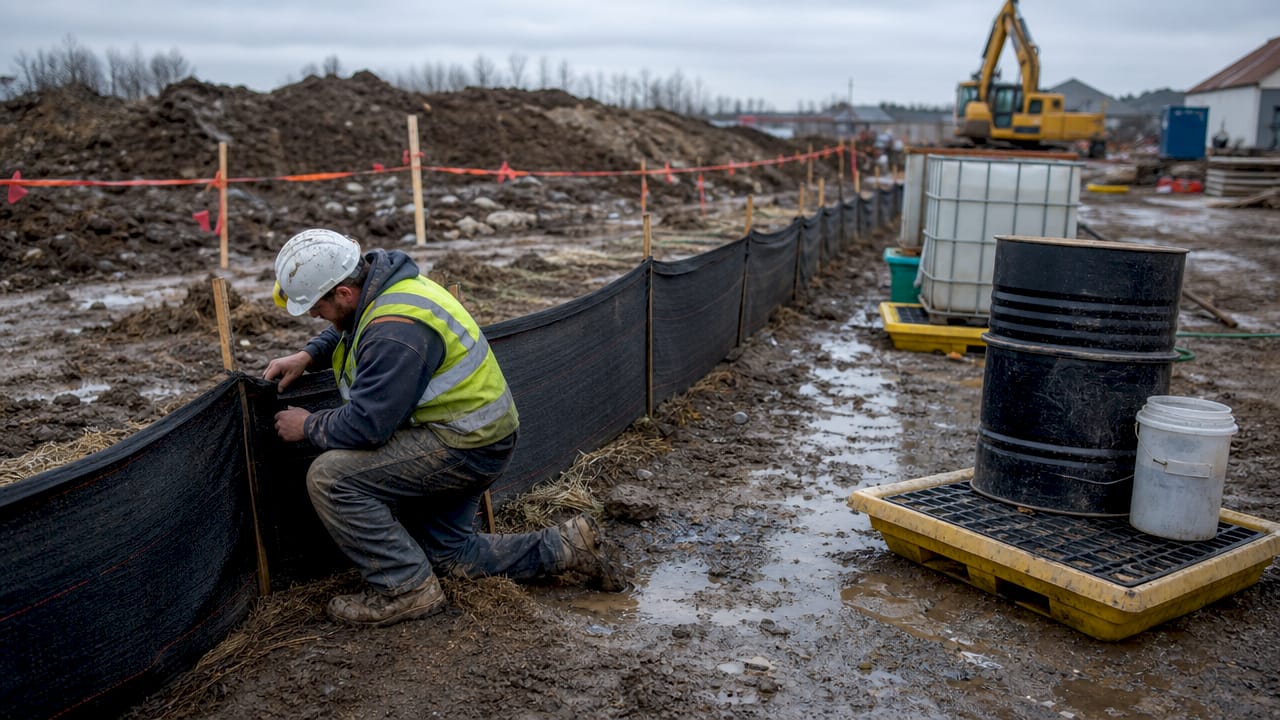
- Stormwater management: Verification of Best Management Practices (BMPs) such as silt fences, sediment basins, and inlet protection. Stormwater inspections must occur every 7 days and within 24 hours following rainfall events exceeding 0.5 inches under NPDES Construction General Permit requirements.
- Soil and erosion controls: Physical inspection of erosion control measures, grading practices, and stabilization of disturbed areas.
- Hazardous materials management: Verification of Material Safety Data Sheets (MSDS), secondary containment structures, and proper labeling and storage of fuels, solvents, and concrete washout.
- Air quality controls: Dust suppression measures, idling restrictions, and equipment emission records.
- Waste management: Segregation of construction debris, recycling documentation, and disposal manifests for regulated waste streams.
- Noise pollution controls: Compliance with local ordinances governing construction hours and equipment noise thresholds.
- Training and documentation: Verification that all site personnel have received environmental awareness training, with signed attendance records on file.
Pro Tip: Assign a single point of contact on each project to own the environmental compliance file. Fragmented responsibility across multiple subcontractors is the fastest path to documentation gaps that trigger violations.
Auditors do not simply review plans. They look for physical evidence that controls are installed, maintained, and functioning. A Stormwater Pollution Prevention Plan (SWPPP) sitting in a site office binder is not sufficient if the sediment basin is silted beyond capacity.
How does the construction environmental audit process work?
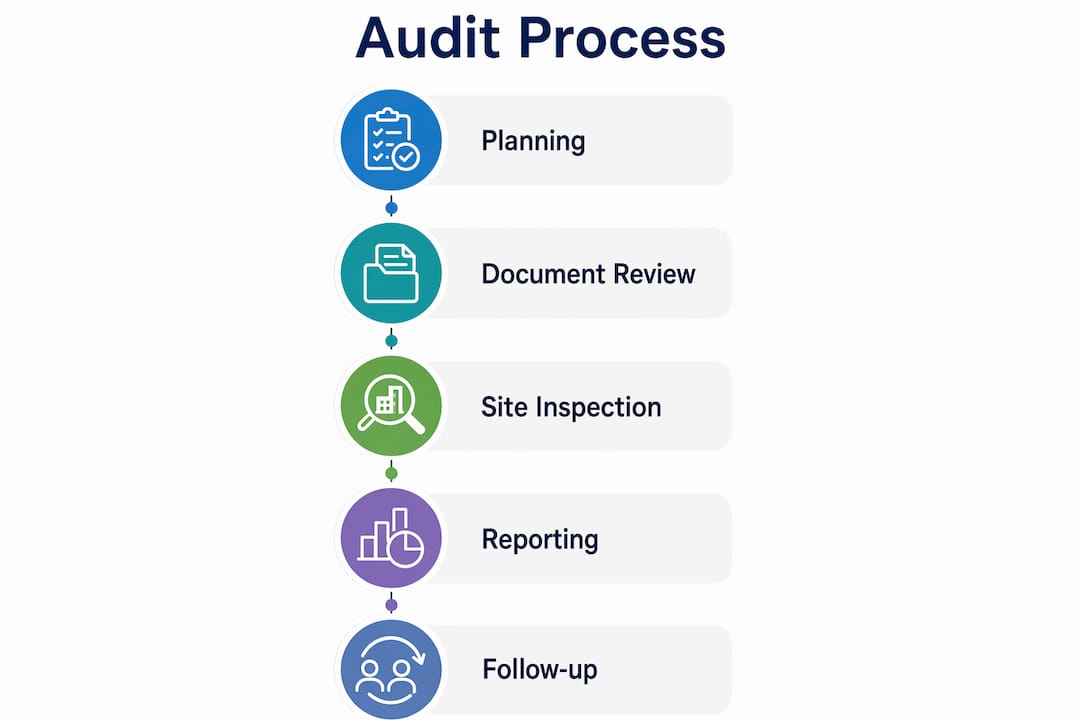
A formal construction environmental audit follows a structured sequence of phases. The full process typically spans approximately three months, divided into four weeks of planning, four weeks of on-site fieldwork, and four weeks of reporting and corrective action follow-up. Understanding each phase allows project teams to allocate resources and prepare documentation without disruption to active construction schedules.
-
Pre-audit planning. The audit scope is defined, including which regulatory permits, environmental plans, and operational areas will be evaluated. The auditor, whether a third-party specialist or an internal compliance officer, reviews the project’s SWPPP, stormwater permits, and any prior inspection records before setting foot on site.
-
Document review. All environmental management documentation is collected and assessed. This includes inspection logs, training records, waste disposal manifests, chemical inventories, and corrective action reports from previous inspections. Missing or incomplete records at this stage are treated as non-compliance findings, not administrative oversights.
-
On-site physical inspection. Auditors conduct a systematic walkthrough of the entire site, verifying that physical controls match the SWPPP and permit conditions. They photograph non-conformances, measure BMP performance, and interview site personnel to assess awareness of environmental responsibilities.
-
Non-conformance identification. Each gap between observed conditions and regulatory requirements is documented with objective evidence. Findings are categorized by severity, distinguishing between minor documentation deficiencies and major operational failures that require immediate corrective action.
-
Corrective action planning. The project team receives a formal list of findings with required remediation actions, responsible parties, and completion deadlines. Regulatory agencies may require submission of a corrective action report within a defined timeframe.
-
Final audit report and management response. The auditor issues a written report summarizing findings, corrective actions taken, and any outstanding obligations. Management formally acknowledges the report and commits to a resolution timeline.
This sequential structure reflects the principle that successful sustainable audits rely on objective, evidence-based evaluation from planning through reporting to drive continuous operational improvement and regulatory adherence.
Audits vs. inspections: what is the real difference?
Construction professionals frequently conflate environmental audits with routine site inspections. The distinction is operationally significant and determines how each activity should be resourced and scheduled.
| Dimension | Environmental Audit | Environmental Inspection |
|---|---|---|
| Frequency | Periodic (quarterly, annually, or triggered by permit) | Frequent (weekly, post-rain events, daily for high-risk activities) |
| Scope | Entire management system, policies, documentation, and controls | Immediate site conditions and specific BMP performance |
| Conducted by | Third-party auditors, internal compliance teams, or regulators | Site supervisors, environmental monitors, or regulatory inspectors |
| Output | Formal written report with findings and corrective actions | Inspection log entry, immediate corrective action if required |
| Regulatory trigger | Permit conditions, ISO 14001 requirements, or internal governance | NPDES Construction General Permit, local ordinances |
Internal inspections are more frequent operational spot checks; audits are periodic comprehensive reviews that assess adherence to all environmental requirements and policies. Inspections monitor daily site conditions. Audits evaluate whether the management system governing those conditions is functioning as designed.
Pro Tip: Use inspection data as the primary evidence base for your audit. A well-maintained inspection log transforms a potentially adversarial audit into a straightforward documentation exercise.
The two activities are complementary, not interchangeable. A site that passes every weekly inspection but lacks a functioning SWPPP review process will still fail a formal environmental audit. Conversely, a site with an excellent audit record but inconsistent daily inspection practices remains exposed to enforcement actions between audit cycles.
What challenges do construction firms face in environmental audits?
The most common cause of audit failure is not a lack of regulatory knowledge. Operational breakdowns such as fragmented responsibility and poor documentation are the leading causes of failed audits, a finding that consistently surprises project managers who believe permit familiarity is sufficient preparation.
The specific challenges that recur across construction projects include:
- Fragmented subcontractor accountability. When environmental responsibilities are distributed across a general contractor and multiple subcontractors without explicit assignment, critical tasks fall through the gaps. No single party owns the inspection log, and no one notices when it goes unsigned for two weeks.
- Missing time-stamped documentation. Auditors prioritize evidence of execution over plans alone. Digital, time-stamped logs of daily inspections, including sediment control checks, are decisive in audit outcomes. A handwritten log with no dates is treated as no log at all.
- Inadequate post-construction monitoring. Post-construction environmental monitoring can be required for 1 to 5 years beyond site stabilization. Projects that fail to assign these obligations during handover incur unexpected costs and regulatory exposure long after the construction team has demobilized.
- Reactive rather than preventive compliance culture. Sites that address environmental controls only when an inspector is expected will accumulate deferred maintenance on BMPs, creating conditions that produce multiple simultaneous findings during a formal audit.
- Documentation gaps elevating minor issues. Failure to document inspections and corrective actions properly can elevate minor issues into major violations triggering enforcement actions and large fines, even when the physical controls are functioning correctly.
Pro Tip: Integrate environmental compliance tasks into your daily construction schedule as fixed line items, not optional add-ons. Sites with structured daily compliance programs achieve measurable reductions in violations compared to sites that treat compliance as a separate administrative function.
Digital compliance platforms, including tools like LifeSafety.ai’s environmental monitoring module, address the documentation and accountability gaps that drive most audit failures by centralizing inspection records, automating scheduling reminders, and generating time-stamped evidence trails accessible to all responsible parties.
How to prepare your site for an environmental audit
Audit readiness is not a state achieved in the week before an audit. It is the product of consistent operational discipline embedded in daily site management. The following preparation sequence reflects industry best practice for construction firms operating under NPDES permits, ISO 14001 environmental management systems, or Singapore’s environmental regulatory framework.
-
Build and maintain a digital audit-ready folder. Auditors expect immediate access to the SWPPP on-site; failure to produce it results in automatic violations. The folder should contain the current SWPPP, all active permits, inspection logs, training records, waste manifests, and corrective action reports, organized by date and accessible from a mobile device.
-
Conduct scheduled internal audits. Run a full internal audit at least quarterly, using the same checklist structure a third-party auditor would apply. This practice identifies gaps while there is still time to remediate them without regulatory consequence.
-
Train all personnel, not just supervisors. Environmental awareness training must reach every worker on site, including subcontractor crews. Training records with signatures and dates must be filed in the audit-ready folder. Verbal briefings without documentation do not satisfy audit requirements.
-
Assign explicit ownership for each compliance task. Every inspection, BMP maintenance activity, and documentation requirement must have a named responsible party. This assignment should appear in the project’s environmental management plan and be communicated during subcontractor onboarding.
-
Implement real-time monitoring and corrective action tracking. Use a platform that logs inspection findings, assigns corrective actions, and tracks resolution with timestamps. The safety audit module from LifeSafety.ai provides this functionality in a construction-specific format.
-
Verify BMP physical condition before the audit date. Walk the entire site against the SWPPP site map one week before any scheduled audit. Repair or replace any BMP that is damaged, undersized, or not installed per plan specifications.
Pro Tip: Treat your internal audit findings as a rehearsal report. If you would not want a regulator to read a finding, remediate it before the formal audit. The internal audit is your last opportunity to correct the record without enforcement consequences.
For construction firms operating in Singapore, the environmental compliance guide for local construction projects provides jurisdiction-specific requirements that must be layered onto general audit preparation practices.
Key takeaways
A construction environmental audit is the most effective mechanism for identifying and closing compliance gaps before they generate regulatory enforcement, project delays, or reputational damage.
| Point | Details |
|---|---|
| Audit definition | A systematic, evidence-based review of site compliance with environmental regulations and pollution prevention requirements. |
| Core components | Covers stormwater management, hazardous materials, air quality, waste disposal, and training documentation. |
| Audit vs. inspection | Audits evaluate the entire management system periodically; inspections are frequent operational spot checks of site conditions. |
| Leading failure cause | Operational breakdowns and documentation gaps, not regulatory ignorance, drive most audit failures. |
| Audit readiness | A digital audit-ready folder with SWPPP, permits, inspection logs, and training records is the single most decisive preparation step. |
Why compliance culture matters more than compliance calendars
Having worked across construction compliance programs in multiple regulatory environments, I find the most persistent misconception is that environmental audits are calendar events to be managed rather than operational states to be maintained. Project teams invest significant effort in the two weeks before a scheduled audit and almost none in the forty weeks between audits. The result is a compliance posture that looks adequate on paper and fails in practice.
The projects that consistently perform well in formal audits share one characteristic: they have embedded environmental compliance into the daily rhythm of site operations. Inspection tasks appear on the morning schedule alongside concrete pours and steel erections. Subcontractors are briefed on environmental responsibilities during onboarding, not during the pre-audit scramble. Documentation is generated in real time, not reconstructed from memory.
Digital tools have materially changed what is achievable here. Time-stamped mobile inspection logs, automated BMP maintenance reminders, and centralized document repositories eliminate the administrative friction that causes documentation gaps. The technology does not replace compliance judgment. It removes the excuses for not exercising it consistently.
My strongest advice to any project manager reading this: stop treating the audit as the compliance event and start treating every daily inspection as the compliance event. The audit is simply the moment when someone else reviews the record you have been building all along. If that record is accurate and complete, the audit is a formality. If it is not, no amount of last-minute preparation will change the outcome.
— Aman
How MOSAIC can simplify your environmental audit process
Construction firms operating under Singapore’s environmental and safety regulatory framework face a demanding compliance environment that requires both technical expertise and operational discipline. MOSAIC Ecoconstruction Solutions provides expert-led audit services designed to close the gap between regulatory requirements and site-level execution.

MOSAIC’s audit team brings direct experience with Singapore’s construction compliance requirements, delivering structured audit programs that cover documentation review, physical site inspection, and corrective action management. Whether your project requires a pre-permit audit, a periodic compliance review, or preparation support ahead of a regulatory inspection, MOSAIC provides the specialist guidance needed to protect your project timeline and avoid enforcement exposure. Review audit examples for Singapore construction compliance to understand the scope and depth of what a professional audit engagement delivers.
FAQ
What is a construction environmental audit?
A construction environmental audit is a formal, systematic review of a construction site’s compliance with environmental regulations, permit conditions, and pollution prevention plans. It evaluates management systems, physical controls, and documentation across areas including stormwater, hazardous materials, air quality, and waste management.
How often should construction environmental audits be conducted?
Audit frequency depends on permit conditions and project risk profile, but most construction projects require at least one formal audit per permit cycle, with some high-risk projects requiring quarterly reviews. Internal audits should be conducted more frequently to maintain continuous audit readiness.
What is the difference between an environmental audit and an environmental inspection?
An environmental audit is a periodic, comprehensive review of the entire environmental management system, conducted by a qualified auditor and producing a formal written report. An environmental inspection is a more frequent operational check of specific site conditions, typically performed by site supervisors or regulators.
What documents do auditors check during a construction environmental audit?
Auditors verify the Stormwater Pollution Prevention Plan, active permits, inspection logs with timestamps, training records, waste disposal manifests, chemical inventories, and corrective action reports. Failure to produce the SWPPP on-site constitutes an automatic violation under NPDES Construction General Permit requirements.
What are the consequences of failing a construction environmental audit?
Non-compliance findings can result in fines reaching $70,000 per day, mandatory corrective action orders, project stop-work orders, and reputational damage with clients and regulators. Repeat violations identified through audit records can trigger escalated enforcement actions under the Clean Water Act and Clean Air Act.