
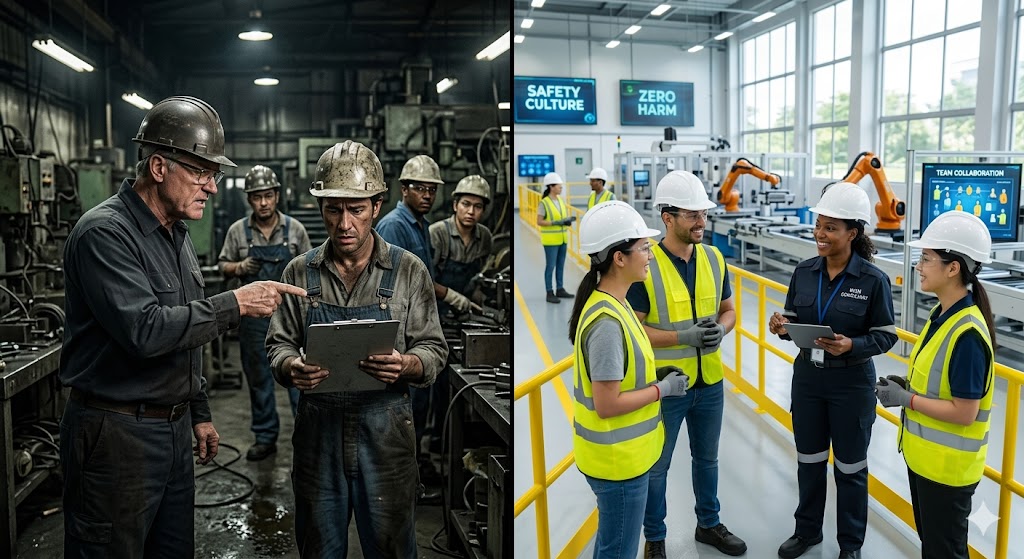
From Compliance to Culture: The WSH Consultant’s Role in Building Resilient Teams
SEO Metadata
Focus Key Phrase: WSH consultant safety culture transformation.
SEO Title: From Compliance to Culture: The WSH Consultant’s Role in Building Resilient Teams.
Meta Description: Discover how a WSH consultant drives safety culture transformation. Explore the Bradley Curve, Hudson Ladder, psychological safety, and Just Culture frameworks.
Tags: Workplace Safety, Safety Culture, WSH Consultant, Vision Zero, Psychological Safety, Behavior-Based Safety.
Introduction: The Vision Zero 2028 Imperative
Workplace safety management transcends basic regulatory compliance.1 Organizations must prioritize a proactive safety culture.2 A WSH consultant guides this essential transformation.3 The ultimate goal is achieving Vision Zero globally.1 Vision Zero assumes all workplace injuries are preventable.2 Consequently, zero harm becomes a realistic business objective.2
The Singapore Workplace Safety and Health Act supports this.1 Additionally, the WSH 2028 Committee recommends ten-year strategies.1 A WSH consultant implements these crucial strategies effectively.3 Thus, businesses protect their most valuable human assets.2 Strong safety performance translates into robust business performance.2 Moreover, it builds a positive corporate reputation globally.2 Companies can easily avoid costly prosecutions and damage claims.2
However, achieving this requires a massive mindset shift.2 Organizations must move away from fault-finding mentalities.2 Instead, they must focus on finding sustainable solutions.2 A WSH consultant facilitates this essential cultural progression.3 They ensure everyone goes home safe and healthy.2 Therefore, leadership commitment is absolutely critical for success.2 Senior management sets the tone for the entire organization.2 They play a key role in raising WSH capabilities.2
Core Strategies of the WSH 2028 Committee
Singapore takes occupational safety and health very seriously.4 The government aims to reduce accident rates continuously.4 Every injury brings immense pain and suffering.4 Furthermore, every death deprives a family of a breadwinner.4 It is a national duty to minimize these tragedies.4 Over the past decade, fatal injury rates dropped significantly.4
The WSH 2028 Tripartite Strategies Committee established key goals.1 They published a comprehensive set of national recommendations.1 Strategy one aims to strengthen overall WSH ownership.1 Every stakeholder must embrace mutual trust and responsibility.5 Furthermore, WSH must become salient in business decisions.5 Company directors must align with strict WSH ownership.5 Workers must also strengthen their personal safety ownership.5
Strategy two enhances the focus on workplace health.1 Focusing solely on injury prevention is highly insufficient.1 A healthy workforce naturally produces a safe workplace.1 Conversely, a safe workplace promotes excellent workforce health.1 Consequently, occupational disease prevention efforts must expand rapidly.1 Medical communities must raise detection and reporting capabilities.1 Health hazard surveillance must increase across all workplaces.1
Strategy three promotes technology-enabled WSH solutions extensively.1 Singapore strives to become a leading Smart Nation.5 Therefore, technology can transform traditional WSH practices deeply.5 The government provides rapid support for successful technological solutions.1 WSH training must incorporate these advanced technologies effectively.1 Micro-learning applications on hand-held devices ensure continuous upgrading.1
Deciphering the Concept of Safety Culture
Safety culture is an incredibly complex organizational topic.6 Most companies do not understand their cultures well.6 The concept was introduced after the 1986 Chernobyl accident.7 Poor safety culture caused this historic nuclear disaster.7 Since then, academic research on safety culture has exploded.7 However, no universal consensus exists on its exact definition.7
The term often acts as a broad conceptual umbrella.7 Both safety and culture are multifaceted and difficult terms.7 Culture represents a highly complicated linguistic concept.7 A WSH consultant demystifies these complex cultural paradigms.3 They assess interactions between safety management systems and behaviors.6 They also evaluate employees’ hearts, minds, and deeply held beliefs.6
Despite excellent managerial systems, people may behave unexpectedly.6 Their attitudes and value systems dictate their daily actions.6 Conversely, workers might bypass malfunctioning systems to work safely.6 A comprehensive safety culture profile reveals these hidden dynamics.6 A WSH consultant identifies if a culture is pathological.8 They can determine if the risk rating is dangerously high.6 Relying solely on basic safety perception surveys is inadequate.6
The CultureSAFE Singapore Framework
The CultureSAFE program provides a comprehensive culture-building platform.9 The Workplace Safety and Health Council developed this tool.10 It moves organizations beyond basic infrastructure and competency.9 It cultivates the right mindset in every single employee.9 Top management and frontline workers participate in this journey.9 A WSH consultant frequently utilizes this powerful national tool.11
The program structurally addresses six critical safety attributes.12 It quantifies safety maturity through the generated CultureSAFE Index.12 This index allows organizations to set accurate safety priorities.12 Furthermore, it helps management allocate necessary resources efficiently.12
| CultureSAFE Attribute | Description and Focus Area |
| Leadership & Commitment | WSH as a core value, credibility, and involvement. 13 |
| Governance | WSH vision, values, HR, and operation policies. 13 |
| Work Management System | Day-to-day operations and change management processes. 13 |
| Competent Organisation | Workforce competency, continuous learning, and external knowledge. 13 |
| Ownership & Teamwork | Stakeholder engagement, empowerment, and corporate citizenship. 13 |
| Communication & Reporting | Open communication, two-way feedback, and no-blame reporting. 13 |
The CultureSAFE cycle involves five distinct, continuous steps.14 First, a diagnostic report assesses the existing safety culture.14 Second, management reviews the generated CultureSAFE Index scores.14 Third, the organization engages in targeted action planning.14 Fourth, the company implements the newly designed WSH initiatives.14 Finally, a thorough review evaluates the implementation for improvement.14
The EQS CultureSAFE Approach
Consultants deploy the EQS approach during CultureSAFE implementation.13 First, they build trust within the target organization.13 They create a positive mindset and open communicative environment.13 This requires an intensive focus on avoiding blame.13 Second, they empower people through employee-driven safety initiatives.13 Employees develop specific behavior-based safety observation processes.13
Third, the approach emphasizes observation and continuous feedback.13 Workers conduct regular peer-to-peer safety observations actively.13 They provide positive feedback on observed behaviors to peers.13 Fourth, management focuses on removing systemic safety barriers.13 They seek to understand the root causes of at-risk behaviors.13 Subsequently, they solve complex safety problems collectively and collaboratively.13
Fifth, the strategy utilizes an appreciative approach heavily.13 Leaders focus extensively on organizational strengths and successes.13 They extend recognition and celebrate safety milestones frequently.13 Finally, they constantly strengthen the BBS implementation process.13 They monitor process indicators to improve overall safety performance.13 A WSH consultant guides teams through this transformational methodology.11
Integrating ISO 45001 and Management Systems
Integrating CultureSAFE with ISO 45001 brings significant strategic benefits.12 ISO 45001 specifies the framework for occupational health systems.12 However, safety control measures rely entirely on human beings.12 Workers must have a positive attitude toward safety procedures.12 CultureSAFE creates an environment where workers willingly follow rules.12 Positive safety attitudes develop organically over extended time.12
Organizations frequently integrate multiple standards simultaneously for efficiency.12 For example, they utilize the ISO 14001 environmental standard.12 They apply the life cycle perspective to operations.12 Companies also assess readiness using self-evaluation checklists efficiently.12 Furthermore, organizations adopt new data protection principles actively.12 They map previous DPTM requirements to the SS 714 standard.12
Food safety management relies on the ISO 22001 standard.12 Practical hygiene inspection checklists support compliance monitoring effectively.12 Moreover, construction companies utilize the ConSASS assessment framework extensively.12 They track hardware and software using CIS Asset Trackers.12 A WSH consultant aligns these diverse systems seamlessly.3 They ensure compliance integrates flawlessly into the organizational culture.12
Assessment Tools and Cultural Methodologies
Measuring safety culture requires sophisticated and validated methodologies.15 A WSH consultant deploys quantitative and qualitative assessment tools.15 Staff surveys provide valuable quantitative baseline data metrics.15 However, qualitative tools uncover the reasoning behind employee perceptions.15 Consultants conduct detailed interviews and structured focus groups.15 They also perform rigorous onsite observations of physical processes.15
Integrating these data points creates a comprehensive organizational picture.15 Assessors evaluate the status of existing safety policies.16 They review communication procedures for rules and regulations.16 Furthermore, they inspect risk management and manual task procedures.16 Hazardous substance handling and infection control systems undergo scrutiny.16 A WSH consultant validates survey data through evidence-based assessments.10
Verification interviews and documentation reviews ensure absolute data consistency.10 Assessors can moderate each attribute’s score if deemed necessary.10 This provides a much clearer picture of organizational maturity.10 Companies can track their progress toward safety excellence accurately.6 Additionally, psychosocial risk assessments identify threats to mental safety.15 These comprehensive tools drive highly targeted safety intervention strategies.15
The DuPont Bradley Curve Framework
The DuPont Bradley Curve assesses cultural maturity stages.17 DuPont created this popular framework in the 1990s.17 It shows how companies move from reacting to preventing.17 The curve consists of four distinct behavioral stages.17 Each stage represents a different level of safety commitment.17 A WSH consultant uses it to guide cultural advancement.17
The first stage is the Reactive or Instinctive stage.18 In this stage, safety progress occurs only by chance.19 Behavior is inconsistent, unplanned, and highly unpredictable.19 People do not care about safety rules at all.20 Accidents are considered a normal part of daily work.21 Employees believe that you cannot make an omelet safely.21 Communication focuses on reacting to incidents after they occur.22
The second stage is the Dependent stage.22 Occupational safety relies entirely on strict external rules.18 Employees depend on others for direction and accountability.19 There is very limited personal ownership of safety outcomes.19 Management must supervise workers constantly to ensure strict compliance.14 Communication focuses on beginning with the end in mind.22
Advancing on the Bradley Curve
The third stage is the Independent stage.22 It features a safety approach based on self-responsibility.18 Employees demonstrate self-reliance and highly proactive safety behaviors.19 They internalize safety values and look out for themselves.18 Communication focuses on putting first things first efficiently.22 A WSH consultant actively drives this specific cultural progression.3
The final stage is the Interdependent stage.22 Safety approaches are based on shared responsibilities and care.18 Employees collaborate to achieve collective success and zero harm.19 They investigate unsafe behaviors collaboratively and highly proactively.3 Management is no longer solely responsible for workplace safety.3 Communication focuses on seeking mutual understanding and strategic synergy.22
Experts align the Bradley Curve with Covey’s maturity continuum.19 Covey describes development from dependence to ultimate interdependence.19 The Bradley Curve adds the initial reactive level.19 The Safety Culture State Review provides a numerical solution.19 It turns cultural maturity into a transparent, trackable indicator.19 It scores maturity on a scale from one to eight.19
The Hudson Safety Culture Ladder
The Hudson Safety Culture Ladder offers an alternative framework.23 It captures how organizations conceptualize safety from basic levels.23 It defines five sequential levels of organizational safety maturity.23 A WSH consultant uses this roadmap for cultural change.24 Usually, companies target one step higher within three years.24 It is widely used in the oil and gas industry.8
The Pathological level represents the absolute lowest cultural tier.24 Incidents are hidden wherever possible to avoid harsh punishment.23 Messaging is highly blame-focused and incredibly defensive.23 Workers only care about not getting caught by regulators.8 The prevailing attitude is simply “who cares about safety?”.25 Safety is completely ignored by top organizational leadership.8
The Reactive level takes safety seriously only after accidents.8 Organizations do a lot every time an accident happens.23 However, they lack proactive measures to prevent future incidents.23 The culture cares about safety but lacks structured decisions.24 Management believes taking appropriate steps after accidents is sufficient.25 Safety systems may exist but see extremely little use.8
The Calculative Trap and Generative Safety
The Calculative level represents a significant systematic step forward.23 Organizations have systems in place to manage all hazards.23 They are extremely comfortable with systems, audits, and numbers.8 However, they often fall into the dangerous “calculative trap”.23 They obsess over impressive dashboards but ignore human mindsets.23 The locus of control belongs to competent systemic authorities.24
The Proactive level shifts focus toward continuous systemic improvement.23 Organizations begin to anticipate and actively prevent potential problems.23 Safety leadership and core values drive all operational behaviors.25 The workforce starts to get heavily involved in practice.8 Management empowers subject matter experts to take safety responsibility.26 They look forward instead of dwelling on the past.8
The Generative level is the ultimate pinnacle of safety.23 Safety is simply how the organization does daily business.23 They set incredibly high standards and constantly exceed them.20 Generative cultures actively move the span of organizational control.24 Trust is high, and safety values are universally shared.25 A WSH consultant strives to build these generative environments.3
Comparing Maturity Models and Indices
Both models conceptualize the evolution of organizational safety culture.27 However, they emphasize slightly different aspects of the journey.28
| Feature | DuPont Bradley Curve | Hudson Safety Culture Ladder |
| Core Focus | Personal behavioral maturity and incident rates.19 | Systems, leadership, and locus of organizational control.24 |
| Stages | Reactive, Dependent, Independent, Interdependent.17 | Pathological, Reactive, Calculative, Proactive, Generative.23 |
| Origins | Corporate framework developed by DuPont in the 1990s.17 | Developed for the aviation and oil/gas industries.8 |
| Critique | Oversimplifies safety, lacks deep organizational diagnostic power.29 | The “calculative trap” stalls many organizations indefinitely.23 |
The Bradley Curve links maturity to accident rate outcomes.19 It heavily emphasizes Covey’s personal behavioral maturity continuum concepts.19 It provides a simple, well-known way to visualize maturity.30 Conversely, the Hudson Ladder emphasizes systemic and leadership components.24 It defines the exact locus of control within the organization.24
Some experts criticize the Bradley Curve as overly simplistic.29 They claim it lacks sufficient organizational and systemic diagnostic power.29 It may misalign with modern psychosocial risk assessment requirements.29 Alternative frameworks like the Health and Safety Index exist.29 The HSI provides a broader, evidence-based cultural view.30 It measures leadership, engagement, wellbeing, and psychosocial risk factors.30
Fostering Psychological Safety in the Workplace
Psychological safety is the absolute core of resilient teams.31 Professor Amy Edmondson pioneered this vital organizational concept.32 It clears major blocks to innovation, connection, and collaboration.31 Psychological safety allows people to speak up without fear.33 They can ask for help and admit their mistakes freely.33 Consequently, organizations learn faster and recover from errors quickly.33
Psychological safety is not about making people feel comfortable.33 It is not about niceness or the absence of accountability.33 A psychologically safe team still experiences conflict and challenge.33 However, this conflict happens honestly without fear of retaliation.33 A WSH consultant trains leaders to cultivate this vital environment.32 Without safety, diverse perspectives cannot enter the organizational conversation.33
Leaders must model candor through their daily communication styles.34 They must practice vulnerability and manage their personal emotions.34 Furthermore, leaders must be highly approachable and emotionally reliable.34 They should actively invite perspective and encourage healthy disagreement.34 Overcoming existing cultural norms regarding silence can be highly challenging.32 Change takes immense time, massive effort, and deliberate intention.34
Overcoming Impression Management and Fear
Impression management often prevents employees from reporting safety hazards.32 Workers fear looking incompetent, negative, or overly disruptive.32 This silence is a terrible solution for the entire organization.32 Leaders must explicitly request input using open-ended coaching questions.35 If employees feel blamed, they will never speak up again.35 Curiously asking good questions shows leaders are truly open-minded.35
A team is only as safe as its least safe person.33 Edmondson created a series of statements to measure this safety.32 Employees indicate their agreement on a detailed numerical scale.32 This scale highlights exactly where the organization currently falls.32 It determines how teams track toward vital business goals.32 Furthermore, it identifies areas needing immediate cultural improvement strategies.32
Psychological safety impacts high-risk sectors like healthcare profoundly.36 Patients are considered the first victims of patient safety events.36 However, healthcare providers can experience a severe second victim impact.36 Safety culture analyses include staff propensity to report adverse events.36 Establishing a fearless organization protects both patients and clinical staff.31 A WSH consultant guides teams through these complex emotional landscapes.3
Implementing a Just Culture Philosophy
A Just Culture balances system learning and individual accountability.37 James Reason fully developed this theory in 1997.38 A WSH consultant implements Just Culture to build organizational trust.38 It ensures balanced accountability for individuals and the entire organization.39 High-risk industries like aviation and healthcare utilize it extensively.37 David Marx expanded this concept into healthcare in 2001.38
A Just Culture rejects the simplistic “human error” blame game.37 Errors are often caused by faulty organizational conditions.25 When accidents occur, investigators must look beyond surface-level blame.37 They must determine what systemic events contributed to the mistake.37 TapRooT Root Cause Analysis helps uncover these deeper systemic factors.37 This approach empowers employees to monitor the workplace proactively.40
However, Just Culture does not release workers from responsibility.37 It distinguishes between human error, at-risk behavior, and recklessness.40 Disciplinary action is applied only when fair and completely justified.37 It requires evidence that a worker intentionally violated rules.37 Consequently, workers feel extremely safe reporting incidents and near misses.38
This creates a robust reporting culture within the organization.38 A reporting culture is where all safety incidents are reported.38 Organizations can then design safety into all clinical systems.40 Shared accountability leads to a more productive organizational environment.40 It becomes an integral part of modern safety management systems.41 Senior management commitment to this culture is absolutely crucial.41
Behavior-Based Safety (BBS) Applications
Behavior-Based Safety addresses the human element of workplace risk.42 Human behavior profoundly impacts workplace accident prevention strategies globally.3 A WSH consultant deploys specific behavioral frameworks to optimize efficiency.3 They transform workers into highly proactive and dedicated safety advocates.3 The ABC Model is a well-established strategy for analyzing actions.42
The ABC Model stands for Antecedent, Behavior, and Consequence.42 Antecedents direct behaviors while consequences strongly motivate future behaviors.42 Management must understand what triggers unsafe behavior in frontline workers.42 Highlighting positive consequences reinforces favorable and safe workplace behaviors.42 Geller stated that total safety culture requires three specific factors.42
These are internal personal factors, external environments, and behavioral factors.42 Geller created seven fundamental principles for successful BBS implementation.42 Behavior interventions must be directly observable by trained peers.42 Organizations must determine external factors that influence daily behaviors.42 BBS programs must be objectively measurable and highly consistent.42
Programs must consider employees’ feelings, attitudes, and personal values.42 When implemented correctly, BBS finds core organizational causes of risk.42 However, poorly executed BBS masks massive systemic management failures.42 Larry Hansen warned against using BBS as a blame game.42 A WSH consultant ensures BBS drives true autonomous productivity.3 Employees investigate unsafe behaviors collaboratively and take absolute ownership.3
Safety Leadership Coaching Strategies
Safety leadership coaching drastically enhances overall workplace safety performance.43 A WSH consultant uses coaching to empower management teams globally.43 Coaching develops strong communication skills and fosters open dialogue.44 Leaders gain the confidence to make safety a core value.44 Furthermore, trained leaders can proactively manage risks and prevent accidents.44
The GROW model is the most widely used coaching framework.45 Sir John Whitmore created this model in the 1980s.46 It provides a simple structure for guiding meaningful leadership conversations.45 It breaks down the coaching process into four easy steps.46 It empowers leaders to motivate their teams and drive success.47
| GROW Model Stage | Coaching Focus and Practical Application |
| Goal | Defining achievable targets. “What do you want to achieve?” 47 |
| Reality | Assessing current states. “What is happening at the moment?” 47 |
| Options / Obstacles | Brainstorming solutions. “What else could you do to succeed?” 48 |
| Will / Way Forward | Committing to action. “What is your very first step?” 48 |
During the Goal stage, coaches help individuals clarify their objectives.45 They establish specific timelines and visualize the benefits of success.47 The Reality stage involves exploring the coachee’s current organizational world.47 It uncovers patterns, assumptions, and critical gaps in safety performance.45 Coaches ask what actions have contributed to success so far.48
Applying Coaching in Real Scenarios
The Options stage encourages creative brainstorming without immediate filtering.48 Coaches ask what would happen if the coachee did nothing.48 Finally, the Will stage requires strict commitment to future action.45 Employees take absolute ownership of their upcoming safety decisions.45 A WSH consultant ensures leaders follow up regularly on progress.46
Implementing safety leadership coaching can face organizational resistance initially.44 Consultants overcome this by communicating benefits and sharing success stories.44 Even with limited resources, safety leadership coaching remains highly effective.44 Organizations use this training to prepare for comprehensive BBS strategies.49 Setting achievable goals sustains momentum and drives continuous cultural improvement.44
Research confirms coaching impact in high-hazard environments like sawmills.50 The wood-processing industry historically exhibited incredibly high occupational hazard rates.50 Small firm size often precludes hiring full-time safety officers.50 However, safety leadership training and management coaching proved highly effective.50 Mean rates of safety compliance increased significantly by over 15%.50
The Skills Framework for WSH Professionals
WSH consultants rely on structured frameworks for professional skill development.51 The Skills Framework for WSH was jointly developed in Singapore.51 SkillsFuture Singapore, Workforce Singapore, and WSHC collaborated on it.51 Employers, industry associations, and training providers also contributed significantly.51 The Singapore Institution of Safety Officers partnered in its development.51
This framework provides detailed information on the safety sector.51 It outlines clear career pathways and specific occupational job roles.51 Furthermore, it identifies the skills and competencies required for success.51 It details available training programs to achieve these crucial competencies.51 The Skills Framework directly supports the WSH 2028 national target.51
By standardizing competencies, consultants ensure high-quality safety culture implementations.51 Professionals play an important role in promoting prevention and trust.52 Operational level workers gain essential skills on safety regulations.52 They learn to plan daily work meeting legal WSH requirements.52 Implementing risk controls safely becomes a standardized, highly professional practice.52
Corporate Transformation: The Alcoa Case Study
Paul O’Neill’s tenure at Alcoa exemplifies ultimate safety culture transformation.53 O’Neill shocked Wall Street investors during his very first speech.54 He refused to discuss profit margins or standard financial metrics.54 Instead, he declared his intention to achieve zero workplace injuries.54 Investors initially panicked and sold their Alcoa stock shares immediately.54
However, O’Neill understood that safety is a powerful keystone habit.54 He used safety as a catalyst for massive operational transformation.54 A tragic fatal accident occurred in an Arizona plant early on.54 A mechanical arm crushed a new employee’s skull instantly.54 O’Neill immediately took complete personal responsibility for the tragic failure.54
He identified massive failures in training, engineering, and daily management.54 Two managers saw the employee jump a wall but did nothing.54 He ordered all safety railings repainted bright yellow globally immediately.54 O’Neill bypassed traditional hierarchy to improve open safety communication.54 He explicitly permitted all employees to call his home phone.53
This established unprecedented psychological safety across the entire global organization.53 O’Neill was uncompromising regarding strict adherence to safety values.53 He famously fired a senior executive for hiding a toxic leak.54 This proved that covering up incidents was completely unacceptable behavior.54 A Benedictine nun had confronted him about the hidden leak.54
Ultimately, prioritizing worker safety streamlined the entire aluminum production process.54 Alcoa’s market value skyrocketed from $3 billion to $27 billion.54 A WSH consultant uses this case study to inspire leadership.55 It proves that when employees come first, immense profits follow.54 Safety commitment lowers costs related to regulatory infractions and compensation.56
Corporate Transformation: Keppel Offshore and Marine
Keppel Offshore & Marine actively demonstrates commitment to safety excellence.57 They execute a comprehensive Zero Fatality Strategy across all operations.58 This strategy aims to build a high-performance, resilient safety culture.59 Keppel adopts a highly proactive approach to daily safety management.59 They leverage advanced technology and AI to mitigate workplace risks.59
Keppel opened a massive integrated safety training facility in Tuas.60 The Keppel Safety Training Centre offers immersive, specialized certification courses.60 It provides trade-specific and broad-based skills for all workforce levels.60 The center features an innovative e-learning zone and multimedia stations.61 It even includes a life-size replica of a tanker mid-section.61
This allows workers to experience vital hands-on technical learning safely.61 Training curricula cover welding, scaffolding, and confined space entry protocols.62 Workers undertake Marine Electrical Technology and Fabrication Technology Nitec courses.62 Keppel emphasizes safety leadership development and core competency programs heavily.61 Their safety journey lowered Accident Frequency Rates significantly over time.63
They conduct an annual Global Safety Time-Out across all worksites.57 Employees pause work to participate in safety briefings and workshops.57 During these standdowns, teams thoroughly review their standard work procedures.57 Keppel empowers its workforce to speak up against unsafe acts.58 Data analytics provide real-time insights into emerging risk patterns globally.58
Immersive Training: The SSE Scotland Experience
Innovative training environments reinforce generative safety cultures profoundly.64 SSE created a pioneering immersive safety training center in Scotland.64 The £2.5m Faskally Safety Leadership Centre operates in Perth.64 It will welcome 7,000 people annually over three consecutive years.64 The unique program blends film and live action for impact.64
The award-winning Active Training Team designed and delivers this program.64 It is firmly rooted in immersive theatre and powerful storytelling.64 Furthermore, it is based on psychological and neuroscientific learning principles.64 This ensures that vital safety learning is remembered much longer.64 It positively influences actual behavior in the real operational world.64
SSE executes massive operations and high-risk capital projects daily.64 Therefore, reinforcing safety culture through impactful training is absolutely essential.64 The venture also created 60 jobs for creatives and actors.64 A WSH consultant advocates for similar highly engaging, experiential learning methods.55 Traditional classroom training simply cannot replicate these intense emotional impacts.64
Leveraging SEO and Digital Metrics for Safety
Technology-enabled WSH strategies involve modern digital tools and metrics.1 WSH consultants increasingly leverage SEO tools to track safety engagement.65 Search volume indicates how often users search specific safety phrases.65 It reveals public interest and real user demand for topics.66 A WSH consultant uses this to target safety campaigns effectively.65
Tools like SE Ranking provide accurate data on organic searches.65 Semrush instantly delivers monthly search volume and keyword difficulty data.66 Consultants analyze search demand for terms like “workplace safety”.65 Higher volumes indicate greater interest and potential campaign traffic visibility.66 Lower-volume keywords are specific and useful for niche safety topics.66
| SEO Tool | Safety Campaign Application |
| SE Ranking | Checks accurate monthly organic search volumes for safety terms. 65 |
| Semrush | Evaluates keyword difficulty and tracks real user search demand. 66 |
| Moz Explorer | Assesses SERP landscapes and gauges organic click-through rates. 67 |
| WordStream | Discovers high-volume keywords in specific industrial safety niches. 68 |
| SearchVolume | Gathers hidden search volume data for safety trend analysis. 69 |
Moz Keyword Explorer provides over a billion keyword suggestions globally.67 It helps identify high-opportunity safety keywords for corporate communication platforms.67 Consultants can align their content strategy with primary search intent.67 WordStream helps find high-volume keywords in specific industrial niches.68 Consequently, digital safety messaging reaches the widest possible internal audience.66
Navigating the Regulatory Landscape and Statistics
Singapore achieved record-low workplace fatalities during the 2025 calendar year.70 The fatal injury rate fell to 0.96 per 100,000 workers.70 This places Singapore alongside top-performing countries like the Netherlands globally.70 The manufacturing and construction sectors saw continued statistical performance improvements.71 However, they remain the top contributors to major workplace injuries.71
In 2025, exactly 36 fatal workplace injuries occurred across Singapore.72 Vehicular incidents, falls from height, and equipment collapses dominated causes.73 These specific hazards collectively accounted for 28 tragic workplace deaths.73
| Singapore WSH Metric | 2024 Statistics | 2025 Statistics |
| Total Workplace Fatalities | 43 fatalities 74 | 36 fatalities 72 |
| Workplace Fatality Rate | 1.2 per 100,000 workers 74 | 0.96 per 100,000 workers 72 |
| Major Injury Rate | 15.9 per 100,000 workers 74 | Continued reductions noted 71 |
The Ministry of Manpower strictly enforces robust workplace safety regulations.75 Previously, they implemented a strict Heightened Safety Period across Singapore.75 The MOM introduced a severe Safety Disqualification framework for contractors.75 Companies facing systemic breaches entered the Business Under Surveillance Programme.75 Errant companies accumulated severe points under the Demerit Point System.75
Enforcement, Debarment, and Sustainable Outcomes
Consequently, MOM debarred unsafe companies from hiring new foreign employees.76 Debarment durations ranged from three months to two full years.75 Chief Executives had to personally account for serious safety lapses.76 The threshold for issuing demerit points was significantly lowered recently.76 Therefore, companies with poor performance reach penalty thresholds much quicker.76
A WSH consultant helps companies navigate these severe regulatory minefields.11 Consultants conduct mandatory Safety Time-Outs following serious workplace safety incidents.76 They help SMEs identify risks through the expanded StartSAFE programme.76 The government harmonized disqualification criteria across all public sector construction tenders.76 Contractors with poor WSH performance cannot participate in these tenders.76
Building a generative safety culture prevents organizations from facing debarment.23 It ensures they qualify for lucrative public sector construction contracts.76 Organizations must press on toward the WSH 2028 statistical goals.75 They must keep major injury rates below 12.0 per 100,000 workers.75 Compliance becomes a natural byproduct of a robust safety culture.2
Conclusion: The Path Forward for Resilient Teams
Transforming a workplace from compliance-driven to culture-driven takes immense effort.6 A WSH consultant is the architect of this vital transformation.3 They deploy sophisticated models like the Bradley Curve and Hudson Ladder.27 These tools map the journey from pathological compliance to generative excellence.23 The ultimate goal is always achieving Vision Zero across industries.2
Building psychological safety is non-negotiable for modern organizational resilience.31 Employees must feel empowered to speak up and report hazards.32 Furthermore, implementing a Just Culture balances human learning and accountability.39 It eliminates toxic blame while maintaining high standards of personal responsibility.40 Safety leadership coaching ensures managers can sustain these vital cultural shifts.44
The GROW model provides a highly structured coaching conversation framework.46 Integrating frameworks like CultureSAFE and ISO 45001 builds robust systems.12 Case studies from Alcoa and Keppel prove that safety pays.56 Prioritizing safety boosts operational efficiency, innovation, and corporate market value.54 While Singapore’s safety statistics are improving, continuous vigilance remains mandatory.70 A proactive safety culture protects both human lives and business profitability.2
Works cited
- WORKPLACE SAFETY AND HEALTH 2028 TRIPARTITE STRATEGIES COMMITTEE’S REPORT Executive Summary Introduction 1. Singapore has made – MOM, accessed May 30, 2026, https://www.mom.gov.sg/-/media/mom/documents/safety-health/publications/executive-summary.pdf
- Vision Zero, accessed May 30, 2026, https://www.tal.sg/wshc/about-us/vision-zero
- The Productivity Boost: 5 Ways a WSH Consultant Enhances Employee Efficiency and Morale – MOSAIC Eco-construction Solutions Pte Ltd, accessed May 30, 2026, https://mosaicsafety.com.sg/the-productivity-boost-5-ways-a-wsh-consultant-enhances-employee-efficiency-and-morale/
- Workplace Safety and Health Institute – International Labour Organization, accessed May 30, 2026, https://www.ilo.org/sites/default/files/wcmsp5/groups/public/@ed_protect/@protrav/@safework/documents/presentation/wcms_364813.pdf
- WSH 2028 – Singapore – MOM, accessed May 30, 2026, https://www.mom.gov.sg/-/media/mom/documents/safety-health/publications/wsh2028-report.pdf
- Safety Culture Profiling®, accessed May 30, 2026, https://www.behavioral-safety.com/behavior-based-safety-solution-center/safety-culture-assessments/safety-culture-profiling
- Measuring Safety Culture Using an Integrative Approach: The Development of a Comprehensive Conceptual Framework and an Applied Safety Culture Assessment Instrument – PMC, accessed May 30, 2026, https://pmc.ncbi.nlm.nih.gov/articles/PMC9602973/
- Safety Culture Maturity Model and Its Application to Regulatory Independent Assessment, accessed May 30, 2026, https://gnssn.iaea.org/NSNI/SC/SCCIP/Presentations/Day%202/06_Sheen_%20Safety%20Culture%20maturity%20model%20and%20its%20application%20to%20regulators%20independent%20assesment.pdf
- What is the CultureSAFE Programme? – MOM, accessed May 30, 2026, https://www.mom.gov.sg/faq/educational-resources/what-is-the-culturesafe-programme
- Machine Learning Methods for Predicting the Outcome of Safety Culture Attributes, accessed May 30, 2026, http://www.iemsjl.org/journal/article.php?code=89335
- CultureSAFE Programme – Concord Associates, accessed May 30, 2026, https://www.concordassociates.com.sg/culturesafe-programme
- ISO 45001 & CultureSAFE | QuESH – QuESH Consultants, accessed May 30, 2026, https://www.queshconsultants.com/articles/iso-45001-culturesafe
- CultureSAFE Programme – EQS Asia, accessed May 30, 2026, https://eqsasia.com/wp-content/uploads/2018/01/CultureSAFE-Presentation-V3.pdf
- CultureSAFE, accessed May 30, 2026, https://www.tal.sg/wshc/programmes/culturesafe
- Safety Culture Assessment | Safety Culture Measurement Tools & Guidance – Jonah Group, accessed May 30, 2026, https://jonahgroup.com.au/solutions/safety-culture-assessment/
- Free Safety Culture Assessment Forms | PDF | SafetyCulture, accessed May 30, 2026, https://safetyculture.com/checklists/safety/safety-culture-assessment
- How to Implement the Bradley Curve to Strengthen Safety Culture – Veriforce, accessed May 30, 2026, https://veriforce.com/blog/how-to-implement-the-bradley-curve-to-strengthen-safety-culture
- The Bradley Curve Meaning & Definition | EcoOnline, accessed May 30, 2026, https://www.ecoonline.com/glossary/bradley-curve/
- The Four Maturity Levels of Safety Culture, accessed May 30, 2026, https://safetyculturestatereview.com/en/4-states-of-safety-culture
- Understanding your HSE culture | Hearts and Minds – Energy Institute, accessed May 30, 2026, https://heartsandminds.energyinst.org/toolkit/UYC
- Using the Bradley Curve to improve occupational safety – Quentic, accessed May 30, 2026, https://www.quentic.com/articles/using-the-bradley-curve/
- Communicating through the curve: strategies for each stage of the Bradley Curve – Ideagen, accessed May 30, 2026, https://www.ideagen.com/thought-leadership/blog/communicating-through-bradley-curve-stages
- Decoding the safety culture ladder (Part 1): Five levels of …, accessed May 30, 2026, https://cairnrisk.com/knowledge_bank/decoding-the-safety-culture-ladder-part-1-five-levels-of-organisational-maturity/
- Structural Understanding Underlying the Safety Culture Ladder – ecoPortal, accessed May 30, 2026, https://www.ecoportal.com/hubfs/SPE-220464-MS.pdf
- Generative Proactive Calculative Reactive Pathological – The College of Anaesthesiologists of Ireland, accessed May 30, 2026, https://www.anaesthesia.ie/wp-content/uploads/2021/10/C-Farell-Essay.pdf
- transcript-patrick-hudson-ladder.docx – Safe Work Australia, accessed May 30, 2026, https://www.safeworkaustralia.gov.au/sites/default/files/transcript-patrick-hudson-ladder.docx
- (PDF) Exploring Safety Culture Maturity Models: A Systematic Review of Approaches, Assessment Elements, and Industrial Contexts – ResearchGate, accessed May 30, 2026, https://www.researchgate.net/publication/393079020_Exploring_Safety_Culture_Maturity_Models_A_Systematic_Review_of_Approaches_Assessment_Elements_and_Industrial_Contexts
- Safety culture maturity: A problem disguised as a solution – IILSC, accessed May 30, 2026, https://iilsc.com/wp-content/uploads/2025/05/Safety_culture_maturity.pdf
- Bradley Curve vs Health & Safety Index, accessed May 30, 2026, https://healthandsafetyindex.com.au/bradley-curve-vs-health-safety-index/
- Safety Culture Models, accessed May 30, 2026, https://healthandsafetyindex.com.au/safety-culture-models/
- Psychological Safety – Amy C. Edmondson, accessed May 30, 2026, https://amycedmondson.com/psychological-safety/
- How to Build Psychological Safety in the Workplace | HBS Online, accessed May 30, 2026, https://online.hbs.edu/blog/post/psychological-safety-in-the-workplace
- What is Psychological Safety?, accessed May 30, 2026, https://psychsafety.com/about-psychological-safety/
- Psychological Safety at Work | American Federation of Teachers, accessed May 30, 2026, https://www.aft.org/news/psychological-safety-work
- What Is Psychological Safety? – YouTube, accessed May 30, 2026, https://www.youtube.com/watch?v=GZgmoxOgfig
- Effect of interventions to improve safety culture on healthcare workers in hospital settings: a systematic review of the international literature – PMC, accessed May 30, 2026, https://pmc.ncbi.nlm.nih.gov/articles/PMC11086522/
- James Reason’s Just Culture: Balancing Systems and Accountability, accessed May 30, 2026, https://taproot.com/james-reasons-just-culture-balancing-systems-and-accountability/
- Just culture – Wikipedia, accessed May 30, 2026, https://en.wikipedia.org/wiki/Just_culture
- Just Culture: A Foundation for Balanced Accountability and Patient Safety – PMC, accessed May 30, 2026, https://pmc.ncbi.nlm.nih.gov/articles/PMC3776518/
- Just Culture: Balancing Accountability, Quality, and Safety – RSNA, accessed May 30, 2026, https://www.rsna.org/news/2019/february/just-culture-background
- Safety Culture – Air Safety Support International, accessed May 30, 2026, https://www.airsafety.aero/safety-information-and-reporting/safety-management-systems/safety-culture
- The Ultimate Guide to Behavior Based Safety | SafetyCulture, accessed May 30, 2026, https://safetyculture.com/topics/behavior-based-safety
- Enhancing Workplace Safety Via Effective Leadership Coaching – EHS Momentum, accessed May 30, 2026, https://ehsmomentum.com/enhancing-workplace-safety-leadership-coaching/
- Improve Safety Culture thru Safety Leadership Coaching, accessed May 30, 2026, https://www.progressivesafety.com/post/improve-safety-culture-thru-safety-leadership-coaching
- A Complete Guide to the GROW Coaching Model – Performance Consultants, accessed May 30, 2026, https://www.performanceconsultants.com/resources/the-grow-model/
- The GROW coaching model: What it is and how to use it | Culture Amp, accessed May 30, 2026, https://www.cultureamp.com/blog/grow-model-coaching
- The GROW model Coaching Framework | Culture at Work, accessed May 30, 2026, https://www.coachingcultureatwork.com/the-grow-model/
- The GROW Framework – Coaching for Leadership, accessed May 30, 2026, https://wp.nyu.edu/coaching/tools/grow-model/
- Leadership Safety Coaching Workshop, accessed May 30, 2026, https://proactsafety.com/solutions/consulting/leadership-safety-coaching
- Effect of a Safety Leadership Training Including Coaching on Safety Performance and Climate in Wood-processing Companies – PMC, accessed May 30, 2026, https://pmc.ncbi.nlm.nih.gov/articles/PMC11410716/
- Skills Framework For Workplace Safety And Health (WSH) – SkillsFuture Singapore, accessed May 30, 2026, https://www.ssg.gov.sg/newsroom/skills-framework-for-workplace-safety-and-health-wsh/
- Apply Workplace Safety and Health Policy (SF) – SkillsFuture for Business, accessed May 30, 2026, https://skillsfuture.gobusiness.gov.sg/course-directory/courses/TGS-2023018336
- Paul O’Neill: A Psychological Safety Success Story, accessed May 30, 2026, https://psychsafety.com/paul-oneill-a-psychological-safety-success-story/
- How Paul O’Neill Fought For Safety At Alcoa – David Burkus, accessed May 30, 2026, https://davidburkus.com/2020/04/how-paul-oneill-fought-for-safety-at-alcoa/
- Safety Coaching & WHS Leadership Training – WCA Solutions, accessed May 30, 2026, https://wcasolutions.com/safety-coaching-whs-leadership-training/
- Alcoa and a Culture of Safety – Mitratech, accessed May 30, 2026, https://mitratech.com/resource-hub/blog/alcoa-and-a-culture-of-safety/
- Keppel recognised for safety excellence at WSH Awards 2025 – Keppel – Global asset manager and operator creating solutions for a sustainable future, accessed May 30, 2026, https://www.keppel.com/media/keppel-recognised-for-safety-excellence-at-wsh-awards-2025/
- People and Community – Keppel – Global asset manager and operator creating solutions for a sustainable future, accessed May 30, 2026, https://www.keppel.com/sustainability/people-and-community/
- Safety & Health | Keppel Infrastructure Trust, accessed May 30, 2026, https://www.kepinfratrust.com/sustainability/safety–health/
- Singapore: Keppel Opens first-of-its-kind Immersive Safety Training Center for its Workforce, accessed May 30, 2026, https://www.offshore-energy.biz/singapore-keppel-opens-first-of-its-kind-immersive-safety-training-center-for-its-workforce/
- Keppel opens integrated safety training facility – Drilling Contractor, accessed May 30, 2026, https://drillingcontractor.org/keppel-opens-integrated-safety-training-facility-6032
- Factsheet Keppel Safety Training Centre, accessed May 30, 2026, https://www.keppel.com/upload/PressRelease/002%20Factsheet_FINAL.pdf
- Keppel Opens Immersive Safety Training Hub – Marine Link, accessed May 30, 2026, https://www.marinelink.com/news/immersive-training-keppel334538
- SSE unveils first immersive safety leadership training centre in Scotland, accessed May 30, 2026, https://www.sse.com/news-and-views/2024/04/sse-unveils-first-immersive-safety-leadership-training-centre-in-scotland/
- Free Keyword Search Volume Checker – SE Ranking, accessed May 30, 2026, https://seranking.com/keyword-search-volume-checker.html
- Free Keyword Search Volume Tool – Semrush, accessed May 30, 2026, https://www.semrush.com/free-tools/keyword-search-volume-checker/
- Free Keyword Research Tool – Moz, accessed May 30, 2026, https://moz.com/explorer
- Free Keyword Tool | WordStream, accessed May 30, 2026, https://www.wordstream.com/keywords
- Free Keyword Search Volume Tool. Bulk 1,000s of Keywords for Google SEO, accessed May 30, 2026, https://searchvolume.io/
- 0325 WSH Report 2025 – Singapore – MOM, accessed May 30, 2026, https://www.mom.gov.sg/newsroom/press-releases/2026/0325-wsh-report-2025
- Singapore’s Workplace Safety And Health Performance In 2024 Remains Among Top Performing Countries Globally – MOM, accessed May 30, 2026, https://www.mom.gov.sg/newsroom/press-releases/2025/0326wshreport
- Workplace Safety and Health Report 2025 – Singapore – MOM, accessed May 30, 2026, https://www.mom.gov.sg/-/media/mom/documents/safety-health/reports-stats/wsh-national-statistics/wsh-national-stats-2025.pdf
- 36 workplace deaths in Singapore in 2025, down from previous year – CNA, accessed May 30, 2026, https://www.channelnewsasia.com/singapore/workplace-deaths-major-injuries-construction-manufacturing-mom-6013966
- Workplace Safety Report: Workplace fatalities increase in 2024, despite major injuries hitting an all-time low – NTUC, accessed May 30, 2026, https://www.ntuc.org.sg/pme/news/Workplace-Safety-Report-2024-workplace-fatalities-increase-major-injuries-hit-an-all-time-low/
- Exit from Heightened Safety Period and New Measures for Sustainable WSH Outcomes, accessed May 30, 2026, https://www.mom.gov.sg/newsroom/press-releases/2023/0523-exit-from-heightened-safety-period-and-new-measures-for-sustainable-wsh-outcomes
MOM announces heightened safety period measures to address spate of workplace fatalities: 1 September 2022 to 28 February 2023 – Allen & Gledhill, accessed May 30, 2026, https://www.allenandgledhill.com/sg/publication/articles/22328/mom-announces-heightened-safety-period-measures-to-address-spate-of-workplace-fatalities-1-september-2022-to-28-february-2023