

A poorly executed site safety inspection checklist process is not a procedural inconvenience. It is a direct precursor to regulatory violations, project shutdowns, and, in the worst cases, fatalities. Construction sites operate under conditions where hazard exposure changes daily, where subcontractors rotate in and out, and where even minor documentation gaps can trigger punitive audits. Safety managers and compliance officers who rely on informal walkthroughs or static paper forms consistently find themselves reactive rather than prepared. This guide provides a structured, regulation-informed framework for building and executing an inspection process that satisfies both statutory requirements and operational realities in 2026.
Table of Contents
- Key takeaways
- The site safety inspection checklist process: preparation fundamentals
- Executing a thorough site safety inspection
- Common pitfalls that compromise inspection programs
- Acting on findings and driving continuous improvement
- My perspective on inspection programs that actually work
- How MOSAIC Safety supports your inspection program
- FAQ
Key takeaways
| Point | Details |
|---|---|
| Prepare before you inspect | Confirm legal frameworks, assign competent personnel, and gather permits before any walkthrough begins. |
| Digital checklists outperform paper | Real-time digital systems capture leading indicators and improve program effectiveness beyond paper-based approaches. |
| Personnel role clarity is non-negotiable | Misassigning competent versus qualified persons undermines inspection validity and creates audit exposure. |
| Findings require classified follow-up | Categorize findings by severity and enforce corrective timelines or escalation protocols immediately. |
| Embed inspections into daily workflows | Inspections treated as periodic events fail; those integrated into routine site operations produce durable safety cultures. |
The site safety inspection checklist process: preparation fundamentals
Before any inspector sets foot on a worksite, a structured set of prerequisites must be satisfied. Treating the preparation phase as a formality is one of the most common errors in worksite safety review programs, and it compounds every subsequent step.
The first obligation is regulatory mapping. Safety managers must identify the precise statutory frameworks governing their project type, whether that involves the Workplace Safety and Health Act in Singapore, OSHA standards in the United States, or local municipal requirements in other jurisdictions. Each framework prescribes specific inspection frequencies, documentation retention periods, and personnel qualifications that must be reflected in the construction site checklist before a single line is added.
The following table outlines the critical preparation requirements for a compliant site safety evaluation:
| Preparation element | Requirement | Responsible party |
|---|---|---|
| Regulatory framework review | Identify applicable acts, codes, and municipal bylaws | Safety manager / compliance officer |
| Document assembly | Gather permits, method statements, and risk assessments | Project manager |
| Personnel assignment | Designate competent and qualified persons per task | Safety manager |
| Tool and platform selection | Choose digital or hybrid checklist system | Safety manager / IT |
| Pre-inspection briefing | Align team on scope, hazards, and reporting format | Lead inspector |
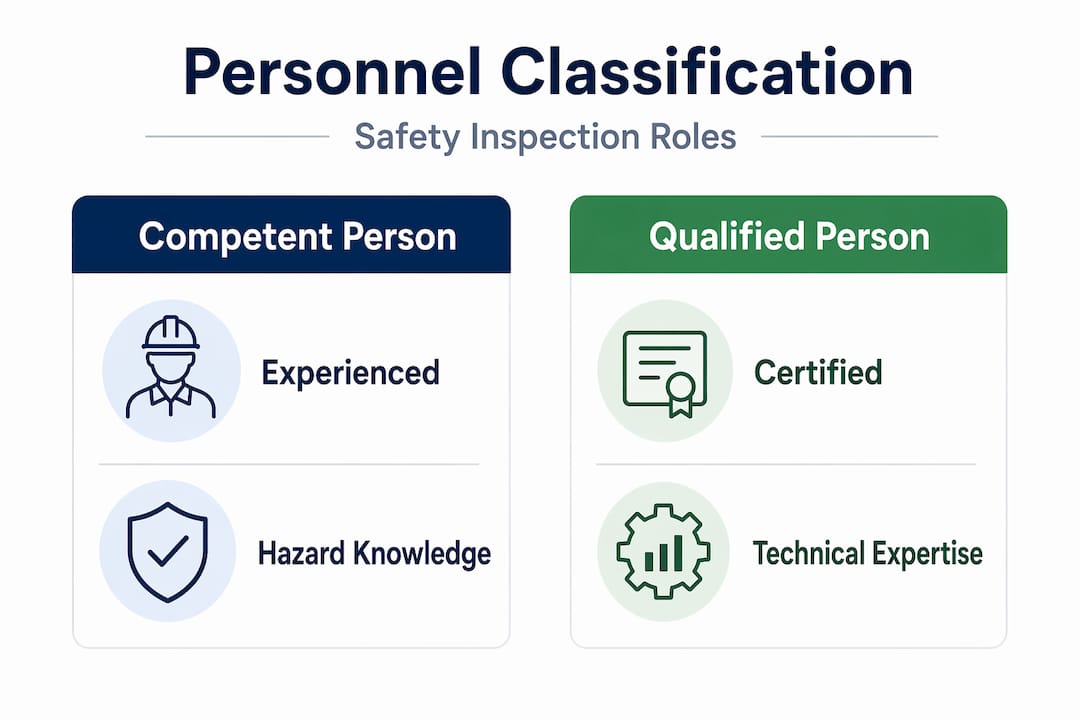
Two distinct personnel classifications must be assigned with precision. A competent person is designated based on demonstrated knowledge and experience with a specific task or hazard. A qualified person meets specific legal or certification thresholds, often mandated for technically complex equipment. Misassigning these roles is one of the most frequently cited failures in regulatory audits, particularly for crane operations and structural assessments.
Documentation must be assembled before the walkthrough begins, not reconstructed afterward. This includes method statements, permit-to-work records, subcontractor safety plans, and approved risk assessment checklists for all active work scopes on site.
Pro Tip: Request subcontractor safety plans at least 72 hours before a scheduled inspection. Last-minute submissions rarely reflect actual site conditions and introduce significant verification delays.
Executing a thorough site safety inspection
With preparation complete, the execution phase demands systematic discipline. An ad hoc walkthrough, no matter how experienced the inspector, will produce inconsistent results and unacceptable documentation gaps. The following sequence constitutes an effective onsite safety evaluation procedure:
- Schedule and communicate the inspection with at least 24 hours’ notice to site supervisors, specifying the scope, areas to be covered, and expected duration.
- Conduct a pre-inspection briefing with the inspection team, reviewing the risk assessment checklist and any recently reported near-misses or incidents.
- Execute the site walkthrough systematically, moving through predefined zones rather than following a supervisor’s suggested path, which often avoids problem areas.
- Inspect all critical work scopes in sequence: personal protective equipment (PPE) compliance, scaffolding integrity, machinery and crane conditions, emergency response equipment, site signage, electrical installation safety, and general housekeeping.
- Engage workers directly during the walkthrough. Inspection teams that include supervisors and workers familiar with the equipment improve hazard identification accuracy and reinforce safety culture more effectively than top-down enforcement models.
- Document findings in real time using the selected checklist platform, capturing photographs, timestamps, and GPS location data for every observation.
- Conduct a post-inspection debrief with site supervisors before leaving, communicating any critical findings that require immediate corrective action.
The choice between digital and paper-based checklists has measurable consequences. Digital safety inspection systems that capture leading indicators in real time improve program effectiveness beyond what paper checklists can achieve, particularly for organizations managing multiple active sites simultaneously.
| Checklist type | Strengths | Limitations |
|---|---|---|
| Paper-based | Low cost, no tech dependency | Prone to loss, difficult to analyze, slow to share |
| Digital (tablet/mobile) | Real-time capture, auto-reporting, photo integration | Requires device management and connectivity |
| Hybrid | Familiar format with digital upload | Inconsistent data quality, manual transcription errors |
| Integrated platform | Linked to corrective action workflows and dashboards | Higher implementation cost and training requirements |
For construction sites with active crane operations, OSHA regulations require that monthly inspection records be retained for a minimum of three months, and annual inspection documentation must be maintained for at least twelve months. Annual inspections must include structural checks and load tests at 125% of rated capacity, conducted exclusively by qualified persons.
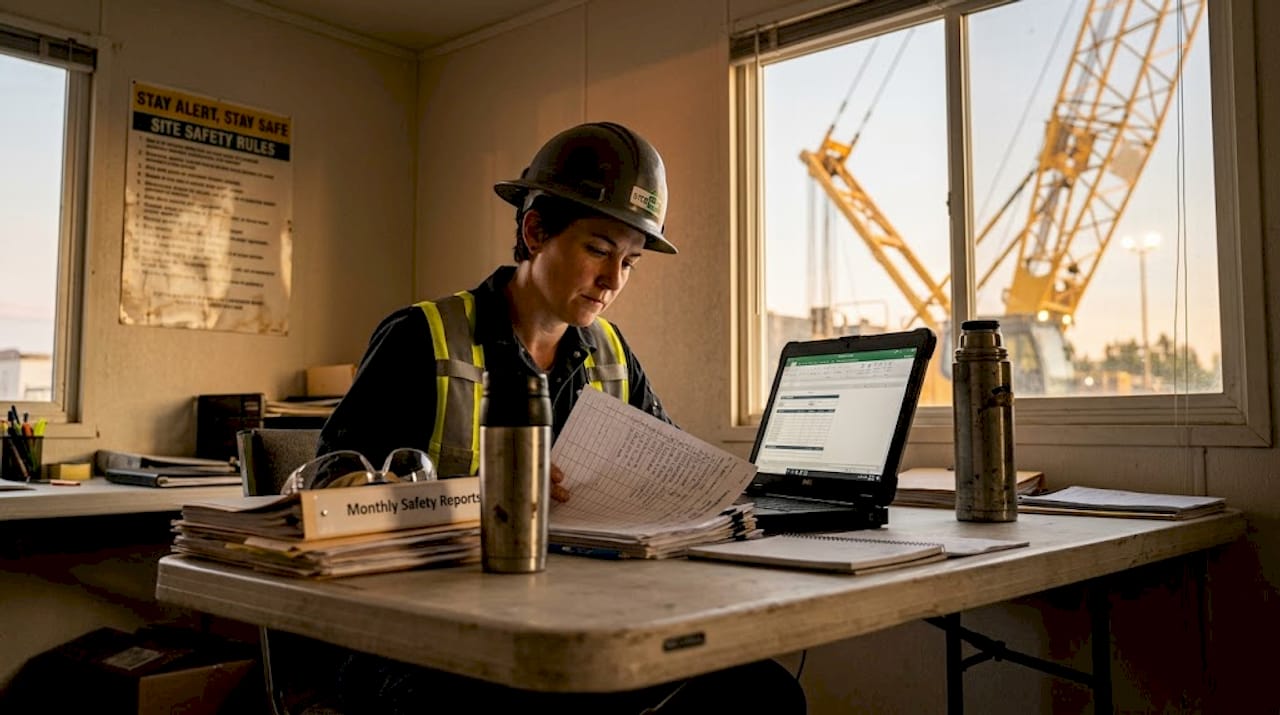
Pro Tip: Photograph not just deficiencies but also compliant conditions during each inspection. This creates a documented baseline that strengthens your position in regulatory audits and demonstrates proactive safety management.
Common pitfalls that compromise inspection programs
Even well-designed inspection programs degrade when implementation lapses accumulate. The following failure patterns represent the most consequential risks to a construction safety audit process:
- Treating inspections as one-time events. Effective programs recognize that inspections are dynamic periodic processes triggered by schedule changes, new equipment introductions, and incident reports. At minimum, a comprehensive annual evaluation is necessary, but high-activity sites demand far greater frequency.
- Confusing competent and qualified persons. As noted in the preparation section, this distinction is not semantic. Assigning a competent person to a task that legally requires a qualified person invalidates the entire inspection for that scope and creates direct regulatory liability.
- Failing to retain documentation consistently. Regulatory auditors prioritize consistent documentation trails over flawless records. A documented deficiency with a recorded corrective action carries far less audit risk than an undocumented inspection.
- Ignoring critical follow-up on findings. A safety inspection checklist that produces findings with no assigned corrective actions or deadlines is legally and operationally indefensible. Each finding must be classified, assigned, and tracked to closure.
- Over-relying on supervisors to self-report hazards. Workers directly performing tasks consistently identify hazards that supervisors miss, which is why mixed-composition inspection teams outperform management-only teams on accuracy metrics.
The inspection procedure guide that sustains long-term compliance is one embedded into daily operational rhythms. Weekly toolbox talks, shift supervisor checklists, and real-time hazard reporting mechanisms create the conditions in which formal periodic inspections become validation exercises rather than discovery missions.
Pro Tip: Assign corrective actions within the inspection report itself, not in a separate follow-up email. Platform-based assignment with named owners and due dates reduces closure time significantly and creates an auditable accountability trail.
Acting on findings and driving continuous improvement
The post-inspection phase is where most programs either generate lasting value or quietly fail. Completing the inspection report is not the end of the safety audit process. It is the beginning of the corrective cycle.
Findings must be classified immediately using a severity-based system. The framework used by Dubai Municipality offers a practical model: critical findings require immediate correction, major findings must be resolved within 14 days, and minor findings carry a 30-day correction window. Open critical or major findings trigger escalation through management. This tiered structure creates clear accountability and prevents the common tendency to treat all findings as equally urgent, which paradoxically results in none being addressed promptly.
| Finding severity | Corrective timeline | Escalation trigger |
|---|---|---|
| Critical | Immediate work stoppage / same-day correction | Site manager + safety manager notification |
| Major | Within 14 days | Weekly management review until closed |
| Minor | Within 30 days | Included in next scheduled safety review |
| Observation | Next inspection cycle | Logged for trend analysis |
Once findings are classified and assigned, results must be communicated to all relevant stakeholders. This includes subcontractor supervisors, project managers, and where required by statute, the client or regulatory authority. Inspection outcomes should feed directly into the agenda of the next safety meeting and inform refresher training where recurring deficiencies are identified.
Follow-up inspections must be scheduled as part of the original inspection report, not as an afterthought. Embedding photos, electronic signatures, and timestamps into daily workflows replaces passive documentation with dynamic, verifiable evidence. This distinction separates programs that withstand scrutiny from those that exist only on paper.
The construction risk assessment framework underpinning each inspection should itself be reviewed at regular intervals, particularly when new work scopes are introduced, after any incident, or following a significant change in site conditions. Safety inspections are most effective when positioned as a continuous improvement mechanism rather than a discrete compliance exercise.
My perspective on inspection programs that actually work
I’ve spent considerable time reviewing safety inspection programs across construction projects of varying scale, and the pattern that repeatedly undermines otherwise well-resourced teams is this: the checklist becomes the goal rather than the evidence.
Organizations invest in detailed forms, assign trained inspectors, and conduct regular walkthroughs. Then the reports accumulate in a shared drive and corrective actions go untracked. The documentation exists, but the site doesn’t get safer. What I’ve found is that the single most reliable predictor of inspection program effectiveness is not checklist quality. It is what happens in the 72 hours after the report is submitted.
Digital transformation of inspection workflows matters, but not because software solves safety problems. It matters because it removes the friction that allows findings to go unaddressed. When a corrective action is assigned inside the inspection platform, with an owner’s name and a deadline, the probability of follow-through increases substantially compared to a finding buried on page 7 of a PDF.
The other shift I’d advocate for strongly is moving inspection team composition away from safety-department-only models. Workers who operate machinery daily perceive hazard signals that periodic visitors simply cannot. Programs that incorporate frontline workers into formal inspection rotations consistently report richer findings and, more importantly, faster voluntary hazard reporting between inspections.
The goal of a site safety inspection checklist process is not audit compliance. It is a site where workers return home. Every structural element of the program should be evaluated against that outcome, not against the thickness of the documentation binder.
— Aman
How MOSAIC Safety supports your inspection program

Construction firms operating in Singapore’s demanding regulatory environment require more than generic templates. Com’s consultancy team provides structured support across the full site safety inspection checklist process, from regulatory mapping and checklist development to audit preparation and corrective action management. Com’s safety audit preparation services are designed specifically for construction project teams navigating BizSAFE, ConSASS, and ISO 14001 compliance requirements. Whether your organization requires outsourced safety officer deployment, inspection platform implementation, or pre-audit advisory support, Com delivers structured, site-specific solutions that withstand regulatory scrutiny.
FAQ
What is the site safety inspection checklist process?
The site safety inspection checklist process is a structured, sequential procedure for identifying, documenting, and resolving physical and procedural hazards on a construction site. It spans preparation, execution, documentation, corrective action, and follow-up verification.
How often should construction site inspections be conducted?
At minimum, a comprehensive site safety evaluation should occur annually, but high-activity construction projects require far greater frequency. Inspections should also be triggered by new equipment, scope changes, incidents, or near-miss events.
What is the difference between a competent person and a qualified person in safety inspections?
A competent person is designated based on experience and knowledge of a specific hazard or task. A qualified person meets specific legal certification thresholds. Misassigning these roles is a common audit failure that invalidates inspection findings for regulated equipment.
Why do digital checklists outperform paper in safety inspection programs?
Digital checklists capture real-time observations, photos, and timestamps that paper forms cannot replicate at scale. Integrated digital systems improve continuous improvement processes and provide the evidentiary trail that regulators and auditors require.
How should safety inspection findings be prioritized for corrective action?
Findings should be classified by severity. Critical findings require immediate corrective action and site manager notification. Major findings must be resolved within 14 days, while minor findings carry a 30-day corrective window, with all categories tracked to documented closure.