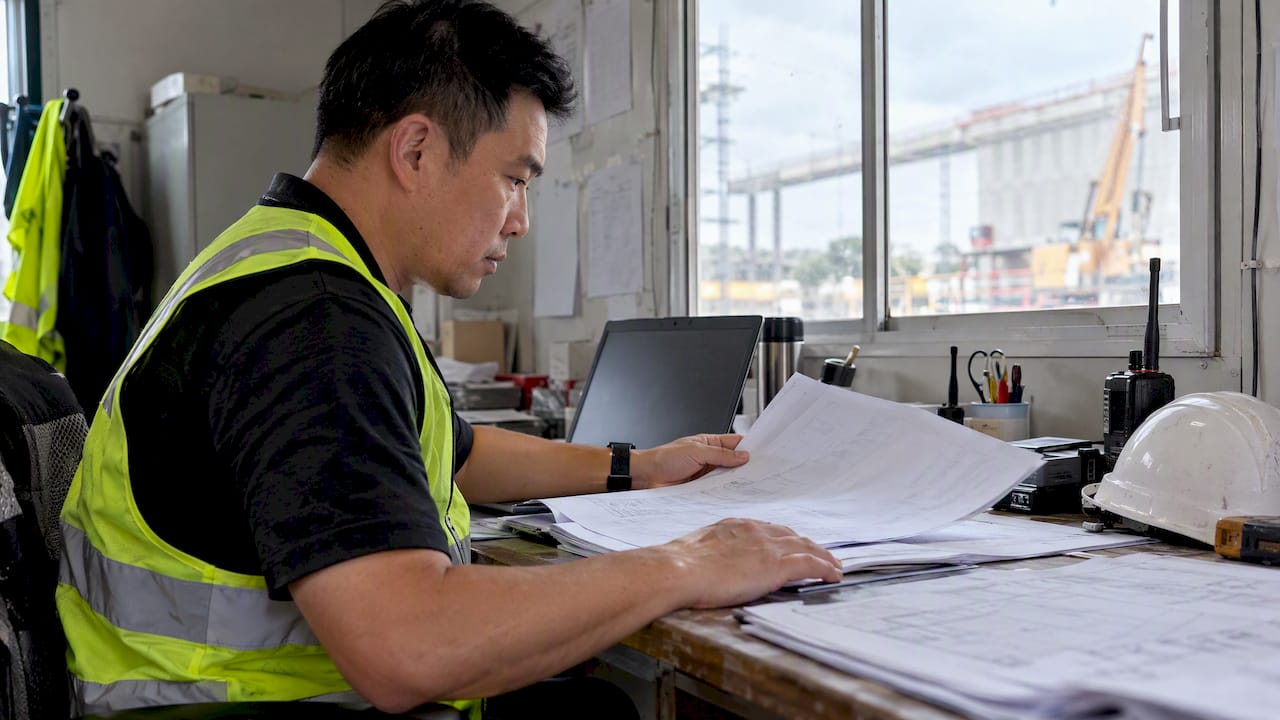
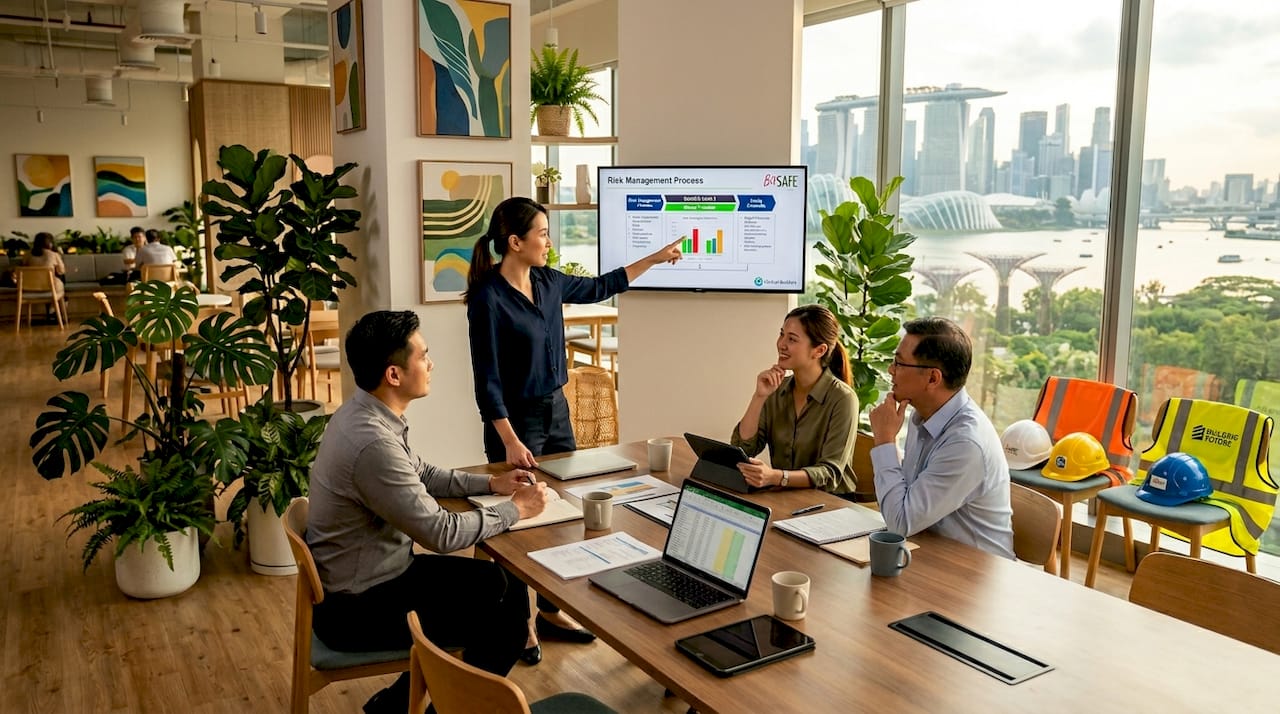
BizSAFE is frequently mischaracterized as a single certification stamp collected to satisfy a procurement checklist. That misunderstanding costs construction companies real money and real safety outcomes. What is BizSAFE, precisely? It is a structured, five-level capability-building programme administered by Singapore’s Workplace Safety and Health Council (WSHC) and the Ministry of Manpower (MOM), designed to develop systematic workplace safety management from the ground up. For construction firms operating in Singapore’s heavily regulated build environment, understanding BizSAFE’s architecture, and especially the critical threshold of Level 3, determines whether you can bid for government work and whether your workers go home safely.
Table of Contents
- Key Takeaways
- What is BizSAFE and how the programme works
- What is BizSAFE Level 3 and why it matters most
- The benefits of BizSAFE certification for construction firms
- How to achieve BizSAFE certification step by step
- My perspective on BizSAFE’s real impact
- How MOSAIC supports your BizSAFE certification journey
- FAQ
Key Takeaways
| Point | Details |
|---|---|
| BizSAFE is a five-level programme | Each level progressively builds workplace safety capability, from awareness training through independently audited risk management systems. |
| Level 3 is the commercial gateway | BizSAFE Level 3 is the minimum certification required to qualify for most government construction tenders, including BCA and HDB projects. |
| Generic Risk Management Plans fail audits | Auditors require site-specific evidence; companies using downloaded templates frequently fail Level 3 audits. |
| Certification delivers measurable safety gains | BizSAFE has contributed to a 30% reduction in fatalities since inception, across over 20,000 certified SMEs. |
| Sequential progression is non-negotiable | Skipping Levels 1 and 2 undermines audit readiness at Level 3 and is strongly discouraged by practitioners. |
What is BizSAFE and how the programme works
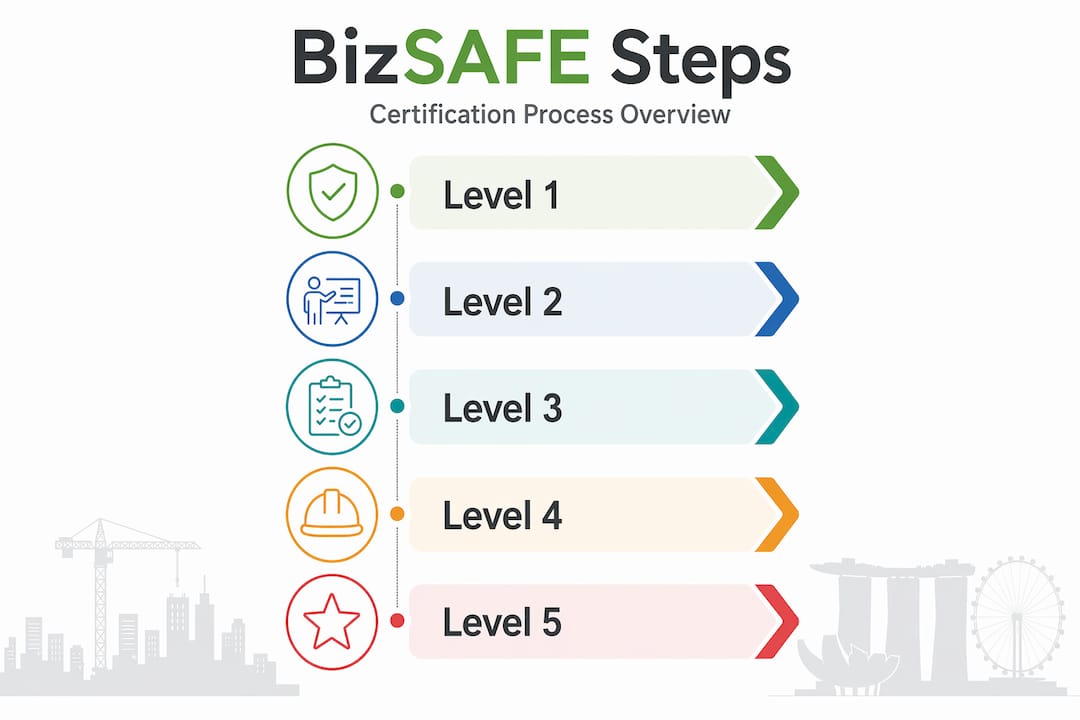
BizSAFE is a five-level progressive programme that combines formal training at the foundational levels with independent third-party audits at the higher levels. Developed by the WSHC in partnership with MOM, the programme is designed to build a company’s workplace safety and health (WSH) capabilities incrementally, rather than imposing a single compliance standard that organizations either meet or fail. This graduated architecture is what separates BizSAFE from a checkbox exercise and makes it a substantive management development framework.
The five levels are structured as follows:
- Level 1 (Top Management Workshop): A three-hour course for senior leadership to understand WSH obligations and commit organizational resources to safety governance.
- Level 2 (Risk Management Champion Training): A sixteen-hour course equipping a nominated Risk Management Champion with the technical skills to develop and implement a Risk Management Plan specific to the company’s operations.
- Level 3 (Risk Management Audit): An independent audit conducted by a MOM-registered Auditing Organisation to verify that the company has implemented a functioning, site-specific Risk Management Plan.
- Level 4 (Occupational Health and Safety Management System): Requires implementation of a formal OHSMS, typically aligned with ISO 45001 or equivalent standards.
- Level STAR (highest tier): Recognizes organizations that have embedded safety excellence as a core organizational value, with externally validated performance metrics and a strong safety culture.
For most construction SMEs in Singapore, the primary compliance and commercial objective is achieving and maintaining Level 3. Levels 1 and 2 provide the training foundation, while Levels 4 and STAR represent advanced performance benchmarks pursued by larger contractors and developers seeking to differentiate further. The programme also incorporates SGSecure elements to address terror contingency planning, reflecting Singapore’s whole-of-nation approach to workplace resilience.
Pro Tip: Do not treat Level 1 as a formality for the CEO to delegate. Senior management’s genuine understanding of WSH obligations directly shapes how seriously the rest of the organization takes safety governance, and auditors at Level 3 will probe for that top-down commitment.
What is BizSAFE Level 3 and why it matters most
Level 3 is the inflection point where a construction company moves from theoretical safety awareness to demonstrated implementation of a systematic risk management approach. The distinction is significant. Passing Levels 1 and 2 means personnel have been trained. Passing Level 3 means an independent auditor has reviewed your actual Risk Management Plan, assessed its applicability to your specific work activities and site hazards, and confirmed that it meets regulatory standards.
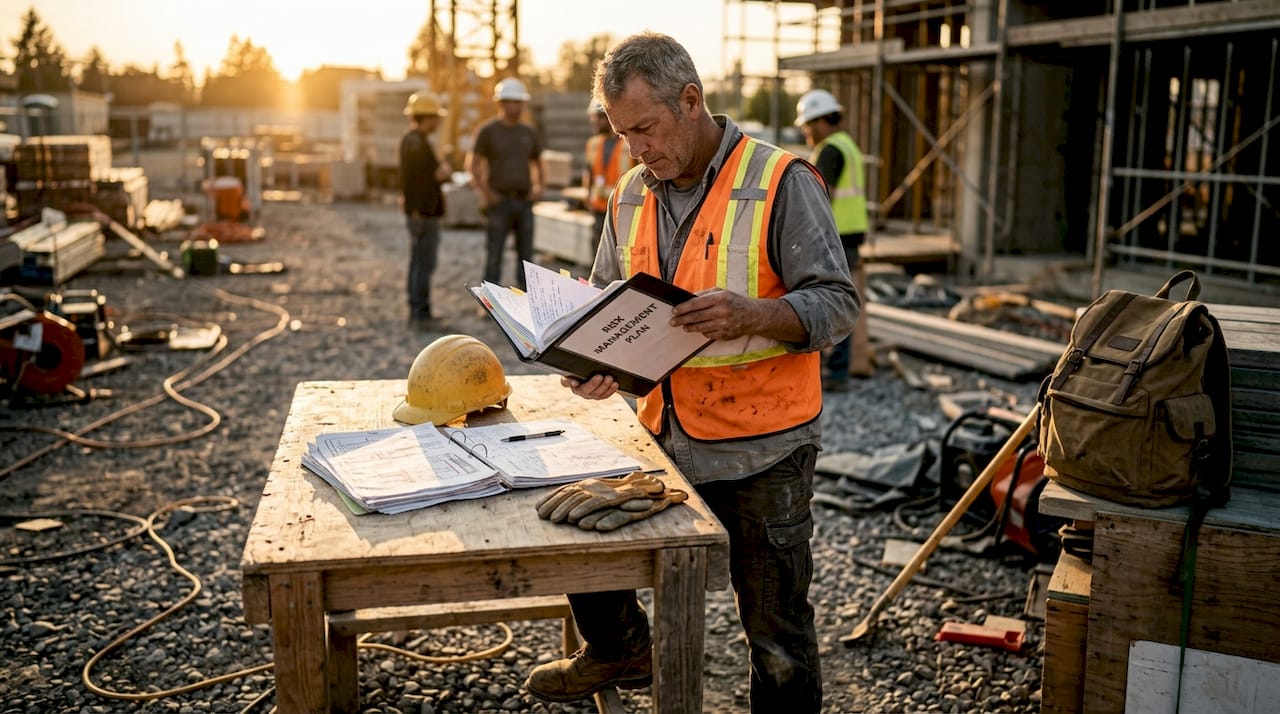
Level 3 is the minimum certification required to qualify for most government construction tenders in Singapore. Statutory boards including the Building and Construction Authority (BCA), the Housing & Development Board (HDB), and Land Transport Authority (LTA) mandate BizSAFE Level 3 as a baseline supplier qualification criterion. Without it, your company cannot compete for these contracts, regardless of technical capability or price competitiveness.
Several features of Level 3 certification demand deliberate attention:
- The Risk Management Plan must cover all work activities specific to your company, including trade-specific hazards such as working at height, excavation, or confined space entry.
- The independent audit is conducted by a MOM-registered Auditing Organisation, not by an internal team or a training provider.
- Certification at Level 3 carries a three-year validity period, after which renewal requires a fresh audit.
- Applications for renewal must be submitted with at least six months of validity remaining on the current audit report to avoid a compliance gap during processing.
Pro Tip: Many firms discover too late that their audit report is expiring while their renewal application is still in process. Mark your renewal deadline eighteen months before expiry, not six. The administrative buffer matters more than most project managers expect.
The most frequent cause of audit failure is the use of generic Risk Management Plans sourced from online templates. Auditors are specifically trained to distinguish between a plan that describes the company’s actual site conditions, equipment, and workforce exposures versus one that reads like a document drafted for a hypothetical construction company. Site-specific evidence, including hazard identification tables tied to your actual work scope, is the differentiating factor between a pass and a costly re-audit.
The benefits of BizSAFE certification for construction firms
The strategic and operational advantages of achieving BizSAFE certification extend well beyond regulatory compliance. Understanding the full spectrum of benefits clarifies why pursuing BizSAFE certification is a business decision, not merely a legal obligation.
| Benefit Category | Description |
|---|---|
| Workplace fatality reduction | BizSAFE has driven a 30% reduction in fatalities across certified companies, directly reducing human and financial loss from incidents. |
| Regulatory compliance | Certification demonstrates adherence to Singapore’s Workplace Safety and Health Act, reducing exposure to MOM enforcement actions and stop-work orders. |
| Tender qualification | Level 3 unlocks access to government and statutory board contracts, significantly expanding the addressable market for certified contractors. |
| Business reputation | Certification signals structured safety governance to developers, main contractors, and institutional clients who conduct supplier pre-qualification assessments. |
| Market visibility | Certified companies can list on the BizSAFE Marketplace, which provides free advertising and direct networking access to safety-conscious clients. |
| Cost reduction | A reduction in workplace incidents directly lowers costs associated with medical claims, project delays, equipment damage, and insurance premiums. |
The safety culture dimension deserves particular emphasis. Construction firms that complete the BizSAFE programme report measurable changes in how workers at all levels perceive and respond to site hazards. When a Risk Management Champion has been formally trained and a documented plan is actively used for toolbox meetings and pre-task briefings, safety transitions from a poster on the hoarding to an operational discipline embedded in daily work. That cultural shift, difficult to quantify but unmistakable in practice, is among the most durable advantages of BizSAFE certification.
For a broader view of how BizSAFE fits within Singapore’s regulatory architecture for construction, the safety certifications guide published by MOSAIC provides a structured reference across the full certification portfolio relevant to contractors.
How to achieve BizSAFE certification step by step
Progressing through BizSAFE levels is a sequential process with defined prerequisites at each stage. Attempting to shortcut the sequence is both technically impermissible and operationally counterproductive. Skipping Levels 1 and 2 deprives your Risk Management Champion of the conceptual and technical grounding required to build a credible Risk Management Plan, and auditors can identify underprepared documentation within minutes.
The following sequence represents the standard pathway for a construction company targeting Level 3:
- Complete Level 1 (Top Management Workshop). Enroll the company’s senior leadership, typically the Managing Director or Operations Director, in the three-hour WSHC-approved workshop. This establishes formal organizational commitment and is a prerequisite for Level 2.
- Nominate and train a Risk Management Champion at Level 2. Select an individual with sufficient operational authority and site knowledge to develop and maintain the Risk Management Plan. The sixteen-hour course equips this person with hazard identification methodology, risk assessment frameworks, and control hierarchy principles.
- Develop the company’s Risk Management Plan. Working from the Level 2 training, the Champion builds a plan that maps specific work activities to identified hazards, assesses risk severity, and documents control measures. This document must reflect your company’s actual scope of work, not a generic construction template.
- Engage a MOM-registered Auditing Organisation. The audit is not self-administered. Identify and appoint an approved auditor, allowing sufficient lead time for scheduling. Auditors will review documentation and conduct site or office interviews to verify implementation.
- Submit the BizSAFE Level 3 application through the WSH Council portal. Ensure the audit report will retain at least six months of validity through the application processing period. This is particularly critical for timely renewal submissions.
- Maintain certification through continuous implementation. BizSAFE is not a document exercise. The Risk Management Plan must be reviewed and updated as work scope, site conditions, or workforce change. Annual internal reviews are considered best practice.
Pro Tip: Schedule your Level 3 audit appointment before your Risk Management Plan is fully finalized. Auditors often have lead times of four to eight weeks, and building that buffer into your project timeline prevents unnecessary delays in achieving certification.
For construction companies that want granular guidance on the Level 3 pathway, MOSAIC’s dedicated resource on achieving BizSAFE Level 3 addresses the specific documentation, audit preparation, and submission requirements relevant to Singapore contractors.
My perspective on BizSAFE’s real impact
I have worked alongside construction firms at every stage of the BizSAFE journey, and the pattern I see repeatedly is that companies underestimate the value embedded in Levels 1 and 2. Senior leadership attends the top management workshop as a formality, the Risk Management Champion attends the sixteen-hour course as an administrative requirement, and then everyone is surprised when the Level 3 audit exposes gaps in the documentation. The training is the foundation, not the preamble.
The more substantive issue I have observed is the prevalence of generic Risk Management Plans that fail on first audit. Firms that invest two hours downloading and lightly editing a template cost themselves weeks of re-audit delay, additional fees, and reputational friction with clients waiting on their certification. A plan that reads like it was written for your specific trade, your specific site conditions, and your specific workforce is not a high bar. It is the minimum the programme intends.
What BizSAFE has achieved at a systemic level in Singapore’s construction sector is genuinely significant. The reduction in workplace fatalities across certified companies reflects what happens when safety is treated as a management discipline rather than a regulatory burden. My advice to any contractor approaching this programme is to treat BizSAFE not as a certification to obtain but as a safety management system to build. The certificate is the output. The system is the asset.
— Aman
How MOSAIC supports your BizSAFE certification journey
For construction firms navigating the BizSAFE certification process, the difference between a first-time pass and a costly re-audit frequently comes down to the quality of preparation. MOSAIC Eco-construction Solutions provides specialist consultancy services tailored specifically to the construction sector’s certification requirements, from Risk Management Plan development to pre-audit readiness assessments.
MOSAIC’s team of safety professionals brings direct experience with MOM-registered audit standards, helping contractors avoid the generic documentation pitfalls that derail so many first attempts. The firm’s safety audit preparation service walks companies through the full audit readiness process, while practical safety audit examples give your team a concrete reference point for what compliant documentation looks like in a construction context. Whether you are pursuing Level 3 for the first time or managing a renewal cycle, MOSAIC provides the structured support that converts preparation into certification.
FAQ
What is BizSAFE certification in Singapore?
BizSAFE is a five-level workplace safety and health capability programme developed by the WSH Council and MOM. It progressively builds a company’s safety management systems from foundational training through independently audited risk management implementation.
What is BizSAFE Level 3 and why do construction firms need it?
BizSAFE Level 3 requires an independent audit of a company’s Risk Management Plan and is the minimum certification required to qualify for most government construction tenders in Singapore, including BCA and HDB contracts.
How long does BizSAFE Level 3 certification last?
BizSAFE Level 3 certification is valid for three years. Companies must submit renewal applications with at least six months remaining on their current audit report to avoid a compliance gap during processing.
Why do companies fail the BizSAFE Level 3 audit?
The most common cause of audit failure is submitting a generic or template-based Risk Management Plan. Auditors require site-specific evidence that the plan addresses the company’s actual work activities, hazards, and control measures.
What are the main benefits of BizSAFE certification for construction companies?
BizSAFE certification delivers a measurable reduction in workplace fatalities, regulatory compliance with Singapore’s WSH Act, access to government tenders, improved supplier reputation, and eligibility to list on the BizSAFE Marketplace for increased business visibility.
Recommended
- What is bizSAFE? A Comprehensive Guide for Singapore Businesses (Levels 1-Star) – MOSAIC Eco-construction Solutions Pte Ltd
- The bizSAFE Advantage: How to Unlock Tender Eligibility and Secure Government Contracts in Singapore – MOSAIC Eco-construction Solutions Pte Ltd
- bizSAFE Certification Singapore 2025 Guide for SMEs – MOSAIC Eco-construction Solutions Pte Ltd
- The Ultimate 2025 Guide: Achieving bizSAFE Level 1 & 2 in Singapore Step-by-Step – MOSAIC Eco-construction Solutions Pte Ltd