
When a client asks for your safety manual before awarding a job, or an auditor requests documented evidence of training, inspections, and risk controls, weak paperwork quickly becomes an operational problem. That is where an ehs documentation consultant adds real value – not by producing binders that sit on a shelf, but by building documentation that supports compliance, site execution, and audit readiness.
For construction contractors, engineering firms, manufacturers, and other regulated businesses, documentation is the visible proof of how safety, environmental, and quality controls are managed. Policies, procedures, risk assessments, inspection records, training matrices, emergency response plans, and permit-related documents all play a role. If they are incomplete, outdated, or disconnected from actual work practices, the business carries unnecessary risk.
Why EHS documentation fails in many organizations
Most documentation problems do not start with bad intentions. They usually come from growth, time pressure, or fragmented responsibilities. A company may begin with a basic set of forms to satisfy a client requirement, then add more documents after each audit finding, incident, or tender request. Over time, the system becomes inconsistent.
One procedure says one thing, site practice shows another, and supervisors rely on experience rather than documented controls. The result is familiar: duplicated forms, missing revision control, outdated legal references, training records that cannot be verified, and management systems that look complete until someone tests them during an audit or incident investigation.
This is why documentation work should not be treated as a clerical task. Effective EHS documentation requires knowledge of regulations, operational workflows, certification frameworks, and workplace risk. A document is only useful if it is correct, usable, and aligned with what the business can realistically implement.
What an EHS documentation consultant actually does
An ehs documentation consultant helps an organization translate compliance requirements into a practical and controlled documentation system. That includes more than writing procedures. It usually starts with understanding the company’s scope of work, risk profile, client obligations, and current gaps.
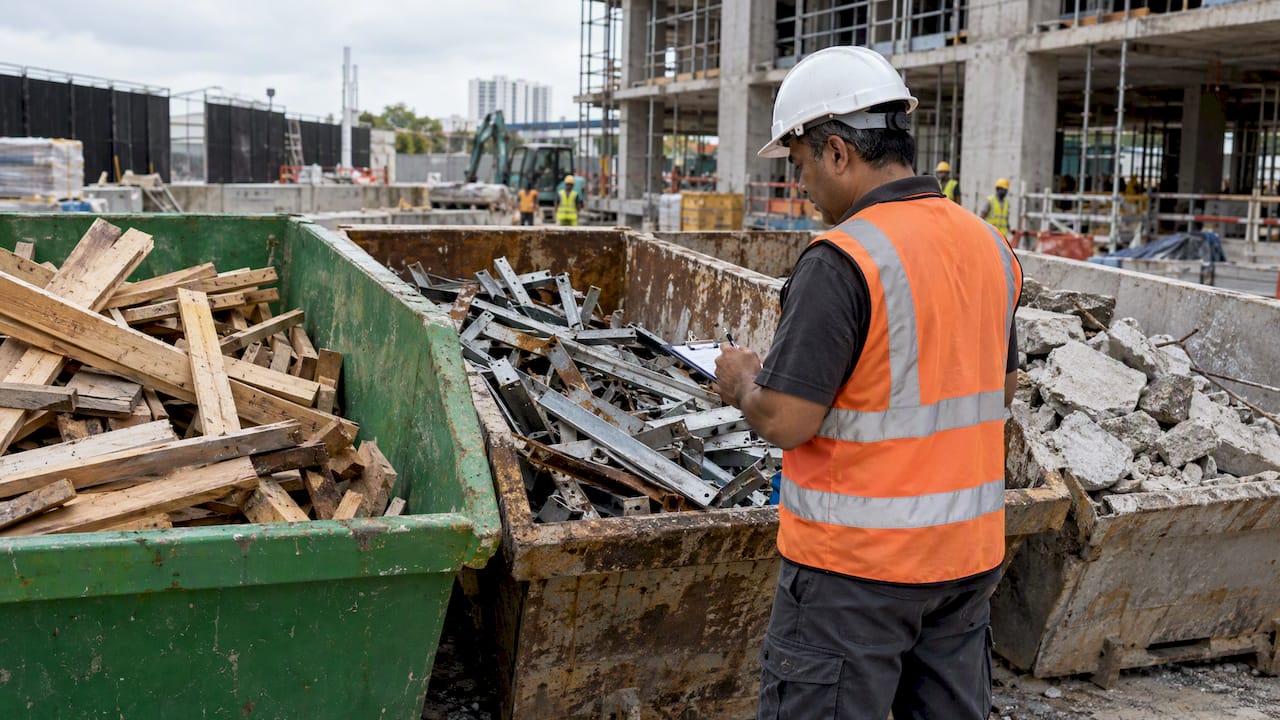
In a construction environment, for example, documentation may need to support subcontractor management, permit-to-work controls, lifting operations, confined space work, work at height, equipment inspections, toolbox meetings, incident reporting, and emergency preparedness. In an industrial setting, the focus may lean more heavily toward process controls, maintenance records, hazardous substance management, environmental monitoring, and contractor coordination.
The consultant reviews what already exists, identifies what is missing, and determines what should be revised rather than rewritten. This matters because starting from zero is not always the best approach. Sometimes a company has usable materials, but they need better structure, stronger technical content, or clearer ownership.
From there, the consultant develops or updates core documents such as EHS policies, manuals, standard operating procedures, safe work procedures, risk assessment templates, inspection checklists, method statements, legal registers, training records, and document control processes. In more mature systems, the work may also include alignment with ISO standards, contractor prequalification requirements, or internal governance needs.
Good documentation is not the same as more documentation
One of the most common mistakes in compliance programs is over-documenting. Businesses under pressure often assume that thicker files mean stronger control. In practice, too many forms and overly complex procedures create the opposite effect. Supervisors stop using them, workers complete records mechanically, and audits reveal that the system is not embedded.
A capable ehs documentation consultant knows when detail is necessary and when simplicity improves compliance. A high-risk activity needs clear and specific controls. A routine low-risk process may only need a concise instruction and a well-designed checklist. The right balance depends on the nature of the work, workforce capability, client expectations, and regulatory exposure.
This is especially relevant for small and mid-sized contractors. They often need documentation that is credible enough for audits and tenders, but practical enough for site teams that are already stretched. Documentation should support the operation, not slow it down.
Where businesses see the biggest benefit
The immediate benefit of better EHS documentation is usually compliance confidence. Leaders know what documents exist, who owns them, which version is current, and how records are maintained. That alone reduces confusion during audits, client reviews, and inspections.
The broader benefit is operational control. Clear procedures improve consistency across projects. Better forms improve traceability. Structured records help management identify recurring issues, overdue actions, training gaps, and weak supervision. Documentation also supports incident response because the company can show what controls were established, communicated, and monitored.
For organizations pursuing certifications or program milestones, documentation quality often affects readiness more than expected. Whether the target is an internal management system, a client-driven safety requirement, or a recognized framework such as BizSAFE, ISO, or ConSASS-related support, documented evidence is central. Auditors and assessors do not evaluate intent alone. They evaluate what is documented, implemented, and retained.
How to tell if you need an EHS documentation consultant
Some triggers are obvious. You have an upcoming audit, a major tender submission, a client prequalification review, or a corrective action plan to close. Others are less visible but just as serious.
If your site teams are using different forms for the same activity, if procedures are copied from unrelated industries, if no one can confirm which documents are current, or if managers spend too much time scrambling for records, your system likely needs attention. The same applies if your documents were created only to pass a one-time requirement and have not kept pace with operational changes.
A consultant is also valuable when internal teams understand the work but lack the time or specialist knowledge to structure the documentation properly. That is common in growing firms where operations move faster than management systems. Bringing in outside expertise can shorten the path to compliance without forcing the business to build a full in-house documentation function.
What to look for in an ehs documentation consultant
Industry knowledge should come first. A consultant who understands construction sequencing, permit controls, subcontractor interfaces, temporary works, and site-level realities will usually produce stronger documentation than someone working only from generic templates. The same principle applies in manufacturing, logistics, utilities, and other sectors.
Regulatory understanding matters just as much. Documentation must reflect applicable legal duties, client standards, and relevant management system expectations. If the consultant cannot explain how a procedure supports compliance in real terms, the document may look polished but still fail under scrutiny.
You should also look for implementation awareness. The best consultants do not hand over documents and disappear. They think about usability, training, document control, revision management, and how records will actually be generated on the ground. That practical focus is what turns documentation into a working management tool.
For many companies, it is also helpful to work with a provider that can support the full chain – gap assessment, documentation, training, audit preparation, and follow-up improvement. That reduces handoff problems and keeps the system aligned from planning through implementation.
Documentation should reflect the real workplace
There is no universal set of documents that fits every organization. A subcontractor with fifty workers does not need the same level of system complexity as a large principal contractor managing multiple high-risk projects. A warehouse operation faces different documentation demands than a fabrication yard or process plant.
That is why templated paperwork often falls short. Templates can provide a starting point, but they need adaptation. Roles, approval authority, emergency arrangements, equipment types, environmental aspects, and work methods all vary. If your documentation could belong to any company, it may not protect yours very well.
This is where firms such as MOSAIC Ecoconstruction Solutions Pte Ltd bring value. Practical documentation support works best when it is grounded in regulatory knowledge and direct field understanding, not just document formatting.
A stronger system starts with clearer evidence
Good EHS documentation does not eliminate risk by itself, but it gives the business a controlled way to define expectations, assign responsibility, track compliance, and demonstrate due diligence. In regulated industries, that is not paperwork for its own sake. It is part of how work is planned, supervised, and improved.
If your documents are outdated, inconsistent, or disconnected from actual operations, the issue is larger than administration. It affects audit outcomes, client confidence, and day-to-day risk control. The right consultant helps close that gap with documentation that stands up to review and works where it matters most – in the field, under pressure, and in real operating conditions.
The best time to fix your documentation is before the next inspection, tender, or incident forces the issue.