

A site induction is a structured, site-specific safety briefing delivered to every person before they first enter a construction worksite, covering active hazards, emergency procedures, PPE requirements, and site rules. Under the OSH Act, employers bear a statutory duty to furnish workers with the information and training necessary to protect their safety and health. If you manage site access, verify right now that every person on your site has received a current, site-specific induction — not a generic safety card — before granting unescorted entry.
Key Takeaways
A site induction is a statutory and operational requirement: every person entering a construction site must receive a site-specific briefing before unescorted access is granted, and every induction must be documented to satisfy OSHA recordkeeping obligations.
| Point | Details |
|---|---|
| Site-specific content is mandatory | A generic safety card does not substitute for a site-specific induction covering active hazards and emergency procedures. |
| OSHA establishes the legal baseline | The OSH Act and 29 CFR 1926.21 require employers to instruct workers on hazard recognition and avoidance before exposure. |
| Documentation is the compliance proof | Records must capture inductee identity, topics covered, trainer sign-off, and competency verification with a time stamp. |
| Re-induction triggers must be enforced | Phase changes, layout modifications, post-incident reviews, and long absences all require a fresh induction. |
| Com integrates induction into full QES systems | MOSAIC designs hazard-led, multilingual induction programs that connect to permit-to-work and contractor management frameworks. |
Table of Contents
- What is a site induction, and how does it differ from a general safety certificate?
- Why site inductions matter for safety, legal compliance, and business continuity
- Who needs a site induction, and when should re-induction occur?
- Core topics every construction site induction must cover
- U.S. legal and regulatory context: OSHA training obligations
- How to deliver a site induction effectively in 2026
- How long does a site induction usually take?
- Documentation, acknowledgement, and recordkeeping
- A step-by-step site induction plan and ready-to-use checklist
- What happens when workers skip a site induction?
- How MOSAIC designs a site-specific induction for complex projects
- Reinforcing compliance after the induction: supervision and mentoring
- Integrating site inductions with your broader safety management system
- How to tailor site induction content for different roles and experience levels
- Strategies for keeping inductees engaged and improving retention
- Common pitfalls in site inductions and how to avoid them
- An editorial perspective on what site inductions actually accomplish
- MOSAIC’s QES consultancy services for site induction design and compliance
- Sources
What is a site induction, and how does it differ from a general safety certificate?
A site induction is not a transferable credential. It is a formal, location-bound briefing that communicates the specific physical conditions, hazards, emergency arrangements, and behavioral rules of one particular project at one particular time. A generic safety card or industry certification confirms that a worker has completed baseline training; it says nothing about the crane operating overhead, the excavation open beside the welfare block, or the muster point behind the site office.
SafetyCulture’s construction safety guidance frames the distinction precisely: a site induction must be site-specific, covering potential hazards, site organization, and individual worker responsibilities. A general certificate covers neither.
| Dimension | General safety certificate | Site-specific induction |
|---|---|---|
| Purpose | Confirms baseline industry training | Communicates this site’s hazards and rules |
| Scope | Industry-wide standards | One project, one phase, one set of conditions |
| Timing | Completed before employment | Completed before first entry to each site |
| Suitability for escorted visitors | Acceptable with supervision | Proportionate briefing still required |
| Suitability for unescorted workers | Insufficient on its own | Mandatory, full induction required |
For a deeper comparison of general versus site-specific safety inductions, MOSAIC’s published guidance explains why tailored content is the operative risk-reduction lever.
Why site inductions matter for safety, legal compliance, and business continuity
The importance of site induction extends well beyond a procedural checkbox. A properly delivered induction reduces the probability that a worker encounters a hazard they were never told about, which is the proximate cause of a significant proportion of construction incidents. The business and legal case is equally direct:
- Reduced incidents and near-misses: Workers who understand active hazards before exposure make better real-time decisions.
- Clear individual responsibilities: Every inductee leaves knowing their stop-work authority, their reporting chain, and their emergency role.
- Faster emergency response: Muster points, assembly procedures, and first-aid locations are communicated before they are needed.
- Contractual compliance: Most general contractor agreements and owner specifications require documented inductions for all site personnel.
- Insurance and regulatory protection: Documented inductions demonstrate due diligence and reduce exposure in the event of an incident investigation or OSHA citation.
The OSH Act places the obligation squarely on the employer to provide a safe workplace and to furnish employees with necessary information and training. Failing to deliver a site-specific induction is not merely a procedural gap; it is a potential statutory violation with citation and penalty consequences.
Who needs a site induction, and when should re-induction occur?
Every person who sets foot on a construction site requires some form of induction before entry. The level of detail scales with the nature of their access and their exposure to uncontrolled hazards.
Categories requiring full induction:
- Employees and direct-hire labor
- Subcontractors and their workers
- Specialty contractors (mechanical, electrical, structural)
- Delivery drivers accessing active work areas
- Inspectors, surveyors, and regulatory visitors
- Vendors and equipment representatives
Escorted visitors — such as client representatives on a brief walk-through — require a proportionate briefing covering emergency procedures, PPE requirements, and prohibited zones. HSE guidance is explicit that even escorted visitors must receive a site-specific briefing calibrated to their level of exposure.
Re-induction triggers include: a major change in site layout or active hazards; commencement of a new high-risk phase (demolition, deep excavation, structural steel erection); return to site after an absence exceeding four weeks; post-incident review requiring updated hazard communication; or a significant change to emergency procedures or muster points.
Core topics every construction site induction must cover
MapTrack’s induction guidance identifies a checklist, attendance register, site map, PPE requirements list, and emergency procedure summary as the minimum evidence items for audit purposes. The content those documents must address includes:
- Site overview and scope of work: Boundaries, active work zones, restricted areas, and current phase of construction.
- Key contacts and responsibilities: Site supervisor, safety officer, first-aid officer, and emergency coordinator names and locations.
- Site rules and permit systems: Behavioral rules, prohibited items, permit-to-work requirements, and hot-work authorization procedures.
- PPE requirements: Mandatory PPE for all zones plus additional requirements for specific tasks or areas.
- Emergency procedures and muster points: Evacuation routes, assembly points, fire extinguisher locations, and first-aid station positions.
- Active hazards: Current crane radius, open excavations, overhead power lines, traffic routes, and any confined-space entries in progress.
- Traffic and vehicle management: Pedestrian segregation routes, vehicle entry/exit points, and speed limits. Safe access protocols, including those relevant to landscaping and site access operations, follow the same segregation logic.
- Confined spaces and hot works: Identification of confined-space entries and hot-work zones requiring permits and atmospheric monitoring.
- Reporting and stop-work authority: How to report hazards, near-misses, and incidents; every worker’s right and obligation to stop unsafe work.
- Welfare and site facilities: Locations of toilets, wash stations, rest areas, drinking water, and first-aid kits.
- Environmental controls: Spill containment, waste segregation, noise and dust controls, and procedures for suspected asbestos or contaminated materials.
- Permit-to-work oversight: Which activities require a permit, who issues them, and what the worker must verify before starting.
U.S. legal and regulatory context: OSHA training obligations
The federal legal framework for site inductions in the United States flows from two primary sources. The OSH Act establishes the general duty of every employer to provide a workplace free from recognized hazards and to furnish employees with the information and training necessary to protect their safety and health. OSHA’s construction-specific standards operationalize that duty: 29 CFR 1926.21 requires employers to instruct each employee in the recognition and avoidance of unsafe conditions and in the regulations applicable to their work environment.
OSHA’s training guidance for construction employers provides practical direction on structuring training programs, documenting delivery, and retaining records to demonstrate compliance during inspections. The guidance addresses both the content of training and the administrative systems needed to evidence it.
Twenty-nine states and territories operate their own OSHA-approved state plans, which must be at least as effective as federal OSHA standards and may impose additional requirements. California (Cal/OSHA), Washington (L&I), and Michigan (MIOSHA) are among the most active state-plan jurisdictions with construction-specific provisions. Contractors operating across multiple states should verify applicable state-plan requirements in addition to federal standards.
How to deliver a site induction effectively in 2026
Delivery method determines whether the content is actually retained, not merely received. The following approaches each carry distinct advantages depending on site complexity, workforce size, and language profile:
- In-person walk-and-talk: The highest-retention format. A supervisor walks inductees through the site, pointing to actual hazards, muster points, and welfare facilities in context.
- Classroom or group brief with site walkthrough: Efficient for large cohorts starting simultaneously; combine a presentation covering rules and emergency procedures with a subsequent physical walkthrough.
- Online module with site-specific addendum: Suitable for pre-mobilization; workers complete a general module remotely, then receive a site-specific briefing on arrival covering current conditions.
- Blended digital and in-person: The most defensible approach for complex projects — digital delivery for consistent content coverage, in-person walkthrough for hazard familiarization, and digital sign-off for audit-ready records.
Pro Tip: Issue a photo ID badge or access pass only after the inductee has completed a short competency check — three to five questions covering emergency procedures and stop-work authority. This single step converts a passive briefing into a verified knowledge transfer and creates a defensible record of comprehension, not just attendance.
Multilingual materials are not optional on sites with a linguistically diverse workforce. Translated written summaries, pictogram-based site maps, and short video segments in workers’ primary languages reduce the risk of critical information being misunderstood. Digital sign-off systems with time-stamped records and photo ID verification provide the strongest audit trail.
How long does a site induction usually take?
Duration scales with complexity, not with convenience.
Factors that extend duration include: the number of active hazard categories, language interpretation requirements, the size of the site requiring walkthrough, competency verification testing, and PPE fitting and issue. Splitting content into an initial induction covering universal topics followed by role-specific briefings for high-risk trades is a practical approach for large, complex projects.
Documentation, acknowledgement, and recordkeeping
An induction that is not documented did not happen — at least not in any way that protects the employer during an OSHA inspection or incident investigation. A complete induction record should capture:
- Date and time of induction
- Inductee full name, company, and role
- Photo ID or certification numbers verified
- Induction version or document reference
- Topics covered (checklist format)
- Trainer name and signature
- Inductee signature or digital acceptance with time stamp
- Expiry date or scheduled refresh
Records should be retained for the duration of the project and for the statutory retention period applicable in the relevant jurisdiction. Digital logs that are searchable by name, date, and company are significantly more useful during audits than paper registers. Cross-referencing induction records with permit-to-work logs and subcontractor competency files creates a coherent compliance trail. The site safety inspection checklist process published by MOSAIC integrates induction status verification into ongoing inspection cycles.
A step-by-step site induction plan and ready-to-use checklist
Step 1: Preparation (48 hours before mobilization)
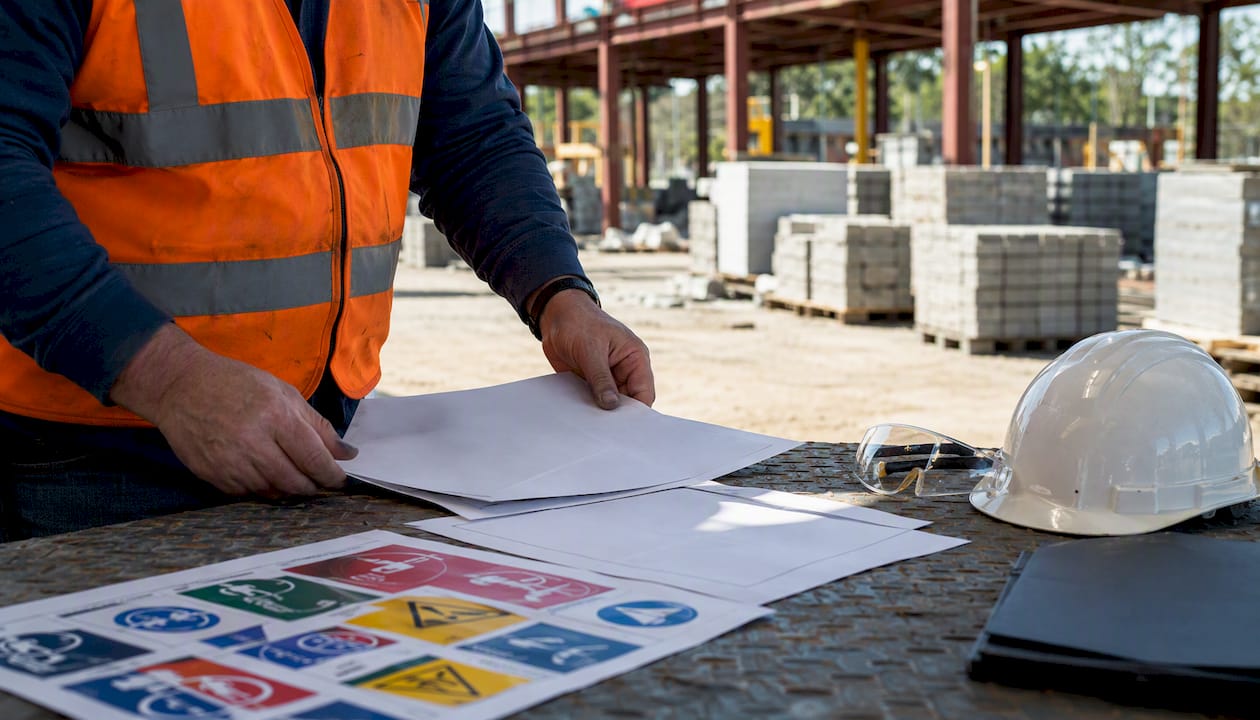
Review current site hazard register, update the induction script to reflect active conditions, confirm PPE stock, and prepare site maps and emergency procedure summaries.
Step 2: Scheduling
Book induction slots before site access is granted. No worker, contractor, or visitor enters an active work area without a confirmed induction appointment.
Step 3: Delivery
Deliver the induction using the chosen method. Cover all mandatory topics. Conduct the physical walkthrough. Issue PPE.
Step 4: Verification
Administer a short competency check. Confirm comprehension of emergency procedures and stop-work authority.
Step 5: Access pass issuance
Issue a site access pass, badge, or wristband only after successful verification and signed acknowledgement.
Step 6: Record filing
File the completed induction record in the project safety management system. Cross-reference with the contractor register and permit-to-work log.
Ready-to-use site induction checklist:
- Pre-induction: confirm inductee identity and verify credentials/certifications.
- Pre-induction: confirm current site hazard register is reflected in induction content.
- Deliver: site overview, scope, and current phase.
- Deliver: key contacts, emergency coordinator, and first-aid officer.
- Deliver: site rules, prohibited items, and behavioral expectations.
- Deliver: PPE requirements by zone and task.
- Deliver: emergency procedures, evacuation routes, and muster points.
- Deliver: active hazards (cranes, excavations, traffic, confined spaces).
- Deliver: permit-to-work and hot-work authorization procedures.
- Deliver: reporting procedures and stop-work authority.
- Deliver: welfare facilities and environmental controls.
- Walkthrough: physically walk inductee through site, pointing to hazards and facilities.
- Verification: administer competency check.
- Issue: PPE and site access pass.
- Record: complete and file induction record with signature/digital acceptance.
For contractors specifically, the subcontractor safety onboarding checklist from MOSAIC provides a parallel framework that integrates induction status into the broader onboarding and competency verification process.
What happens when workers skip a site induction?
The consequences of uninducted personnel on site are not theoretical. They include:
- Elevated incident probability from workers unaware of active hazards.
- OSHA citations under the General Duty Clause or specific training standards, with associated penalties.
- Contractual breach, triggering potential liability to the principal contractor or project owner.
- Insurance exposure if an incident involves a worker whose induction was not documented.
- Stop-work orders from OSHA compliance officers or owner representatives.
Corrective action when an uninducted worker is identified:
- Remove the individual from the active work area immediately.
- Conduct the induction before re-entry is permitted.
- Notify the relevant supervisor and subcontractor principal.
- Document the non-compliance event in the project safety register.
- Review contractor controls and access management procedures to identify the systemic failure.
- For repeat non-compliance, escalate through contract mechanisms, including suspension of site access.
How MOSAIC designs a site-specific induction for complex projects
MOSAIC’s QES consultancy approach to site induction design follows a structured methodology that goes beyond template distribution. The process begins with a site-specific hazard assessment to identify the active risk profile of the project at its current phase. That assessment drives the induction content, so the briefing reflects what is actually happening on site rather than a generic construction scenario.
Key elements of MOSAIC’s induction design process:
- Hazard-led content development: Induction scripts and slide decks are built from the current hazard register, not from a static template.
- Multilingual asset production: Where the workforce includes non-English-speaking workers, translated summaries and pictogram-based site maps are prepared as standard.
- Digital sign-in and retention: MOSAIC implements digital induction platforms that capture time-stamped sign-off, photo ID verification, and competency check results, creating an audit-ready record from day one.
- Contractor competency integration: Induction status is cross-referenced with contractor competency files and permit-to-work logs, so access control and safety management operate as a single system.
- Phase-based refresh scheduling: As the project moves through major phases, MOSAIC schedules re-induction events to communicate changed hazard conditions before new work commences.
This methodology reflects the principle that a site induction is the entry point to a safety management system, not a standalone administrative task.
Reinforcing compliance after the induction: supervision and mentoring
Delivering an induction is the beginning of a safety process, not its conclusion. The period immediately following induction is when behavioral compliance is most fragile, particularly for workers new to a site or new to a specific trade activity. Structured follow-up actions materially reduce the gap between what workers were told and what they actually do.
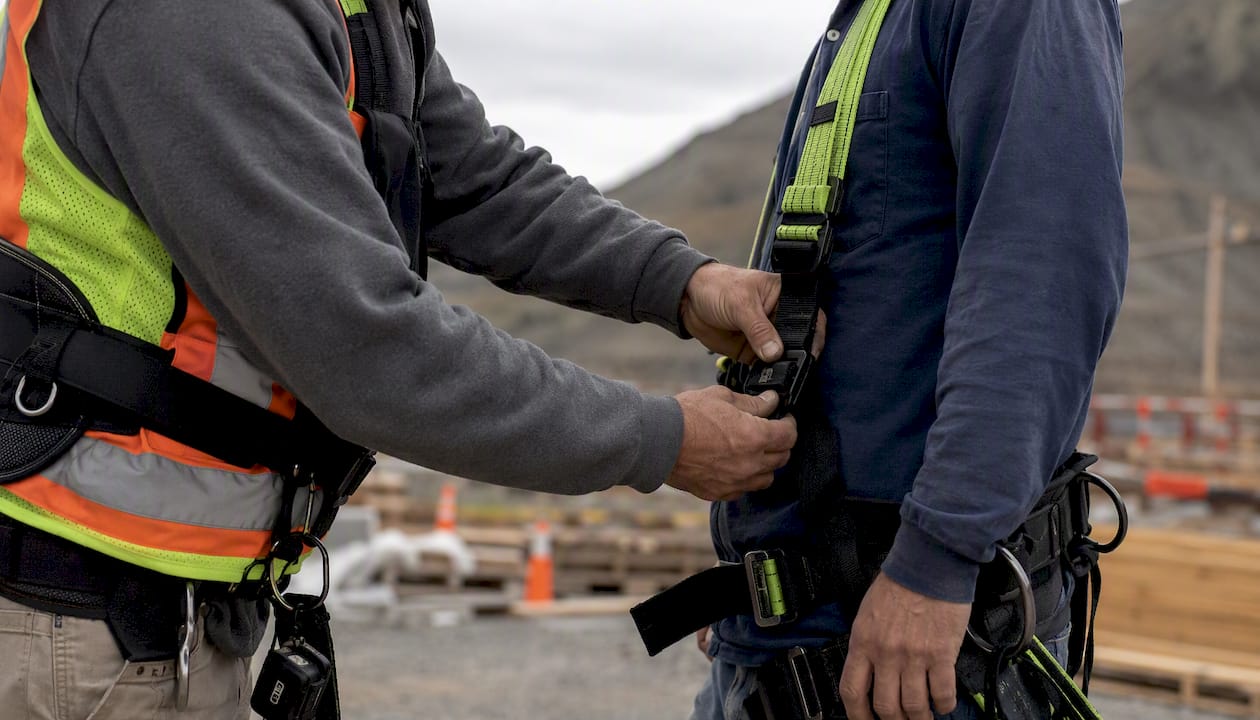
Effective post-induction reinforcement includes: assigning an experienced buddy or mentor to new workers for their first shift; conducting a brief supervisor check-in at the end of the first day to identify any confusion or non-compliance; scheduling a toolbox talk within the first week that revisits the highest-risk topics from the induction; and integrating induction topics into routine site safety observations so that compliance is monitored, not assumed. The construction site inspection program framework provides a practical structure for embedding post-induction monitoring into regular inspection cycles.
Integrating site inductions with your broader safety management system
A site induction that exists in isolation from the project’s safety management system is a missed opportunity. When induction status, competency records, permit-to-work logs, and incident reports are managed as a connected data set, the safety management system gains predictive capability: it can identify workers approaching re-induction dates, flag permit applications from workers whose inductions have lapsed, and correlate incident patterns with induction gaps.
Integration points include: linking induction records to the contractor management register; connecting induction expiry dates to access control systems so that lapsed inductions automatically trigger re-entry restrictions; feeding induction completion data into the project safety dashboard for principal contractor reporting; and using induction content as the baseline for ongoing safety culture development through toolbox talks, safety observations, and behavioral safety programs. This integration positions the site induction as the central nervous system of the project’s safety architecture rather than a one-time administrative event.
How to tailor site induction content for different roles and experience levels
A site induction delivered identically to a first-day laborer and a 20-year structural steel foreman wastes the foreman’s time and under-serves the laborer. Role-calibrated inductions are more effective because they connect hazard information to the specific tasks and exposures each worker will actually encounter.
For experienced tradespeople, the induction can move quickly through baseline content and spend more time on site-specific conditions: the particular excavation geometry, the crane’s operating radius, the specific permit-to-work triggers for this project. For new entrants or workers unfamiliar with construction environments, the induction should slow down on fundamental concepts — what a permit to work means, how to use stop-work authority without fear of reprisal, and how to read a site map. For supervisors and foremen, the induction should include a layer of accountability content: their obligations to monitor compliance among their crews, their authority to remove uninducted workers from site, and their role in the incident reporting chain.
Strategies for keeping inductees engaged and improving retention
The most common failure mode in site inductions is passive delivery: a supervisor reads from a script while workers wait to start work. Retention from passive delivery is low. The following strategies produce measurably better comprehension:
Ask questions throughout rather than presenting a monologue. Pointing to a hazard and asking “What would you do if that crane’s exclusion zone extended to where you’re standing?” forces active processing. Use the physical walkthrough as the primary teaching moment rather than a post-briefing formality. Show the muster point, the first-aid kit, and the permit board in context. Keep the formal presentation component under 20 minutes for most workers; attention degrades sharply beyond that threshold. Follow with a short written or verbal competency check that requires workers to recall specific emergency procedures and hazard locations, not just confirm they “understood.” For workers with lower literacy or limited English proficiency, pictogram-based materials and short demonstration videos in their primary language are not supplementary — they are the primary delivery mechanism.
Common pitfalls in site inductions and how to avoid them
Several failure patterns recur across construction projects of all scales:
Generic content delivered as site-specific: The induction script has not been updated since the project’s mobilization phase, so workers arriving during structural steel erection receive a briefing that still describes earthworks hazards. Update induction content at every major phase transition.
Induction as a signature exercise: The goal becomes obtaining a signature rather than verifying comprehension. Add a competency check with a minimum pass threshold and re-induct workers who do not meet it.
Language and literacy barriers ignored: Delivering an English-language induction to a workforce with limited English proficiency and recording their signatures as evidence of comprehension is a compliance fiction. Translated materials and interpreter-assisted delivery are operational requirements, not courtesies.
No re-induction protocol: Workers inducted at mobilization and never re-inducted through demolition, structural, fit-out, and commissioning phases are operating on outdated hazard information. Establish formal re-induction triggers and enforce them.
Paper records that cannot be retrieved: A paper register stored in a site cabin that floods, burns, or is simply lost provides no protection during an investigation. Digital records with off-site backup are the minimum standard for projects of any significant duration.
An editorial perspective on what site inductions actually accomplish
The conventional framing of a site induction as a compliance requirement understates its operational function. The induction is the single moment in a project’s lifecycle when the site manager has every new entrant’s undivided attention and a legitimate mandate to communicate hazard information. That moment is frequently squandered on administrative procedure rather than genuine hazard communication.
The most effective inductions treat the walkthrough as the core event and the paperwork as the record of it, not the reverse. Sites that invest in multilingual materials, competency verification, and role-specific content consistently produce induction records that are also operationally useful: they identify workers who need additional supervision, flag language barriers before they become incident contributors, and create a baseline against which behavioral safety observations can be measured.
The checklist in this article is a starting point. Complex sites with multiple subcontractors, high-risk activities, and linguistically diverse workforces require a consultancy-level approach to induction design, one that integrates with the project’s permit-to-work system, contractor management register, and incident reporting framework from day one.
MOSAIC’s QES consultancy services for site induction design and compliance
Construction projects with complex contractor structures, multilingual workforces, or high-risk activity profiles require more than a downloaded template. MOSAIC’s QES consultancy practice delivers end-to-end induction design: hazard-led content development, multilingual asset production, digital sign-in systems with audit-ready retention, and integration with contractor competency and permit-to-work frameworks. The result is an induction program that satisfies OSHA documentation requirements and functions as the entry point to a coherent safety management system.

For projects requiring a site induction review, a custom induction package, or a full safety audit aligned to construction compliance standards, contact MOSAIC directly to discuss a scoped engagement.
Sources
The following primary and authoritative sources provide the regulatory foundation and practical guidance referenced throughout this article:
- Osha
- Construction Site Induction: A Guide | SafetyCulture
- How to Do a Site Induction | MapTrack
- Site rules and induction – HSE
Note on state-plan OSHA jurisdictions: Federal OSHA standards apply in most U.S. states, but 29 states and territories operate approved state plans that may impose additional or more specific construction training requirements. Contractors should verify applicable requirements with their state OSHA office, particularly in California (Cal/OSHA), Washington (L&I), and Michigan (MIOSHA).