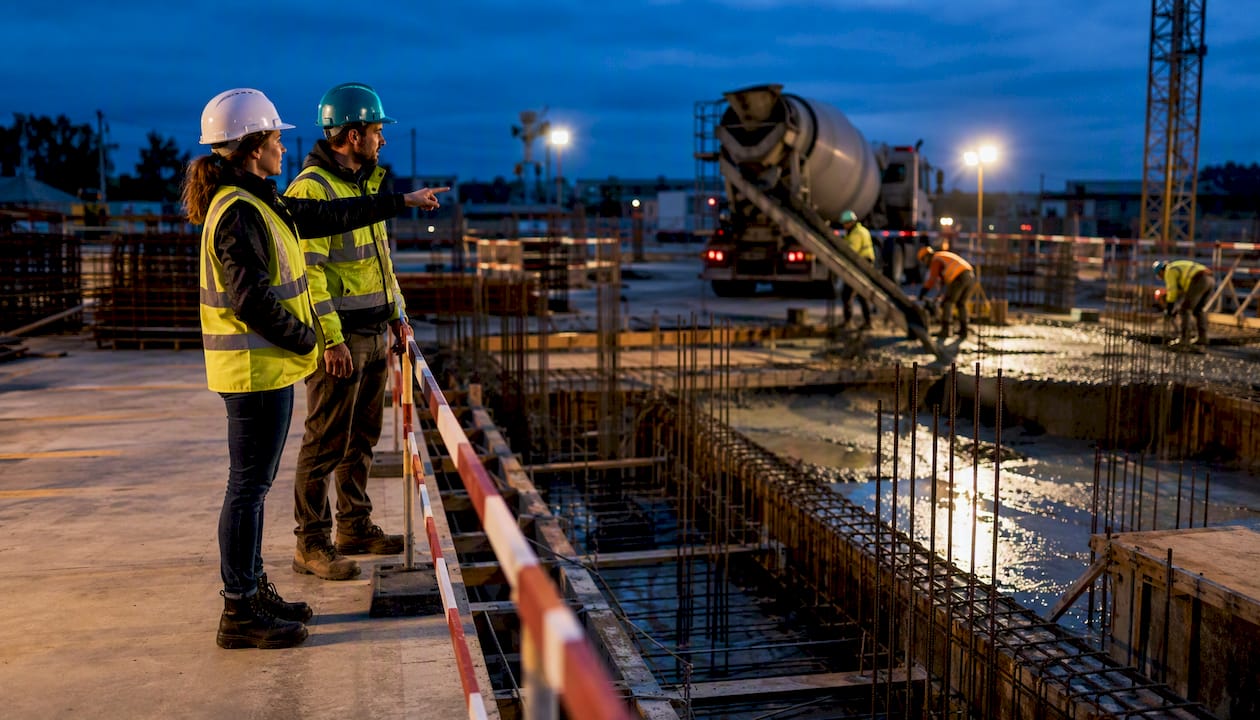
A welder may have the correct helmet, gloves, and fire watch in place, yet still be exposed to metal fumes that accumulate inside a poorly ventilated work area. A demolition crew may follow a work plan, but dust from cutting, drilling, or breaking materials can travel beyond the immediate task zone. Industrial hygiene addresses these less visible hazards before they become illnesses, failed inspections, lost work time, or costly project disruption.
For construction and industrial leaders, this is not a separate exercise from safety management. It is a practical discipline for recognizing exposure risks, evaluating who may be affected, applying effective controls, and keeping evidence that those controls are working. When managed well, it strengthens compliance while protecting the people who keep a project moving.
What Industrial Hygiene Covers
Industrial hygiene is the science and practice of anticipating, recognizing, evaluating, and controlling workplace health hazards. While traditional safety programs often focus on immediate injury risks such as falls, struck-by incidents, or moving equipment, industrial hygiene focuses on conditions that can harm workers through repeated or significant exposure.
Those conditions may include airborne contaminants, excessive noise, heat stress, chemical contact, poor indoor air quality, vibration, biological agents, and ergonomic strain. On a construction site, the risk profile changes as work progresses. Excavation, concrete cutting, welding, painting, confined-space activity, insulation work, and commissioning can each introduce different exposures.
This is why a generic health and safety plan is rarely enough. A strong program considers the actual work method, materials used, location, duration, workforce, and surrounding operations. Cutting concrete outdoors with water suppression presents a different exposure profile from cutting it in an enclosed renovation area. The task may appear similar, but the controls required may not be.
Why Exposure Control Matters to Operations
The consequences of unmanaged exposure often develop quietly. A worker may not report early hearing changes, respiratory irritation, dermatitis, or fatigue. By the time symptoms are clear, the organization may face medical restrictions, compensation claims, workforce concerns, client scrutiny, or regulatory action.
There is also an operational cost. Exposure controls that are considered only after work starts can cause avoidable delays. A project team may need to source ventilation equipment, change a chemical product, arrange monitoring, retrain crews, or stop work while a concern is investigated. Planning the controls before mobilization is usually less expensive than correcting them under pressure.
Compliance expectations also extend beyond having a written policy. Inspectors, clients, and auditors typically want to see how the organization identified hazards, assessed exposure, selected controls, trained workers, and followed up. Documentation must reflect site reality. A completed form will not compensate for ineffective ventilation, unavailable respiratory protection, or a crew that does not understand the limits of its equipment.
Start With the Work, Not the Paperwork
An effective industrial hygiene assessment begins with a detailed review of the work. Site leaders should examine each activity that can generate or release a hazard, including routine tasks, non-routine maintenance, cleanup, emergency work, and work performed by subcontractors.
The review should ask practical questions. What chemicals, materials, or processes are involved? Can dust, fumes, vapor, mist, noise, heat, or biological contaminants be produced? Who is nearest to the source, and who may be affected downwind or in adjacent areas? How long does the task last, and how often is it repeated? Are there enclosed, poorly ventilated, or confined locations that could increase concentration levels?
Safety data sheets, equipment manuals, process specifications, and prior incident records are useful inputs, but they are only a starting point. A site walk-through is essential because work conditions frequently differ from planned conditions. A temporary enclosure may restrict airflow. A subcontractor may use a product that was not included in the original material register. A change in sequencing can place multiple exposure-generating tasks in the same area.
Build an Exposure Register That Can Be Used
A practical exposure register connects hazards to specific work activities and responsible persons. It should identify the source, affected roles, existing controls, required monitoring or verification, and actions needed to close gaps. It should also be reviewed when scope, process, material, location, or workforce conditions change.
The purpose is not to create another administrative document. It is to give project managers and EHS personnel a clear view of where exposure risk exists and what must happen before work proceeds. When the register is tied to method statements, permits, procurement, and daily planning, it becomes a working control rather than a file stored for audit day.
Evaluate Exposure With the Right Evidence
Not every hazard requires the same assessment method. A competent visual review may confirm whether housekeeping, ventilation placement, or chemical labeling meets the expected standard. Other hazards require quantitative monitoring because exposure cannot be judged accurately by sight or smell alone.
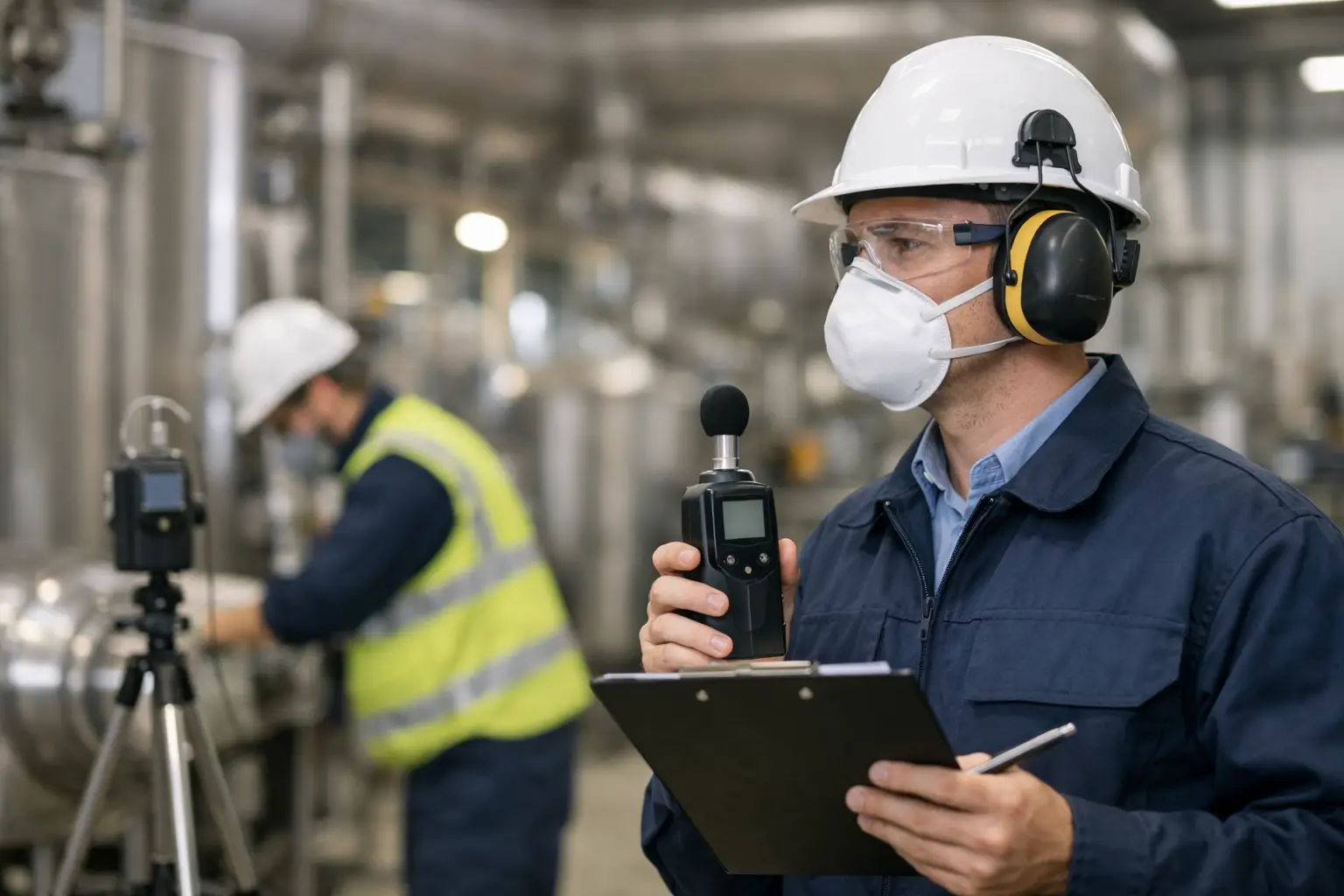
Personal air sampling can help determine a worker’s exposure to dust, silica, welding fumes, solvents, or other contaminants over a shift or task period. Noise dosimetry can establish whether workers are approaching or exceeding applicable action levels. Direct-reading instruments may be appropriate for certain gases, vapors, oxygen levels, or heat conditions, particularly where conditions can change quickly.
Monitoring should be planned around representative worst-case conditions. Sampling a short, low-output task on a cool day may not reflect a full production shift in a confined area. Similarly, one result does not automatically represent every crew, shift, location, or process. The scope depends on the variability of the work and the risk involved.
Results should lead to decisions. If monitoring identifies unacceptable exposure, the team needs a defined response: stop or restrict the task if necessary, improve controls, reassess the work method, provide appropriate protective equipment, and verify performance after changes are made. Numbers without corrective action do not protect workers.
Apply the Hierarchy of Controls
Personal protective equipment has a role, but it should not be the first or only answer. Respirators, gloves, hearing protection, and protective clothing depend on correct selection, fit, maintenance, and consistent use. They are valuable when residual risk remains, but they should support stronger upstream controls.
The preferred approach follows the hierarchy of controls. Eliminate the hazard where feasible, substitute a less hazardous product or process, apply engineering controls, establish administrative controls, and then use PPE for remaining exposure. For example, a contractor may replace a high-solvent product, use wet methods for dust-generating cutting, install local exhaust ventilation for welding, limit time in heat-intensive areas, and provide task-specific respiratory protection where required.
Trade-offs need to be considered honestly. Wet cutting can reduce airborne dust but may create slip hazards or wastewater management needs. Enclosures can contain contaminants but may worsen heat stress or restrict access. Local exhaust ventilation is highly effective only when it is positioned correctly, maintained, and matched to the process. Good control design looks at the whole task rather than solving one risk while creating another.
Respiratory Protection Requires Program Discipline
Where respiratory protection is necessary, issuing masks is not enough. The organization needs a written program that covers hazard assessment, respirator selection, medical evaluation where required, fit testing for tight-fitting respirators, user training, inspection, cleaning, storage, and supervision.
Workers must also know when a respirator is not functioning properly. Facial hair that interferes with a sealing surface, damaged valves, expired filters, incorrect cartridge selection, and poor storage can compromise protection. Supervisors should treat these as operational checks, not minor paperwork issues.
Make Verification Part of Site Management
Controls can deteriorate after they are introduced. Ventilation ducts can be disconnected, water suppression systems can run dry, equipment filters can clog, and workers may adapt methods to save time. Regular inspections and supervisor observations are necessary to confirm that the planned controls remain in place.
Training should be specific to the exposure and the task. Telling workers to “wear PPE” is less useful than explaining what the hazard is, how exposure occurs, what control must be used, what warning signs to watch for, and who to notify when conditions change. This is especially relevant for multilingual workforces, where visual instruction, demonstrations, and supervisor reinforcement may be more effective than lengthy written material alone.
Records should be organized so the organization can demonstrate control over its program. Depending on the work, this may include assessments, monitoring reports, equipment maintenance logs, training records, fit-test records, chemical inventories, corrective action records, and periodic review notes. Good records support audit readiness, but more importantly, they help identify recurring weaknesses before they cause harm.
Integrate Health Risk Into Project Planning
Industrial hygiene works best when it is built into preconstruction and operational planning. Procurement teams should consider hazardous-product alternatives early. Design and engineering teams should account for ventilation, access, drainage, isolation, and maintainability. Project managers should coordinate high-exposure work rather than allowing incompatible tasks to occur in the same area.
For contractors and industrial operators with limited in-house expertise, competent external support can help establish the exposure register, conduct assessments, coordinate monitoring, improve documentation, and train supervisors. The value is not simply obtaining a report. It is translating technical findings into workable site controls that crews can apply under real production conditions.
The most useful question for every project leader is simple: if this task changes tomorrow, will our exposure controls change with it? Organizations that can answer yes are better positioned to protect their workforce, meet client expectations, and keep work progressing with confidence.