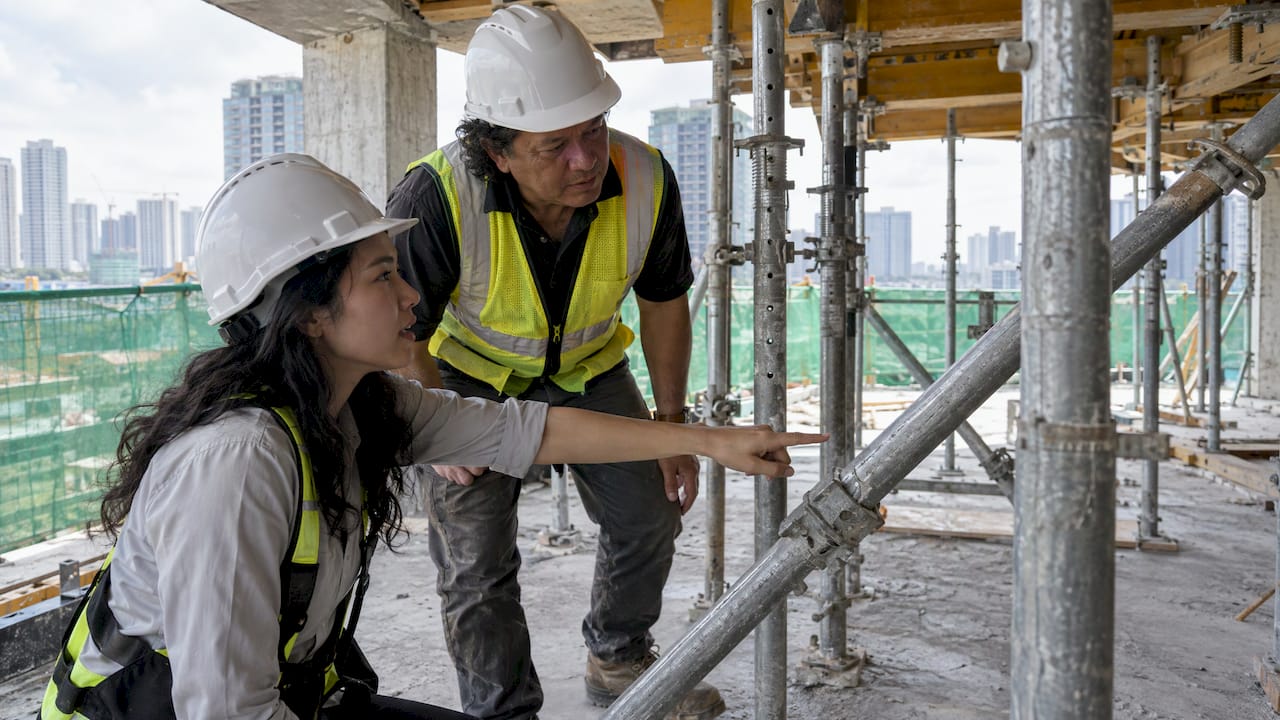

A crew standing silently through a five-minute safety talk is not necessarily a safe crew. On an active construction or industrial site, silence can mean the topic is irrelevant, the message is unclear, or workers do not believe raising an issue will change anything. To improve toolbox meeting participation, leaders need to treat these meetings as a working control for site risk, not a compliance item to complete before the shift begins.
A useful toolbox meeting creates a two-way exchange: supervisors set expectations, and the people closest to the work identify changing conditions, gaps in controls, and practical solutions. That exchange supports stronger field execution, better reporting, and more credible evidence that the organization is managing risk with intent.
Why low participation is a safety and compliance concern
Toolbox meetings are often short because production needs are real. The problem begins when short becomes rushed, repetitive, or disconnected from the work scheduled that day. A generic talk on PPE will not hold attention when the crew is preparing for a complex lift, a concrete pour near live traffic, or work at height in changing weather.
Low participation also removes an early-warning channel. Workers may notice damaged access equipment, conflicting trades, missing permits, or an impractical method statement before a supervisor does. If they are not asked directly, or if prior concerns were ignored, that knowledge stays on the ground until an incident, near miss, inspection finding, or work delay exposes it.
From a management perspective, signed attendance alone is weak assurance. Auditors, clients, and project leaders increasingly look for evidence that safety communication is relevant, understood, and acted upon. Meaningful participation provides that evidence, but only when concerns, actions, and closeout are documented properly.
Improve toolbox meeting participation by changing the format
The most effective change is simple: build each meeting around today’s work and ask the crew to contribute to the plan. A supervisor does not need to deliver a long presentation. They need to lead a focused discussion that connects a specific task, its critical hazards, the controls required, and the conditions that could make those controls fail.
Before the meeting, the supervisor should review the day’s work sequence, permits, recent observations, incident trends, design changes, and interface risks with other trades. This preparation prevents the common mistake of reading from a standard topic sheet that has no clear connection to the work front.
Start with a field-specific question
Open with one question that requires a practical answer. For example: “What could stop this lifting operation from being completed safely?” or “Where could workers be exposed during today’s work near the excavation edge?” Questions such as these are more productive than asking, “Any safety issues?” to a large group.
Allow a short pause. Crews need time to consider the question, particularly when they are accustomed to one-way briefings. If no one responds at first, ask a person whose role is closely connected to the task, without putting them on the spot in a punitive way. A rigger, operator, electrician, or trade lead may identify a detail that is invisible in the paperwork.
Use the response to clarify the control. If a worker raises poor ground conditions for a mobile plant operation, confirm who will inspect the travel path, whether mats or barriers are needed, and what the stop-work trigger will be. The point is not merely to collect comments. It is to convert concerns into clear operational decisions.
Keep one meeting focused on one critical risk
Trying to cover too many subjects reduces retention. A short discussion about dropped-object prevention, exclusion zones, or energy isolation is more likely to result in action than a rapid review of five unrelated rules.
There are exceptions. A major shift change, a high-risk operation, or a serious incident may justify a longer briefing. Even then, organize the discussion around priorities. State what has changed, what workers must do, who has authority to stop work, and how the supervisor will verify the control in the field.
Visual prompts can help when they are specific. A photograph of the actual work area, a marked-up lifting plan, a simple sketch of a traffic route, or an example of damaged equipment gives the crew something concrete to assess. Avoid visuals that are dramatic but unrelated to the site. They may attract attention, but they do not necessarily improve hazard recognition.
Make speaking up worthwhile
Participation rises when workers see that their input leads to a response. If a crew repeatedly reports blocked walkways, inadequate lighting, or missing guardrails and nothing changes, the next toolbox meeting will produce silence regardless of how skilled the presenter is.
Supervisors should close the loop at the next meeting. Briefly state what was raised, what action was taken, and what remains open. For example: “Yesterday’s crew identified a conflict between the delivery route and pedestrian access. The route was revised, barriers were installed, and the banksman will be in place during deliveries.” This reinforces that reporting is part of site control, not an inconvenience.
It also matters how leaders respond when a concern affects schedule or cost. A dismissive answer can discourage reporting across the entire project. A more credible response is: “We cannot proceed with that condition unresolved. We will assess the alternative sequence and confirm the safe method before restarting.” Workers do not expect every request to be approved immediately. They do expect a fair, visible process.
Recognition should be proportionate and genuine. Thanking a worker for identifying a practical risk is often more effective than creating a complicated reward scheme. Incentives can be useful, but they should never encourage people to report trivial issues simply to win a prize. The desired behavior is quality reporting and safe decision-making.
Give supervisors the skills and authority to lead
A toolbox meeting succeeds or fails largely through the supervisor leading it. Technical knowledge alone is not enough. Supervisors need to translate risk assessments into plain work instructions, ask effective questions, manage differing views, and know when an issue requires escalation.
Organizations should provide a consistent meeting structure while allowing supervisors to tailor the content. A practical structure includes the day’s task, the main hazard, the required controls, a question to the crew, assigned actions, and confirmation of understanding. This supports consistency without forcing every meeting to sound scripted.
Language and literacy must be considered on diverse worksites. Where crews use multiple languages, rely on clear visuals, short sentences, competent translation where needed, and demonstration rather than paperwork alone. Asking a worker to explain or show the control in their own words is a stronger check than asking everyone to sign an attendance sheet.
Supervisors also need authority to pause work. Participation loses value if workers identify a serious issue but the supervisor has no practical route to stop, escalate, and resolve it. Project managers should make those escalation expectations clear and support supervisors who intervene early.
Measure participation without turning it into a numbers exercise
Attendance is necessary, but it is not a meaningful participation measure by itself. Track a small set of indicators that show whether toolbox talks are improving field control: the number of task-relevant issues raised, actions closed by the agreed date, repeat concerns, quality of supervisor records, and verification that controls were applied at the work front.
Quality matters more than volume. Ten vague comments do not provide better assurance than one specific observation that prevents an unsafe lift. Review the records regularly for patterns. Repeated concerns about housekeeping, access, permit coordination, or subcontractor interfaces may point to a planning failure that toolbox meetings alone cannot solve.
Periodic field observations are equally valuable. EHS personnel and project leaders should check whether the discussion matches the actual work, whether workers can describe the agreed controls, and whether action items have been completed. This is where an integrated safety management approach is stronger than documentation in isolation.
Build participation into the daily safety culture
Toolbox meetings work best when they reinforce what workers experience throughout the day. If site leaders conduct respectful inspections, act on reports, and apply standards consistently across employees and subcontractors, workers are more likely to contribute openly at the morning briefing.
MOSAIC Ecoconstruction Solutions supports contractors in strengthening this connection through practical EHS advisory, site audits, training, and implementation support. The objective is not to make meetings longer. It is to make each conversation more relevant, traceable, and useful for controlling the work in front of the crew.
The next toolbox meeting is an opportunity to test the culture on site. Ask one specific question about the day’s highest-risk task, listen long enough for a real answer, and visibly act on what the crew tells you. That is how a routine briefing becomes a reliable part of operational safety control.