Introduction
MOM’s enforcement actions since 2022 converted bizSAFE certification from a voluntary capability-building exercise into a gatekeeping mechanism for tender eligibility, business licensing, and executive legal defense. The Ministry of Manpower (MOM) issued over 3,800 composition fines in 2024-2025 and conducted over 3,000 inspections in high-risk industries in 2025 alone, creating direct consequences for companies whose bizSAFE status lapses or whose workplace safety records fall short.
This article is written for directors, C-suite officers, and legal compliance teams who need to understand how enforcement pressure reshaped bizSAFE requirements. It covers the Business Under Surveillance (BUS) programme’s impact on tender eligibility, the WSH Act Section 48(1) liability framework for executives, and the operational changes companies must implement to maintain certification. Companies that treat bizSAFE as a one-time achievement rather than an ongoing compliance obligation face tender deferments, financial penalties reaching up to S$500,000 for severe safety breaches, and personal criminal prosecution of senior management.
Enforcement actions by Singapore’s Ministry of Manpower have transformed bizSAFE standards into a strict necessity. Non-compliance triggers immediate tender restrictions, bizSAFE marketplace removal, and personal executive liability under Section 48(1) of the WSH Act.
After reading this analysis, you will understand:
-
How MOM inspection protocols now verify real-time WSH management system implementation, not paper compliance
-
The specific triggers that place companies in the BUS programme and suspend bizSAFE certification
-
What Section 48(1) requires of executives and how bizSAFE Level 3/STAR status supports due diligence defense
-
The tender deferment timeline and recovery process for companies with expired or suspended certification
-
Practical steps for maintaining continuous compliance across multiple sites and business operations
Understanding MOM’s Enforcement Evolution and bizSAFE Integration
MOM regulates employment standards and workplace safety in Singapore. The WSH Act was enacted in 2006 to improve workplace safety, and the bizSAFE programme was launched alongside it to help SMEs build systematic workplace safety capabilities. For the first decade, enforcement focused on reactive responses to incidents. That changed in September 2022 when MOM declared a Heightened Safety Period (HSP), running through May 2023, which raised inspection frequency, introduced mandatory video surveillance for high-risk construction sites, and required CEO/Board accountability training after fatal incidents.
The result: workplace fatality rates dropped from 1.5 per 100,000 workers (January to August 2022) to 0.8 during the HSP. MOM’s enforcement actions increased by 50% during targeted periods. Singapore now aims to reduce workplace fatalities below 1.0 per 100,000 workers by 2028, and the enforcement infrastructure built during the HSP became permanent through SAFE (Safety, Accountability, Focus, Empowerment) measures.
Strong enforcement integrates with capability-building schemes for better safety outcomes. High-level enforcement drives organizations to genuinely practice bizSAFE-certified risk management protocols, rather than treating certification as a filing exercise.
Enhanced Inspection Protocols Under the New Framework
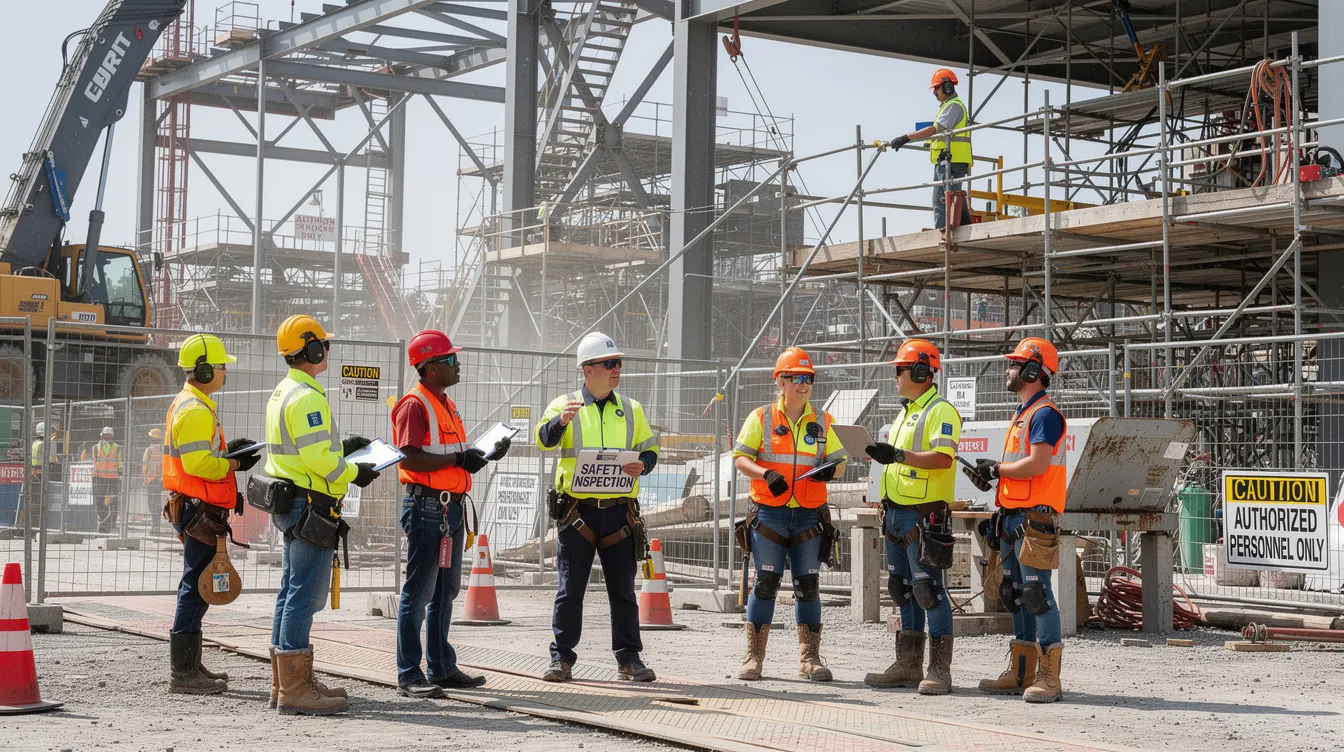
MOM conducted over 3,000 inspections in high-risk industries in 2025. These inspections verify that bizSAFE-documented procedures are actually implemented on worksites, not merely archived in binders. Inspectors check training records against worker deployment logs, verify that risk assessments match current site conditions, and confirm that emergency response plans are known to workers on the ground.
MOM’s inspections encourage compliance with structured risk management instead of superficial certification. A typical MOM inspection now includes document review of hazard identification records, physical verification of control measures for fall hazards and other high risk activities, and interviews with safety officers and frontline workers to confirm worker participation in toolbox meetings as part of broader MOM steps. Inspection failures trigger bizSAFE certification reviews. In 2025, a construction firm was fined $250,000 for safety violations discovered during such inspections.
MOM issued over 3,800 composition fines for WSH offences in 2024-2025. The composition fines target specific breaches: missing toe boards on scaffolding, blocked safe access routes, absent incident reporting protocols. Each fine creates a record that feeds into the company’s WSH compliance history, which auditors review during bizSAFE Level 3 renewal.
Business Under Surveillance (BUS) Programme Integration
The BUS programme, first introduced in 2006, places companies with poor WSH performance under direct MOM oversight. Triggers include fatal or serious injury incidents, multiple Stop Work Orders, accumulated demerit points, or a pattern of enforcement actions. Companies in the Business Under Surveillance programme must show leadership commitment to improve safety management before they can exit.
BUS designation automatically suspends bizSAFE certification benefits. The company loses its listing on the bizSAFE marketplace, cannot use the bizSAFE logo, and becomes ineligible for private sector contracts requiring bizSAFE certification. Construction companies under BUS face disqualification from public sector tenders. In 2023, 16 companies entered BUS across construction, manufacturing, and services sectors, and 16 exited. Since inception, over 300 companies have passed through the programme. The minimum stay is approximately 18 months.
Recovery from BUS requires companies to demonstrate genuine improvements in their company’s WSH capabilities through enhanced auditing by MOM-approved auditors, completion of executive WSH training, and sustained compliance during an extended monitoring period. Companies with poor safety performance may have their bizSAFE status suspended until improvements are demonstrated. The BUS programme’s expansion beyond construction into manufacturing and services sectors means that Singapore employers across all industries face this risk.
Transformed bizSAFE Certification Requirements and Standards
BizSAFE is a 5-level workplace safety certification program, administered by the WSH Council, the Workplace Safety and Health Council often referred to in industry coverage as the health council. Level 1 requires a CEO commitment to workplace safety. Level 3, the most commercially relevant tier, requires an independent audit by a MOM-approved auditor and typically takes 4 to 8 weeks to complete. The bizSAFE program aligns with legal requirements and helps organizations develop capabilities for workplace safety. What changed under enforcement pressure is not the formal level structure, but the depth of verification and the consequences of non-compliance at every stage.
Elevated Documentation and Evidence Standards
Risk assessments under bizSAFE Level 3 no longer pass review as static annual documents. MOM requirements now demand that companies maintain a risk management plan with evidence of continuous updates reflecting changes in work processes, site conditions, and workforce composition. Safety management documentation must include timestamps showing when hazard identification reviews occurred, worker acknowledgments confirming they received briefings on corrective actions, and supervisor sign-offs verifying control measures are in place.
For companies managing foreign workers across multiple sites, this means maintaining training records in workers’ languages, documenting that work permits holders received site-specific safety inductions, and recording attendance at regular toolbox meetings. The entire process of documentation shifted from proving that a system exists on paper to proving that it functions in practice.
Stricter Third-Party Audit Processes
bizSAFE Level 3 certification requires an audit by a MOM-registered Auditing Organisation. Since the enforcement changes, these auditors verify not only the WSH management system documentation but also the company’s enforcement history: demerit point totals, past MOM inspection outcomes, any corrective actions issued, and whether the company has faced Stop Work Orders. A WSH consultant preparing a company for audit now routinely reviews the company’s MOM compliance record as part of pre-audit preparation.
As of 1 June 2024, maximum fines under WSH Act Subsidiary Legislation for breaches causing death, serious injury, or dangerous occurrence increased from SGD 20,000 to SGD 50,000 for a first offence. Companies can face fines up to half a million for serious safety violations. Higher penalties make audit failures costlier; an audit deficiency that previously led to a warning now sits in a regulatory environment where financial penalties are steep enough to affect business operations.
Enhanced Risk Management Integration Requirements
bizSAFE Level STAR audits now require risk assessments covering dimensions that earlier cycles did not address: disease outbreaks, occupational health threats including mental health, and terrorism scenarios. This reflects the WSH Council’s push toward a systematic approach to risk management that goes beyond traditional occupational safety concerns like fall hazards and equipment hazards.
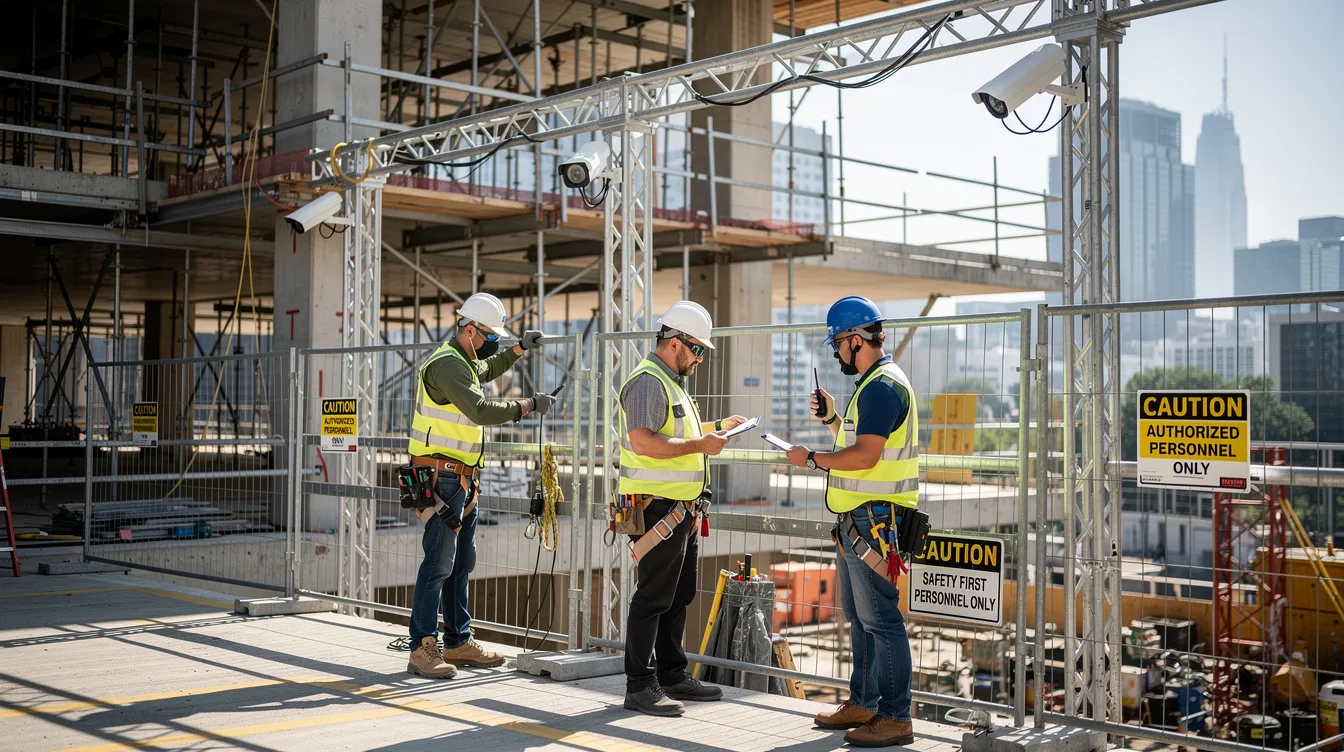
Construction sites with contract value of SGD 5 million or above involving high risk activities must install Video Surveillance Systems (VSS). This mandate, introduced as a SAFE measure, connects directly to bizSAFE compliance: VSS footage provides audit evidence, supports investigations after incidents, and deters unsafe work practices. Companies in facilities management and equipment rental must also account for these requirements when deploying assets to client sites.
MOM’s enforcement includes heavy penalties and Stop Work Orders for safety violations. Twenty-eight stop-work orders were issued in the first half of 2025 alone. Each creates an imminent danger determination that appears on the company’s enforcement record and weighs against future bizSAFE certification renewals.
bizSAFE evolved from a static certification milestone to a dynamic compliance monitoring system. These enhanced requirements directly support executive due diligence defense strategies, which the next section addresses.
Executive Accountability and Tender Protection Mechanisms
MOM drives high-level accountability for corporate leadership regarding workplace safety outcomes. MOM has targeted management oversight and imposed personal liability on executives for safety lapses. For directors and C-suite officers, the question is no longer whether the company holds a certificate, but whether senior management can demonstrate active involvement in maintaining the WSH management system that the certificate represents.
WSH Act Due Diligence Requirements for Executives
Under Section 48(1) of the WSH Act, when a company commits an offence, its directors, CEO, and other officers face criminal liability unless they prove two things: the offence occurred without their consent or connivance, and they exercised all due diligence to prevent it given their function and circumstances. The legal obligation is personal and non-delegable.
The Approved Code of Practice on Chief Executives’ and Board of Directors’ WSH Duties, launched on 19 September 2022, specifies what “due diligence” means in practice. Executives must approve risk management plans, allocate budgets for workplace safety and health measures, review incident reports, and verify that reasonably practicable measures are implemented. Meeting minutes, budget approvals for WSH training, and authorization of safety officer appointments all constitute evidence.
Court precedent illustrates the stakes. In Public Prosecutor v Gary Choo Pu Chang (2022), an executive director was convicted under Section 12(1) read with Section 20 and Section 48(1) after the court examined his responsibilities and involvement in the breach of Part IV duties. In 2025, director Ong Bok Wan received a 30-week imprisonment sentence under Section 12(1) with Section 48(1) after his company failed its employer duties under the WSH Act.
Active bizSAFE Level 3 certification does not immunize executives from prosecution. It does, however, provide documented evidence of a functioning WSH management system, executive sign-off on risk assessments, and participation in regular inspections and reviews. For C-suite officers facing a Section 48(1) charge, the difference between a maintained bizSAFE certification and a lapsed one is the difference between having a defense file and not having one.
Tender Deferment and Eligibility Protection
Higher bizSAFE levels are now a prerequisite for securing public and private sector contracts. Government procurement entities must impose more stringent safety requirements in tenders, including bizSAFE status and WSH performance criteria. From 1 January 2024, cleaning business licences (Class 1 and Class 2) require a valid bizSAFE Level 3 or higher certificate throughout the licence validity period. If certification lapses, the licence is not valid.
Companies face commercial consequences for poor safety performance that affects competitiveness. Companies with bizSAFE certification can attract better clients, while those without it face exclusion from bidding processes entirely. The recovery timelines vary by severity:
|
Compliance Status |
Tender Eligibility |
Recovery Timeline |
|---|---|---|
|
Active bizSAFE Level 3 |
Immediate eligibility |
N/A |
|
Expired certification |
Deferred pending renewal |
4-8 weeks (Level 3 audit cycle) |
|
BUS designation |
Suspended from tenders |
Minimum 18 months |
|
WSH Act conviction |
Disqualified pending review |
Case-by-case assessment |
For procurement teams evaluating subcontractors: verify bizSAFE status through the official WSHC portal, not via certificates alone. At least one case of a forged bizSAFE certificate is currently under investigation.
Compliance Verification and Monitoring Protocols
MOM maintains enforcement databases that track company compliance history, demerit points, inspection outcomes, and BUS status. Regular inspections by MOM feed into this record. Companies should conduct quarterly internal reviews of their WSH compliance status, track bizSAFE renewal deadlines against tender submission calendars, and maintain records of executive participation in WSH oversight activities.
Documented executive involvement in bizSAFE maintenance provides a legal protection layer against WSH Act prosecution. This means senior management must sign off on risk assessment updates, attend required WSH training sessions, and approve incident investigation reports. BizSAFE certification is not legally mandatory for all businesses, but for any company bidding on government contracts or operating in regulated sectors, it functions as a de facto requirement.
Common Challenges and Solutions
Organizations across Singapore face practical difficulties adapting to enforcement-driven bizSAFE requirements. The multi faceted approach required to maintain compliance strains internal resources, particularly for SMEs managing multiple concurrent projects.
Maintaining Executive Engagement During Busy Periods
The WSH Act does not pause its accountability requirements during peak business periods. Directors who delegate WSH oversight entirely to safety officers without maintaining their own documented involvement lose their due diligence defense under Section 48(1).
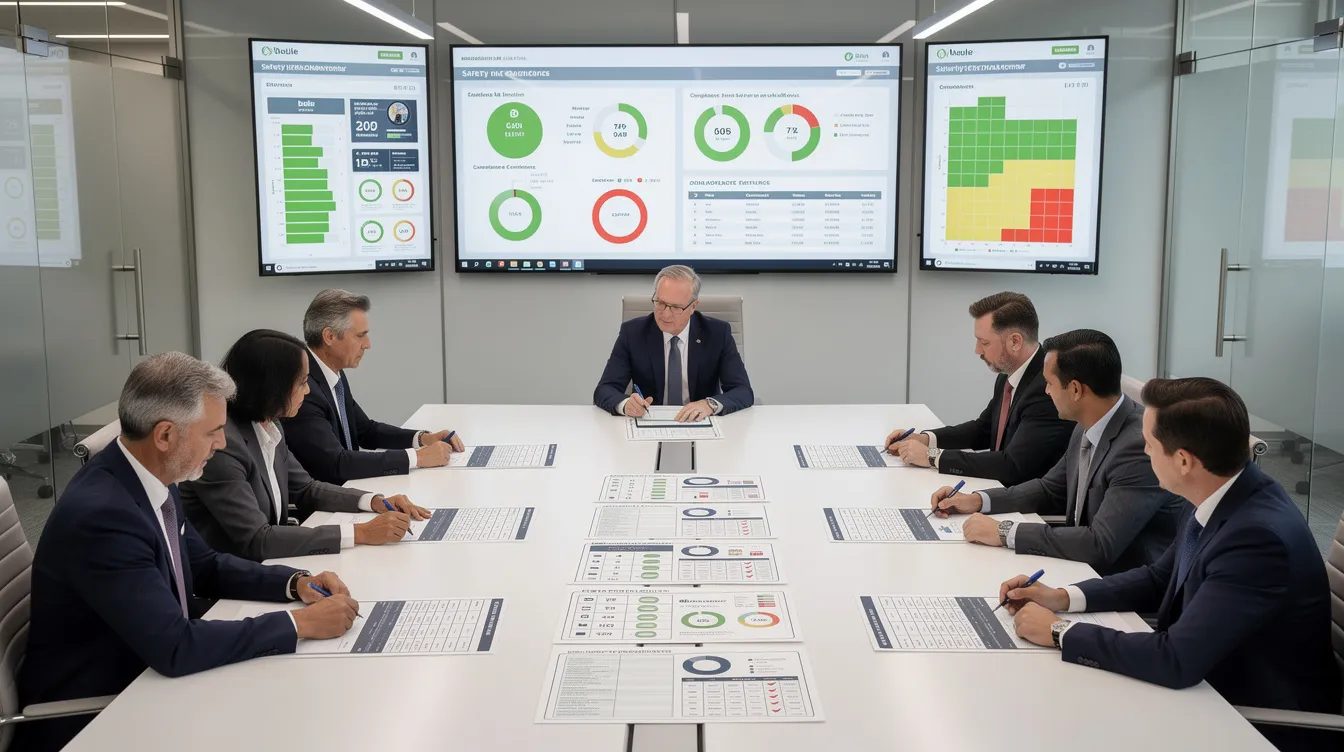
Structure quarterly executive briefings around three fixed items: current bizSAFE status and renewal timeline, open corrective actions from the most recent MOM inspection or internal audit, and a review of the company’s demerit point balance. Keep these to 45 minutes with documented minutes. The investment is minor compared to the exposure: a director facing prosecution under Section 48(1) can point to four quarterly reviews per year as evidence of active oversight. Create dashboards that track well being metrics, incident reporting rates, and pass applications status for foreign workers alongside bizSAFE compliance indicators.
Managing Documentation Complexity
The shift from annual risk assessment reviews to continuous monitoring generates volume. Companies maintaining a WSH management system across multiple projects accumulate thousands of records per year: training records, toolbox meeting logs, hazard identification forms, incident reports, and corrective actions.
Deploy integrated WSH management systems that generate audit-ready documentation as a byproduct of daily operations rather than as a separate administrative task. Establish a dedicated compliance role responsible for maintaining the interface between internal records and MOM requirements. For companies in the typical process of preparing for bizSAFE Level 3 renewal, this role should begin audit preparation at least 12 weeks before certification expiry.
Coordinating Multi-Site bizSAFE Compliance
Companies operating across multiple locations must ensure that every site meets the same WSH excellence standards. A bizSAFE Level 3 certificate covers the organization, but MOM inspections target individual worksites. A company can hold valid certification while a specific site operates below compliance standards.
Standardize work processes for hazard identification, incident reporting, and emergency response plans across all locations. Appoint site-level safety officers with clear reporting lines to the centralized WSH management function. Implement cross-site auditing on a rotating basis to catch inconsistencies before MOM does. For construction firms, this includes verifying that each site with a contract value above SGD 5 million has operational video surveillance and that workers have received site-specific inductions covering fall hazards, safe access requirements, and leave entitlements under the Employment Act.
Conclusion and Next Steps
MOM enforcement efforts transformed bizSAFE from a voluntary WSH training and certification exercise into a prerequisite for tender eligibility, business licensing, and executive legal defense. The combination of over 3,800 composition fines in 2024-2025, over 3,000 inspections in high-risk industries in 2025, and criminal prosecutions of directors under Section 48(1) leaves no room for treating certification as a periodic administrative task. A safer workplace is now a measurable, auditable, and enforceable requirement.
Immediate action items for directors and compliance teams:
-
Verify your current bizSAFE Level 3 or bizSAFE STAR status and confirm the renewal deadline against upcoming tender submission dates
-
Establish documented executive oversight protocols: quarterly sign-offs on risk assessments, budget approvals for WSH initiatives, and attendance at required training
-
Review your company’s MOM enforcement record, including demerit points, inspection outcomes, and any outstanding corrective actions
-
Engage a qualified WSH consultant to conduct a pre-audit gap assessment aligned with current MOM enforcement expectations
-
Implement continuous compliance monitoring rather than annual review cycles to protect against both enforcement actions and tender deferments
Related areas worth examining include integration with international standards such as ISO 45001 for companies bidding on international projects, alignment with construction-specific requirements under ConSASS, and emerging requirements around psychosocial safety and occupational health that future bizSAFE audit cycles will likely incorporate.
Additional Resources
-
WSHC bizSAFE FAQ and certification verification portal: Confirm certification status, review audit requirements, and access executive engagement guidance from the WSH Council
-
MOM enforcement press releases and WSH national statistics: Track regulatory changes, fine increases, and enforcement trends
-
WSH Act full text and subsidiary legislation: Review Section 48(1) officer liability provisions and the Approved Code of Practice on CEO/Board WSH duties
-
Professional WSH consultant networks registered with MOM for ongoing compliance support, audit preparation, and BUS programme exit guidance