Introduction
Building safety culture in the workplace demands more than policies, permits, and paperwork. CultureSAFE Singapore offers C‑Suite executives and HR Directors a nationally endorsed, data-driven path to shift employee mindsets from compliance to genuine care-turning workplace safety from an obligation into a core value that shapes every decision, conversation, and action on-site and in the office.
This article focuses on how leaders in Singapore’s construction, manufacturing, and industrial sectors can use the WSH Council’s CultureSAFE programme to move their workforce from rule-following to authentic WSH ownership. We cover the framework’s mechanics, leadership and HR levers for mindset change, a practical implementation roadmap, and solutions to common challenges. Technical legal details of every regulation are out of scope; instead, we concentrate on culture, strategy, and the behaviours that make safety systems actually work.
Shifting from a compliance driven approach to care requires three things working together: leadership commitment modelled visibly and consistently, structured CultureSAFE diagnosis that surfaces hidden attitudes and trust gaps, and embedding care into systems, daily conversations, and recognition practices across the organization.
This matters now more than ever. Singapore’s WSH 2028 strategy and its Vision Zero aspirations reflect the national direction set by government to sustain the workplace fatal injury rate below 1.0 per 100,000 workers. By end-2025, that rate reached a record low of 0.96 per 100,000. Sustaining and improving these numbers requires the kind of pervasive culture change that CultureSAFE is designed to create.
By the end of this article, you will:
-
Understand what CultureSAFE is and why it is the most effective lever for shifting safety mindsets in Singapore
-
Recognise the concrete signs of compliance-only culture versus a strong safety culture built on care
-
Know how to translate CultureSAFE diagnostic insights into leadership, HR, and frontline actions
-
Have a step-by-step roadmap to implement CultureSAFE over 18–36 months
-
Be equipped to address common challenges-from middle management resistance to fragmented contractor cultures
Understanding Safety Mindsets: From Compliance to Care
Every safety management system-no matter how comprehensive-rests on the mindsets of the people who use it. How employees think and feel about safety determines whether those systems protect lives or simply collect dust. Organizational culture is the invisible architecture beneath visible safety standards. Without the right mindset, even the best documented procedures fail when supervisors turn their backs.
This section defines the two ends of the mindset spectrum-compliance and care-links them to the daily behaviours leaders actually observe, and explains why many Singapore organisations remain stuck in the gap between them.
What a “Compliance Mindset” Looks Like in Singapore Workplaces
A compliance mindset means employees act safely only when they perceive they are being watched—to avoid fines, MOM inspections, demerit points, or disciplinary actions. Safety is treated as a reaction to enforcement, rules, or regulators rather than a personal responsibility.
In practice, the signs are unmistakable across construction, manufacturing, and logistics:
-
PPE appears the moment a supervisor rounds the corner and disappears when the supervisor leaves
-
Toolbox meetings are scripted, tick-box exercises where workers sit distracted, waiting for the sign-off sheet
-
Risk assessments are completed in a rush the night before an audit rather than used as living documents
-
Near-miss reports are hidden or minimised because workers fear blame, not because nothing happened
-
Safety officers are treated as the sole owners of workplace safety-everyone else focuses on production
The business risks of this approach are substantial. Injury rates plateau because the underlying unsafe acts and conditions go unreported. Near-miss under-reporting means the organization loses its most valuable source of prevention data. Reputational risk escalates when public tender evaluators assess safety culture maturity. And regulatory exposure-debarment, higher insurance premiums, intensified inspections-becomes a persistent threat. In Singapore, where key sectors like Construction, Manufacturing, and Transportation & Storage still account for over half of fatal and major injuries, a compliance-only approach simply cannot deliver the improvement trajectory that regulations and clients demand.
Defining a “Care Mindset” and WSH Ownership
A care mindset is fundamentally different. Employees act safely because they value their own lives, their colleagues’ wellbeing, and the long-term success of the organization. Safety is not just a priority-it is a core value woven into identity and daily practice. When safety is just a priority, it can be displaced by other priorities; when it is a value, it is non-negotiable.
WSH ownership means workers at all levels proactively identify hazards, raise concerns, and take initiative without waiting for instructions. Purpose-driven leadership connects daily tasks to a larger, human-centric purpose-people understand that the harness check protects someone’s parent, partner, or child.
Tangible behaviours of a care mindset include:
-
Workers intervening when they see a colleague performing an unsafe act, even without authority to do so
-
Supervisors asking “what worries you most about today’s task?” rather than only telling people what to do
-
Contractors challenging the main-con if they identify something unsafe, without fear of contract consequences
-
Regular near-miss reports and improvement suggestions flowing from frontlines upward
-
Leaders sharing personal safety stories-including their own mistakes-to build trust and open communication
A care mindset directly supports Vision Zero 2028 by moving past compliance toward genuine prevention. It aligns with clients’ ESG expectations, strengthens tender pre-qualification submissions, and builds the kind of workforce confidence and loyalty that reduces turnover. Psychological safety fosters an environment where employees feel safe to voice concerns-and that is precisely what separates organisations that learn from those that repeat.

Why the Gap Exists: Systems Without Organizational Culture
Many Singapore companies already hold ISO 45001 certification, bizSAFE Star status, and shelves of documented SOPs. Yet they still operate with compliance-focused mindsets. The gap is not in systems-it is in culture.
Root causes are consistent across industries:
-
Safety as someone else’s job: Non-WSH leadership delegates safety to safety officers and does not model safe behaviours. Without visible leadership commitment, workers interpret safety as secondary to production.
-
Production and cost pressure: When deadlines tighten, safety becomes the first thing squeezed. Leadership metrics are tied to output, schedule, and cost-not to safety ownership or care behaviours.
-
Fear of blame: Workers avoid reporting failures or near misses because they expect punishment. Psychological safety is weak, and the organization learns slowly-or not at all. Supportive management and psychological safety encourage employees to raise concerns without fear; without them, silence prevails.
-
Misaligned incentives: Recognition systems reward zero-incident records, which paradoxically incentivise hiding incidents rather than learning from them. Shifting recognition from output to growth-emphasising learning, mentorship, and innovation-breaks this pattern.
-
Workforce diversity: In construction especially, multilingual, multinational teams receive generic communications that do not resonate. Workers may feel excluded rather than empowered.
Research from NUS found that leaders who modelled transformational behaviours-idealised influence, inspirational motivation, and empowerment-achieved significantly better safety culture outcomes. The message is clear: systems alone do not shift mindsets. A structured culture framework is needed-and that is exactly what CultureSAFE provides.
The CultureSAFE Singapore Framework as a Lever for Mindset Shift
The CultureSAFE programme is the WSH Council’s national platform for assessing and improving safety culture across all industries in Singapore. It bridges the gap between having compliance-ready systems and building a care-based WSH culture that sustains zero-harm ambitions. At MOSAIC Ecoconstruction Solutions, we help clients navigate and implement CultureSAFE within their real projects-connecting diagnostics to leadership action and operational change.
What is CultureSAFE and How It Works
CultureSAFE is a structured, data-driven approach endorsed by the WSH Council to measure and improve safety culture maturity. Unlike traditional audits that check what is documented, CultureSAFE examines what people believe, feel, and do.
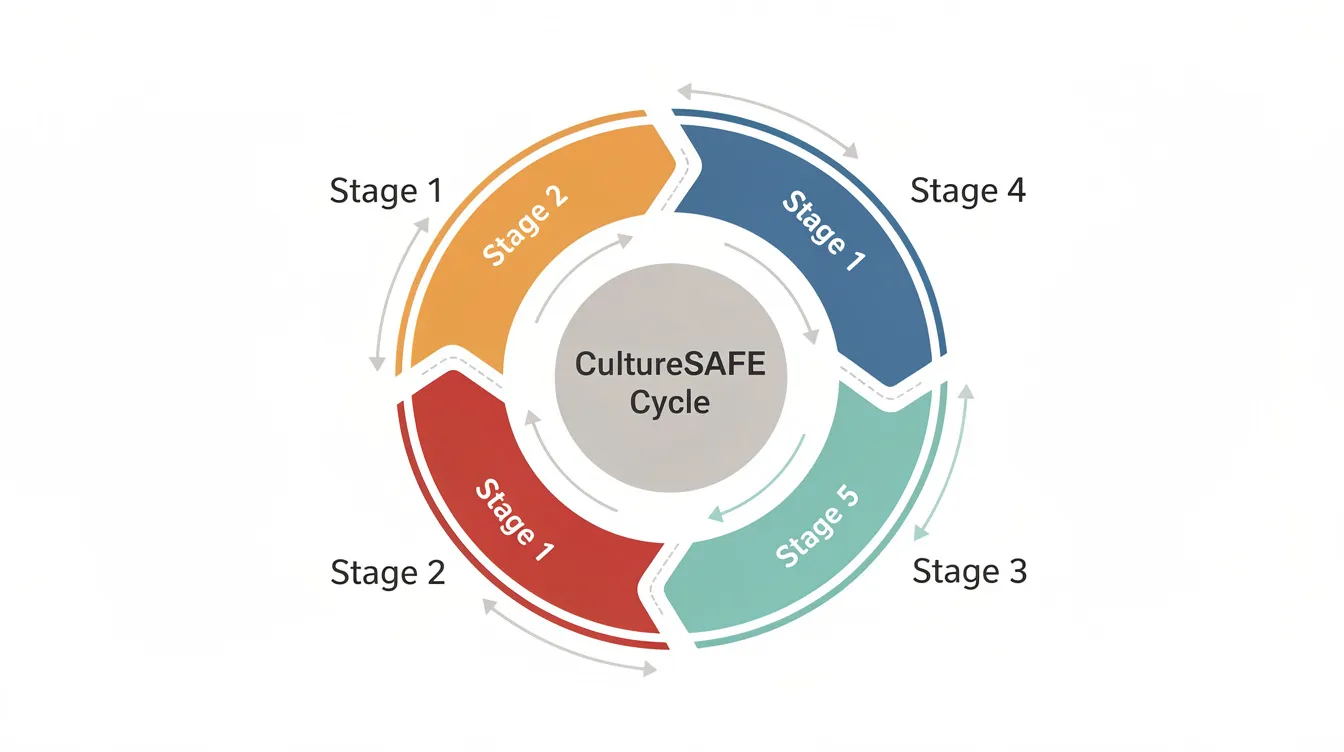
The programme operates as a five-step cyclical process:
-
Diagnostic / Perception Survey: Collecting employee feedback on WSH practices, attitudes, leadership behaviour, trust, and voice-available in multiple languages to accommodate Singapore’s diverse workforce
-
Reporting: Generating a unique CultureSAFE Index that classifies culture maturity across five levels-Reactive (Level 1), Participative (Level 2), Proactive (Level 3), Progressive (Level 4), and Exemplary (Level 5)
-
Action Planning: Organisations prioritise key gaps, engage stakeholders, and co-design interventions based on survey data
-
Implementation: Rolling out planned actions across leadership, operations, HR systems, and safety practices
-
Review & Evaluation: Re-surveying, comparing the index score, assessing leading and lagging indicators, and sustaining continuous improvement
The CultureSAFE programme quantifies safety maturity through the CultureSAFE Index, giving leadership a measurable benchmark rather than vague aspiration. This aligns with well-established models: the DuPont Bradley Curve, which consists of four distinct behavioural stages of safety commitment, and the Hudson Safety Culture Ladder, which defines five sequential levels of safety maturity. CultureSAFE draws on similar principles but is purpose-built for Singapore’s regulatory and industrial context.
How CultureSAFE Supports Moving from Compliance to Care
The shift from compliance to care focuses on understanding human needs and psychological safety-and CultureSAFE’s diagnostic tools are designed to surface exactly these dimensions.
Perception surveys, focus groups, and site observations uncover hidden attitudes that traditional management reviews miss: fear of speaking up, perception that production always wins over safety, trust gaps between workers and supervisors, and beliefs that safety is purely a managerial responsibility. This survey data makes the invisible visible.
For C‑Suite and HR leaders, CultureSAFE insights make it possible to target the specific leadership behaviours, communication patterns, and recognition systems that drive care. Instead of guessing where culture is weak, leaders receive a data-backed diagnosis they can act on. Leaders should connect tasks to impact by linking guidelines to the organization’s core mission-CultureSAFE data shows them exactly where that connection is broken.
CultureSAFE findings can be mapped against both lagging indicators (lost-time injuries, near misses) and leading indicators (safety observations, improvement suggestions, quality of safety dialogues). This dual view demonstrates not only where the organisation stands but whether the culture is moving in the right direction. Workplaces should track employee engagement and well-being metrics in addition to compliance metrics to get the full picture.
CultureSAFE vs Traditional Safety Audits
The distinction matters for strategic planning:
|
Dimension |
Traditional WSH Audit |
CultureSAFE |
|---|---|---|
|
Focus |
Documents, procedures, physical compliance |
Beliefs, attitudes, norms, psychological safety |
|
What it measures |
Presence of policies, PPE, paperwork |
Mindsets, trust, voice, leadership behaviour |
|
Output |
Non-conformance reports, corrective actions |
Culture maturity index, priority themes, roadmap |
|
Drives |
Regulatory compliance |
Behavioural and cultural transformation |
|
Frequency |
Annual or periodic |
Cyclical, continuous improvement |
Both are necessary. ISO 45001 specifies the framework for occupational health systems, and audits verify that framework is in place. But only culture work truly shifts mindsets from compliance to care. Without culture, compliance adherence is brittle-it falters the moment oversight drops.
C‑Suite and HR leaders should treat CultureSAFE as a strategic leadership tool, not another audit requirement. It is the difference between knowing your systems are documented and knowing your people actually believe in them.
This foundation sets the stage for translating CultureSAFE insights into specific, daily leadership and HR practices.
Practical Applications: Translating CultureSAFE Insights into Daily Behaviours
CultureSAFE diagnostics reveal where culture is strong and where it fractures. The real work begins when those insights are converted into specific interventions across four key levers: leadership behaviour, HR systems, frontline practices, and communication. Each lever, when aligned, creates consistency that workers experience as genuine care rather than performance.
Leadership Behaviours That Signal Care, Not Just Compliance
Safety leadership is the single most powerful driver of culture change. Research consistently shows that leaders act as role models whose actions, communication patterns, and reactions to safety issues shape worker beliefs and behaviours. Safety leadership coaching enhances workplace safety performance significantly-and research shows a 15% increase in safety compliance from coaching alone.
Specific actions CEOs, MDs, and Directors can take:
-
Regular site walks focused on listening: Structure “Leadership Safety Walkabouts” around curiosity and care. Ask “what worries you most about today’s work?” rather than “why aren’t you wearing your harness?” The former signals care; the latter signals policing.
-
Personal storytelling: Share personal safety stories at townhalls and project kick-offs-including times you got it wrong. Leaders can model psychological safety by openly sharing challenges and admitting mistakes. Leaders must model candor in communication. This vulnerability builds trust faster than any poster campaign.
-
Visible, consistent presence: Not once-a-quarter walk-throughs, but routine, informal interactions. Workers quickly distinguish between leaders who genuinely care and those putting on a show.
Empathy-first management training equips managers with emotional intelligence and coaching skills. The GROW model is a widely used coaching framework that helps leaders structure safety conversations around goals, reality, options, and commitment. While safety leadership coaching can face initial organizational resistance, coaching develops strong communication skills among leaders that compound over time.
Empowerment over micromanagement allows employees autonomy and trust to solve problems creatively. When a worker raises a concern and sees it acted on within days-not months-that single moment does more for culture than a year of compliance training.

HR and People Systems that Reinforce Care
HR systems either reinforce care or silently undermine it. Effective leaders include employee well-being as a standard consideration in organizational decisions-and HR is where that consideration becomes structural.
Key interventions:
-
Performance reviews: Embed safety leadership competencies into reviews for project managers, foremen, and site supervisors. Evaluate how they foster open communication, respond to near-miss reports, and model care behaviours-not just whether their site had zero incidents.
-
Promotion and bonus criteria: Tie a meaningful portion of variable compensation for line managers to leading safety indicators: participation in safety dialogues, quality of toolbox meetings, number of hazard elimination suggestions actioned.
-
Recognition programmes: Organizations should reward care behaviours to encourage a supportive culture. Create recognition that celebrates near-miss reporting, peer interventions, and hazard elimination-not just zero-incident records. Recognition of values shifts from purely ticking boxes to celebrating behaviours like empathy and teamwork. A “Safety Champion of the Month” programme based on care behaviours sends a powerful signal.
-
Job descriptions: Include safety ownership and WSH culture responsibilities in job descriptions across all roles, not only WSH-designated positions. This distributes accountability beyond the safety officer.
-
Well-being integration: Holistic well-being incorporates physical, mental, emotional, and financial health support frameworks. Integrating wellness initiatives into the workday prioritises both mental and physical health-broadening the definition of “care” beyond injury prevention.
Policies should be tools for people rather than merely compliance shields for organizations. When HR systems reward the right behaviours consistently, culture shifts from aspiration to reality.
Frontline Practices that Build Everyday WSH Ownership
Culture lives or dies in daily routines. Three frontline practices create the most visible shift:
Redesigned toolbox meetings: Move from scripted, one-way briefings to shorter, interactive sessions where workers identify risks specific to that day’s tasks. Ask the team: “What could go wrong today? What have you seen this week that concerned you?” Creating a two-way dialogue fosters an engaged workplace culture. Two-way feedback loops replace top-down mandates with open dialogue and visible feedback actions.
Peer-led safety moments: At the start of every team meeting-on-site or in the office-a different worker shares a personal safety observation or experience. This normalises safety conversations and distributes ownership. Peer influence is often more powerful than management instruction.
Near-miss learning huddles: Quick, blame-free debriefs at the workface within 24 hours of an event, focusing on systems and conditions rather than individual fault. Just Culture balances system learning and individual accountability. A Just Culture rejects the simplistic “human error” blame game and instead asks what conditions allowed the error to occur. Disciplinary action is applied only when fair and justified-when behaviour was reckless, not merely mistaken. High-risk industries like aviation and healthcare have demonstrated that Just Culture creates a robust reporting culture within organizations.
Communication across all frontline practices must be multilingual and visual-using real site photos, infographics, and pictograms-to reach every segment of Singapore’s diverse workforce.
Integrating CultureSAFE with ISO and bizSAFE Programmes
CultureSAFE does not replace existing frameworks-it strengthens them. Findings from CultureSAFE diagnostics can directly refine ISO 45001 risk assessments, training plans, and management review agendas by highlighting where documented systems diverge from lived reality.
For SMEs on the bizSAFE journey, CultureSAFE provides a pathway to graduate from paper compliance to a living safety culture-particularly critical at bizSAFE Level 3 and Star, where auditors increasingly look for evidence of culture, not just documentation. MOSAIC Ecoconstruction Solutions designs integrated roadmaps that align CultureSAFE, ISO, and bizSAFE requirements to avoid duplication and maximise return on every hour invested.
In summary: leadership sets the tone, HR systems embed the expectations, frontline practices make care visible daily, and integration with existing frameworks ensures nothing operates in a silo. The next section provides the step-by-step process for putting all of this into action.
A Step-by-Step Roadmap: Shifting from Compliance to Care with CultureSAFE
Cultural transformation is a multi-year journey-typically 18–36 months to shift deeply held beliefs-but early wins can be visible within the first quarter when approached systematically. The roadmap below is structured for C‑Suite and HR project planning, with clear stages, responsibilities, and milestones.
1. Set the Strategic Intent and Narrative
Define a clear care-focused vision tied to Vision Zero and your organisational values-not simply “avoid fines” or “reduce incidents.” Vision Zero aims for zero workplace injuries globally, and your internal narrative should connect to that ambition in human terms: protecting lives, families, and futures.
-
Create a simple internal narrative: why WSH ownership matters now, linking to recent sector incidents and the regulatory landscape heading into 2028
-
Ensure communication materials-townhalls, intranet banners, site posters-visually reflect care: images of teamwork and families, not just warning signs and skull-and-crossbones
-
Leaders should connect tasks to impact by linking safety guidelines to the organization’s core mission, so workers understand the “why” behind every rule
2. Conduct a CultureSAFE Diagnostic
-
Appoint a steering committee with representatives from executive leadership, operations, HR, safety, and worker representatives or unions
-
Conduct the diagnostic: perception surveys (in multiple languages), focus groups, leadership interviews, and site observations. An external partner such as MOSAIC Ecoconstruction Solutions can facilitate this with objectivity and experience
-
Guarantee psychological safety during the process: anonymised responses, non-punitive participation, and clear communication that honest feedback is valued, not punished. Psychological safety is the core of resilient teams-it allows people to speak up without fear. Organizations learn faster with psychological safety.
-
Continuous two-way feedback replaces annual surveys with regular anonymous pulse checks-consider supplementing the formal CultureSAFE survey with shorter, more frequent check-ins
3. Translate Insights into a Prioritised Culture Action Plan
-
Review the CultureSAFE report at EXCO and HR level, focusing on 3–5 priority themes (e.g. trust in supervision, voice and feedback mechanisms, workload vs safety trade-offs)
-
Co-design solutions with employees through workshops, ensuring frontline voices shape interventions. Shifting from a compliance-driven culture to an engagement-driven culture requires behavioural changes at every level-and people support what they help create
-
Create a one-page “Culture Action Plan” infographic for internal distribution, making the strategy visible and accessible to everyone
4. Align Leadership, HR, and Operational Practices
-
Revise KPIs for leaders and managers to include safety ownership metrics-not just lagging indicators but leading ones like safety dialogue frequency, suggestion response time, and mentoring
-
Pilot changes in one business unit or project site first, then scale based on feedback and results. Piloting reduces risk and builds internal case studies
-
Invest in leadership coaching and training to equip managers with conversational skills that foster care and psychological safety. Psychological safety is not about avoiding accountability-it is about creating conditions where accountability and learning coexist. Conflict in a safe environment happens without fear of retaliation. Training managers in autonomy-supportive behaviours can increase employee engagement
-
Adjust operational practices: revise risk assessment processes, toolbox meeting formats, and reporting channels based on CultureSAFE findings
5. Monitor, Communicate, and Celebrate Progress
-
Set leading indicators to track cultural shift: participation in safety dialogues, number of improvement suggestions, quality and timeliness of near-miss reports, leadership walk frequency
-
Create quarterly visual dashboards and storytelling outputs-case study summaries, worker testimonials, before-and-after comparisons-shared across the organisation
-
Periodically re-assess using the CultureSAFE Index to demonstrate maturity gains and refine the plan. The CultureSAFE Index quantifies safety maturity in organizations, making improvement both visible and measurable
-
Connect cultural progress to tangible business outcomes: fewer disruptions, better tender scores, improved talent retention, and stronger ESG positioning
This roadmap transforms abstract culture goals into a structured process with accountability, measurement, and the flexibility to adapt as the organisation matures.
Common Challenges in Moving Beyond Compliance – and How to Address Them
Even organisations with genuine commitment face predictable roadblocks when shifting mindsets. Anticipating these challenges-and having practical solutions ready-is what separates successful culture journeys from abandoned initiatives.
Resistance from Middle Management
Supervisors and project managers often perceive culture work as extra workload or a threat to production targets. They are caught between competing pressures, and without engagement, they can block progress entirely.
Solutions: Involve middle management early in the CultureSAFE design process-not as passive recipients but as co-creators. Align their KPIs to value safety leadership alongside productivity. Share success stories from peer companies and similar sectors. Targeted coaching and peer learning sessions build confidence and skill simultaneously. When managers see that culture work makes their job easier-fewer incidents, less firefighting, better team morale-resistance fades.
Fear of Blame and Low Psychological Safety
Workers’ reluctance to report issues undermines CultureSAFE survey data quality and slows the entire shift to care. If people do not feel safe speaking up, the diagnostic produces a distorted picture-and the interventions miss the mark.
Solutions: Implement a Just Culture approach with clear differentiation between human error, at-risk behaviour, and reckless behaviour. Train leaders to respond to incident reports with curiosity first: ask “how did this happen?” not “who is at fault?” Psychological safety should allow for open communication and constructive feedback from employees. When workers see that honest reporting leads to system improvement rather than punishment, reporting volumes increase-and so does the organization’s ability to prevent future harm.
Short-Termism and Competing Business Priorities
Deadline pressure, client demands, and cost constraints with limited resources consistently push WSH to the background-especially when safety is framed as just a priority rather than a non-negotiable value.
Solutions: Integrate safety and productivity planning rather than treating them as competing demands. Present ROI cases: fewer disruptions, better tender scores, lower insurance premiums. Use dashboards that display both safety and productivity metrics together, so leaders see them as mutually reinforcing. Safety gap analysis can quantify where investments in culture yield the greatest returns.
Fragmented Contractor and Subcontractor Cultures
Multi-layered subcontracting-common in construction and industrial projects-creates inconsistent mindsets on the same site. A main contractor’s care culture can be undermined by a subcontractor’s compliance-only approach.
Solutions: Engage key subcontractors in the CultureSAFE journey from the outset. Include care-based behavioural expectations in contractor safety management contracts and pre-qualification criteria. Standardise toolbox meeting formats and near-miss reporting across all tiers. Organise joint safety workshops and cross-company recognition initiatives that build a shared identity around care. Collaboration across organisational boundaries is difficult but essential-fragmented culture is one of the highest-risk conditions on any multi-contractor site.
Conclusion and Strategic Next Steps for C‑Suite and HR Leaders
CultureSAFE is not another compliance exercise-it is a practical, nationally endorsed framework for building the kind of strong safety culture that delivers zero-harm outcomes and measurable business value. The CultureSAFE Index gives leaders a clear benchmark, the diagnostic tools reveal what no audit can see, and the structured cycle ensures continuous improvement rather than one-off campaigns.
Mindset change requires consistency: consistent leadership behaviour, aligned HR systems, ongoing measurement, and the patience to sustain focus over 18–36 months. Safety culture was introduced as a concept after the 1986 Chernobyl accident, and decades of evidence since then confirm that organisations with care-based cultures outperform those relying on compliance alone-in injury prevention, in quality, in workforce retention, and in competitive positioning.
Immediate Actions You Can Take in the Next 90 Days
-
Schedule an executive briefing on CultureSAFE implications for your sector-bring your operations, HR, and WSH leads into the same room to align understanding
-
Identify a pilot site or business unit for a CultureSAFE diagnostic-choose one where leadership is receptive and results will be visible to the wider organisation
-
Review current leadership KPIs and HR policies for alignment with care-based behaviours-ask honestly whether your systems reward learning and reporting or silence and zero-incident illusions
-
Plan one organisation-wide safety conversation campaign focused on listening, not lecturing-use open questions, personal stories, and multilingual materials
-
Assess your current contractor engagement model to determine whether subcontractors are included in your culture journey or operating in a separate compliance universe
-
Begin building internal capability through safety training that focuses on culture, coaching, and communication-not just technical hazard awareness
How MOSAIC Ecoconstruction Solutions Can Support Your CultureSAFE Journey
MOSAIC Ecoconstruction Solutions brings hands-on experience helping Singapore construction, manufacturing, and industrial clients implement CultureSAFE alongside ISO 45001 and bizSAFE requirements. Our services include:
-
CultureSAFE diagnostic facilitation: Independent, multilingual survey deployment, focus group facilitation, and leadership interviews that surface honest insights
-
Leadership workshops: Practical, coaching-based sessions that equip senior and middle managers with the skills to lead safety conversations that build trust
-
Integrated roadmap design: Aligning CultureSAFE, ISO 45001, and bizSAFE requirements into a single implementation plan that eliminates duplication and maximises impact
-
Outsourced WSH manpower: Sustained support to maintain momentum when internal resources are stretched
We work with organisations across the safety maturity spectrum-from those beginning their first CultureSAFE diagnostic to those refining their approach after multiple cycles. Contact us to schedule a consultation and explore what a care-based safety culture looks like for your organisation.
Additional Resources on Building a Care-Based Safety Culture
These resources extend the concepts covered in this article and provide practical tools for implementation:
-
MOSAIC whitepaper on integrating CultureSAFE with ISO 45001 for Singapore SMEs – Detailed guidance on aligning culture diagnostics with occupational health and safety management systems
-
Internal checklist: Does your safety communication signal compliance or care? – A self-assessment tool for HR and WSH teams to evaluate tone, format, and effectiveness of current safety messaging
-
Template agenda for a leadership safety walkabout – Structured around listening, open questions, and psychological safety, with suggested prompts for different site environments
-
Infographic: The five stages of culture maturity from compliance to care – Visual summary adapted for Singapore context, suitable for boardroom presentations and site noticeboards
-
Case study collection: Lessons from MOM WSH alerts – Real-world case study examples illustrating what happens when culture fails and how to prevent recurrence
Frequently Asked Questions (FAQ)
These FAQs address the most common questions from CEOs and HR Directors in Singapore considering the CultureSAFE programme for their organisations.
How long does a CultureSAFE implementation typically take from diagnostic to visible behaviour change? The full diagnostic-to-action cycle typically takes 6–12 months, with visible behaviour changes emerging within the first quarter if leadership engagement is strong. Deep cultural shift-where care becomes the default mindset rather than a conscious effort-usually requires 18–36 months of sustained focus, measurement, and reinforcement.
Can CultureSAFE be applied to both office and site environments? Yes. While CultureSAFE is most commonly associated with high-risk site environments, the framework applies equally to corporate and operational settings. Office-based teams contribute to safety culture through procurement decisions, project planning, contractor management, and the tone they set for frontline operations.
What resources will my organisation need to commit? Expect dedicated time from senior leadership (for steering committee participation and visibility), HR (for system alignment and recognition design), and WSH teams (for diagnostic coordination and action plan implementation). External facilitation is recommended for objectivity. Organisations with limited resources can scale the approach-starting with a single site or business unit-rather than attempting organisation-wide deployment immediately.
How does CultureSAFE relate to MOM inspections and enforcement? CultureSAFE is developmental, not punitive. It is a voluntary programme designed to help organisations improve, not a regulatory inspection tool. However, the insights and improvements it generates directly support regulatory expectations-including the Top Executive Workplace Safety and Health Programme (TEWP), which became mandatory for high-risk industries from March 2024, requiring senior leaders to develop strategic safety leadership capabilities.
Is CultureSAFE only for large companies? No. The CultureSAFE programme includes self-help toolkits and perception survey instruments specifically designed to be accessible for SMEs. Smaller organisations often find it easier to achieve rapid culture change because communication lines are shorter and leadership visibility is naturally higher. The key is commitment, not company size.
CultureSAFE: How to Shift Employee Mindsets from Compliance to Care
Introduction
Building safety culture in the workplace demands more than policies, permits, and paperwork. CultureSAFE Singapore offers C‑Suite executives and HR Directors a nationally endorsed, data-driven path to shift employee mindsets from compliance to genuine care-turning workplace safety from an obligation into a core value that shapes every decision, conversation, and action on-site and in the office.
This article focuses on how leaders in Singapore’s construction, manufacturing, and industrial sectors can use the WSH Council’s CultureSAFE programme to move their workforce from rule-following to authentic WSH ownership. We cover the framework’s mechanics, leadership and HR levers for mindset change, a practical implementation roadmap, and solutions to common challenges. Technical legal details of every regulation are out of scope; instead, we concentrate on culture, strategy, and the behaviours that make safety systems actually work.
Shifting from a compliance driven approach to care requires three things working together: leadership commitment modelled visibly and consistently, structured CultureSAFE diagnosis that surfaces hidden attitudes and trust gaps, and embedding care into systems, daily conversations, and recognition practices across the organization.
This matters now more than ever. Singapore’s WSH 2028 strategy and its Vision Zero aspirations set a national target of sustaining the workplace fatal injury rate below 1.0 per 100,000 workers. By end-2025, that rate reached a record low of 0.96 per 100,000. Sustaining and improving these numbers requires the kind of pervasive culture change that CultureSAFE is designed to create.
By the end of this article, you will:
-
Understand what CultureSAFE is and why it is the most effective lever for shifting safety mindsets in Singapore
-
Recognise the concrete signs of compliance-only culture versus a strong safety culture built on care
-
Know how to translate CultureSAFE diagnostic insights into leadership, HR, and frontline actions
-
Have a step-by-step roadmap to implement CultureSAFE over 18–36 months
-
Be equipped to address common challenges-from middle management resistance to fragmented contractor cultures
Understanding Safety Mindsets: From Compliance to Care
Every safety management system-no matter how comprehensive-rests on the mindsets of the people who use it. How employees think and feel about safety determines whether those systems protect lives or simply collect dust. Organizational culture is the invisible architecture beneath visible safety standards. Without the right mindset, even the best documented procedures fail when supervisors turn their backs.
This section defines the two ends of the mindset spectrum-compliance and care-links them to the daily behaviours leaders actually observe, and explains why many Singapore organisations remain stuck in the gap between them.
What a “Compliance Mindset” Looks Like in Singapore Workplaces
A compliance mindset means employees act safely only when they perceive they are being watched-to avoid fines, MOM inspections, demerit points, or disciplinary actions. Safety is treated as an external obligation, not a personal responsibility.
In practice, the signs are unmistakable across construction, manufacturing, and logistics:
-
PPE appears the moment a supervisor rounds the corner and disappears when the supervisor leaves
-
Toolbox meetings are scripted, tick-box exercises where workers sit distracted, waiting for the sign-off sheet
-
Risk assessments are completed in a rush the night before an audit rather than used as living documents
-
Near-miss reports are hidden or minimised because workers fear blame, not because nothing happened
-
Safety officers are treated as the sole owners of workplace safety-everyone else focuses on production
The business risks of this approach are substantial. Injury rates plateau because the underlying unsafe acts and conditions go unreported. Near-miss under-reporting means the organization loses its most valuable source of prevention data. Reputational risk escalates when public tender evaluators assess safety culture maturity. And regulatory exposure-debarment, higher insurance premiums, intensified inspections-becomes a persistent threat. In Singapore, where key sectors like Construction, Manufacturing, and Transportation & Storage still account for over half of fatal and major injuries, a compliance-only approach simply cannot deliver the improvement trajectory that regulations and clients demand.
Defining a “Care Mindset” and WSH Ownership
A care mindset is fundamentally different. Employees act safely because they value their own lives, their colleagues’ wellbeing, and the long-term success of the organization. Safety is not just a priority-it is a core value woven into identity and daily practice. When safety is just a priority, it can be displaced by other priorities; when it is a value, it is non-negotiable.
WSH ownership means workers at all levels proactively identify hazards, raise concerns, and take initiative without waiting for instructions. Purpose-driven leadership connects daily tasks to a larger, human-centric purpose-people understand that the harness check protects someone’s parent, partner, or child.
Tangible behaviours of a care mindset include:
-
Workers intervening when they see a colleague performing an unsafe act, even without authority to do so
-
Supervisors asking “what worries you most about today’s task?” rather than only telling people what to do
-
Contractors challenging the main-con if they identify something unsafe, without fear of contract consequences
-
Regular near-miss reports and improvement suggestions flowing from frontlines upward
-
Leaders sharing personal safety stories-including their own mistakes-to build trust and open communication
A care mindset directly supports Vision Zero 2028 by moving past compliance toward genuine prevention. It aligns with clients’ ESG expectations, strengthens tender pre-qualification submissions, and builds the kind of workforce confidence and loyalty that reduces turnover. Psychological safety fosters an environment where employees feel safe to voice concerns-and that is precisely what separates organisations that learn from those that repeat.
Why the Gap Exists: Systems Without Culture
Many Singapore companies already hold ISO 45001 certification, bizSAFE Star status, and shelves of documented SOPs. Yet they still operate with compliance-focused mindsets. The gap is not in systems-it is in culture.
Root causes are consistent across industries:
-
Safety as someone else’s job: Non-WSH leadership delegates safety to safety officers and does not model safe behaviours. Without visible leadership commitment, workers interpret safety as secondary to production.
-
Production and cost pressure: When deadlines tighten, safety becomes the first thing squeezed. Leadership metrics are tied to output, schedule, and cost-not to safety ownership or care behaviours.
-
Fear of blame: Workers avoid reporting failures or near misses because they expect punishment. Psychological safety is weak, and the organization learns slowly-or not at all. Supportive management and psychological safety encourage employees to raise concerns without fear; without them, silence prevails.
-
Misaligned incentives: Recognition systems reward zero-incident records, which paradoxically incentivise hiding incidents rather than learning from them. Shifting recognition from output to growth-emphasising learning, mentorship, and innovation-breaks this pattern.
-
Workforce diversity: In construction especially, multilingual, multinational teams receive generic communications that do not resonate. Workers may feel excluded rather than empowered.
Research from NUS found that leaders who modelled transformational behaviours-idealised influence, inspirational motivation, and empowerment-achieved significantly better safety culture outcomes. The message is clear: systems alone do not shift mindsets. A structured culture framework is needed-and that is exactly what CultureSAFE provides.
The CultureSAFE Singapore Framework as a Lever for Mindset Shift
The CultureSAFE programme is the WSH Council’s national platform for assessing and improving safety culture across all industries in Singapore. It bridges the gap between having compliance-ready systems and building a care-based WSH culture that sustains zero-harm ambitions. At MOSAIC Ecoconstruction Solutions, we help clients navigate and implement CultureSAFE within their real projects-connecting diagnostics to leadership action and operational change.
What is CultureSAFE and How It Works
CultureSAFE is a structured, data-driven approach endorsed by the WSH Council to measure and improve safety culture maturity. Unlike traditional audits that check what is documented, CultureSAFE examines what people believe, feel, and do.
The programme operates as a five-step cyclical process:
-
Diagnostic / Perception Survey: Collecting employee feedback on WSH practices, attitudes, leadership behaviour, trust, and voice-available in multiple languages to accommodate Singapore’s diverse workforce
-
Reporting: Generating a unique CultureSAFE Index that classifies culture maturity across five levels-Reactive (Level 1), Participative (Level 2), Proactive (Level 3), Progressive (Level 4), and Exemplary (Level 5)
-
Action Planning: Organisations prioritise key gaps, engage stakeholders, and co-design interventions based on survey data
-
Implementation: Rolling out planned actions across leadership, operations, HR systems, and safety practices
-
Review & Evaluation: Re-surveying, comparing the index score, assessing leading and lagging indicators, and sustaining continuous improvement
The CultureSAFE programme quantifies safety maturity through the CultureSAFE Index, giving leadership a measurable benchmark rather than vague aspiration. This aligns with well-established models: the DuPont Bradley Curve, which consists of four distinct behavioural stages of safety commitment, and the Hudson Safety Culture Ladder, which defines five sequential levels of safety maturity. CultureSAFE draws on similar principles but is purpose-built for Singapore’s regulatory and industrial context.
How CultureSAFE Supports Moving from Compliance to Care
The shift from compliance to care focuses on understanding human needs and psychological safety-and CultureSAFE’s diagnostic tools are designed to surface exactly these dimensions.
Perception surveys, focus groups, and site observations uncover hidden attitudes that traditional management reviews miss: fear of speaking up, perception that production always wins over safety, trust gaps between workers and supervisors, and beliefs that safety is purely a managerial responsibility. This survey data makes the invisible visible.
For C‑Suite and HR leaders, CultureSAFE insights make it possible to target the specific leadership behaviours, communication patterns, and recognition systems that drive care. Instead of guessing where culture is weak, leaders receive a data-backed diagnosis they can act on. Leaders should connect tasks to impact by linking guidelines to the organization’s core mission-CultureSAFE data shows them exactly where that connection is broken.
CultureSAFE findings can be mapped against both lagging indicators (lost-time injuries, near misses) and leading indicators (safety observations, improvement suggestions, quality of safety dialogues). This dual view demonstrates not only where the organisation stands but whether the culture is moving in the right direction. Workplaces should track employee engagement and well-being metrics in addition to compliance metrics to get the full picture.
CultureSAFE vs Traditional Safety Audits
The distinction matters for strategic planning:
|
Dimension |
Traditional WSH Audit |
CultureSAFE |
|---|---|---|
|
Focus |
Documents, procedures, physical compliance |
Beliefs, attitudes, norms, psychological safety |
|
What it measures |
Presence of policies, PPE, paperwork |
Mindsets, trust, voice, leadership behaviour |
|
Output |
Non-conformance reports, corrective actions |
Culture maturity index, priority themes, roadmap |
|
Drives |
Regulatory compliance |
Behavioural and cultural transformation |
|
Frequency |
Annual or periodic |
Cyclical, continuous improvement |
Both are necessary. ISO 45001 specifies the framework for occupational health systems, and audits verify that framework is in place. But only culture work truly shifts mindsets from compliance to care. Without culture, compliance adherence is brittle-it falters the moment oversight drops.
C‑Suite and HR leaders should treat CultureSAFE as a strategic leadership tool, not another audit requirement. It is the difference between knowing your systems are documented and knowing your people actually believe in them.
This foundation sets the stage for translating CultureSAFE insights into specific, daily leadership and HR practices.
Practical Applications: Translating CultureSAFE Insights into Daily Behaviours
CultureSAFE diagnostics reveal where culture is strong and where it fractures. The real work begins when those insights are converted into specific interventions across four key levers: leadership behaviour, HR systems, frontline practices, and communication. Each lever, when aligned, creates consistency that workers experience as genuine care rather than performance.
Leadership Behaviours That Signal Care, Not Just Compliance
Safety leadership is the single most powerful driver of culture change. Research consistently shows that leaders act as role models whose actions, communication patterns, and reactions to safety issues shape worker beliefs and behaviours. Safety leadership coaching enhances workplace safety performance significantly-and research shows a 15% increase in safety compliance from coaching alone.
Specific actions CEOs, MDs, and Directors can take:
-
Regular site walks focused on listening: Structure “Leadership Safety Walkabouts” around curiosity and care. Ask “what worries you most about today’s work?” rather than “why aren’t you wearing your harness?” The former signals care; the latter signals policing.
-
Personal storytelling: Share personal safety stories at townhalls and project kick-offs-including times you got it wrong. Leaders can model psychological safety by openly sharing challenges and admitting mistakes. Leaders must model candor in communication. This vulnerability builds trust faster than any poster campaign.
-
Visible, consistent presence: Not once-a-quarter walk-throughs, but routine, informal interactions. Workers quickly distinguish between leaders who genuinely care and those putting on a show.
Empathy-first management training equips managers with emotional intelligence and coaching skills. The GROW model is a widely used coaching framework that helps leaders structure safety conversations around goals, reality, options, and commitment. While safety leadership coaching can face initial organizational resistance, coaching develops strong communication skills among leaders that compound over time.
Empowerment over micromanagement allows employees autonomy and trust to solve problems creatively. When a worker raises a concern and sees it acted on within days-not months-that single moment does more for culture than a year of compliance training.
HR and People Systems that Reinforce Care
HR systems either reinforce care or silently undermine it. Effective leaders include employee well-being as a standard consideration in organizational decisions-and HR is where that consideration becomes structural.
Key interventions:
-
Performance reviews: Embed safety leadership competencies into reviews for project managers, foremen, and site supervisors. Evaluate how they foster open communication, respond to near-miss reports, and model care behaviours-not just whether their site had zero incidents.
-
Promotion and bonus criteria: Tie a meaningful portion of variable compensation for line managers to leading safety indicators: participation in safety dialogues, quality of toolbox meetings, number of hazard elimination suggestions actioned.
-
Recognition programmes: Organizations should reward care behaviours to encourage a supportive culture. Create recognition that celebrates near-miss reporting, peer interventions, and hazard elimination-not just zero-incident records. Recognition of values shifts from purely ticking boxes to celebrating behaviours like empathy and teamwork. A “Safety Champion of the Month” programme based on care behaviours sends a powerful signal.
-
Job descriptions: Include safety ownership and WSH culture responsibilities in job descriptions across all roles, not only WSH-designated positions. This distributes accountability beyond the safety officer.
-
Well-being integration: Holistic well-being incorporates physical, mental, emotional, and financial health support frameworks. Integrating wellness initiatives into the workday prioritises both mental and physical health-broadening the definition of “care” beyond injury prevention.
Policies should be tools for people rather than merely compliance shields for organizations. When HR systems reward the right behaviours consistently, culture shifts from aspiration to reality.
Frontline Practices that Build Everyday WSH Ownership
Culture lives or dies in daily routines. Three frontline practices create the most visible shift:
Redesigned toolbox meetings: Move from scripted, one-way briefings to shorter, interactive sessions where workers identify risks specific to that day’s tasks. Ask the team: “What could go wrong today? What have you seen this week that concerned you?” Creating a two-way dialogue fosters an engaged workplace culture. Two-way feedback loops replace top-down mandates with open dialogue and visible feedback actions.
Peer-led safety moments: At the start of every team meeting-on-site or in the office-a different worker shares a personal safety observation or experience. This normalises safety conversations and distributes ownership. Peer influence is often more powerful than management instruction.
Near-miss learning huddles: Quick, blame-free debriefs at the workface within 24 hours of an event, focusing on systems and conditions rather than individual fault. Just Culture balances system learning and individual accountability. A Just Culture rejects the simplistic “human error” blame game and instead asks what conditions allowed the error to occur. Disciplinary action is applied only when fair and justified-when behaviour was reckless, not merely mistaken. High-risk industries like aviation and healthcare have demonstrated that Just Culture creates a robust reporting culture within organizations.
Communication across all frontline practices must be multilingual and visual-using real site photos, infographics, and pictograms-to reach every segment of Singapore’s diverse workforce.
Integrating CultureSAFE with ISO and bizSAFE Programmes
CultureSAFE does not replace existing frameworks-it strengthens them. Findings from CultureSAFE diagnostics can directly refine ISO 45001 risk assessments, training plans, and management review agendas by highlighting where documented systems diverge from lived reality.
For SMEs on the bizSAFE journey, CultureSAFE provides a pathway to graduate from paper compliance to a living safety culture-particularly critical at bizSAFE Level 3 and Star, where auditors increasingly look for evidence of culture, not just documentation. MOSAIC Ecoconstruction Solutions designs integrated roadmaps that align CultureSAFE, ISO, and bizSAFE requirements to avoid duplication and maximise return on every hour invested.
In summary: leadership sets the tone, HR systems embed the expectations, frontline practices make care visible daily, and integration with existing frameworks ensures nothing operates in a silo. The next section provides the step-by-step process for putting all of this into action.
A Step-by-Step Roadmap: Shifting from Compliance to Care with CultureSAFE
Cultural transformation is a multi-year journey-typically 18–36 months to shift deeply held beliefs-but early wins can be visible within the first quarter when approached systematically. The roadmap below is structured for C‑Suite and HR project planning, with clear stages, responsibilities, and milestones.
1. Set the Strategic Intent and Narrative
Define a clear care-focused vision tied to Vision Zero and your organisational values-not simply “avoid fines” or “reduce incidents.” Vision Zero aims for zero workplace injuries globally, and your internal narrative should connect to that ambition in human terms: protecting lives, families, and futures.
-
Create a simple internal narrative: why WSH ownership matters now, linking to recent sector incidents and the regulatory landscape heading into 2028
-
Ensure communication materials-townhalls, intranet banners, site posters-visually reflect care: images of teamwork and families, not just warning signs and skull-and-crossbones
-
Leaders should connect tasks to impact by linking safety guidelines to the organization’s core mission, so workers understand the “why” behind every rule
2. Conduct a CultureSAFE Diagnostic
-
Appoint a steering committee with representatives from executive leadership, operations, HR, safety, and worker representatives or unions
-
Conduct the diagnostic: perception surveys (in multiple languages), focus groups, leadership interviews, and site observations. An external partner such as MOSAIC Ecoconstruction Solutions can facilitate this with objectivity and experience
-
Guarantee psychological safety during the process: anonymised responses, non-punitive participation, and clear communication that honest feedback is valued, not punished. Psychological safety is the core of resilient teams-it allows people to speak up without fear. Organizations learn faster with psychological safety.
-
Continuous two-way feedback replaces annual surveys with regular anonymous pulse checks-consider supplementing the formal CultureSAFE survey with shorter, more frequent check-ins
3. Translate Insights into a Prioritised Culture Action Plan
-
Review the CultureSAFE report at EXCO and HR level, focusing on 3–5 priority themes (e.g. trust in supervision, voice and feedback mechanisms, workload vs safety trade-offs)
-
Co-design solutions with employees through workshops, ensuring frontline voices shape interventions. Shifting from a compliance-driven culture to an engagement-driven culture requires behavioural changes at every level-and people support what they help create
-
Create a one-page “Culture Action Plan” infographic for internal distribution, making the strategy visible and accessible to everyone
4. Align Leadership, HR, and Operational Practices
-
Revise KPIs for leaders and managers to include safety ownership metrics-not just lagging indicators but leading ones like safety dialogue frequency, suggestion response time, and mentoring
-
Pilot changes in one business unit or project site first, then scale based on feedback and results. Piloting reduces risk and builds internal case studies
-
Invest in leadership coaching and training to equip managers with conversational skills that foster care and psychological safety. Psychological safety is not about avoiding accountability-it is about creating conditions where accountability and learning coexist. Conflict in a safe environment happens without fear of retaliation. Training managers in autonomy-supportive behaviours can increase employee engagement
-
Adjust operational practices: revise risk assessment processes, toolbox meeting formats, and reporting channels based on CultureSAFE findings
5. Monitor, Communicate, and Celebrate Progress
-
Set leading indicators to track cultural shift: participation in safety dialogues, number of improvement suggestions, quality and timeliness of near-miss reports, leadership walk frequency
-
Create quarterly visual dashboards and storytelling outputs-case study summaries, worker testimonials, before-and-after comparisons-shared across the organisation
-
Periodically re-assess using the CultureSAFE Index to demonstrate maturity gains and refine the plan. The CultureSAFE Index quantifies safety maturity in organizations, making improvement both visible and measurable
-
Connect cultural progress to tangible business outcomes: fewer disruptions, better tender scores, improved talent retention, and stronger ESG positioning
This roadmap transforms abstract culture goals into a structured process with accountability, measurement, and the flexibility to adapt as the organisation matures.
Common Challenges in Moving Beyond Compliance – and How to Address Them
Even organisations with genuine commitment face predictable roadblocks when shifting mindsets. Anticipating these challenges-and having practical solutions ready-is what separates successful culture journeys from abandoned initiatives.
Resistance from Middle Management
Supervisors and project managers often perceive culture work as extra workload or a threat to production targets. They are caught between competing pressures, and without engagement, they can block progress entirely.
Solutions: Involve middle management early in the CultureSAFE design process-not as passive recipients but as co-creators. Align their KPIs to value safety leadership alongside productivity. Share success stories from peer companies and similar sectors. Targeted coaching and peer learning sessions build confidence and skill simultaneously. When managers see that culture work makes their job easier-fewer incidents, less firefighting, better team morale-resistance fades.
Fear of Blame and Low Psychological Safety
Workers’ reluctance to report issues undermines CultureSAFE survey data quality and slows the entire shift to care. If people do not feel safe speaking up, the diagnostic produces a distorted picture-and the interventions miss the mark.
Solutions: Implement a Just Culture approach with clear differentiation between human error, at-risk behaviour, and reckless behaviour. Train leaders to respond to incident reports with curiosity first: ask “how did this happen?” not “who is at fault?” Psychological safety should allow for open communication and constructive feedback from employees. When workers see that honest reporting leads to system improvement rather than punishment, reporting volumes increase-and so does the organization’s ability to prevent future harm.
Short-Termism and Competing Business Priorities
Deadline pressure, client demands, and cost constraints with limited resources consistently push WSH to the background-especially when safety is framed as just a priority rather than a non-negotiable value.
Solutions: Integrate safety and productivity planning rather than treating them as competing demands. Present ROI cases: fewer disruptions, better tender scores, lower insurance premiums. Use dashboards that display both safety and productivity metrics together, so leaders see them as mutually reinforcing. Safety gap analysis can quantify where investments in culture yield the greatest returns.
Fragmented Contractor and Subcontractor Cultures
Multi-layered subcontracting-common in construction and industrial projects-creates inconsistent mindsets on the same site. A main contractor’s care culture can be undermined by a subcontractor’s compliance-only approach.
Solutions: Engage key subcontractors in the CultureSAFE journey from the outset. Include care-based behavioural expectations in contractor safety management contracts and pre-qualification criteria. Standardise toolbox meeting formats and near-miss reporting across all tiers. Organise joint safety workshops and cross-company recognition initiatives that build a shared identity around care. Collaboration across organisational boundaries is difficult but essential-fragmented culture is one of the highest-risk conditions on any multi-contractor site.
Conclusion and Strategic Next Steps for C‑Suite and HR Leaders
CultureSAFE is not another compliance exercise-it is a practical, nationally endorsed framework for building the kind of strong safety culture that delivers zero-harm outcomes and measurable business value. The CultureSAFE Index gives leaders a clear benchmark, the diagnostic tools reveal what no audit can see, and the structured cycle ensures continuous improvement rather than one-off campaigns.
Mindset change requires consistency: consistent leadership behaviour, aligned HR systems, ongoing measurement, and the patience to sustain focus over 18–36 months. Safety culture was introduced as a concept after the 1986 Chernobyl accident, and decades of evidence since then confirm that organisations with care-based cultures outperform those relying on compliance alone-in injury prevention, in quality, in workforce retention, and in competitive positioning.
Immediate Actions You Can Take in the Next 90 Days
-
Schedule an executive briefing on CultureSAFE implications for your sector-bring your operations, HR, and WSH leads into the same room to align understanding
-
Identify a pilot site or business unit for a CultureSAFE diagnostic-choose one where leadership is receptive and results will be visible to the wider organisation
-
Review current leadership KPIs and HR policies for alignment with care-based behaviours-ask honestly whether your systems reward learning and reporting or silence and zero-incident illusions
-
Plan one organisation-wide safety conversation campaign focused on listening, not lecturing-use open questions, personal stories, and multilingual materials
-
Assess your current contractor engagement model to determine whether subcontractors are included in your culture journey or operating in a separate compliance universe
-
Begin building internal capability through safety training that focuses on culture, coaching, and communication-not just technical hazard awareness
How MOSAIC Ecoconstruction Solutions Can Support Your CultureSAFE Journey
MOSAIC Ecoconstruction Solutions brings hands-on experience helping Singapore construction, manufacturing, and industrial clients implement CultureSAFE alongside ISO 45001 and bizSAFE requirements. Our services include:
-
CultureSAFE diagnostic facilitation: Independent, multilingual survey deployment, focus group facilitation, and leadership interviews that surface honest insights
-
Leadership workshops: Practical, coaching-based sessions that equip senior and middle managers with the skills to lead safety conversations that build trust
-
Integrated roadmap design: Aligning CultureSAFE, ISO 45001, and bizSAFE requirements into a single implementation plan that eliminates duplication and maximises impact
-
Outsourced WSH manpower: Sustained support to maintain momentum when internal resources are stretched
We work with organisations across the safety maturity spectrum-from those beginning their first CultureSAFE diagnostic to those refining their approach after multiple cycles. Contact us to schedule a consultation and explore what a care-based safety culture looks like for your organisation.
Additional Resources on Building a Care-Based Safety Culture
These resources extend the concepts covered in this article and provide practical tools for implementation:
-
MOSAIC whitepaper on integrating CultureSAFE with ISO 45001 for Singapore SMEs – Detailed guidance on aligning culture diagnostics with occupational health and safety management systems
-
Internal checklist: Does your safety communication signal compliance or care? – A self-assessment tool for HR and WSH teams to evaluate tone, format, and effectiveness of current safety messaging
-
Template agenda for a leadership safety walkabout – Structured around listening, open questions, and psychological safety, with suggested prompts for different site environments
-
Infographic: The five stages of culture maturity from compliance to care – Visual summary adapted for Singapore context, suitable for boardroom presentations and site noticeboards
-
Case study collection: Lessons from MOM WSH alerts – Real-world case study examples illustrating what happens when culture fails and how to prevent recurrence
Frequently Asked Questions (FAQ)
These FAQs address the most common questions from CEOs and HR Directors in Singapore considering the CultureSAFE programme for their organisations.
How long does a CultureSAFE implementation typically take from diagnostic to visible behaviour change? The full diagnostic-to-action cycle typically takes 6–12 months, with visible behaviour changes emerging within the first quarter if leadership engagement is strong. Deep cultural shift-where care becomes the default mindset rather than a conscious effort-usually requires 18–36 months of sustained focus, measurement, and reinforcement.
Can CultureSAFE be applied to both office and site environments? Yes. While CultureSAFE is most commonly associated with high-risk site environments, the framework applies equally to corporate and operational settings. Office-based teams contribute to safety culture through procurement decisions, project planning, contractor management, and the tone they set for frontline operations.
What resources will my organisation need to commit? Expect dedicated time from senior leadership (for steering committee participation and visibility), HR (for system alignment and recognition design), and WSH teams (for diagnostic coordination and action plan implementation). External facilitation is recommended for objectivity. Organisations with limited resources can scale the approach-starting with a single site or business unit-rather than attempting organisation-wide deployment immediately.
How does CultureSAFE relate to MOM inspections and enforcement? CultureSAFE is developmental, not punitive. It is a voluntary programme designed to help organisations improve, not a regulatory inspection tool. However, the insights and improvements it generates directly support regulatory expectations-including the Top Executive Workplace Safety and Health Programme (TEWP), which became mandatory for high-risk industries from March 2024, requiring senior leaders to develop strategic safety leadership capabilities.
Is CultureSAFE only for large companies? No. The CultureSAFE programme includes self-help toolkits and perception survey instruments specifically designed to be accessible for SMEs. Smaller organisations often find it easier to achieve rapid culture change because communication lines are shorter and leadership visibility is naturally higher. The key is commitment, not company size.
How does CultureSAFE differ from frameworks like the DuPont Bradley Curve? The DuPont Bradley Curve has four stages of safety commitment and is widely used internationally as a conceptual model. The Hudson Safety Culture Ladder defines five levels of safety maturity. CultureSAFE draws on similar maturity-progression principles but is purpose-built for Singapore’s regulatory context, endorsed by the WSH Council, and comes with practical diagnostic tools, benchmarking, and action-planning support tailored to local industries and workforce demographics.