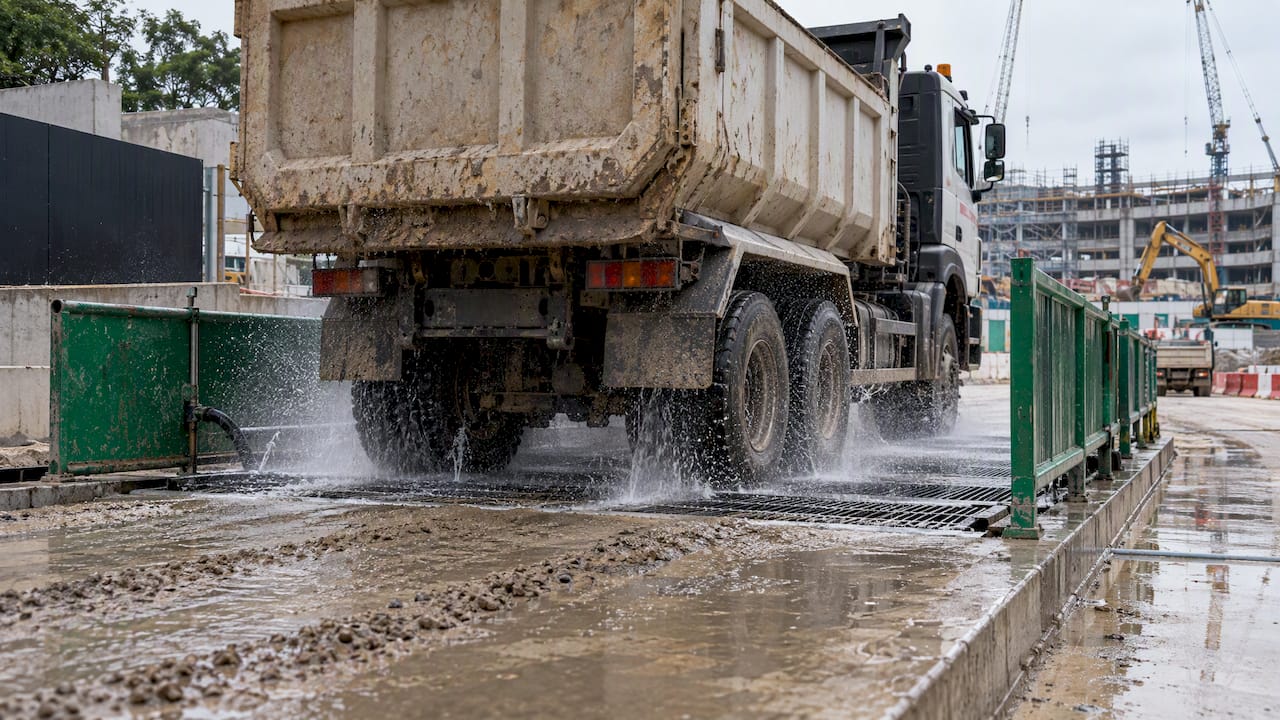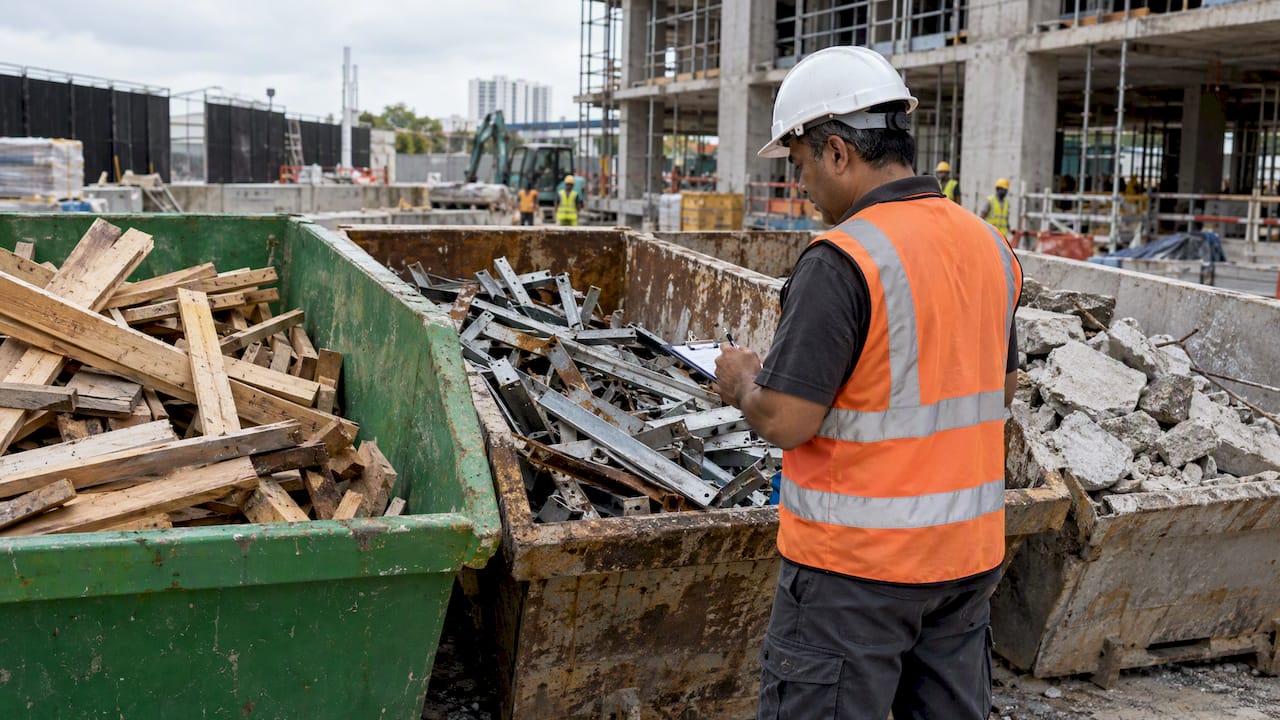
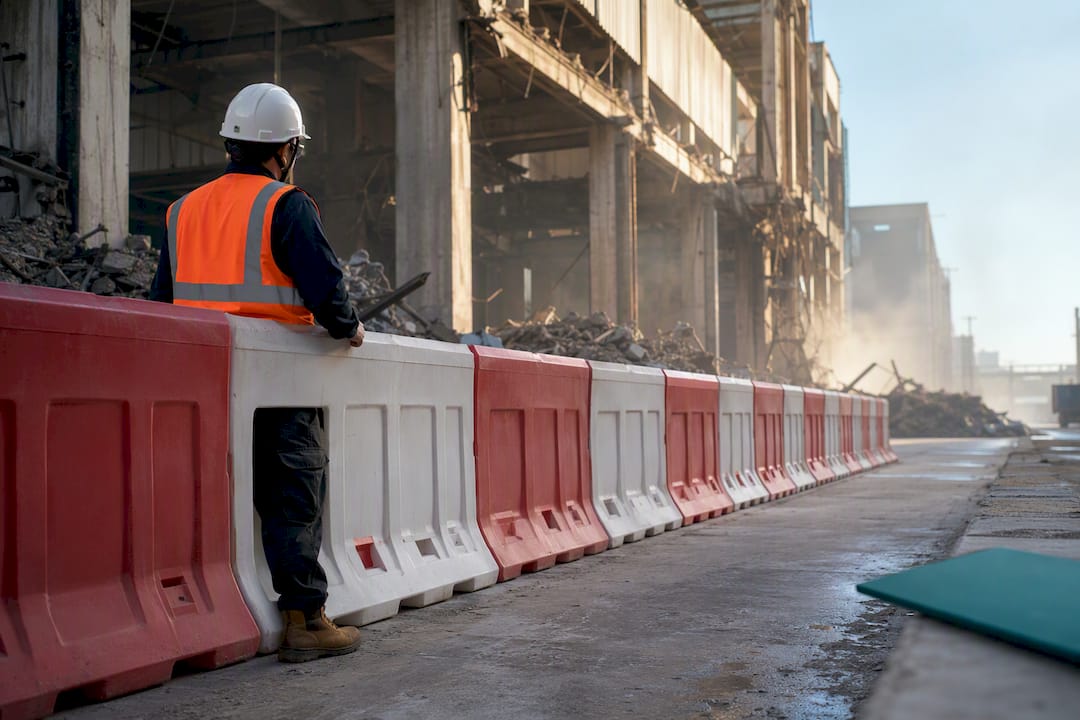
Before the first excavator arrives on site, a compliant demolition project already has a demolition plan and stability report endorsed by a qualified person, a completed pre-demolition survey, documented WSH officer and supervisor competency, and enforced site controls covering hoarding, exclusion zones, and debris routes. Everything else, from SS 557 provisions to Building Control (Demolition Works) Regulations lodgment, flows from those four fixed points. Asbestos screening, services isolation, and monitoring instrumentation are not later refinements; they are day-one priorities that determine whether the rest of the plan holds up.
TL;DR:
- Early and thorough asbestos screening, service isolation, and structural stability assessments are critical to prevent costly delays or incidents during demolition.
- Demolition plans must include detailed sequencing, load calculations, temporary support details, and monitoring strategies prepared by qualified professionals to gain approval.
- Supervisors must enforce physical safety measures such as hoarding, exclusion zones, and safety barriers, especially for mechanical demolition within extended exclusion zones.
- Sites valuing over S$5 million are legally required to install and retain video surveillance footage for 30 to 180 days, depending on incident reports.
- Conducting a comprehensive safety audit beforehand helps identify gaps in stability reports, impact assessments, and machine load calculations, ensuring smooth regulatory approval.
Table of Contents
- Key Legal and Regulatory Requirements for Demolition Safety in Singapore
- What Should a Pre-Demolition Survey Cover?
- Demolition Plan and Stability Report: What Must It Contain?
- How Do You Enforce Safe Work Controls on a Demolition Site?
- Managing Asbestos, Debris, and Environmental Risk
- Training and Competency: What Courses Should Your Team Complete?
- MOSAIC’s Field Notes on Demolition Compliance
- Get Your Demolition Plan Audit-Ready Before Lodgment
- Sources
Key Legal and Regulatory Requirements for Demolition Safety in Singapore
Three legal instruments govern demolition safety in Singapore, and each imposes distinct duties on employers, occupiers, and qualified persons. The Workplace Safety and Health Act and its accompanying WSH (Construction) Regulations set out dutyholder obligations covering safe access and egress, adequate supervision, and penalties for non-compliance during demolition works. These regulations apply to every party on site, from the principal contractor down to individual trade supervisors.
Building Control (Demolition Works) Regulations add a separate lodgment layer. Before work starts, project teams must submit demolition works plans containing specific particulars the Commissioner of Building Control may require, including impact assessments on neighboring structures.
SS 557, the Code of Practice for demolition, complements both statutes by detailing how a compliant demolition plan should actually read: sequencing, temporary supports, debris handling, and resource recovery expectations.
What this means for your audit trail:
- Keep the WSH Act and Construction Regulations text accessible for reference during risk assessments and toolbox talks.
- Lodge demolition works plans early, since Building Control review timelines affect your start date.
- Treat SS 557 as your technical baseline, not a nice-to-have supplement.
- Verify you are working from the current version of each document before finalizing submissions.
What Should a Pre-Demolition Survey Cover?
A pre-demolition survey is the single activity most likely to prevent an on-site incident, according to WSH Council guidance, because it surfaces structural and hazardous material risks before anyone touches a wall. Skipping or rushing this step is the root cause behind most stop-work orders issued mid-project.
A thorough survey addresses these areas in sequence:
- Structural layout — load paths, load-bearing elements, and any prior alterations that were not captured in original drawings.
- Hazardous substances — asbestos-containing materials, lead paint, and other legacy contaminants common in older Singapore buildings.
- Live services — gas lines, electrical feeds, and water mains that must be isolated before demolition sequencing begins.
- Adjacent building conditions — cracks, settlement, or existing defects in neighboring structures that could worsen from vibration or ground movement.
- Temporary support needs — where shoring or bracing will be required once original structural elements are removed.
Competent persons can conduct routine surveys, but findings involving structural instability or ambiguous load paths require a professional engineer’s sign-off before work proceeds. Survey outcomes should translate directly into your risk assessment, permit-to-work conditions, and the briefing content given to every worker on-site.
Pro Tip: Photograph adjacent structures before demolition starts, timestamped and dated. If a neighboring property owner later claims damage, this record is often the difference between a quick resolution and a drawn-out dispute.
Demolition Plan and Stability Report: What Must It Contain?
Your demolition plan and stability report is the technical backbone of the entire project, and Building Control regulators expect it to demonstrate, not just assert, structural safety at every stage. Practitioner experience shows that incomplete impact assessments and missing machine-load calculations are the most common reasons plans get bounced back before approval.
A compliant plan and report include:
- A floor-by-floor demolition sequence identifying the order of beams, columns, walls, and slabs to be removed.
- Clearly marked demolition zones showing where work is active versus restricted.
- Design calculations proving structural continuity of any truncated or partially demolished elements.
- Temporary support and shoring details, including layout plans and load capacity.
- Ramp and machine loading calculations verified against floor capacity for both debris weight and equipment movement.
- Method statements covering debris handling from breakage to removal.
- An instrumentation and monitoring plan specifying monitoring point layout, inspection frequency, allowable vibration limits, and CCTV or video surveillance system placements where the project scope requires them.
A qualified person or professional engineer must prepare and review this documentation before lodgment. Approval delays almost always trace back to one of the gaps above, particularly impact assessments on adjacent structures that were treated as a formality rather than a genuine engineering exercise.
How Do You Enforce Safe Work Controls on a Demolition Site?
Technical approval on paper means little if daily site controls do not match it. Supervisors are responsible for translating the demolition plan into physical, enforced barriers rather than passive warnings.
Standard perimeter controls include hoarding, covered walkways, catch platforms, and catch fans positioned to protect both workers and the public from falling debris around openings and edges. For mechanical demolition specifically, compliance guidance sets an 8-meter exclusion zone around the line of travel for clamshell buckets. Machine ramps require engineering verification before use, and safe machine routes should be marked with physical barricades, not signage alone, since experienced teams treat barricades as the only reliable deterrent against a machine operator drifting off-route.
Additional daily enforcement items:
- Fall protection is mandatory at any opening exceeding 2 meters.
- Lifting equipment needs a documented inspection regime, not a one-time check at mobilization.
- Access and egress routes must stay clear and clearly marked at all times, even as demolition progresses floor by floor.
Since June 1, 2024, construction sites valued at S$5 million or more must install a VSS recording at a minimum of 1920×1080 resolution at 12 frames per second, with footage retained for 30 days, extending to 180 days if a reportable WSH incident occurs. For a project of that size, VSS is not a discretionary safety add-on; it is a lodged obligation with real retention math behind it.
Managing Asbestos, Debris, and Environmental Risk
Hazardous materials and waste handling sit at the intersection of safety and environmental compliance, and demolition teams that treat them as separate concerns tend to fail both; following essential waterproofing safety procedures for SA properties can provide valuable insights into construction site safety practices. Asbestos identification should happen during the pre-demolition survey, and where suspected materials are confirmed, licensed removal contractors must handle extraction, with documentation retained for regulatory review.
Debris handling follows its own set of physical rules under SS 557:
- Debris openings require full enclosure before removal work starts.
- Compliance checklists recommend a 6-meter barricade guidance zone around active debris drop points.
- Segregation at source and clearly defined disposal routes reduce cross-contamination risk between hazardous and general construction waste.
- SS 557’s updated guidance encourages treating demolition debris as a resource recovery stream rather than pure disposal, which changes how sorting and storage should be planned on-site.
Dust and noise controls, along with permit obligations tied to specific waste streams, round out the environmental side of the equation.
Training and Competency: What Courses Should Your Team Complete?
Documentation only holds up during a MOM or WSH Council audit if the people behind it can demonstrate real competency, not just attendance certificates. The Demolition Safety Course remains the standard reference point for supervisors directly managing demolition activities, and alignment with ConSASS and BizSAFE frameworks strengthens your broader safety management case.
When selecting a provider, match course scope to project complexity. A small interior strip-out does not need the same training depth as a multi-story structural demolition with mechanical plant involved.
Keep this on file for every audit:
- Signed competency records naming who approved each worker’s readiness for high-risk tasks.
- Defined refresher intervals rather than a one-time certification assumption.
- Supervision ratios appropriate to task risk, documented in the site’s safety management system.
MOSAIC’s Field Notes on Demolition Compliance
During audits, MOSAIC verifies four things first: stability report sign-off, temporary support inspection records, physical exclusion zone enforcement, and VSS readiness where the contract value triggers it. The pattern repeats project after project. Incomplete impact assessments on adjacent structures cause the most lodgment delays; the fix is engaging a structural engineer earlier, not after Building Control flags it. Missing machine-load calculations follow close behind; verify ramp and floor capacity before mobilization, not during it. Poor debris routing, meanwhile, tends to surface only after waste has already accumulated in the wrong zone, which makes it the costliest pitfall to correct mid-project.
— Aman
Get Your Demolition Plan Audit-Ready Before Lodgment
Most demolition projects that stall at Building Control review do not fail because teams do not know the rules. They fail because someone assumed a document was complete when it was not. Consultants work directly with construction companies and safety officers on common gaps that trigger those delays: stability report review, ConSASS and BizSAFE certification support, and demolition safety training aligned to project risk profiles.

A safety audit from MOSAIC gives you a documented picture of where your demolition plan, site controls, and training records stand against WSH and Building Control expectations, before an inspector finds the gap for you. For teams that also need a wider WSH Act refresher, MOSAIC’s guidance on navigating compliance with an expert covers the surrounding obligations that demolition work sits inside. If you are preparing a lodgment submission or bracing for a MOM audit, request a safety audit now and get a clear, prioritized list of what to fix before work begins.
Sources
- Video surveillance system for construction sector — Ministry of Manpower (MOM)
- Workplace Safety and Health (Construction) Regulations 2007 — Singapore Statutes Online
- SS 557: Code of practice for demolition (preview) — Singapore Standards