Report any work-related accident, occupational disease, or dangerous occurrence to the Ministry of Manpower through myMOM. Notify the Commissioner immediately for fatalities and dangerous occurrences, and file the detailed incident report within the required timeframe for other cases as specified by MOM. Employers submit through the WSH Incident Reporting eService using Corppass credentials.
TL;DR:
- Immediate notification to MOM is required for fatalities and dangerous occurrences, with full reports due within 10 days for most incidents.
- Employers must report incidents involving their own employees, while occupiers report incidents involving the public or fatalities on their premises, with specific rules for gig workers.
- Accurate and timely submission through myMOM’s WSH eService requires prior Corppass setup, with corrections only possible via amendment requests using acknowledgment numbers.
- Key details in reports include precise incident timing, location, injured person’s info, cause description, and supporting evidence like medical certificates and photos.
- Preparation, including appointing Corppass administrators and maintaining ready-to-use templates and contact lists, significantly reduces the risk of missing the 10-day reporting deadline.
Table of Contents
- What Counts as a Reportable Incident in Singapore?
- Who Is Responsible for Filing the Report?
- How Do You Submit a WSH Incident Report Through myMOM?
- What Information Belongs in an Incident Report?
- Amendments, Common Mistakes, and Penalties
- MOSAIC’s Safety Officer Playbook for Incident Readiness
- Official Links and User Guides for Quick Reference
- Get Compliance Support Before the Next Incident Happens
- Sources
What Counts as a Reportable Incident in Singapore?
The Workplace Safety and Health (Incident Reporting) Regulations define three categories that trigger mandatory reporting to MOM. Missing the distinction between them is where most compliance failures begin.
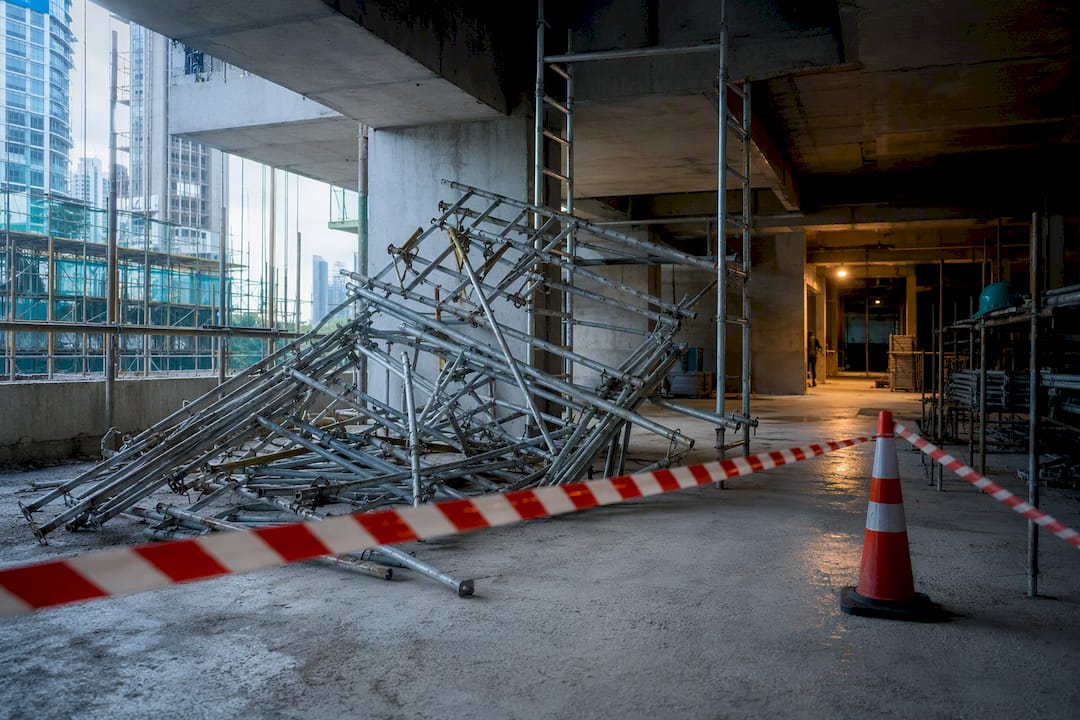
Work-related accidents cover any injury arising out of and in the course of employment, from a fall on a wet floor to a machinery entanglement. Occupational diseases are conditions medically linked to workplace exposure, such as noise-induced hearing loss or occupational asthma from silica dust. Dangerous occurrences are near-miss events with high injury potential regardless of whether anyone was hurt, such as a crane load dropping or a partial scaffold collapse.
Timing hinges on severity. Fatal accidents and dangerous occurrences demand immediate notification to the Commissioner, followed by a full written report within 10 days. Non-fatal accidents and confirmed occupational diseases follow a single 10-day window, counted from the employer’s first notice of the incident, not from the date it occurred.
On construction sites specifically, these thresholds show up in recognizable forms:
- A crane topple or load drop, even without injury, qualifies as a dangerous occurrence.
- Scaffolding collapse or partial structural failure triggers immediate notification.
- A fall from height resulting in hospitalization is a reportable work accident with a 10-day filing window.
- Exposure incidents (chemical spills, gas leaks) that cause no immediate injury can still meet the dangerous occurrence threshold.
Pro Tip: If your team debates whether an event clears the threshold, stop debating. MOM’s own guidance recommends reporting when in doubt, since an unnecessary report carries far less risk than a missed one.
Who Is Responsible for Filing the Report?
Reporting duty depends on relationship to the incident, not proximity to it. Confusion over this point causes some of the longest delays in practice.
- The employer reports incidents involving their own employees, regardless of where the accident occurred.
- The occupier of the premises reports incidents involving members of the public, self-employed persons, or fatalities that happen on their site even when the injured party works for another company.
- A doctor who diagnoses an occupational disease linked to a patient’s work must report it directly, independent of what the employer does.
- Platform operators now carry reporting obligations for platform workers under updated rules that took effect from 2025, shifting some responsibility away from individual clients who engage gig workers.
On multi-contractor construction sites, more than one party can technically have a duty to report the same event. The safer approach is for the main contractor or occupier to confirm, in writing, who is filing before the 10-day clock runs out. Two overlapping reports cause no harm; zero reports do.
How Do You Submit a WSH Incident Report Through myMOM?
Filing runs through the WSH Incident Reporting eService, and employers need Corppass, not Singpass, to access it. A Corppass Administrator at your company must assign the “WSH eServices” permission to whoever will be filing, and doing this before an incident happens saves real time when the clock is already running.
- Log in to myMOM using Corppass credentials tied to your company’s UEN.
- Navigate to Workplace Safety and Health, then select Create Report.
- Choose the correct informant type (employer, occupier, or doctor).
- Complete the mandatory fields covering the injured person, incident details, and outcome.
- Upload supporting documents such as medical certificates or site photos.
- Submit the report and retain the system-generated acknowledgement number.
Once submitted, certain fields lock and can’t be edited directly. Corrections go through the online amendment request form rather than a resubmission, which avoids creating a duplicate case in MOM’s system.
- Photos of the scene and any damaged equipment
- The injured worker’s medical certificate
- Salary records, if medical leave wages are being claimed
Pro Tip: Build a “ready in five minutes” folder before you need it: a template statement form, a Corppass login checklist, and a contact list for the clinic your site normally uses. Sites that prepare this in advance rarely blow the 10-day window.
What Information Belongs in an Incident Report?
MOM’s employer user guide lists the fields required to complete a valid iReport, and skipping any of them is a common cause of rejected or delayed submissions.
- Injured person’s full details, including NRIC or work permit number and job role
- Employer’s UEN and company details
- Exact date, time, and location of the incident
- Outcome classification: medical leave, hospitalization, or death
- A concise narrative answering “how did the accident happen”
- The specific object, machine, or environmental factor that led to the incident
The narrative field trips people up more than any other. Write it as a short factual sequence, not a defense of the company: what the worker was doing, what failed or went wrong, and what happened as a result. Supporting documents typically include the medical certificate, hospital discharge summary, site plans or photos, and, where relevant, equipment inspection records showing the machine was within its maintenance schedule.
Amendments, Common Mistakes, and Penalties
Once a report routes into MOM’s system, fields covering the incident classification and informant type typically lock. Corrections require the amendment request form rather than a fresh submission, and requests should reference the original acknowledgement number to avoid creating a second case file.
The errors that cause the most trouble are predictable:
- Missing the 10-day window because the “first notice” date was calculated incorrectly.
- Selecting the wrong informant type, which routes the report to the wrong review queue.
- Submitting without supporting documents, which stalls the case during MOM’s follow-up.
The regulations exclude certain categories from mandatory reporting, including injuries to domestic workers and some commuting injuries where the employer did not arrange the transport. Failing to report a genuinely reportable incident is a separate offense from misclassifying one, and repeat or willful non-reporting can lead to fines and, in serious cases, imprisonment. There is no fixed statistic on enforcement outcomes worth citing here, but MOM has been explicit that non-reporting is treated as a compliance failure in its own right, separate from any fault in the underlying accident.
MOSAIC’s Safety Officer Playbook for Incident Readiness
Most incident reporting failures trace back to preparation gaps, not confusion about the rules. Building a short checklist before anything goes wrong closes most of that gap.
Before an incident happens:
- Confirm your Corppass Administrator has assigned WSH eServices access to at least two people.
- Keep a central digital folder for report templates, contact lists, and prior submissions.
- Maintain contact details for your site clinic, nearest hospital, and emergency stakeholders.
Immediately after an incident:
- Secure the scene and preserve physical evidence before anything is moved, using digital reporting tools to streamline evidence gathering.
- Photograph the area, equipment involved, and any visible damage.
- Arrange medical assessment for the injured person without delay.
- Confirm who is acting as informant, then submit the iReport within 10 days, or notify MOM immediately if the incident is fatal or a dangerous occurrence.
Rehearsed response sequences consistently outperform improvised ones, a pattern the Cyber Security Agency of Singapore has documented in its own incident response guidance and one that applies just as directly to physical site safety. Running a tabletop drill of this sequence once a year costs a fraction of what a missed deadline does.
When an incident exposes gaps in your site’s broader safety systems, that’s usually the signal to bring in outside support rather than patch the process internally. A structured audit, a ConSASS assessment, or a Design for Safety review can catch the systemic issue behind the incident, not just the paperwork around it.
— Aman
Official Links and User Guides for Quick Reference
Keep these bookmarked rather than searched for during an actual incident, since the difference of a few minutes matters when a clock is already running.
- Work-related accidents: what and when to report — MOM’s primary guidance on categories and deadlines.
- WSH Incident Reporting eService — the myMOM portal for submitting reports.
- Workplace Safety and Health (Incident Reporting) Regulations — the legislation defining reportable incidents and exclusions.
- Employer guide to file WSH incident report via myMOM Portal — step-by-step PDF walkthrough.
- Amendment request form — for corrections after a report has been submitted.
Use the first link for immediate notification decisions, the eService for filing, and the amendment form only after a report is already in the system.
Get Compliance Support Before the Next Incident Happens
Some consultancy firms build their Quality, Environment, and Safety practices around exactly this gap: construction firms that know the reporting rules but haven’t stress-tested whether their site could actually meet a 10-day deadline under pressure. Where a generic training course stops at explaining the regulations, Com works directly on your site’s documentation, evidence-preservation habits, and Corppass readiness so a real incident doesn’t expose a process failure on top of a safety one.

That matters most for construction firms juggling multiple contractors and shifting crews, where responsibility for filing can get lost between companies. If your environmental and safety documentation hasn’t been reviewed recently, start with an environmental compliance guide for Singapore construction projects to get a clear picture of where your current setup would hold up, and where it wouldn’t.
Sources
- Work-related accidents: what and when to report
- Workplace Safety and Health (Incident Reporting) Regulations
- WSH Incident Reporting
- Employer guide to file WSH incident report via myMOM Portal
- Incident response checklist — Cyber Security Agency of Singapore
Recommended
- Reporting Workplace Accidents in Singapore: The Ultimate 2025 WSH Compliance Guide
- Construction safety compliance guide: Steps for Singapore firms
- The Comprehensive Guide to Design for Safety Professionals (DFSP) in Singapore Construction Projects
- Construction hazard examples every Singapore site must address