Introduction
Large language model pipelines are transforming how organizations prepare for ISO 9001:2015 audits by automating the most labor-intensive elements of quality management: document control, evidence collection, clause mapping, and CAPA tracking. For quality managers and compliance officers in Singapore’s manufacturing and construction sectors, this shift from manual spreadsheets to intelligent automated workflows represents the single largest operational efficiency gain available in quality management system QMS operations today.
This article covers how LLM pipelines work within a quality management system, the specific ISO 9001 clauses they address, practical implementation steps for audit preparation, deployment configurations, and the challenges organizations face when integrating AI into established quality processes. It is written for quality managers, HSE consultants, and compliance officers operating in Singapore who need to maintain continuous compliance with international standards while managing resource constraints.
Direct answer: Automating quality management systems with large language model pipelines reduces manual overhead in ISO 9001:2015 audit preparation by over 50%, while ensuring full document traceability, real-time compliance monitoring, and audit-ready evidence packages that satisfy external auditors.
By the end of this article, you will understand:
-
How LLM pipelines ingest, process, and generate compliant QMS documentation
-
Methods for automated compliance monitoring across all 10 ISO 9001:2015 clauses
-
Practical steps for generating audit evidence packages with timestamps and digital signatures
-
Deployment configurations (cloud, on-premises, hybrid) and their trade-offs
-
Solutions for data quality, change management, and regulatory compliance concerns
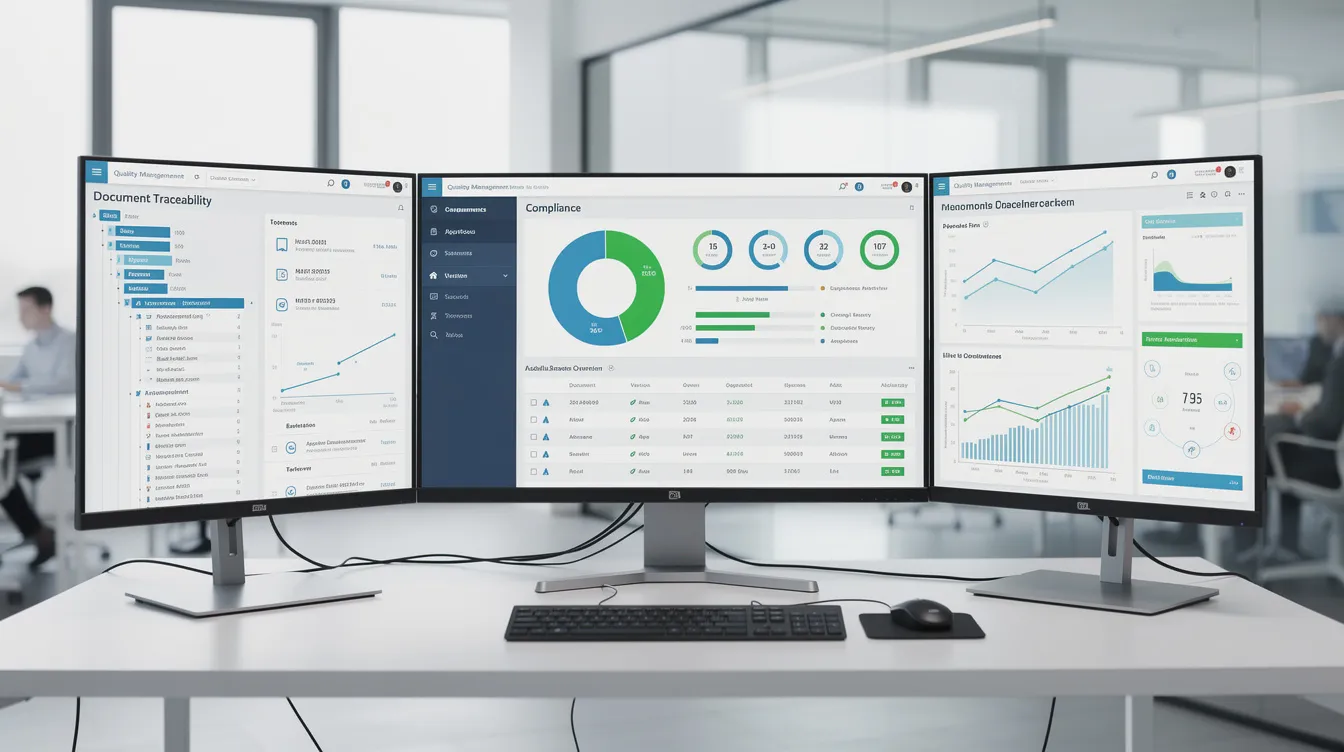
Understanding LLM Pipelines in Quality Management Systems
An LLM pipeline in quality management refers to an automated workflow that uses large language models to interpret ISO 9001 requirements, map organizational processes to specific clauses, generate documented procedures, and validate evidence for audit readiness. Unlike traditional QMS tools that require manual data entry and human interpretation of standards, these pipelines perform continuous assessment and documentation-turning static quality systems into dynamic, self-auditing frameworks.
ISO 9001 is the most recognized QMS standard globally, and a QMS helps organizations meet customer and regulatory requirements. Before LLM-based automation, audit preparation depended on manual evidence gathering through paper records, Excel spreadsheets, and disconnected systems. Quality teams spent weeks compiling records, cross-referencing clauses, and chasing documentation gaps. The push toward integrated management systems in Singapore-combining ISO 9001, ISO 14001, and ISO 45001-has accelerated demand for automation that can handle multiple frameworks simultaneously.
Recent academic research, including a 2024 paper on human-centred architectures for LLM cognitive assistants in manufacturing QMS, confirms that AI agents can support continuous improvement and knowledge management when properly integrated with existing quality processes.
Core Components of QMS LLM Pipelines
A functional LLM pipeline for quality management comprises four interconnected modules:
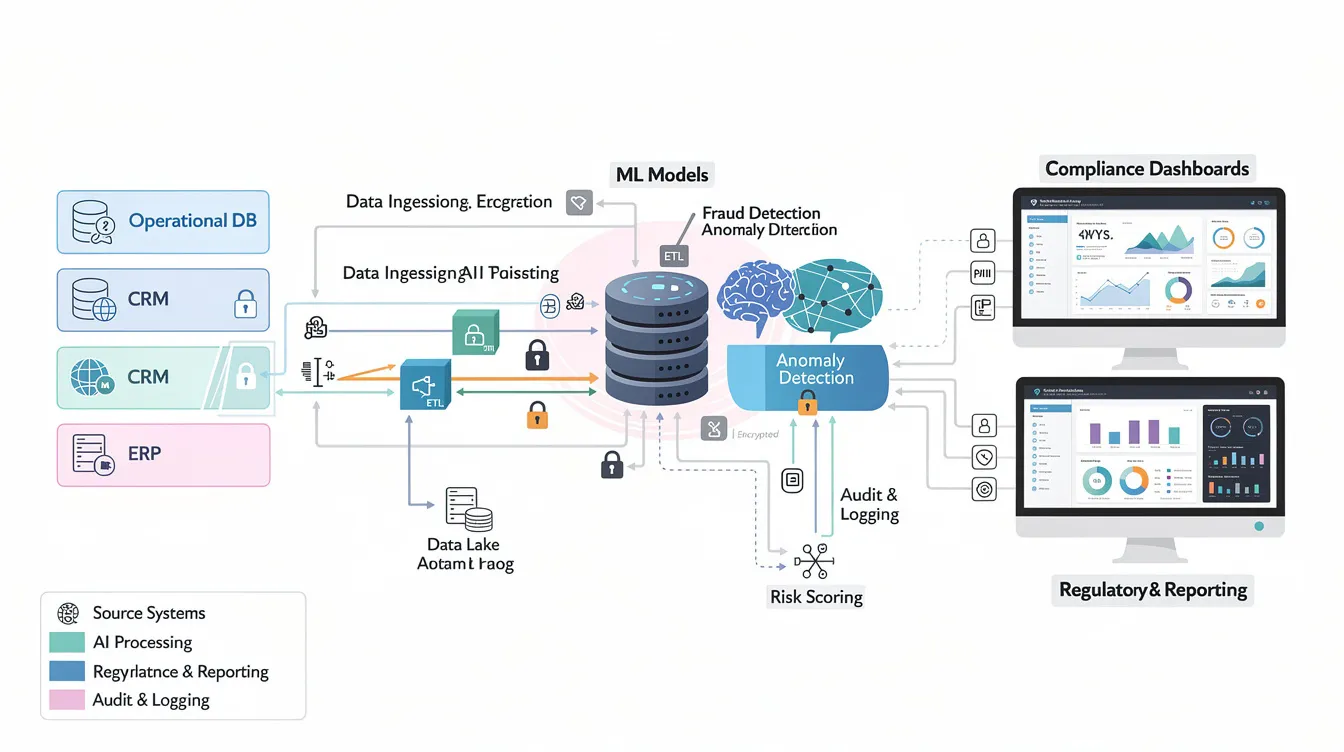
Data ingestion modules capture both structured and unstructured inputs-quality metrics, nonconformance reports, inspection records, calibration logs, training records, and even photographs from production lines. Platforms like audit-labs provide collectors and scripts that pull raw evidence from databases and operational systems automatically, establishing the production data foundation that feeds every downstream analysis.
Natural language processing engines perform the core intelligence work: clause matching (mapping SOPs and records to specific ISO 9001:2015 clauses), interpreting nonconformance language, generating draft documents, and assessing completeness. These are not generic AI models but domain-specific ai systems fine-tuned on quality management terminology and ISO requirements. Platforms such as Compliro read documents in place and assess coverage versus specific clauses using specialized NLP.
Integration and connectivity layers link the pipeline to existing ERP, MES, and document management systems. This is critical because most organization’s processes already generate relevant quality data-the pipeline needs real time access to these sources rather than requiring duplicate data entry.
Version control and approval workflows maintain document integrity through revision history, digital signatures, access logs, and controlled distribution. Every change to a procedure or record is timestamped and traceable, which directly supports data integrity requirements during external audits.
AI-Driven Documentation Generation
Automated creation of quality manuals, procedures, and work instructions represents one of the highest-value applications of LLM pipelines. Using templates aligned with ISO 9001:2015 clauses-covering leadership (clause 5), planning (clause 6), support (clause 7), operations (clause 8), and performance evaluation (clause 9)-AI models generate first drafts individualized to the organization’s context and operational reality.
Rather than static placeholders, intelligent template population pulls from live operational data. Calibration status, training records, production counts, and inspection results feed directly into documents, ensuring that evidence is current and reflects actual performance. A QMS enables data-driven decisions through real-time dashboards that keep this information continuously available. Tools like Pio demonstrate this approach by showing process documentation status and counts for SOPs and training in real time.
Version control goes beyond simple tracking. Every document includes metadata identifying who authored it, who approved it, when it was last updated, and which ISO clause it supports. This level of traceability satisfies the most rigorous external auditors and eliminates the scramble that quality teams typically face during audit prep cycles.
Generative AI enhances audit readiness through automated documentation, but human oversight is necessary in the LLM decision-making process for compliance. Every auto-generated document requires review and approval by authorized personnel before it enters the controlled document system.
With documentation generation automated and traceable, the next logical step is applying these capabilities to specific ISO 9001:2015 compliance requirements.
QMS Automation for ISO 9001:2015 Compliance
ISO 9001:2015 covers leadership, planning, support, operations, and performance evaluation across clauses 4 through 10. LLM pipelines address each of these areas through continuous monitoring, intelligent alerting, and predictive analytics-moving organizations from periodic compliance checks to continuous compliance.
Automated Compliance Monitoring
Real-time tracking of all 10 ISO 9001:2015 clauses happens through continuous data analysis and gap identification. AI improves compliance with ISO 9001 by ensuring full traceability across every documented procedure, record, and piece of audit evidence.
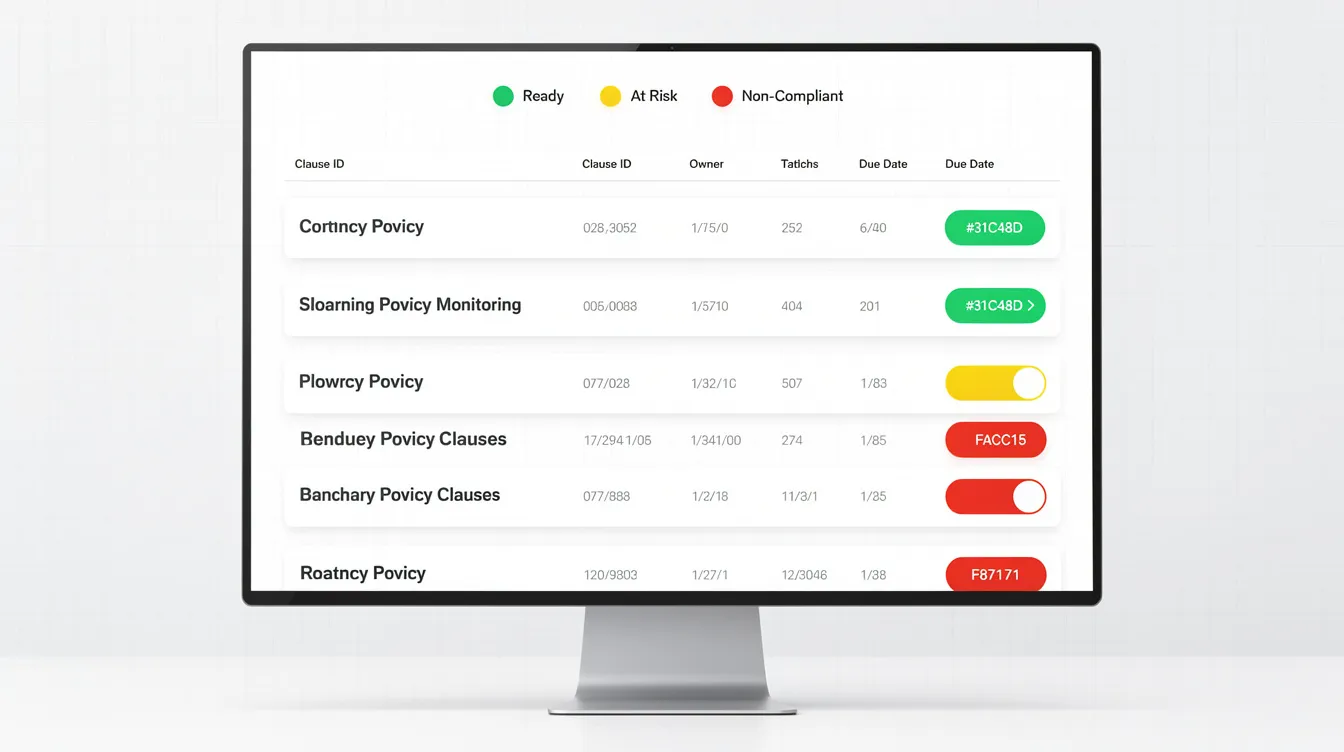
Compliance dashboards display readiness percentages showing which clauses are fully evidenced, partially covered, or missing documentation entirely. Compliro’s platform, for example, provides per-clause coverage assessment that quality managers can review at any time. Automated evidence collection improves the efficiency of ISO 9001:2015 audits by eliminating the manual cross-referencing that traditionally consumed weeks of effort.
Intelligent alerts activate when data indicates threshold breaches-calibration overdue, document reviews missed, nonconformance reports unresolved, or corrective actions past their deadlines. These automated workflows assign tasks to responsible owners and escalate unresolved items, ensuring that audit findings from internal audits never surprise the organization during external audits.
ISO 9001:2015 emphasizes evidence-based decision-making and accountability. LLMs can continuously assess compliance and identify missing documentation, transforming what was once a quarterly or annual exercise into a daily automated process. Automated internal auditing can flag non-conformities before external audits occur, giving quality teams time to implement corrective actions.
Effective communication of quality objectives enhances compliance efforts in companies by making compliance reporting visible across departments. When every team member can see the current state of compliance through dashboards and notifications, accountability becomes embedded in daily operations rather than reserved for audit season.
Risk-Based Thinking Implementation
Risk-based thinking is crucial for effective internal auditing in ISO 9001:2015, and LLM-powered risk assessment algorithms bring unprecedented depth to this requirement. AI systems analyze operational data-complaint trends, inspection failures, downtime patterns, supplier performance-to identify potential quality issues before they manifest as nonconformities.
Risk management minimizes compliance risks in quality management systems by enabling early intervention. ISO 9001 emphasizes risk management for continuous improvement, and generative AI enhances risk identification in quality management by processing volumes of historical data that would be impossible for human analysts to review comprehensively.
Automated risk register maintenance includes dynamic priority scoring that adjusts as new data arrives. Rather than static risk matrices updated quarterly, these predictive quality tools recalculate risk scores continuously. Effective risk management supports audit readiness and compliance by ensuring that risk registers always reflect current conditions. Risk management frameworks are essential for regulatory compliance, particularly in Singapore’s construction and manufacturing sectors where workplace risk assessment requirements are stringent.
Organizations using AI report a 25% reduction in quality-related incidents. This improvement comes from the predictive maintenance and anomaly detection capabilities that AI supports-identifying patterns in production data that signal emerging quality problems. AI can reduce quality-related incidents by 25%, and AI supports real-time anomaly detection in quality processes, enabling preventive rather than reactive quality control.
Customer Focus Automation
Customer satisfaction is central to ISO 9001:2015, and NLP excels at processing customer feedback at scale. Automated analysis of complaint text, survey responses, and communication records detects sentiment trends, recurring issues, and emerging customer requirements that might otherwise go unnoticed.
Intelligent complaint categorization uses root cause analysis to classify issues by type, severity, product line, and responsible process. This produces structured reports tied to clause 9 (performance evaluation) and clause 8 (operation), directly supporting audit evidence for customer expectations and relationship management requirements.
By automating customer feedback analysis, organizations gain actionable insights into satisfaction trends that drive continuous improvement initiatives. Rather than relying on periodic surveys, LLM pipelines process every customer interaction to identify patterns that inform quality objectives and improve processes across the organization.
These automated compliance capabilities create the foundation for efficient audit preparation-the practical implementation of which follows.
Implementing LLM Pipelines for Audit Preparation
Moving from continuous monitoring to audit-ready packages requires a structured framework for evidence generation that satisfies the specific expectations of certification bodies and external auditors. The process approach embedded in ISO 9001:2015 means that every piece of evidence must demonstrate not just the existence of a process, but its effectiveness and continual improvement.
Audit Evidence Generation Process
The evidence generation process activates during scheduled audit preparation cycles, though in a well-configured system, evidence readiness focuses on the availability of objective evidence in compliance at all times rather than only during pre-audit scrambles.
-
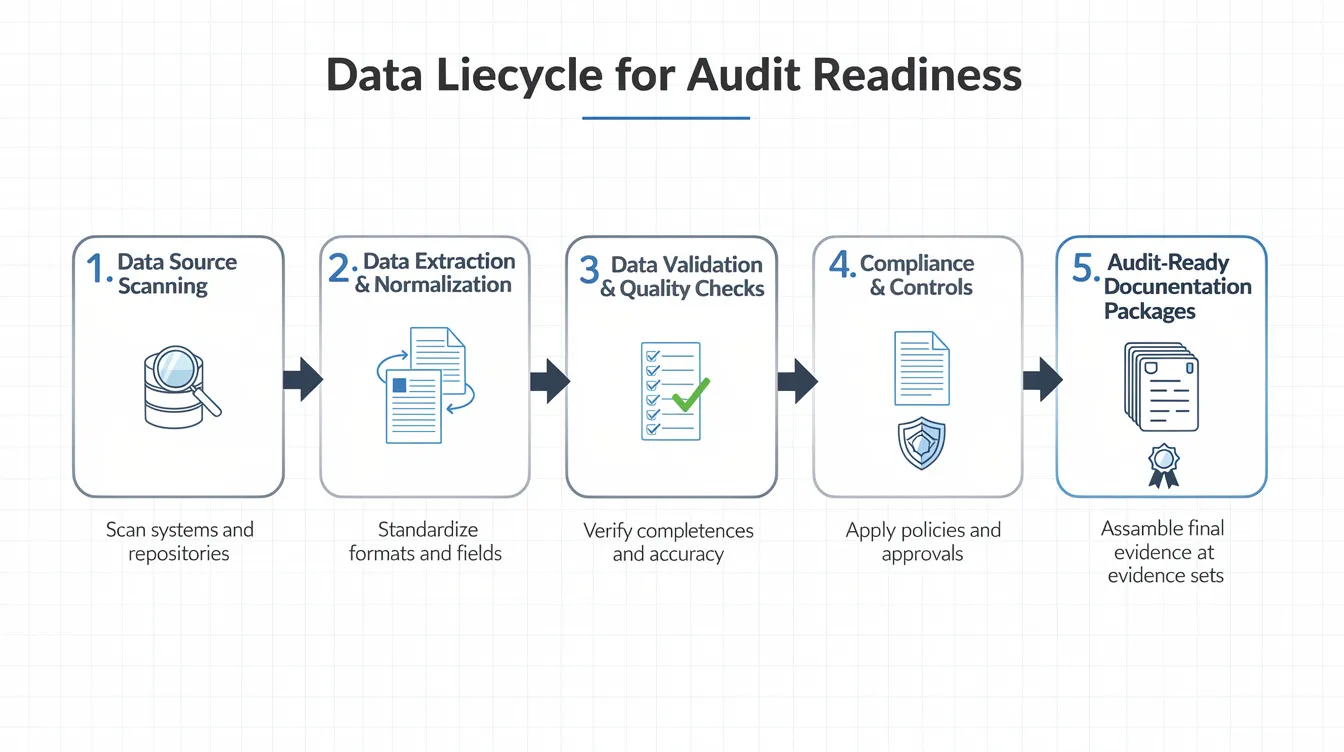
Configure data source scanning – The LLM pipeline connects to all QMS databases, nonconformance logs, inspection records, training records, and the document control system to extract relevant audit evidence. Define objectives and scope for the audit preparation to ensure the audit scope covers all required clauses.
-
Generate cross-reference matrices – Automated mapping links every SOP, procedure, and record to specific ISO 9001:2015 clauses, creating a comprehensive traceability matrix. Gap analysis identifies discrepancies between current practices and ISO 9001:2015 requirements.
-
Compile objective evidence packages – Timestamped documents, digital signatures, photographs, calibration records, and management review minutes are grouped by audit period and clause reference. Evidence includes management review minutes (clause 9.3), internal audit results, calibration schedules, supplier evaluation records, and competence records. ISO 9001:2015 requires management review inputs to be based on actual performance data.
-
Validate evidence completeness – AI-powered gap analysis identifies missing evidence per clause and generates tasks to fill documentation gaps before the audit. Conduct document reviews to verify QMS documentation is complete, current, and properly approved.
-
Generate audit-ready documentation packages – Final packages export in formats auditors expect (PDF, ZIP, manifest CSV) with complete traceability, version history, and evidence presentation organized by clause.
Aligning processes with ISO 9001 ensures compliance with quality management standards. Develop an audit plan including schedule and methodology well before the audit date. Assemble a competent and impartial audit team for internal audits that precede external certification audits, and use root cause analysis for corrective actions post-audit to close any identified nonconformities.
Training and competence management are integral components of ISO 9001:2015 and must be evidenced in every audit package. The LLM pipeline automatically compiles training records, competence assessments, and development plans as part of the evidence generation process.
LLM Pipeline Configuration Comparison
Choosing the right deployment configuration depends on organizational size, security requirements, and the regulatory environment. For Singapore-based organizations subject to PDPA requirements, data sovereignty is a critical consideration.
|
Configuration |
Cloud-Based LLM |
On-Premises LLM |
Hybrid Model |
|---|---|---|---|
|
Implementation Time |
2–4 weeks |
8–12 weeks |
6–8 weeks |
|
Data Security |
External hosting, vendor-managed |
Full organizational control |
Balanced-sensitive data local, analytics in cloud |
|
Scalability |
Virtually unlimited |
Hardware limited |
Flexible scaling |
|
Upfront Cost |
Lower (subscription model) |
Higher (infrastructure investment) |
Moderate |
|
Compliance Suitability |
Standard regulatory requirements |
High-security and IP-sensitive environments |
Most versatile for integrated management systems |
|
Best For |
SMEs with standard needs |
Regulated industries, defense/government contracts |
Most manufacturing and construction firms |
Cloud-based models offer faster deployment and lower upfront costs, making them suitable for SMEs beginning their automation journey. On-premises models provide the data control that regulated industries and government contractors require. Hybrid models-where document control and evidence storage remain on-premises while LLM analytics run in the cloud-offer the most balanced approach for organizations seeking both security and scalability.
Vendors differ in their approach: VoraSuite builds evidence automatically from shop-floor work with proof trails linked to control plans; RegulaCore focuses on AI-assisted gap analysis with supplier quality workflows; and SentinelPath reports over 50% reduction in audit prep time with real-time audit readiness scores.
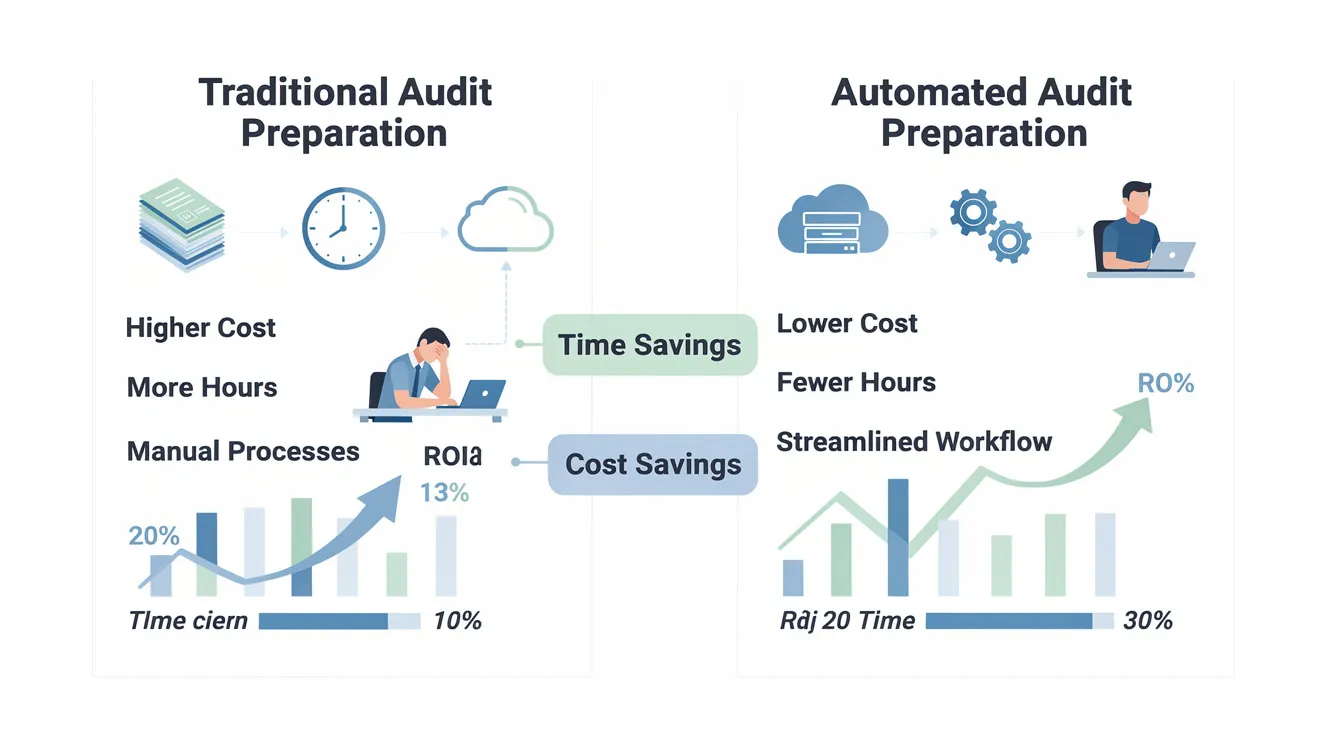
Implementing a QMS can improve operational efficiency by 30%, and AI integration can increase operational efficiency by 30% on top of baseline QMS improvements. Companies integrating AI see a 25% reduction in quality-related incidents, demonstrating measurable ROI regardless of deployment configuration.
Common Challenges and Solutions
Singapore organizations implementing QMS automation face specific hurdles rooted in existing infrastructure, organizational culture, and regulatory expectations. Understanding these challenges before deployment prevents costly delays and ensures long term success.
Data Quality and Integration Issues
Most organizations operate with disparate systems-paper records, manual spreadsheet entries, and disconnected databases with inconsistent formats and missing metadata. LLMs require well-structured inputs to produce reliable outputs, making data quality the most critical prerequisite for successful implementation.
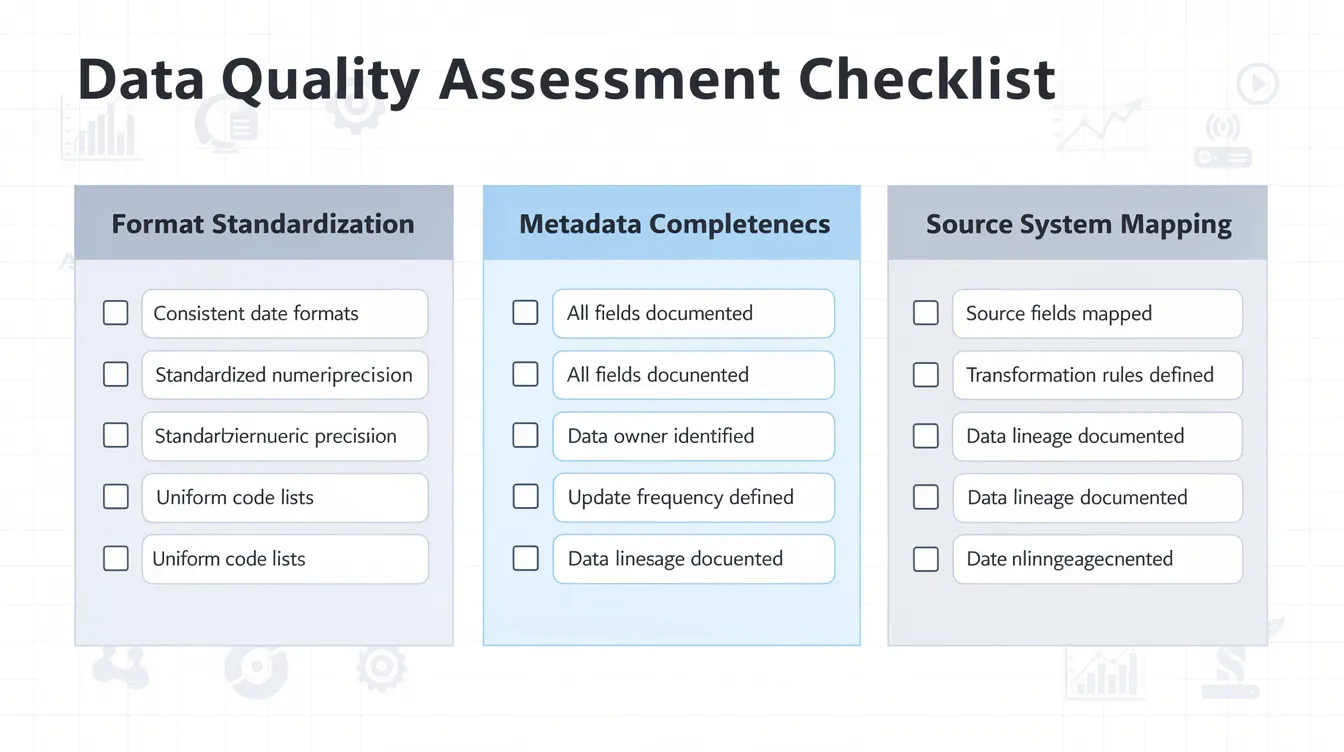
Solution: Implement data cleansing protocols and establish standardized data formats across all QMS inputs before LLM pipeline deployment. Start with a data quality assessment that maps all existing data sources, identifies format inconsistencies, and creates transformation rules. Organizations can lower rework and operational losses significantly by investing in this foundation before activating AI processing. Monitor metrics like First Pass Yield, which measures the percentage of products manufactured correctly without rework, and Defects Per Million Opportunities, which normalizes defects across production scales, to establish baseline quality data. Cost of Poor Quality aggregates costs from scrap and rework into a single metric that justifies automation investment.
Change Management Resistance
Resistance to replacing long-established manual or Excel-based practices is natural. Quality teams may distrust automatically generated documents or fear that artificial intelligence will introduce errors into critical processes. The change management challenge is organizational rather than technical.
Solution: Develop comprehensive training programs and demonstrate quick wins through pilot implementations in non-critical QMS areas. Select one or two quality processes with high documentation burden and low risk-such as training record compilation or calibration schedule tracking-and automate them first. When quality managers see audit prep time reduced from days to hours for these processes, adoption accelerates organically. The PDCA cycle is fundamental for continuous improvement in quality management, and applying it to automation implementation itself-planning pilots, executing them, checking results, and acting on lessons learned-builds organizational confidence. Continuous quality improvement is a fundamental principle of ISO 9001:2015, and the improvement loop applies to the automation tools themselves.
Regulatory Compliance Concerns
Certification auditors may still require original source documents, and organizations must ensure that LLM-generated content meets their chosen certification body’s expectations for proof of ownership, traceability, and digital signatures. There is also a risk of LLM hallucinations-where ai models generate plausible but incorrect content-that could introduce errors into quality documentation.
Solution: Engage with Singapore Standards Council and accredited certification bodies early to validate that LLM-generated documentation meets ISO 9001:2015 audit requirements. Implement mandatory human oversight at every approval gate-no document enters the controlled system without review by an authorized person. Identify nonconformities during the audit process through pre-audit internal reviews that specifically examine AI-generated content for accuracy. Continuous auditing is integral to maintaining ISO 9001:2015 compliance, and this applies equally to auditing the AI tools themselves. Consider emerging standards like ISO 42001 (AI management system) to establish proper ai governance frameworks that satisfy both quality assurance and technology governance requirements.
Singapore’s regulatory ecosystem-including WSH Act requirements, MOM regulations, and public sector contracting standards-often ties quality management in construction to ISO accreditation and bizSAFE certification. Data sovereignty under Singapore’s PDPA requires careful legal review of any cloud or hybrid deployment to ensure documentation and evidence ownership remain clearly managed.
Conclusion and Next Steps
LLM pipelines transform ISO 9001:2015 audit preparation from a reactive, resource-draining exercise into a proactive, continuous process. By automating document control, evidence collection, compliance monitoring, and risk assessment, organizations achieve audit readiness as a permanent state rather than a seasonal scramble. The numbers support the investment: AI integration can increase operational efficiency by 30%, and platforms report audit prep time reductions exceeding 50%.
The competitive advantage goes beyond cost reduction. Organizations that maintain continuous compliance through data driven systems and digital tools position themselves to win tenders, satisfy customer requirements at scale, and drive continuous improvement across every quality process.
Immediate next steps:
-
Assess current QMS documentation gaps – Map all existing quality documents, records, and data sources against ISO 9001:2015 clause requirements to identify where automation delivers the greatest value
-
Identify pilot processes for LLM automation – Select two or three critical processes with high documentation burden for initial implementation, measuring total quality management improvements against baseline metrics
-
Engage qualified consultants for implementation planning – Work with specialists who understand both ISO 9001 certification requirements and LLM pipeline architecture to ensure your deployment meets Singapore’s regulatory requirements
Related topics worth exploring include bizSAFE certification automation, integrated EHS management systems, and predictive maintenance applications within quality management. As Singapore’s interest in both AI governance and quality standards continues to grow, organizations that help their teams build competence in integrating AI with established management systems will secure long term success.
Additional Resources
-
ISO 9001:2015 clause-by-clause automation readiness assessment – Evaluate which of your quality processes are ready for LLM pipeline integration by mapping current documentation maturity against each clause requirement
-
LLM pipeline vendor evaluation criteria – When selecting platforms, prioritize clause mapping accuracy, integration capabilities with your existing ERP/MES systems, data sovereignty compliance under PDPA, and export formats accepted by your certification body
-
Sample audit evidence templates – Review examples of automatically generated cross-reference matrices, evidence packages, and gap analysis reports to understand what audit ready output looks like in practice
-
MOSAIC Ecoconstruction Solutions – For specialized consulting on QMS automation and ISO certification in Singapore’s construction and manufacturing sectors, contact our team for implementation planning and training support