Introduction
Large Language Models (LLMs) are transforming how Singapore shipyards conduct permit to work PTW auditing by automating document analysis, compliance verification, and risk pattern detection across high risk activities such as hot work, confined space entry, and electrical isolation. These AI systems-trained on massive text corpora-can ingest permit documentation, cross-reference it against regulatory requirements, and flag compliance gaps in a fraction of the time required by traditional manual review, while digital permit workflows such as an e Permit setup help reduce risk during the audit process.
This guide covers the full scope of LLM implementation for PTW audit processes in Singapore’s marine sector, from regulatory alignment with the WSH Act and MOM guidelines to practical deployment steps, technology comparisons, and real-world performance metrics. It falls outside this guide’s scope to address general AI strategy or non-PTW safety applications, though we touch on adjacent digital transformation trends where relevant.
The target audience includes HSE managers, safety officers, marine compliance teams, and digital transformation leads working in Singapore shipyards who are evaluating or actively rolling out AI-supported PTW auditing. Whether you operate a large shipbuilding facility with mandatory annual SHMS audits or a smaller ship repair yard conducting internal reviews, this guide addresses your operational reality.
Direct answer: LLMs can automate PTW audit processes by analyzing permit documentation, identifying compliance gaps against WSH regulations and internal safety protocols, and generating structured audit reports approximately 70% faster than manual methods-while achieving detection accuracy rates exceeding 90% for common compliance issues.
Key outcomes you will gain from this guide:
-
How LLMs analyze and validate permit documents for hot work, confined spaces, and other high risk tasks in shipyard environments
-
Practical deployment steps for integrating LLM auditing with existing e PTW and shipyard management systems
-
Quantitative benchmarks comparing traditional manual auditing against LLM-enhanced approaches
-
Solutions to common implementation challenges including data quality, legacy system integration, and regulatory compliance
-
Forward-looking trends shaping AI-assisted safety management in Singapore’s maritime sector

Understanding LLMs in PTW Auditing Context
Large Language Models are AI systems capable of understanding, summarizing, classifying, and generating human-quality text. When applied to permit to work system auditing, they function as intelligent document processors that can parse permit forms, identify required fields (permit type, hazard descriptions, control measures, personnel qualifications), and verify content against regulatory standards and internal policies. Their relevance to Singapore shipyard operations is immediate: the sector’s complex web of work permits, risk assessments, and safety documentation creates exactly the kind of high-volume, text-heavy audit workload where LLMs deliver measurable efficiency gains.
Core LLM Capabilities for PTW Analysis
Natural language processing enables LLMs to review permit documents-whether in PDF format, digital forms, or scanned paper-and extract structured data from fields covering hazard identification, mitigation measures, personnel qualifications, machinery certifications, isolation procedures, and emergency protocols. This capability directly supports the compliance verification that safety teams perform during PTW auditing.
Pattern recognition and anomaly detection allow LLMs to learn from historical PTW records and identify recurring non-compliance patterns. For example, an LLM trained on a shipyard’s permit database might detect that confined space entry permits for certain vessel classes consistently lack adequate ventilation test data, or that hot work permit applications during dry dock periods frequently omit firewatch specifications. These insights shift auditing from reactive to predictive.
Retrieval-Augmented Generation (RAG) is a critical architecture for shipyard applications. Rather than relying solely on training data, RAG-enabled LLMs pull in external documents-MOM regulation text, SHMS procedures, company policies-at query time. This anchors compliance checks in current regulatory requirements and dramatically reduces the hallucination risk that undermines trust in AI outputs. Every finding can link back to a specific regulation clause or policy section, creating the audit trail that WSH compliance frameworks demand.
The connection to shipyard safety management is straightforward: LLMs enhance traditional audit processes by handling the volume-intensive document review work while safety officers focus their expertise on contextual judgment, on site verification, and decision-making for complex scenarios.
Singapore Maritime Regulatory Context
Permit-to-Work auditing requires compliance with the Workplace Safety and Health Act in Singapore. Workplace Safety and Health regulations are enforced by Singapore’s Ministry of Manpower, which sets the foundational obligations for safe work across all industries, with sector-specific requirements for shipbuilding and ship repair operations.
The WSH (Shipbuilding and Ship-Repairing) Regulations 2008, particularly Part IV, mandate a permit to work system for defined high risk activities including work involving hazardous chemicals, confined space entry, spray painting, and radiography. Shipyards must appoint competent safety assessors-qualified WSH officers-to implement and oversee these PTW systems. Laws require that competent safety assessors evaluate Permit-to-Work requests before approval.
Under MOM’s SHMS requirements, shipyards employing 200 or more persons must undergo external SHMS audits annually, while smaller operations require internal reviews. PTW systems are an integral part of SHMS for marine industries, meaning audit quality directly affects regulatory standing. General auditing requirements for shipyards include tracking personnel training and permitting records. Periodic audits are essential for maintaining high standards of safety management in shipyards.
For public-sector projects with contract sums at or above S$3 million, electronic PTW systems are required to provide full real time visibility of high risk works and conflict detection capabilities. This regulatory push toward digitization creates a natural entry point for LLM-enhanced auditing.
The WSH Manual for Marine Industries details the stages of PTW procedure-inspection, application by supervisor, risk assessment, issuance by safety assessor, handover, monitoring, and revocation-each generating documentation that LLMs can systematically review. Compliance with local regulations is necessary for effective auditing frameworks in Singapore shipyards.
With this regulatory foundation established, the next section examines specific LLM applications across shipyard PTW workflows.
LLM Applications in Singapore Shipyard PTW Systems
Building on Singapore’s regulatory framework, LLMs offer three primary application areas that address the most time-consuming and error-prone aspects of PTW auditing: document review, compliance gap detection, and risk pattern analysis.
Automated Permit Document Review
LLMs can perform real-time analysis of hot work permits, confined space entry documentation, and electrical isolation permits by parsing each document’s fields and evaluating completeness against regulatory and internal standards. For a hot work permit, the system checks whether fire extinguishing equipment is specified, whether gas testing results are documented, whether firewatch personnel are assigned, and whether the permit’s time boundaries align with the planned work activities.
Instant flagging of incomplete risk assessments is where LLMs deliver immediate value. PTWs require risk assessments and safety documentation, yet auditors frequently encounter permits with blank or generic hazard descriptions, missing ventilation test data for confined spaces, or absent emergency procedure references. An LLM trained on compliant permit examples can identify these gaps in seconds rather than the minutes or hours required for manual review. Digital PTW systems enhance compliance and help reduce risk in permit review through this kind of automated verification.
Cross-referencing capabilities extend the analysis further. The LLM can pull a shipyard’s historical PTW records, SHMS policy documents, and MOM’s Tripartite Guide on Permit-to-Work to verify that each permit uses approved procedures and matches both internal company policy and regulatory text. PTW systems must ensure that only certified workers can execute high-risk tasks in shipyards-and LLMs can verify personnel qualifications and equipment certifications against database records as part of this cross-referencing process.
Compliance Gap Detection
Beyond individual permit review, LLMs excel at automated checking against WSH Act requirements and shipyard-specific safety protocols simultaneously. This matters because a permit might satisfy minimum regulatory requirements but violate the company’s stricter internal standards-or vice versa. The LLM identifies both types of gaps, supporting the strict adherence to regulatory requirements that effective safety audit preparation demands.
Identification of permit overlaps and potential conflicts in vessel maintenance areas is another high-value application. Automated conflict checks prevent overlapping high-risk activities-for instance, detecting when chemical cleaning is scheduled in a compartment where welding hot work is also permitted during the same timeframe. By analyzing compartment references, scheduling data, and work location metadata, LLMs can flag these conflicts before they create dangerous conditions on site.
Integration with existing shipyard management systems allows the LLM to access scheduling databases, contractor records, and active PTWs across the facility. Real-time status tracking is essential for active PTWs, and when the LLM connects to these data sources, it provides comprehensive oversight that no manual review process can match at scale. Digital solutions can cut permit application time by 90 minutes while maintaining this level of thoroughness.
Risk Pattern Analysis for Confined Space Entry
Historical permit data analysis transforms PTW records from static archives into actionable intelligence. By mining past permit databases, LLMs identify recurring safety issues-such as oxygen depletion incidents concentrated in confined space entries on certain vessel classes-and bottlenecks in the approval process that cause delays and overdue permits.
Predictive insights emerge when LLMs correlate permit data with contextual factors. Certain vessel types, dry dock periods, or seasonal conditions (such as monsoon weather) may show elevated rates of non-compliance or incidents. These insights enable pre-emptive audits, targeted inspections, and resource allocation to the highest-risk areas. This kind of dynamic risk assessment capability moves shipyards from reactive compliance to a proactive safety culture.
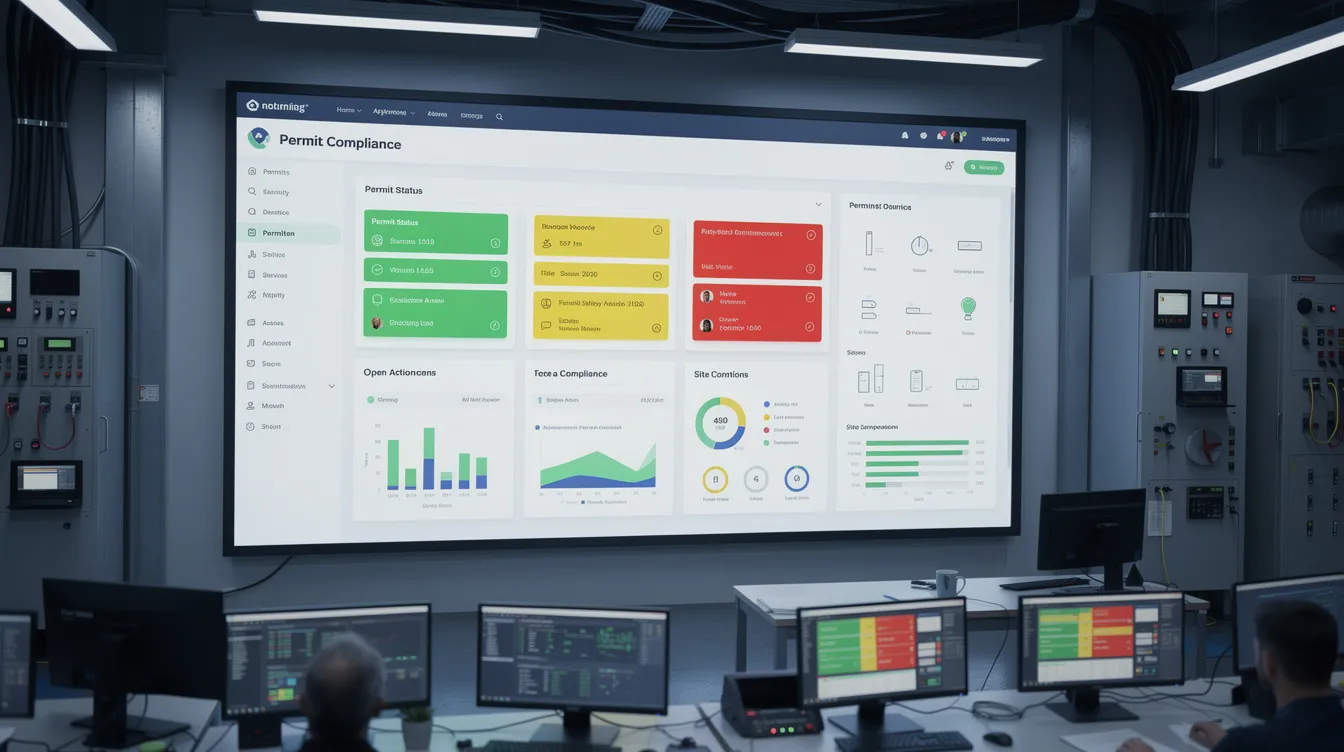
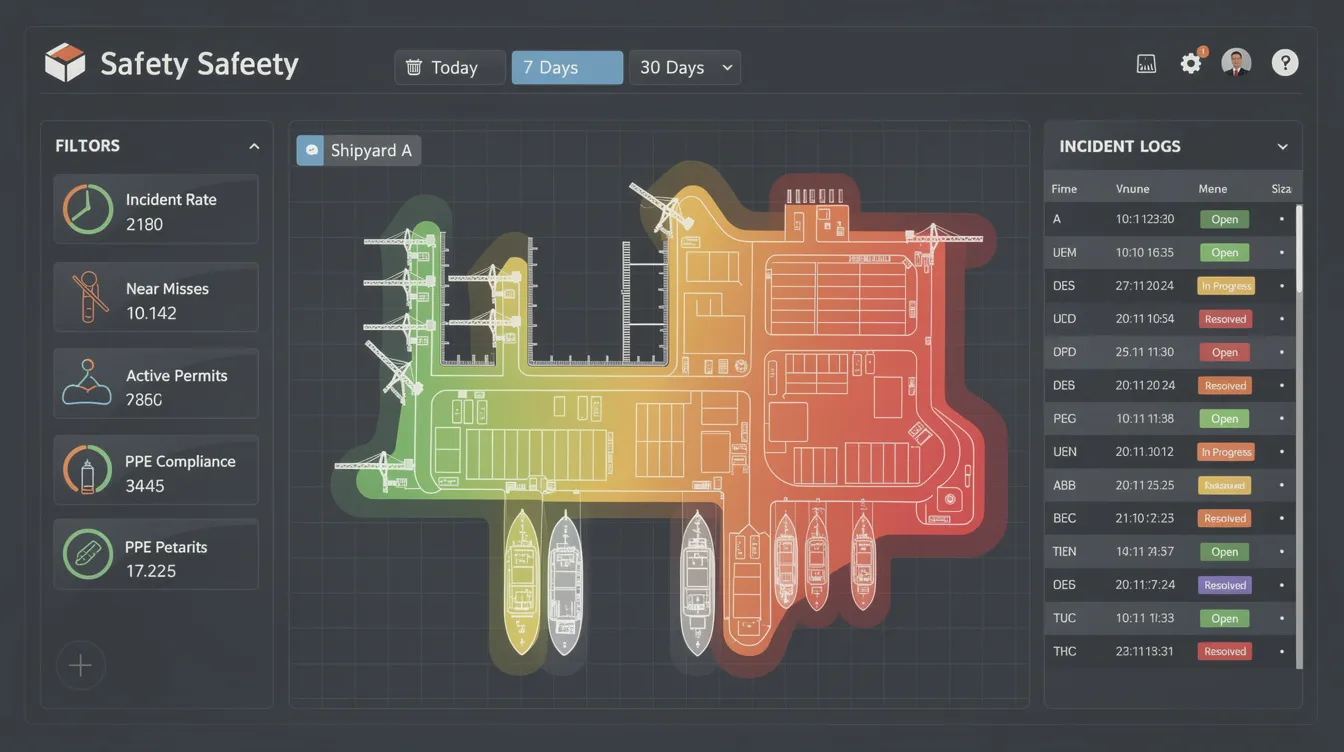
Real-time dashboards powered by LLM analysis can display heatmaps of high-risk zones across the shipyard, types of work permits with the highest recurrence of issues, and live status monitoring of permit trends and high-risk zones-giving supervisors and safety teams actionable visibility into the safety landscape.
Implementation of LLM-Based PTW Auditing Systems
Moving from applications to execution, implementing LLM-based PTW auditing in a Singapore shipyard requires structured planning across data preparation, technology selection, integration, and workforce readiness.
Deployment Process for Singapore Shipyards
Shipyards should consider implementing LLM auditing systems when manual paperwork creates audit backlogs, when compliance detection rates are inconsistent, or when scaling audit capacity for growing project volumes becomes impractical with existing staff.
-
Assess existing PTW documentation systems and data quality. Inventory all permit types and formats-paper forms, digital templates, scanned documents. Evaluate data completeness, legibility (OCR quality for scanned permits), terminology consistency, and the availability of labeled datasets distinguishing compliant from non-compliant permits. Paper based workflows will need digitization before LLM processing can begin. Mobile compatibility and offline access are important for PTW systems in shipyards, so assess field-level technology readiness simultaneously.
-
Select and configure the LLM model. Decide between a foundation model (such as GPT-4 or an open-source alternative like Llama) fine-tuned on your domain corpus versus a proprietary safety-domain model. Implement RAG pipelines that ensure the model references current MOM regulations, WSH shipbuilding regulations, and your internal policies. Include confidence scoring and source citation mechanisms so that every flag traces back to a specific regulatory clause or policy reference. Traditional Learning Management Systems are not designed for real-time Permit-to-Work execution-the LLM platform must be purpose-built for document analysis workflows.
-
Integrate with current PTW software platforms and shipyard management systems. Build APIs or middleware connecting the LLM to your e PTW system, scheduling databases, HR and contractor management systems, and safety incident records. This integration enables the LLM to access real time status of active PTWs, verify personnel qualifications against training databases, and check equipment certifications. Role-based permissions help in restricting access to Permit-to-Work systems based on personnel qualifications.
-
Pilot test with selected projects. Choose specific vessel maintenance projects or hot work operations for parallel testing-run LLM auditing alongside manual review. Measure processing time, detection accuracy, false positive and false negative rates, and user acceptance among safety officers. PTW applications must be submitted by contractors, so include contractor-submitted permits in the pilot scope. Batch training modules via LMS can enhance the safety competency of workers in shipyards during this transition period.
-
Deploy fully with comprehensive training programs. Roll out across all PTW processes with structured training for permit issuers, safety assessors, and supervisors. Clarify that human oversight remains essential-the LLM augments rather than replaces the safety assessor’s judgment. Digital audit trails capture key information like time and location verification, ensuring the system meets documentation standards from day one. Companies save over 90 minutes per PTW application with digital systems, and these efficiency gains should be communicated clearly to all stakeholders involved.
Technology Comparison for Shipyard Environments
|
Criterion |
Traditional Manual Auditing |
LLM-Enhanced Auditing |
|---|---|---|
|
Processing Speed |
2–3 days per vessel audit |
4–6 hours automated review |
|
Compliance Detection Rate |
~85% detection rate |
~95% automated detection |
|
Cost per Audit Cycle |
S$2,500–4,000 |
S$800–1,200 |
|
Review Time Reduction |
Baseline |
~68% reduction (per audit documentation studies) |
|
Conflict Detection |
Manual cross-checking, prone to oversight |
Automated spatial and schedule-based conflict identification |
|
Audit Trail Quality |
Dependent on individual assessor documentation |
Automated, timestamped, source-linked records |
|
Scalability |
Linear with headcount |
Scales with computing resources |
Analogous compliance review implementations demonstrate these gains concretely. A regulated-industry case study by Kaivex achieved approximately 70% reduction in document review cycle time using LLM-assisted triage with human-in-the-loop controls, reducing backlogs from 11 days to under 3 days. A machine-learning-enhanced audit documentation study reported 91.4% classification accuracy, 94.2% recall for high-risk documents, and 68% reduction in review time. Research by Jezierski et al. found that access to firm-specific LLMs improves audit output quality and reduces task completion time across auditor experience levels.
ePTW systems save over 5,000 hours of downtime annually. Digital PTW systems reduce administration costs by up to 80%. The hybrid approach-LLM processing combined with human expert review-consistently yields the best outcomes, pairing high automated accuracy with the contextual judgment that only qualified personnel can provide.
PTW approval duration can vary from hours to days under traditional methods. Digital approvals streamline the permit application process, and when combined with LLM-powered audit verification, the entire cycle from submission to approved status compresses dramatically. Digital signatures cut permit approval delays from days to minutes. Real-time tracking enhances workplace safety and compliance, and real-time dashboards improve visibility of permit statuses across the entire shipyard operation.
The efficiency case is clear, but implementation comes with challenges that shipyard managers must address proactively.
Common Challenges and Solutions for LLM PTW Auditing
Every Singapore shipyard implementing LLM-based PTW auditing will encounter obstacles rooted in data quality, legacy infrastructure, workforce adaptation, and regulatory expectations. Here are the most common challenges with proven solutions.
Data Quality and Permit Documentation Standardization
Inconsistent permit documents-different templates across vessel types, missing fields, non-standard terminology-complicate LLM training and reduce output reliability. Scanned or handwritten paper forms produce poor OCR results that degrade analysis accuracy.
Solution: Implement structured data collection protocols and standardize permit templates across all vessel types and work activities before LLM deployment. Migrate from paper based workflows to digital permit to work software with mandatory field completion. Establish a data governance framework that defines terminology standards, required fields for each permit type, and quality thresholds for the integrated risk assessments that feed into the LLM. ePTW systems eliminate manual paperwork and reduce delays, and this standardization is a prerequisite for LLM effectiveness. Digital PTW systems can reduce application time significantly once standardized templates are in place.
Integration with Legacy Shipyard Management Systems
Many shipyards still operate with fragmented systems-separate databases for scheduling, contractor management, personnel records, and PTW records-that lack modern API capabilities. Real-time performance issues with LLM processing of large permit batches add technical complexity.
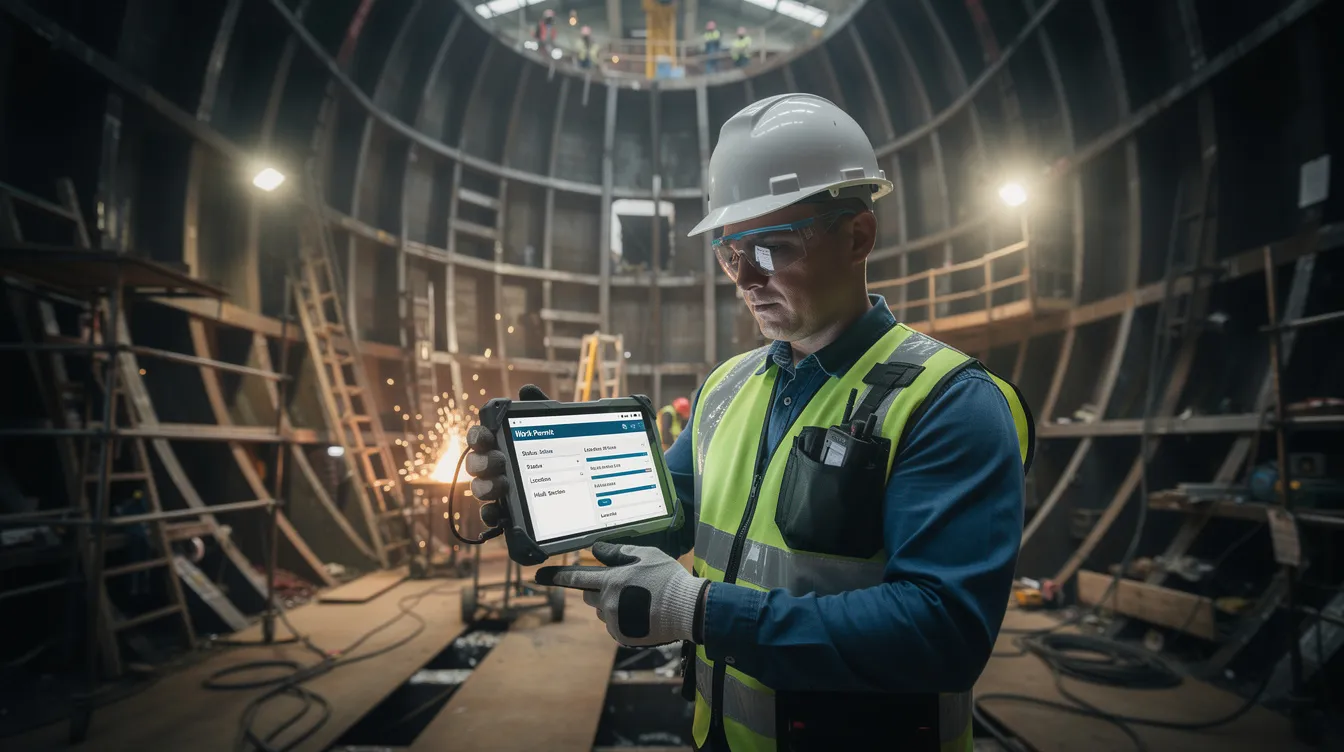
Solution: Deploy API middleware solutions and adopt a gradual migration strategy to connect LLM platforms with existing PTW databases. Start with read-only integration that allows the LLM to access permit data without modifying source systems, then expand to bidirectional data flow as confidence grows. Address latency through efficient prompt engineering, caching strategies, and infrastructure sizing appropriate to your permit volume. Consider cloud-based deployment for scalability, with mobile device approval capabilities for on site permit processing. Automated workflows ensure compliance with safety protocols while maintaining system performance under load.
Staff Training and Change Management
Resistance to AI-assisted review is common among experienced safety officers who rightfully take pride in their expertise. Without proper change management, LLM tools face low adoption rates regardless of their technical capability.
Solution: Develop comprehensive training programs for safety officers and implement phased rollout with continuous support. Run pilot projects where the LLM operates alongside manual review, allowing PTW users to see the system’s value firsthand. Emphasize that the LLM handles volume-intensive documentation review while safety assessors retain authority over judgment calls, site verification, and critical safety decisions. Frame the technology as a tool that elevates their role from administrative document checking to strategic risk management. Competency verification is essential before issuing high-risk permits in Singapore-the LLM supports this verification but does not replace the human assessor’s responsibility.
Regulatory Compliance and MOM Approval Requirements
Any automated auditing tool must produce reports traceable to source documents, maintain version history, and meet the documentation standards required under the WSH Act. The legal responsibility for PTW decisions remains with the safety assessor, not the AI system, and those decisions should also verify personnel qualifications and machinery certifications to help minimise accident risks.
Solution: Ensure LLM audit trails meet WSH Act documentation standards by implementing source citation for every flag, confidence scoring for all findings, and complete version history of model updates and regulatory text changes. Maintain human oversight as a non-negotiable element of the work system-role based workflows should require safety assessor sign-off on all LLM-generated findings before they become part of the official audit record. Keep regulatory text repositories current through automated monitoring of MOM circulars and regulation amendments. Address data privacy by implementing secure handling protocols for sensitive permit data including vessel identities and contractor details. This approach supports the audit readiness that effective safety management systems require.
Real-time tracking reduces risks of accidents and injuries when these challenges are properly addressed, enabling the safe execution of LLM-enhanced auditing at scale.

Conclusion and Next Steps
LLM-enhanced PTW auditing offers Singapore shipyards a proven path to faster processing (approximately 70% reduction in review cycles), higher compliance detection accuracy (~95% for common issues), and substantially reduced administration costs-an 80% reduction in administration costs with digital permit systems is achievable. These gains directly support workplace safety outcomes by ensuring that risk assessments are complete, potential conflicts between work permits are detected before work begins, and audit documentation meets the strict standards that MOM and WSH regulations require across various industries.
Faster submission and approval cycles enhance project efficiency, and the productivity gains compound across sites managing hundreds of active permits. 5,000+ hours of downtime saved annually with digital permit approvals represents a tangible operational improvement that justifies the investment in LLM technology.
Immediate actionable steps:
-
Conduct a current PTW system assessment – audit your existing permit documentation formats, data quality, and system integration architecture to establish a baseline for LLM readiness
-
Identify data standardization requirements – map all permit templates, close permits procedures, and reporting formats to create the structured data foundation LLMs require
-
Pilot an LLM solution on selected vessel projects – choose 2–3 vessel maintenance or hot work operations for parallel testing, measuring time savings, detection rates, and user acceptance against your current ptw process
-
Engage stakeholders early – brief safety teams, supervisors, and management on the technology’s capabilities and limitations to build the organizational support essential for successful deployment
Related topics worth exploring include AI-powered safety technology for construction and industrial environments, the future of EHS technology integration in Singapore, and advanced WSH risk management approaches that complement LLM-based auditing systems. Over the next two to three years, expect Singapore shipyards to increasingly adopt hybrid LLM auditing tools, domain-adapted models trained on maritime safety data, and potentially regulatory guidance from MOM on AI-assisted auditing standards-including emerging research like the SafeMTS initiative applying LLMs to maritime near-miss data analysis.
Additional Resources
-
WSH (Shipbuilding and Ship-Repairing) Regulations 2008, Part IV – Singapore’s statutory permit-to-work requirements for shipyard high-risk work
-
WSH Manual for Marine Industries – Detailed PTW procedure guidelines published by the WSH Council
-
MOM SHMS Audit Requirements – Safety and Health Management System obligations for shipyards
-
Tripartite Guide: Permit-to-Work – MOM publication covering PTW auditing and monitoring requirements
-
Guide to Workplace Risk Assessments – Practical risk assessment guidance for Singapore workplaces