

The top safety training topics 2026 compliance managers must address are defined by OSHA’s most-cited violations, newly regulated psychosocial hazards, and a fundamental shift from attendance-based completion to demonstrated competency. Fall protection, hazard communication, lockout/tagout, respiratory protection, and heat illness prevention form the regulatory backbone of any credible 2026 workplace safety program. Layered on top are emerging priorities like lone-worker safety, mental health awareness, and microlearning delivery formats that regulators and industry leaders now treat as non-negotiable. Safety officers who align their training calendars with these priorities will satisfy audit requirements and build measurable competence across their workforce.
1. Why fall protection remains the top safety training priority
Fall protection is the single most-cited OSHA violation for the fifteenth consecutive year. 5,914 documented citations under 29 CFR 1926.501 were recorded in 2026 alone. That volume confirms that training gaps in this area are systemic, not isolated.
Effective fall protection training under 29 CFR 1926.503 must cover four core competencies:
- Hazard recognition: Workers must identify unprotected edges, floor openings, and leading-edge conditions before work begins.
- Equipment use and limitations: Training must address the correct selection, inspection, and donning of personal fall arrest systems, guardrails, and safety nets.
- Rescue planning: Workers and supervisors must know the site-specific rescue procedure before any elevated work starts. Post-arrest suspension trauma is a documented medical risk that many programs still omit.
- Compliance documentation: Training records must be signed, dated, and retained to satisfy inspection requirements.
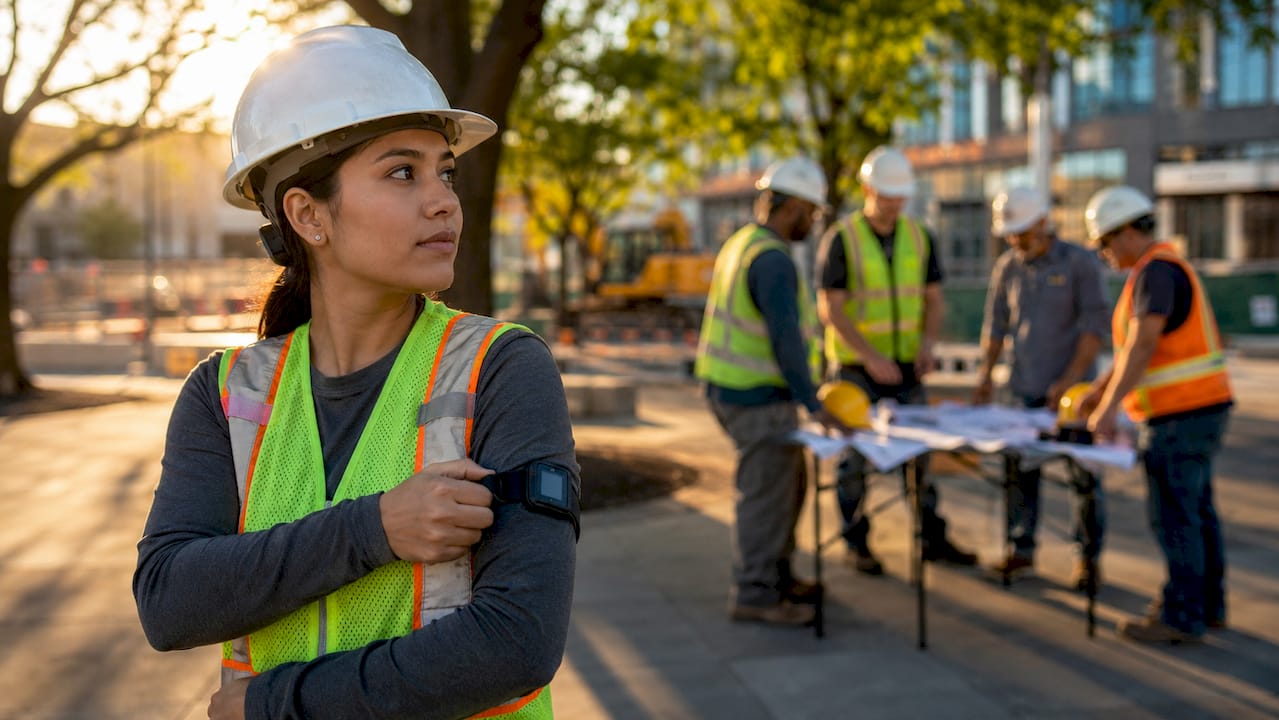
Construction sites increasingly use wearable sensors and drone-based inspections to identify fall hazards in real time. These tools generate data that can sharpen training content by revealing which hazard types workers encounter most frequently. For construction teams managing common site hazards, integrating this data into training design is now a recognized best practice.
Pro Tip: Schedule fall protection refresher training whenever site conditions change significantly, such as when new floor openings are created or scaffolding configurations are altered. Waiting for the annual cycle creates a compliance gap.
2. Hazard communication, lockout/tagout, and respiratory protection
Three of OSHA’s top ten most-cited violations carry mandatory training requirements that safety coordinators must address in every annual program. Fall protection, hazard communication, lockout/tagout, and respiratory protection all rank among the most frequently cited standards, making them the structural core of any best safety training program.
Hazard communication (HazCom) training must now align with GHS Revision 7, which introduced updated label elements and Safety Data Sheet formatting. Training must be refreshed whenever new chemicals are introduced to the workplace. Multilingual training materials are not optional on sites with diverse workforces. They are a compliance requirement under OSHA’s HazCom standard.
Lockout/tagout (LOTO) training requires annual retraining for authorized and affected employees. The most common violations involve failure to verify zero-energy state before work begins and inadequate documentation of energy control procedures. Training must include hands-on practice with site-specific equipment, not generic demonstrations.
Respiratory protection presents a persistent challenge because fit testing and medical evaluation requirements are frequently overlooked. Training must cover respirator selection, donning and doffing sequences, storage, and the limitations of each respirator type. Workers who use tight-fitting respirators must be fit-tested annually and whenever their facial structure changes significantly.
Eye, face, and body PPE training must specify the correct protection class for each task. Chemical splash, impact, and radiation hazards each require different equipment. Documenting which PPE is required for each job task, and training workers to that standard, closes the gap between policy and practice.
3. Emerging safety training trends for 2026
The 2026 regulatory environment has expanded the definition of workplace safety well beyond physical hazards. Psychosocial hazards, lone-worker safety, and heat stress now receive explicit regulatory scrutiny, and safety officers who omit them from training plans face both compliance exposure and genuine workforce risk.
Key emerging topics every training coordinator should address this year:
- Psychosocial hazards and mental health: Regulatory bodies in multiple jurisdictions now require employers to assess and control psychosocial risks including chronic workload pressure, workplace violence, and fatigue. Training must teach workers to recognize symptoms and report concerns through defined channels.
- Heat illness prevention: The introduction of OSHA’s Heat Illness Prevention Standard means supervisor-specific heat training is now a regulatory expectation. Supervisors must understand acclimatization schedules, early warning signs, and their authority to halt work when heat index thresholds are exceeded.
- Lone-worker safety: Workers operating without direct supervision require dedicated risk assessment, check-in protocols, and communication technology training. This topic is particularly relevant in construction, utilities, and field service environments.
- Microlearning delivery: Short 2–5 minute sessions delivered at shift start are now recommended for high-stakes, low-frequency skills such as CPR, severe bleeding control, and emergency shutdown procedures. Frequency of exposure matters more than session length for skill retention.
Pro Tip: For psychosocial hazard training, use anonymous scenario-based exercises rather than open group discussions. Workers are significantly more likely to engage honestly when the format removes personal exposure.
4. How technology is transforming workplace safety training
The shift from seat-time compliance to competency-based evaluation is the defining structural change in 2026 workplace safety courses. Completion certificates no longer satisfy auditors who expect behavioral demonstration tied to specific standard operating procedures.
| Training Method | Primary Strength | Primary Limitation |
|---|---|---|
| Traditional classroom | Instructor interaction, group discussion | Scheduling constraints, passive learning |
| Mobile-first e-learning | Anytime access, real-time SOP reference | Requires device access and digital literacy |
| Immersive simulation (VR) | High-fidelity hazard exposure without risk | High setup cost, limited scenario library |
| AI-driven microlearning | Personalized content, adaptive pacing | Requires quality content architecture |
| Blended learning | Combines theory with hands-on assessment | Requires coordination between delivery modes |
Mobile-first platforms now allow workers to access SOPs, report hazards with photo documentation and geotags, and complete training modules from the job site. This capability reduces the gap between training and application to near zero. Organizations using these platforms report faster incident investigation cycles because hazard data is already documented and timestamped.
AI chatbots integrated into learning management systems now provide on-demand guidance for workers who encounter unfamiliar hazards between formal training sessions. These tools do not replace structured training. They reinforce it by providing immediate, context-specific answers at the point of need.
Immersive simulation using virtual reality delivers measurable advantages for high-consequence scenarios such as confined space entry, elevated rescue, and chemical spill response. Workers can experience failure conditions without physical risk, which accelerates competency development compared to lecture-based instruction alone.
5. Best practices for building a 2026 safety training program
A successful 2026 safety training program begins with a formal training needs assessment, not a recycled prior-year calendar. The assessment must cross-reference OSHA citation data, incident records, job hazard analyses, and any regulatory changes that took effect since the last program cycle.
Blended learning combining pre-session online theory with in-person practical assessments is now the preferred delivery model for multi-site organizations. It reduces floor time without sacrificing hands-on competency verification. OSHA 10 and OSHA 30 courses provide a useful baseline, but role-specific modules must supplement them for workers in high-hazard positions.
Refresher training frequency must reflect task risk, not calendar convenience. High-risk, low-frequency tasks require more frequent targeted refreshers than annual cycles can provide. Emergency response procedures, confined space rescue, and LOTO verification sequences fall into this category.
Leadership engagement is a core safety culture control, not an optional program feature. Visible stop-work authority exercised by supervisors and senior managers signals to the workforce that safety training translates directly into operational decisions. Organizations where leadership participates in training exercises consistently outperform those where training is delegated entirely to safety officers.
Pro Tip: Build your training needs assessment around your last three years of incident data and your most recent OSHA inspection findings. This approach produces a defensible, data-driven training calendar that withstands regulatory scrutiny.
For organizations managing contractor compliance across multiple sites, standardizing the training needs assessment process across all contractors is the fastest way to close systemic competency gaps. Inconsistent contractor training is one of the most common sources of repeat OSHA citations in the construction sector.
Understanding how training drives compliance at the site level requires connecting training records to inspection outcomes and incident rates. Organizations that track this relationship can demonstrate training ROI to leadership and justify program investment with quantitative evidence.
Key takeaways
Effective 2026 safety training programs integrate OSHA’s top-cited violation areas with emerging hazard categories and competency-based delivery methods to produce measurable, audit-ready workforce performance.
| Point | Details |
|---|---|
| Fall protection leads all priorities | 5,914 OSHA citations in 2026 confirm this topic demands annual, role-specific training and refreshers tied to site changes. |
| Core OSHA topics remain non-negotiable | HazCom, LOTO, and respiratory protection require current content, multilingual materials, and hands-on verification. |
| Emerging risks require explicit inclusion | Psychosocial hazards, heat stress, and lone-worker safety must appear in 2026 training plans to satisfy regulatory scrutiny. |
| Competency replaces completion | Task-based evaluations and simulation replace seat-time hours as the accepted standard for demonstrating training effectiveness. |
| Blended and mobile delivery wins | Combining online theory with in-person assessment reduces floor time while improving knowledge retention and audit readiness. |
The case for treating training as a risk control, not a compliance task
I have reviewed training programs across construction, manufacturing, and utilities sectors for years, and the pattern that consistently separates high-performing safety cultures from chronically non-compliant ones is not budget or technology. It is intent.
Organizations that treat training as a risk control measure design it differently. They ask what competency the worker needs to demonstrate, then work backward to the content and delivery format. Organizations that treat training as a compliance task ask how many hours are required, then fill them with slides.
The technology available in 2026, from AI-driven microlearning to VR simulation, is genuinely powerful. However, I have seen organizations deploy sophisticated platforms while their workers still cannot correctly don a full-face respirator or identify a lockout point. The tool does not create competency. The design of the learning experience does.
The emerging topics, particularly psychosocial hazards and heat stress, deserve more than a module added to the end of an existing program. They represent a regulatory and ethical obligation to address the full spectrum of harm workers face. Safety officers who integrate these topics early will be ahead of enforcement timelines, not reacting to them.
— Aman
How Com supports your 2026 safety training program
Building a training program that satisfies OSHA priorities, addresses emerging risks, and demonstrates genuine competency requires more than a content library. It requires a structured consultancy approach that connects regulatory requirements to your specific workforce, site conditions, and audit obligations.

Com provides safety consultancy services tailored to construction and industrial organizations navigating the 2026 regulatory environment. From training needs assessments aligned with current OSHA and WSH standards to safety audit examples that identify competency gaps before inspectors do, Com’s approach connects training design directly to compliance outcomes. Contact Com to assess your current program and build a 2026 training calendar that holds up under scrutiny.
FAQ
What is the number one OSHA safety training topic in 2026?
Fall protection under 29 CFR 1926.501 is the top-cited OSHA violation in 2026, with 5,914 documented citations. Training must cover hazard recognition, equipment use, and site-specific rescue planning.
How often should safety training refreshers be scheduled?
Refresher frequency must match task risk. High-risk, low-frequency tasks such as emergency response and LOTO procedures require more frequent refreshers than annual cycles. Short 2–5 minute sessions before shifts are recommended for critical skills.
What are the emerging safety training topics for 2026?
Psychosocial hazards, heat illness prevention, and lone-worker safety are the three emerging areas receiving explicit regulatory attention in 2026. Safety officers should incorporate these into training plans alongside traditional OSHA-mandated topics.
What does competency-based training mean in practice?
Competency-based training requires workers to demonstrate specific behaviors tied to standard operating procedures, not simply complete a set number of training hours. Task-based evaluations and simulation exercises are the accepted methods for verification.
How does blended learning improve safety training outcomes?
Blended learning combines online pre-session theory with in-person practical assessments, reducing floor time while maintaining hands-on competency verification. Organizations using this model report improved knowledge retention and more efficient multi-site scheduling.