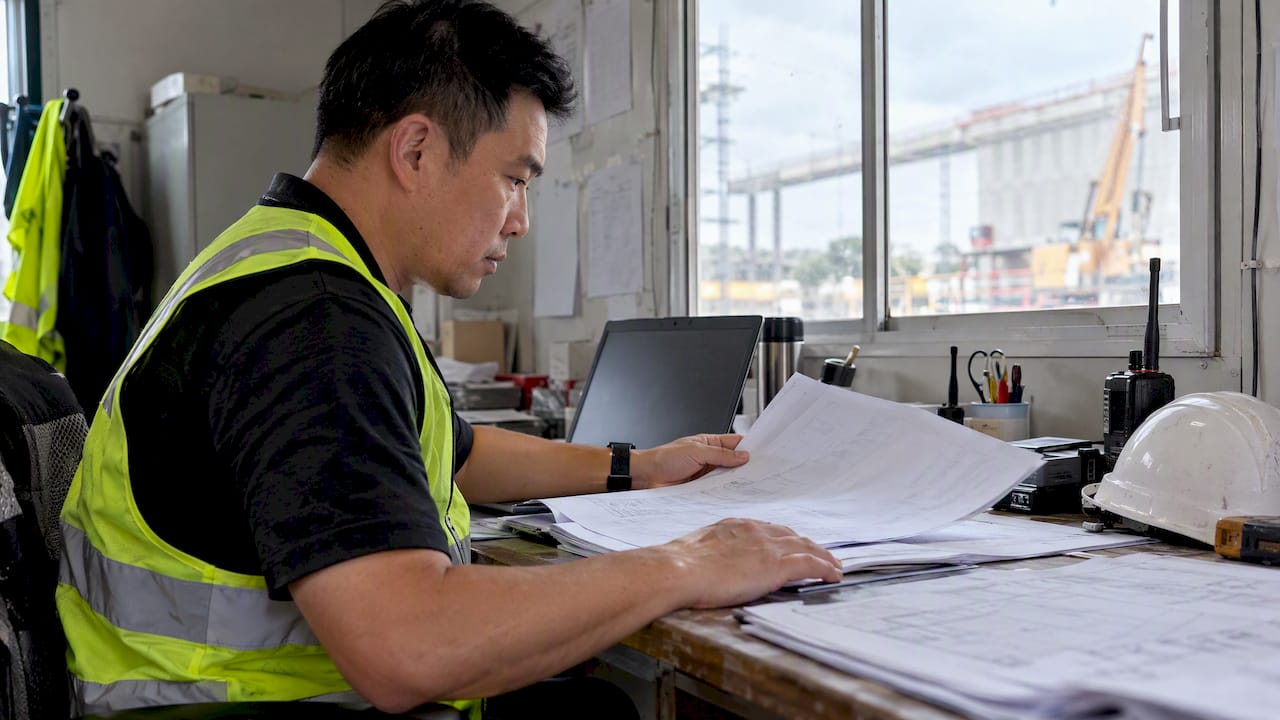

The Role of a WSH Consultant: When to Outsource vs. Hire an In-House Safety Officer
The Evolving Workplace Safety Landscape
Workplace safety is a fundamental pillar of operational success. Global regulatory bodies constantly introduce stringent safety mandates. Consequently, organizations face a highly critical strategic personnel decision. They must choose between two primary safety leadership models. Companies can hire a dedicated in-house safety officer. Alternatively, they can outsource to a professional WSH consultant.
Outsourcing safety management is becoming increasingly popular globally.1 Modern businesses must navigate a complex web of legislation. Therefore, choosing the correct safety leadership model is vital. This exhaustive report analyzes the role of a WSH consultant. It compares outsourcing against hiring an in-house safety officer.
Financial, legal, and operational metrics are evaluated in detail. Furthermore, this report examines global regulatory compliance frameworks. Consequently, organizations can make highly informed strategic personnel decisions.
Defining the In-House Safety Officer
Understanding the distinct differences between these roles is crucial. An in-house safety officer is a direct company employee.2 They oversee daily workplace safety and health risks internally.3 Their primary function is driving continuous safety performance improvements.3
In Singapore, this role involves strict legal requirements.3 The Ministry of Manpower strictly regulates these safety professionals.3 High-risk worksites require a mandatory registered WSH Officer.4 For example, massive construction sites urgently need them.4 Specifically, construction contracts exceeding $10 million require appointed officers.4
Shipyards and petroleum processing factories also require safety officers.5 Furthermore, any factory employing over 100 persons requires one.5 An in-house safety officer manages hazards daily.3 They implement critical risk-based controls to prevent occupational diseases.3 Moreover, they ensure absolute compliance with industry safety guidelines.3
Becoming a registered safety officer requires specific formal qualifications.3 Candidates must be at least 21 years of age.3 They must hold a recognized diploma or higher qualification.3 Additionally, they must complete an approved WSH Officer course.3 Finally, they need at least two years of experience.5
Defining the WSH Consultant
A WSH consultant operates as an external, independent expert.4 They provide specialized advisory services across multiple different projects.2 A WSH consultant conducts high-level safety audits and assessments.4 Furthermore, they design comprehensive Workplace Safety and Health Management Systems.6
They are heavily utilized for complex compliance risk management.2 A WSH consultant develops robust safety policies and procedures.7 They ensure corporate rules align with national safety regulations.7 Moreover, they evaluate incident reports and perform root-cause analyses.6
These professionals offer high-level strategic safety planning for executives.8 A WSH consultant advises on highly complex, high-risk operations.8 Smaller construction sites often use a WSH consultant extensively.4 The consultant guides internal WSH Coordinators on daily operations.4
External consultants maintain immense knowledge of changing legislative requirements. Therefore, they prepare organizations for highly rigorous external audits.9 Ultimately, a WSH consultant builds resilient corporate safety cultures.10 The global demand for these specialized services is massive.1 The keyword “safety consultant” generates 4,400 monthly global searches.1
The Financial Matrix: Cost Comparison
The financial implications of safety management are massive. Organizations must carefully weigh the costs of internal hiring. Conversely, they must evaluate the strategic ROI of outsourcing.
The Costs of an In-House Safety Officer
Hiring an in-house safety officer requires a massive commitment. Employers must pay a highly competitive full-time annual salary.11 Beyond the base salary, companies fund expensive health insurance.11 They must also provide paid time off and retirement plans.11
Furthermore, onboarding a new safety officer is notoriously lengthy.11 It can take several months to integrate them fully.11 Employers must also pay for continuous professional development courses.11 These courses are strictly required to maintain regulatory certifications.11
Turnover rates are traditionally very high in heavy industries.11 When an in-house safety officer resigns, operations stall immediately.11 Consequently, companies face recurring, expensive recruitment and replacement costs.11
The Cost Efficiency of Outsourcing
Outsourcing safety management is often a much more economical choice.12 Companies entirely avoid the massive overhead of full-time staff.11 A WSH consultant is typically paid on a per-project basis.11 Alternatively, they can be retained on flexible monthly contracts.11
Therefore, organizations only pay for services when truly needed.11 The financial burden of employee benefits is completely eliminated.11 Professional development and training costs are absorbed by the consultant.11
Annual cost savings from outsourcing can reach $85,000.11 These substantial savings directly drive higher corporate profit margins.11 Furthermore, outsourcing transforms fixed safety overheads into variable costs. Small businesses significantly benefit from this flexible pricing model.13
| Financial Metric | In-House Safety Officer | Outsourced WSH Consultant |
| Base Remuneration | High fixed annual salary | Variable pay-per-project fees |
| Employee Benefits | Health, PTO, Retirement matching | Zero benefit costs required |
| Training Expenses | High employer-sponsored costs | Consultant completely self-funds |
| Turnover Liability | High operational disruption risk | Agency guarantees continuous coverage |
| Financial Scalability | Highly rigid overhead costs | Highly flexible and adjustable |
| Overall Expenditure | Premium long-term investment | Potential savings of $85,000/year |
Operational Advantages of Outsourcing
Beyond mere financial savings, outsourcing provides incredible operational advantages. A WSH consultant brings unparalleled depth of expertise.11
Unmatched Depth of Expertise
An in-house safety officer possesses only individual limited knowledge.11 Conversely, an outsourced firm provides an entire expert team.11 This established team offers decades of combined industry experience.11
They provide in-depth guidance on highly complex safety regulations.11 A WSH consultant implements comprehensive safety programs with absolute precision.11 They help avoid costly accidents and maintain project schedules.11
Immediate Deployment and Speed
The internal hiring process causes severe, lengthy project delays.11 Background checks and internal onboarding consume highly valuable time.11 However, a WSH consultant can start work almost immediately.11
They arrive on-site fully certified and completely ready.11 This immediate start is absolutely ideal for urgent needs.11 They can instantly provide vital safety education to workers.11
Access to Massive Resource Libraries
Internal safety departments utilize limited materials created from scratch.11 Building these internal safety resources is highly inefficient.11 A WSH consultant brings a massive, pre-existing resource library.11
They possess highly customizable safety templates and inspection checklists.11 Furthermore, they provide legally vetted site-specific safety plans instantly.11
Reduced Legal Liability
When using an outsourced service, legal liability significantly shifts.14 Liability is partially transferred to the professional consulting provider.14 This minimizes the company’s legal exposure during unexpected accidents.14
Business owners gain immense peace of mind through outsourcing.11 They can focus entirely on their core operational activities.11 External professionals manage the safety department’s overall performance strictly.11
Operational Advantages of In-House Hiring
Despite the massive benefits of outsourcing, in-house hiring remains viable. Certain specific organizational structures require constant internal safety supervision.
Deep Cultural Alignment
An in-house safety officer provides immediate, direct operational control.14 They integrate deeply into complex daily corporate operations seamlessly.14 Furthermore, they quickly learn the highly specific job complexities.14
Internal officers develop much closer personal connections with workers.14 Therefore, they are more likely to embrace company values.14 This deep cultural alignment leads to highly effective behavioral changes.14
Immediate Emergency Response
Because they are integrated internally, they respond to emergencies faster.14 They are physically present to manage growing safety concerns.14 They do not require any travel time to arrive.
Large manufacturing plants usually require custom in-house safety programs.12 Chemical plants have highly unique risks needing constant monitoring.12 For these highly specialized needs, an internal officer is essential.12
Singapore Workplace Safety Statistics
Analyzing national statistics emphasizes the critical need for safety professionals. Singapore reported a workplace fatality rate of 0.99 in 2023.3 This rate is calculated per 100,000 active workers.3 However, the nation still recorded 36 fatal workplace incidents.3
Furthermore, there were 590 major injuries during that year.3 Minor workplace injuries exceeded 22,000 individual reported cases.3 Occupational diseases also remain a very significant corporate concern.3 There were over 1,200 confirmed occupational disease cases in 2023.3
Noise-induced deafness accounted for over 800 of these cases.3 Additionally, work-related musculoskeletal disorders are rising rapidly across industries.3 Singapore confirmed 353 such musculoskeletal cases in 2023 alone.3 This represents a severe incidence rate of 29.7 cases.3
Between 2020 and 2023, cases averaged 350 annually.3 The majority were severe back injuries from heavy lifting.3 These alarming statistics highlight the urgent need for safety experts. Employers must implement robust, proactive hazard mitigation strategies immediately.
Identifying Common Workplace Hazards
Hazard identification is the core duty of any safety professional. Workplaces contain numerous hidden dangers that cause severe injuries.
| Hazard Category | Specific Workplace Examples | Mitigation Strategy |
| Physical Hazards | Noise, heat, poor lighting, severe fire risks | Routine physical environment inspections |
| Mechanical Hazards | Unguarded equipment, rotating machinery parts | Strict machine guarding and lockouts |
| Electrical Hazards | Exposed wiring, overloaded electrical sockets | Regular electrical safety testing |
| Chemical Hazards | Toxic solvents, fumes, flammable cleaning agents | Proper ventilation and strict labeling |
| Biological Hazards | Viruses, dangerous mould, contaminated waste materials | Biohazard containment and deep sanitation |
| Ergonomic Hazards | Prolonged sitting, repetitive movements, manual lifting | Workstation redesign and posture training |
| Psychosocial Hazards | Chronic stress, severe fatigue, workplace violence | Mental health support and scheduling |
A WSH consultant systematically assesses work activities and environments.3 They identify slips, trips, and falls on wet surfaces.3 Furthermore, they identify dangerous work-at-height hazards on construction sites.3
They conduct routine site inspections and gather vital worker feedback.3 Moreover, they analyze incident and near-miss data continuously.3 This proactive approach prevents accidents before they occur physically.3
The Five-Point Fall Prevention Strategy
Slips, trips, and falls consistently rank among top injury causes.3 A WSH consultant implements a strict five-point prevention checklist.3 Employers can significantly strengthen their fall-prevention programs utilizing this.3
First, footwear must be checked thoroughly every single week.3 Workers must wear non-slip shoes that fit them perfectly.3 Second, the physical environment must be verified daily.3 Floors must remain completely dry and pathways clutter-free.3
Third, worker fatigue must be managed every single shift.3 Management must set strict break schedules and hydration reminders.3 Fourth, general safety awareness requires ongoing, strict corporate enforcement.3 Workplaces must enforce a strict “no phone use” policy.3
Fifth, physical balance should be checked frequently by supervisors.3 Teams should conduct quick stretches before their shift starts.3 A WSH consultant effectively integrates these rules into daily operations.3
Mitigating Ergonomic and Psychosocial Hazards
Modern safety extends far beyond simple physical hazard prevention today. Psychosocial hazards cause gradual, severe harm to the workforce.3 Work-related stress and excessive workloads are massive psychosocial hazards.3
Constant time pressure and extreme fatigue severely degrade employee health.3 Two in five employees in Singapore struggle with mental health.3 Chronic stress, severe anxiety, and clinical depression are incredibly common.3
Prioritizing mental wellness is highly beneficial for corporate financial returns.3 Companies investing in well-being see a 20% financial increase.3 Neglecting mental health leads directly to greatly increased sick leave.3 It causes high absenteeism, massive staff turnover, and low morale.3
Implementing Mental Health Interventions
A WSH consultant implements three distinct tiers of workplace interventions.3 Primary prevention is designed to proactively reduce general workforce risk.3 This includes wellness workshops and dedicated mental health recovery days.3
Secondary intervention targets individuals showing early signs of distress.3 This involves regular mental health check-ins and anonymous self-assessments.3 Tertiary support provides direct therapeutic assistance for existing clinical conditions.3
This includes one-on-one professional counseling and dedicated peer support groups.3 Workplaces must actively promote true psychological safety within their teams.3 A WSH consultant integrates psychosocial factors into formal risk registers.3
Conducting Dynamic Risk Assessments
Risk assessments must never be treated as mere paperwork formalities.3 A WSH consultant ensures they remain dynamic, living operational documents.3 They must be reviewed before any new work activities commence.3
Furthermore, they must be updated following any workplace incidents.3 Organizations must continuously evaluate the likelihood and severity of harm.3 A standard risk assessment follows six highly structured steps.3
First, hazards are identified through active observation of tasks.3 Second, the specific risk level is formally evaluated.3 Third, practical risk control measures are determined and executed.3 Effective controls follow a strict hierarchy from elimination to PPE.3
Fourth, comprehensive documentation is recorded in the official safety register.3 Fifth, identified risks and controls are communicated to all employees.3 Sixth, controls are continuously reviewed for ongoing operational effectiveness.3
Developing Site-Specific Safety Plans
A WSH consultant often drafts highly detailed site-specific safety plans.11 An SSSP outlines comprehensive safety details for specific construction projects.11 General contractors strictly require subcontractors to complete an SSSP.11
Old safety plans must never be reused entirely across projects.11 Each individual project requires a highly unique, customized safety plan.11 Creating these plans from scratch requires immense time and effort.11 A WSH consultant accelerates this process using vast resource libraries.11
| SSSP Component | Detailed Description Requirements |
| Project Overview | Job location, start dates, and key management contact details |
| Scope of Work | Exact types of work performed and specific crew sizes |
| Safety Representation | Name and authority level of the primary site safety contact |
| Medical Services | Location of the nearest hospital and first aid policies |
| PPE Requirements | List of required gear and disciplinary actions for non-compliance |
| Fall Management | Details on guardrails, safety nets, and travel restriction systems |
| Emergency Protocols | Step-by-step notification procedures and emergency site evacuation routes |
| Hazard Communication | Information on hazardous chemicals and waste containment procedures |
Singapore Regulatory Framework: Demerit Point System
Singapore strictly enforces the WSH Demerit Point System globally.6 This system penalizes corporate safety non-compliance highly proactively.6 The Ministry of Manpower targets a company’s migrant labor access.6
Accumulating demerit points threatens business continuity and profitability severely.6 Points are awarded depending on the severity of the incident.6 A composition fine generates one demerit point immediately.6 A partial stop-work order generates five demerit points instantly.6
Furthermore, a full stop-work order generates ten demerit points.6 Major injury prosecution generates twenty-five demerit points upon MOM’s decision.6 Accidents causing multiple deaths generate fifty severe demerit points.6
These points remain active for eighteen rolling months consecutively.6 Accumulating 25 points triggers immediate Phase 1 corporate debarment.6 Consequently, companies cannot hire new migrant workers for three months.6
Accumulating 50 points triggers the severe Phase 2 corporate debarment.6 This entirely bans new migrant hires for six full months.6 Repeat offenders enter the Business Under Surveillance (BUS) program.6
Their company names are publicly listed online for everyone.6 This severely damages brand reputation and ruins future tender eligibility.6 A WSH consultant actively prevents these catastrophic regulatory corporate failures.6
US Regulatory Framework: OSHA General Duty Clause
In the USA, safety is guided by strict federal OSHA standards.8 Employers must keep job sites completely hazard-free at all times.8 Breaking OSHA rules leads to fines exceeding $150,000 per violation.8
OSHA relies heavily on the General Duty Clause for enforcement.15 Section 5a1 of the OSH Act is incredibly broad and powerful.16 Employers must provide employment entirely free from recognized serious hazards.17
This applies even if no specific OSHA standard currently exists.16 OSHA must strictly prove four separate conditions to cite this clause.16 First, the employer failed to keep the workplace hazard-free.16
Second, the cited hazard was officially recognized by the industry.16 Third, the hazard was likely to cause severe physical harm.16 Fourth, a feasible method to correct the risk was available.16
Correction methods must always be financially and technically feasible.16 OSHA cannot demand completely unreasonable financial expenditures from the employer.16 A WSH consultant conducts vital mock OSHA inspections to ensure compliance.11
UK Regulatory Framework: The Competent Person
The UK enforces the Management of Health and Safety Regulations.18 Regulation 7 strictly requires appointing a designated competent person.18 This person helps employers meet critical legal safety obligations daily.18
A competent person possesses necessary safety knowledge, skills, and experience.18 This appointed person does not strictly require formal university qualifications.19 However, formal safety training is highly beneficial for the role.19
Crucially, the competent person does not have to be an employee.19 Employers can legally outsource this role to a WSH consultant.18 This provides vital expertise without permanent employee salary overheads.18
If a business lacks internal competence, external help is encouraged.19 However, the ultimate legal duty always remains with the employer.19 Using a health and safety consultant is highly common practice.18
Australia Regulatory Framework: PCBU Duties
Australia enforces incredibly strict Work Health and Safety regulations regionally.20 The law specifically defines a Person Conducting a Business or Undertaking.21 PCBUs owe a primary duty of care to all workers.21
Crucially, WHS duties are absolutely not transferable under any circumstances.21 A PCBU cannot legally contract out their safety duties completely.21 Multiple persons can simultaneously hold the exact same safety duty.21
Consider the CyberEA call center case study for practical context.22 CyberEA employs receptionists to answer calls for other client businesses.22 Both CyberEA and its various clients are classified as PCBUs.22
Clients provide specific call scripts directly to the receptionists.22 Therefore, clients exert some direct control over the daily work.22 Consequently, they hold a shared safety duty for those workers.22
Outsourcing to a WSH consultant significantly improves baseline safety compliance.23 Consultants provide customized safety management partnerships and expert legal advice.23 They expertly navigate these highly complex, shared legal duty relationships.23
Fast-Tracking Compliance: bizSAFE Certification
In Singapore, attaining official safety certification is a massive competitive advantage. The bizSAFE program is a highly structured, five-step educational framework.6 It builds corporate safety capabilities progressively from the top down.6 A WSH consultant accelerates these complex certification timelines very substantially.6
| bizSAFE Level | Core Certification Requirement | Strategic Business Benefit |
| Level 1 | CEO WSH Workshop attendance | Establishes baseline commitment to WSH policies |
| Level 2 | Appointment of Risk Management Champion | Initiates proactive internal hazard identification safely |
| Level 3 | Independent RM Implementation Audit completion | Unlocks eligibility for major government tenders |
| Level 4 | WSHMS Implementation Plan development | Systematizes safety across all business units |
| STAR | ISO 45001 Global Certification attainment | Achieves ultimate industry workplace safety excellence |
Level 1 requires top executive leadership commitment to safety.6 The CEO must formally attend a rigorous WSH leadership workshop.6 Level 2 builds crucial internal risk management capabilities successfully.6 The organization appoints a dedicated internal Risk Management Champion.6
Level 3 is the standard minimum requirement for government tenders.6 It requires an independent audit by a MOM-approved organization.6 Without it, companies simply cannot bid on lucrative government projects.24
Level 4 requires designing a full safety system implementation plan.6 Finally, bizSAFE STAR recognizes exceptional safety performance and global compliance.6 Companies must successfully obtain the prestigious ISO 45001 certification first.6
Integrating ISO 45001 Certification
ISO 45001 is the ultimate global standard for occupational health.25 For companies operating internationally, this certification is often absolutely mandatory.25 The marine and oil sectors demand this certification strictly.25
It utilizes the High-Level Structure known formally as Annex SL.25 This identical structure aligns perfectly with ISO 9001 and ISO 14001.25 Consequently, companies can easily build an Integrated Management System seamlessly.25
This greatly reduces complex administrative burdens and repetitive corporate documentation.25 A WSH consultant manages this complex system integration process flawlessly.6 They ensure all documentation meets the stringent international auditor requirements.6
Navigating Stricter 2026 Audit Controls
A WSH consultant is critical for passing new 2026 audits.6 Starting in 2026, audits verify speed limiters on company lorries.6 Failing this check results in an automatic, immediate audit failure.6
Consequently, the company cannot achieve or renew bizSAFE Level 3.6 Furthermore, simple sample-based hazard assessments are now completely unacceptable.6 The official Risk Register must explicitly cover every single operation.6
It must cover all routine daily tasks and administration duties.6 Moreover, it must cover non-routine troubleshooting and emergency maintenance operations.6 A WSH consultant ensures the Risk Register is exhaustively complete.6
Leveraging SME Government Grants
Financial constraints often deter smaller companies from improving workplace safety. However, the government provides massive subsidies to offset consulting costs.6 SMEs can apply for subsidies via the Business Grants Portal.6
The Productivity Solutions Grant helps SMEs adopt vital safety tools.6 It provides massive funding support covering up to 50% of costs.6 SMEs must employ strictly under 200 workers to qualify generally.6
The Enterprise Development Grant supports core business safety transformation heavily.6 It covers up to 50% of third-party safety consultancy fees.6 SMEs can hire a WSH consultant using these specific funds.6
This minimizes the financial strain of building resilient safety systems.6 Additionally, the Market Readiness Assistance grant supports international expansion safely.6 A WSH consultant can advise on securing these vital government subsidies.6
Strategic Considerations for Businesses
The decision to outsource or hire internally depends on specific variables. Organizations must carefully evaluate their unique operational risk profiles.
Choose an in-house safety officer if your budget is massive.11 Large manufacturing plants require constant physical responses to daily emergencies.12 If deep cultural alignment is paramount, hire an internal employee.14
Conversely, choose to outsource to a WSH consultant for flexibility.11 Outsourcing reduces expensive annual corporate overhead costs by $85,000.11 It provides instantaneous access to a full expert safety team.11
Furthermore, a WSH consultant easily navigates complex bizSAFE certification processes.6 They provide urgent legal protection from devastating OSHA or MOM penalties.11 For most companies, outsourcing provides vastly superior long-term ROI.11
Conclusion
Workplace safety is no longer a simple, reactive administrative function. It is a highly complex, legally demanding pillar of corporate governance. The strategic integration of a WSH consultant offers immense corporate value.
Outsourcing safety management slashes massive internal overhead costs almost immediately. It provides instantaneous access to unparalleled global safety expertise and resources. A WSH consultant successfully navigates the highly punitive MOM Demerit Point System. They easily manage complex OSHA regulations and stringent ISO 45001 audits.
Conversely, an in-house safety officer provides deep cultural integration internally. They offer immediate physical presence and dedicated daily operational hazard control. However, for most small to medium enterprises, outsourcing represents superior ROI.
Ultimately, utilizing a WSH consultant ensures absolute regulatory compliance safely. It actively prevents catastrophic workplace injuries and expensive structural project delays. By prioritizing strategic safety management, organizations protect their most valuable assets. They ensure continuous operational growth while maintaining a profoundly secure workforce.
Works cited
- Maximize Profits and Security: Investing in a WSH Consultant, accessed June 4, 2026, https://mosaicsafety.com.sg/maximize-profits-and-security-investing-in-a-wsh-consultant/
- What is the difference between Safety Health Consultant vs Safety Officer – ZipRecruiter, accessed June 4, 2026, https://www.ziprecruiter.com/e/safety-health-consultant-what-is-the-difference-between-safety-health-consultant-vs-safety-officer
- Workplace Safety Officer Singapore: Roles, Duties & How to …, accessed June 4, 2026, https://www.anjouhealth.com/workplace-safety-officer-singapore/
- WSH Consultant Singapore- Choose The Best 1 – ProSkill Workforce …, accessed June 4, 2026, https://proskillworkforce.com/wsh-consultant/
- Who is a WSHO? – Singapore Institution of Safety Officers, accessed June 4, 2026, https://www.siso.org.sg/WSHO
- Your Guide to BizSafe and Beyond: How WSH Consultants Fast …, accessed June 4, 2026, https://mosaicsafety.com.sg/your-guide-to-bizsafe-and-beyond-how-wsh-consultants-fast-track-certifications/
- Safety Consultant vs Safety Manager: Which one do you need? – SITEX, accessed June 4, 2026, https://sitexsolutions.com/blog/safety-manager-vs-safety-consultant/
- How Outsourced Safety Staffing Helps Reduce Risk and Improve Compliance, accessed June 4, 2026, https://www.safetpros.com/outsourced-safety-staffing/
- Safety Consultant vs. Safety Specialist: What’s the Difference? – SafetyPro Resources, accessed June 4, 2026, https://www.safetyproresources.com/blog/safety-consultant-vs.-safety-specialist-whats-the-difference
- WSH consultant safety culture transformation :Role in Building Resilient Teams., accessed June 4, 2026, https://mosaicsafety.com.sg/wsh-consultant-safety-culture-transformation-role-in-building-resilient-teams/
- 7 Reasons to Consider Outsourcing Safety Management – Safety …, accessed June 4, 2026, https://www.safety-international.com/posts/outsourcing-safety-management/
- The True Cost of Safety Training: In-House vs. Outsourced Analysis – EHS Careers, accessed June 4, 2026, https://ehscareers.com/employer-blog/the-true-cost-of-safety-training-in-house-vs-outsourced-analysis/
- 5 Reasons To Outsource Safety Management (+Tips For Picking A Partner), accessed June 4, 2026, https://www.completepayrollsolutions.com/blog/outsource-safety-management
- The Benefits Of Outsourcing Safety Officers Vs. In-House Hiring – QHSE International, accessed June 4, 2026, https://www.qhseinternational.com/2024/05/13/the-benefits-of-outsourcing-safety-officers-vs-in-house-hiring/
- OSHA’s General Duty Clause | WPVHC | NIOSH – cdc.gov., accessed June 4, 2026, https://wwwn.cdc.gov/WPVHC/Nurses/Course/Slide/Unit5_4
- What is the OSHA General Duty Clause?, accessed June 4, 2026, https://www.osha.com/blog/general-duty-clause
- OSH Law Primer, Part IV: The General Duty Clause – Ogletree, accessed June 4, 2026, https://ogletree.com/insights-resources/blog-posts/osh-law-primer-part-iv-the-general-duty-clause/
- Competent Person Health and Safety, accessed June 4, 2026, https://mastsafety.co.uk/competent-person-health-and-safety/
- Appoint a competent person – HSE, accessed June 4, 2026, https://www.hse.gov.uk/simple-health-safety/gettinghelp/index.htm
- Why Organisations Need WHS Consultants In Their Workplace – Altius Group, accessed June 4, 2026, https://altius.au/news-and-research/why-organisations-need-whs-consultants-in-their-workplace
- Outsourcing | Safe Work Australia, accessed June 4, 2026, https://www.safeworkaustralia.gov.au/sites/default/files/2023-08/whs-principles-case-study_outsourcing.pdf
- Outsourcing – Safe Work Australia, accessed June 4, 2026, https://www.safeworkaustralia.gov.au/sites/default/files/2023-09/WHS-principles-case-study_outsourcing_Sept23.pdf
- Outsourcing OHS to Safety Partners | OHS consultant, accessed June 4, 2026, https://safetypartnersaustralia.com.au/outsourcing-your-whs-ohs/
- The Productivity Boost: 5 Ways a WSH Consultant Enhances Employee Efficiency and Morale – MOSAIC Eco-construction Solutions Pte Ltd, accessed June 4, 2026, https://mosaicsafety.com.sg/the-productivity-boost-5-ways-a-wsh-consultant-enhances-employee-efficiency-and-morale/
BizSafe 2025: The Ultimate Guide to Certification & ROI, accessed June 4, 2026, https://mosaicsafety.com.sg/bizsafe-2025-the-ultimate-guide-to-certification-roi/