Understanding the WSH (Risk Management) Regulations: Are Your 2026 Assessments Up to Date?
Introduction to Modern Workplace Safety
The WSH (Risk Management) Regulations govern workplace safety in Singapore. Understanding these rules is crucial for all modern businesses. Consequently, employers must ensure their 2026 assessments remain updated. The regulatory landscape evolves continuously to address emerging risks. Therefore, companies cannot rely on outdated safety compliance frameworks.
Specifically, the Workplace Safety and Health Act mandates proactive safety. This act replaced the older Factories Act in 2006.1 The transition marked a major philosophical shift in governance. Previously, the system penalized companies only after accidents occurred.2 This reactive approach tolerated sub-optimal safety practices initially.2
However, the current framework imposes financial disincentives proactively.2 Authorities penalize unsafe practices even if no accidents happen.2 Consequently, companies find it cost-effective to improve systems early.2 Furthermore, the WSH (Risk Management) Regulations apply to all workplaces.1 No industry escapes these strict safety requirements today.
Core Principles of Risk Management
Risk management forms the foundation of modern safety culture. It involves identifying, evaluating, and controlling all workplace risks.3 The overarching goal is fostering a strong accident-prevention culture.3 Employers, self-employed persons, and principals bear this legal responsibility.3
Crucially, a hazard is anything causing potential bodily injury.4 This includes physical, chemical, biological, mechanical, and electrical hazards.4 Ergonomic hazards also fall under this strict legal definition.4 Risk is the product of severity and likelihood.5
Therefore, all workplace risks must be controlled or eliminated.5 Ultimately, risk must reach an acceptable level before work begins.5 The WSH (Risk Management) Regulations mandate comprehensive risk assessments.3 This includes both routine and non-routine daily operations.3
Routine operations include normal preparatory and daily troubleshooting work.3 Conversely, non-routine operations include commissioning and complex plant maintenance.3 Employers must review their risk assessments every three years.6 However, specific trigger events require immediate, unscheduled reviews.6
For instance, significant changes to workplace designs require reassessments.6 Furthermore, introducing new machinery or substances triggers immediate reviews.6 Crucially, any bodily injury caused by workplace hazards mandates reassessment.7 Employers cannot wait for the three-year cycle after accidents.7
The Hierarchy of Control Methodology
Conducting a valid risk assessment requires a structured methodology. The WSH (Risk Management) Regulations demand a multi-disciplinary team approach.3 Employers cannot assign this critical task to one junior employee. Teams must include engineers, technical staff, supervisors, and management.3
Furthermore, maintenance staff and safety personnel must participate actively.3 Even contractors and external suppliers should provide essential input.3 The team leader must possess formal risk assessment training.3 Once hazards are identified, the team must evaluate risks systematically.3
Following evaluation, the team selects appropriate risk control measures.3 They must use the approved Hierarchy of Control methodology.3 This hierarchy prioritizes the most reliable and effective safety interventions. First, elimination is the preferred and most effective strategy.5
If elimination fails, substitution offers the next best approach. Companies substitute hazardous materials with less dangerous alternatives whenever possible. Next, engineering controls isolate workers physically from the hazard.8 For example, installing a mechanical conveyor reduces manual lifting risks.8
Administrative controls follow engineering controls in the hierarchy. These include rotating worker schedules to limit hazard exposure time. Finally, Personal Protective Equipment (PPE) provides the last defense layer. However, relying solely on PPE demonstrates poor risk management compliance. Authorities expect companies to prioritize elimination and engineering controls.8
Legislative Expansion and Subsidiary Regulations
The WSH framework utilizes various subsidiary regulations for specific sectors. The WSH (Risk Management) Regulations apply broadly to all workplaces.1 However, other regulations target highly specific industrial safety hazards. Understanding these intersections ensures comprehensive safety compliance in 2026.
| Subsidiary Legislation | Primary Application Scope |
| WSH (Risk Management) Regulations | All Workplaces |
| WSH (Shipbuilding) Regulations 2008 | Shipyards and Ships in Harbour |
| WSH (Construction) Regulations 2007 | All Construction Worksites |
| WSH (Confined Spaces) Regulations 2009 | All Workplaces with Confined Spaces |
This table outlines the scope of key subsidiary legislation.1 For example, construction sites face additional regulatory requirements.9 Contractors must implement comprehensive safety and health management systems.9 However, from 2019, construction sites no longer register with MOM.9
Despite this, structural work permits from BCA remain mandatory.9 Furthermore, companies must notify MOM before starting factory operations.9 High-risk factories require a formal Certificate of Registration (CR).9 Low-risk factories only need a one-time operational notification.9
Non-factory workplaces do not require formal MOM registration.9 Nevertheless, they must comply with WSH (Risk Management) Regulations entirely.9 The law assigns liability to whoever controls the workplace risks.10 This includes occupiers, employers, principals, employees, and equipment suppliers.10
The 2024 Penalty Amendments
Regulatory enforcement became significantly stricter starting in June 2024. The Workplace Safety and Health (Amendment of Penalties) Regulations launched.11 Consequently, the Ministry of Manpower increased maximum safety fines substantially.12 This update aims to create stronger deterrence across all industries.12
Furthermore, it strengthens accountability among senior corporate leadership teams.12 First-time convictions for critical breaches now face unprecedented financial penalties. Contravening the WSH (Risk Management) Regulations costs up to $50,000.4 This fine applies specifically to failures in conducting risk assessments.12
In addition, imprisonment for up to two years remains possible.4 Repeat offenders face even harsher maximum fines under these laws.4 Continuous daily fines apply if the offence continues after conviction.13 The penalty structure categorizes offences based on their severity.12
| Offence Category | Example of Safety Breach | Max First Conviction Fine |
| Major Cause | Failure to conduct WSH Risk Assessment. | $50,000 |
| Contributing Cause | Failure to appoint required WSH personnel. | $20,000 |
| Procedural | Less serious administrative compliance failures. | $10,000 and below |
This table details the newly structured tiered penalty system.12 A major cause offense directly leads to serious workplace harm.12 This includes death, serious bodily injury, or dangerous occurrences.12 Contributing causes are secondary but still create dangerous environments.12
Therefore, updating WSH (Risk Management) Regulations compliance is a financial imperative. The $50,000 fine targets employers who ignore risk assessments blatantly.12 Companies cannot treat safety fines as acceptable operational business costs. The economic risk of non-compliance outweighs any perceived short-term savings.
Mandatory Video Surveillance Systems (VSS)
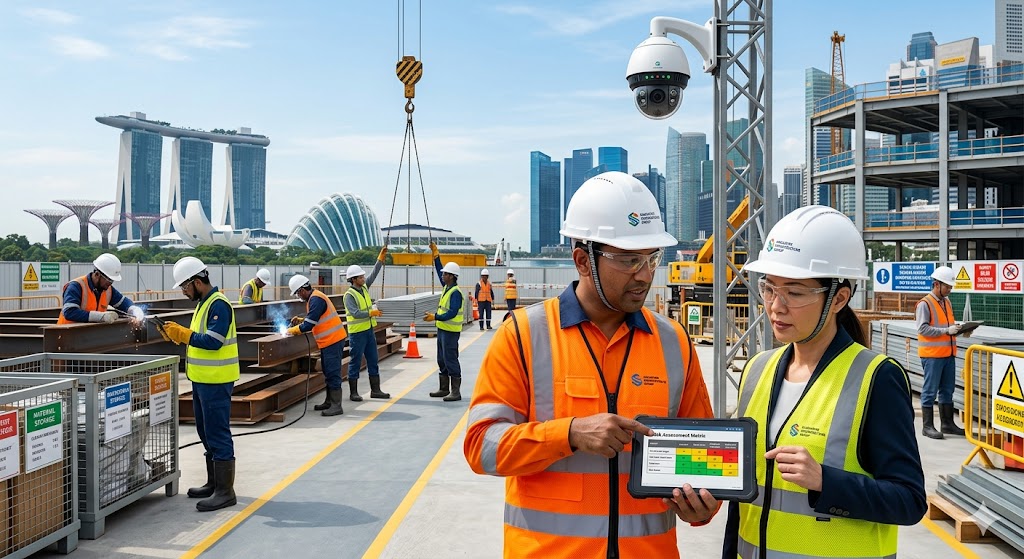
Technological enforcement represents a massive shift in compliance strategies. The Ministry now mandates Video Surveillance Systems (VSS) for worksites.14 This rule targets construction projects valued at $5 million.15 Implementation began strictly in June 2024 without grace periods.15
A standard VSS comprises networked cameras, monitors, and secure recorders.15 Implementing VSS improves WSH performance through continuous, real-time monitoring.15 It facilitates rapid incident investigation and effective corrective actions.14 Furthermore, visible cameras deter unsafe behaviors among site workers.14
The regulations demand strict technical specifications for these surveillance systems. Cameras must record at a minimum resolution of HD 1080.14 Additionally, frame rates must not drop below 12 per second.14 Recordings must also feature clear date and time stamps.14
Crucially, these stamps must not obstruct recorded safety incidents.14 Recordings must export easily into common formats like MP4.14 The law does not demand blanket surveillance of entire worksites.16 Instead, cameras must strategically monitor predefined high-risk work zones.16
| High-Risk Work Zone | VSS Coverage Requirement |
| Work at Heights | Required if fall distance exceeds 2 metres. |
| Lifting Operations | Required around cranes, gondolas, and elevated platforms. |
| Industrial Trucks | Required where excavators or forklifts operate heavily. |
| Loading Areas | Required at all designated loading and unloading zones. |
This table outlines mandatory VSS coverage areas for construction.14 Project managers must secure VSS data storage for MOM inspections.17 Cloud storage or secure on-site servers are highly recommended.17 Furthermore, access to recordings must be restricted to authorized personnel.17
This ensures data privacy while maintaining strict safety compliance.17 VSS allows supervisors to intervene before minor incidents escalate.16 Ultimately, VSS creates an undeniable visual record of WSH compliance. It protects compliant employers from fraudulent injury claims effectively.
Integrating Platform Workers in 2025
The rising gig economy presents unique safety challenges requiring novel rules. Consequently, the Ministry introduced specific WSH amendments for this sector.7 Effective January 2025, WSH protections extend to all platform workers.18 This affects delivery riders and ride-hailing drivers across Singapore.18
Platform operators now share legal responsibilities similar to traditional employers.19 They must conduct comprehensive WSH (Risk Management) Regulations assessments.7 This inclusion followed extensive consultations with major platform operators.18 The labor movement also provided critical input regarding rider safety.18
A major outcome is the Approved Code of Practice for Platforms.18 This Code provides practical guidance aligned with the WSH Act.18 Crucially, it prohibits operators from setting time-based penalty incentives.18 Operators cannot penalize platform workers for missing arbitrary delivery deadlines.18
Historically, such incentives encouraged extremely dangerous riding behaviors globally.18 Therefore, financial incentives must never compromise platform worker safety.18 Platform operators must review their specific risk assessments every three years.7 Furthermore, if a worker suffers injury, an immediate review triggers.7
This expansion forces technology companies to prioritize physical world safety. App developers must now understand WSH (Risk Management) Regulations intimately. The algorithm cannot excuse unsafe operational parameters or excessive workloads. This integration marks a massive leap in modern occupational safety.
Executive Accountability and the ACOP
Corporate leadership can no longer delegate safety to middle management. The Approved Code of Practice (ACOP) demands direct executive involvement.20 This ACOP targets Chief Executives and Boards of Directors directly.21 It applies regardless of company size or specific industry sector.21
The ACOP outlines seventeen actionable measures under four core principles.21 These principles guide executives in fostering a robust safety culture.21 First, executives must integrate WSH directly into major business decisions.21 They must ensure absolute clarity regarding organizational safety roles.21
Second, leaders must demonstrate visible leadership and set the tone.21 This includes ensuring sufficient resource allocation for WSH initiatives.21 For instance, failing to fund machine maintenance breaches this duty.21 Third, management must review WSH management systems regularly for effectiveness.21
Executives must ensure risk assessments are customized for specific needs.21 Fourth, executives must empower workers to engage actively in WSH.21 Workers offer invaluable on-ground feedback regarding practical safety protocols.21 Management should implement a carrot-and-stick approach to enforce compliance.21
| Core ACOP Principle | Key Executive Measure | Legal Implication |
| Business Integration | Set WSH as a regular board meeting agenda item. | Demonstrates diligence. |
| Visible Leadership | Allocate sufficient financial resources for safety training. | Mitigates liability. |
| System Review | Demand effective WSH standards from all supply vendors. | Prevents negligence. |
| Worker Empowerment | Facilitate direct reporting of WSH issues to directors. | Fulfills oversight. |
This table summarizes key executive duties under the ACOP.21 While the Code is guidance, it holds massive legal weight.21 During prosecutions, courts evaluate compliance with these ACOP recommendations.18 Non-compliance serves as an aggravating factor, increasing judicial sentences.21
Conversely, documented adherence acts as a strong mitigating factor.20 In complex industries, upper management must be highly hands-on.21 Executives must seek feedback from independent contractors and union leaders.21 Top executives can attend specific WSH programmes to deepen knowledge.23
Managing Heat Stress in a Warming Climate
Climate change introduces severe environmental hazards to outdoor workers. The WSH Council issued revised comprehensive guidelines on heat stress.24 Extremes of heat and humidity severely decrease natural bodily cooling.24 Heat stress occurs when bodies fail to regulate core temperatures.24
Symptoms range from mild heat rash to severe muscle cramps.24 If ignored, early symptoms quickly progress to life-threatening heat stroke.25 Heat stroke involves a core temperature exceeding 40 degrees Celsius.25 It causes seizures, severe disorientation, and total loss of consciousness.25
All workplaces must implement a comprehensive heat stress management programme.25 Complying with WSH (Risk Management) Regulations requires addressing environmental factors. Companies must layer protective measures to shield vulnerable workers adequately.25 The core strategy revolves around acclimatization, hydration, rest, and shade.25
Workers newly arriving in Singapore remain highly unacclimatized to heat.26 Similarly, employees returning from extended leave require careful acclimatization.26 Employers must gradually increase their daily heat exposure over seven days.27 Other vulnerable groups include older workers and pregnant women.26
Heavy physical labor requires hourly rest breaks of 15 minutes.28 Supervisors must monitor the Wet Bulb Globe Temperature (WBGT) constantly.28 Outdoor work should be rescheduled to cooler morning or evening parts.28 Workplaces must prepare emergency responses for heat-related illness incidents.27
This includes maintaining standby ice packs, cold water, and cooling blankets.27 If a worker exhibits symptoms, rapid cooling is the priority.27 If they fall unconscious, supervisors must call 995 immediately.25 Heat stress management is now a primary compliance metric.
Updated Occupational Diseases Framework (Dec 2025)
The medical classification of workplace harm underwent critical updates recently. Effective December 2025, the Ministry expanded occupational disease lists significantly.29 These changes affect both the WSH Act and Work Injury Compensation Act.29 Harmonizing these acts simplifies reporting and financial compensation processes immensely.29
The updated framework expands coverage for musculoskeletal disorders substantially.29 Previously, WSH regulations focused primarily on upper limb musculoskeletal issues.29 The new scope includes work-related disorders involving the back.29 Furthermore, injuries to the spine and lower limbs are covered.29
Consequently, employers must assess ergonomic risk factors much more rigorously.29 In addition, the scope of occupational infectious diseases broadened considerably.29 Previously, regulatory focus centered heavily on workplace Tuberculosis exposure.29 Now, reporting encompasses any infectious disease from workplace biological exposure.29
This change impacts healthcare workers, laboratory technicians, and clinical staff.29 The nomenclature also changed to align with modern medical terminology.29 For example, “noise-induced deafness” is now “noise-induced hearing loss”.29 Medical practitioners must report diagnosed occupational diseases within ten days.29
Employers share this strict ten-day reporting timeline upon receiving notice.29 Complying with WSH (Risk Management) Regulations requires tracking diagnostic criteria. Accurate risk assessments must reflect this expanded scope of hazards. Ignoring ergonomic risks now carries the same legal weight as ignoring machinery hazards.
Lifting Equipment and Scaffold Regulations (2025)
Machinery and structural safety regulations underwent significant streamlining and tightening. The Ministry issued an updated circular on statutory lifting equipment.30 Taking effect in September 2025, rules removed periodic overload testing.31 Previously, equipment required rigorous overload testing every four years.32
This removal shifts safety focus toward meticulous routine preventative maintenance.30 It allows occupiers to appoint competent internal persons for re-examinations.30 However, Authorised Examiners must still conduct initial equipment registrations.31 They must also inspect equipment following major repairs or modifications.31
Additionally, the periodic test frequency for Hoists extended to twelve months.30
| Lifting Equipment Type | Periodic Examination Frequency (Revised) | Load Test Requirement |
| Mobile Cranes | Every 12 months (6 months for personnel) | Functional & Load Test |
| Tower Cranes | Every 12 months | Functional & Load Test |
| Hoists (LH) | Every 12 months | Functional & Load Test |
| Lifting Gears (LG) | Every 12 months (6 months for cages) | Visual Examination |
This table details the revised 2025 lifting equipment testing schedules.30 While lifting rules relaxed slightly, scaffolding enforcement became significantly stricter. In July 2025, MOM implemented enhanced licensing conditions for scaffolds.33 This followed observations of widespread unsafe scaffold erection practices.33
Approved Scaffold Contractors (ASC) face automatic three-month license suspensions now.33 This suspension triggers if a contractor accumulates five composition fines.33 These fines must relate to scaffold or height contraventions within twelve months.33 Consequently, scaffold companies must execute risk assessments flawlessly every time.
Gate Design and Conveyor System Circulars (2026)
Industrial infrastructure poses distinct hazards requiring specialized engineering risk assessments. In January 2026, the Ministry released an updated circular on gates.34 Between 2023 and 2025, three fatal accidents involved sliding gates.34 Investigations revealed recurring systemic failures in maintenance and structural design.34
Common issues included worn-out stoppers and severely inadequate guide supports.34 Track derailments caused by poor maintenance were also frequently cited.34 Furthermore, unsafe troubleshooting practices exacerbated the toppling risks significantly.34 The 2026 circular demands that heavy gates receive proper continuous support.34
Brackets and stoppers must secure gates during installation and maintenance.34 Similarly, in March 2026, MOM addressed vertical lifters in conveyors.35 Vertical lifters transfer materials vertically between different conveyor system levels.35 Crucially, the Ministry clarified that these lifters are not hoists.35
Therefore, they do not require formal registration as lifting machines.35 Despite this exemption, conveyor systems harbor severe pinching and entrapment hazards.35 Falling from height remains a significant risk near these systems.35 Employers must address these hazards through comprehensive documented risk assessments.35
Control measures must include restricting access and fencing dangerous parts.35 Sensors and interlocks must stop movement automatically when boundaries breach.35 Strict lock-out procedures remain mandatory before commencing any maintenance activities.35 Owners must maintain systems according to exact manufacturer technical specifications.35
The bizSAFE Level 3 Certification Pathway
The bizSAFE program helps Singaporean companies build robust WSH capabilities.36 Progressing through five bizSAFE levels demonstrates a company’s safety maturity.37 Securing bizSAFE Level 3 status is a critical business milestone.38 It proves compliance with the WSH (Risk Management) Regulations comprehensively.38
Achieving Level 3 requires an extensive Risk Management Implementation Audit.39 This audit must be conducted by an SAC-accredited Auditing Organisation.40 The auditor verifies that risk assessments cover every work activity.38 Furthermore, the audit ensures safe work procedures are continually updated.41
Recently, the bizSAFE framework integrated the SGSecure national movement seamlessly.39 Modern risk assessments must address the threat of workplace terror attacks.39 Companies must formulate contingency response plans for active terror scenarios.39 Employees must learn emergency evacuation routes and secure hiding locations.39
| bizSAFE Audit Requirement | Verification Criteria |
| Hazard Identification | RA forms covering all activities updated within 3 years. |
| Hierarchy of Control | Proof of engineering controls prioritized over PPE usage. |
| SGSecure Integration | Incorporation of “Run, Hide, Tell” into worker training. |
| Leadership Commitment | WSH policy endorsed directly by top executive management. |
This table outlines key components of a bizSAFE Level 3 audit.39 Holding bizSAFE Level 3 unlocks significant commercial and operational opportunities.43 Many government tenders and large private projects mandate this certification.44 It signals to stakeholders that risk management is deeply institutionalized.
The audit process involves document reviews, site inspections, and worker interviews.41 Companies must prepare lock-out tag-out (LOTO) evidence and fatigue management plans.42 A professional safety consultant can assist with audit preparation effectively.44 Ultimately, bizSAFE drives operational excellence alongside statutory WSH compliance seamlessly.
ISO 45001 and International Safety Standards
Many companies aim beyond bizSAFE Level 3 towards global standards. ISO 45001 represents the highest international benchmark for occupational health.45 While not legally mandatory, multinational clients demand ISO 45001 increasingly.44 The WSH Council recognizes ISO 45001 as equivalent to advanced bizSAFE.45
Companies holding valid ISO 45001 certificates streamline their bizSAFE renewals significantly.45 However, the certification body must hold SAC accreditation for validity.45 ISO 45001 requires a deeply systemic approach to hazard identification. It focuses heavily on continual improvement and proactive risk prevention.
Integrating ISO 45001 with WSH (Risk Management) Regulations ensures bulletproof compliance. It forces organizations to audit their supply chains for safety risks. This aligns perfectly with the ACOP requirements for executive board members. International standards prepare companies for unexpected operational disruptions and hazards.
Common Risk Assessment Failures and Pitfalls
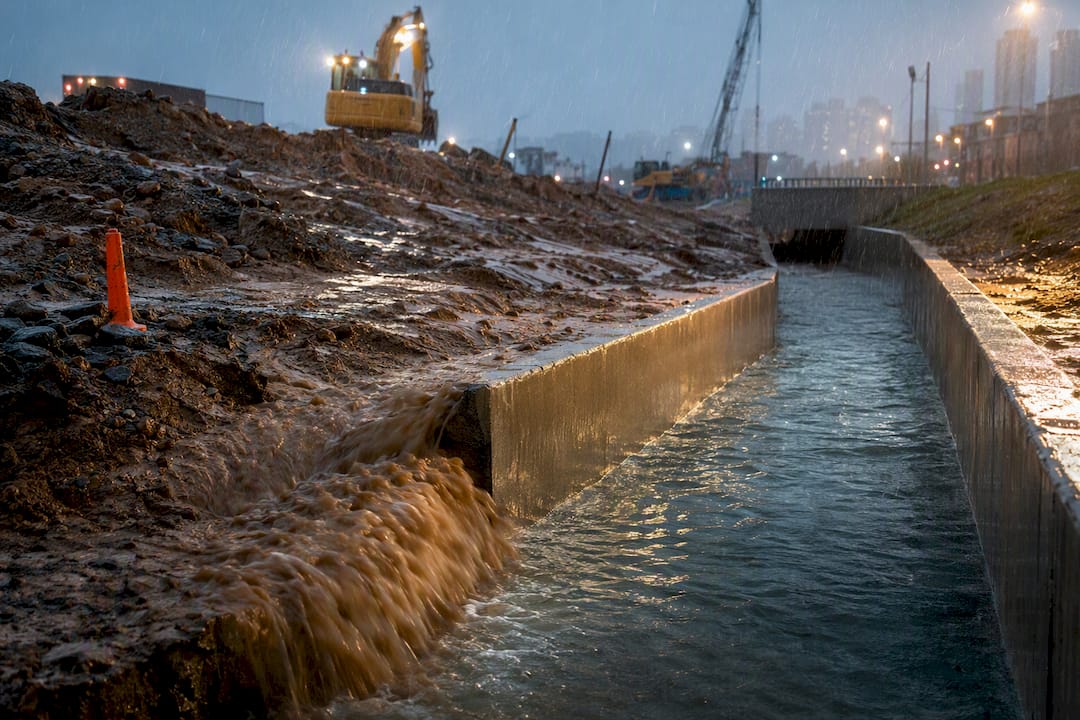
Despite clear regulations, many companies fail their WSH audits frequently. One common failure is relying on generic, copied risk assessment templates. Risk assessments must reflect the unique conditions of specific worksites.21 For example, a construction site facing heavy rain requires specialized protocols.21
Another pitfall is ignoring the mandatory three-year review cycle entirely.7 Many companies complete an assessment once and file it away. This negligence becomes a major liability during a MOM inspection. Furthermore, failing to review assessments after an accident invites massive fines.7
Inadequate worker training also undermines the best risk management plans.46 If workers do not understand the control measures, accidents happen. The WSH (Risk Management) Regulations demand communicating risks to all stakeholders.3 Employers must brief workers regularly on updated safe work procedures.42
Furthermore, poor equipment maintenance negates the effectiveness of engineering controls.35 A sensor that is not calibrated properly provides false security. Therefore, companies must track maintenance schedules as part of risk management. Addressing these pitfalls proactively ensures smooth bizSAFE audits and safe workplaces.
Strategic Advantages of WSH Compliance
Complying with WSH (Risk Management) Regulations offers massive strategic business advantages. A robust safety management system drives operational efficiency and profitability.8 Analyzing work processes through a safety lens reveals hidden operational inefficiencies.8 Eliminating a hazard frequently speeds up production and increases throughput.8
Furthermore, maintaining an excellent safety record reduces corporate insurance premiums. A strong WSH culture enhances employee morale and aids talent retention. Workers feel valued when management invests visibly in their safety. Conversely, a poor safety record destroys a company’s public reputation instantly.
The integration of corporate leadership duties ensures safety starts atop. The ACOP prevents executives from pleading ignorance during accident investigations.20 Directors must ensure they acquire adequate WSH knowledge continually and proactively.22 They must demand effective WSH performance from all vendors and partners.22
This creates a positive ripple effect throughout the entire supply chain. Companies that prioritize safety win better contracts and retain skilled labor. Therefore, risk management is not just compliance; it is competitive advantage.
Conclusion
The regulatory landscape in Singapore continues to evolve rapidly and aggressively. The WSH (Risk Management) Regulations are more expansive than ever before. With maximum penalties reaching $50,000, non-compliance represents an existential threat.4 Employers must treat risk assessments as dynamic documents requiring constant updates.
As 2026 unfolds, companies must audit their existing safety frameworks rigorously. They must ensure compliance with new VSS mandates and platform rules. They must integrate expanded occupational disease criteria and heat stress protocols. Leadership must embrace the ACOP principles to mitigate corporate liability effectively.
Ultimately, a proactive approach to risk management safeguards lives and livelihoods. By prioritizing safety, businesses build resilient, profitable, and ethically sound operations. The mandate is clear: update your 2026 assessments or face unprecedented consequences.
Works cited
- Legislation for workplace safety and health – Singapore – MOM, accessed June 1, 2026, https://www.mom.gov.sg/legislation/workplace-safety-and-health
- Workplace Safety and Health Statistics – Singapore – MOM, accessed June 1, 2026, https://www.mom.gov.sg/-/media/mom/documents/safety-health/reports-stats/wsh-profile/wsh-profile-2008.pdf
- Risk management – MOM, accessed June 1, 2026, https://www.mom.gov.sg/workplace-safety-and-health/safety-and-health-management-systems/risk-management
- Workplace Safety and Health (Risk Management) Regulations – Singapore Statutes Online, accessed June 1, 2026, https://sso.agc.gov.sg/SL/WSHA2006-RG8
- Workplace Safety and Health (Risk Management) Regulations – MOM, accessed June 1, 2026, https://www.mom.gov.sg/-/media/mom/documents/safety-health/guidetoriskmgtregver20.pdf
- When should my company review its risk assessment? – MOM, accessed June 1, 2026, https://www.mom.gov.sg/faq/safety-and-health-management-systems/when-should-my-company-review-its-risk-assessment
- S 1019/2024 1, accessed June 1, 2026, https://sso.agc.gov.sg/SL-Supp/S1019-2024/Published/20241226?DocDate=20241226&ViewType=Pdf&_=20241230173648
- BizSafe 2025: The Ultimate Guide to Certification & ROI, accessed June 1, 2026, https://mosaicsafety.com.sg/bizsafe-2025-the-ultimate-guide-to-certification-roi/
- Factory Notification or Registration requirements – MOM, accessed June 1, 2026, https://www.mom.gov.sg/workplace-safety-and-health/factory-notification-and-registration/requirements-for-factories
- Occupational Safety and Health Profile – Singapore – MOM, accessed June 1, 2026, https://www.mom.gov.sg/-/media/mom/documents/safety-health/reports-stats/wsh-profile/osh-profile-2006.pdf
- S 434/2024 1, accessed June 1, 2026, https://sso.agc.gov.sg/SL-Supp/S434-2024/Published/20240527?DocDate=20240527&ViewType=Pdf&_=20240527163545
- New WSH Measures from 1 June 2024: Increase in Maximum Fines …, accessed June 1, 2026, https://www.rajahtannasia.com/viewpoints/new-wsh-measures-from-1-june-2024-increase-in-maximum-fines-mandatory-video-surveillance-systems-for-relevant-construction-projects/
- Workplace Safety and Health (Workplace Safety and Health Officers) Regulations – Singapore Statutes Online, accessed June 1, 2026, https://sso.agc.gov.sg/SL/WSHA2006-RG9
- Video surveillance system (VSS) for construction sector – MOM, accessed June 1, 2026, https://www.mom.gov.sg/workplace-safety-and-health/safe-measures/sectoral-level/video-surveillance-system-for-construction-sector
- FAQs for video surveillance system (VSS) for construction worksites with contract value of $5 million and above – MOM, accessed June 1, 2026, https://www.mom.gov.sg/-/media/mom/documents/safety-health/faqs-for-vss.pdf
- A Complete Guide to Video Surveillance Systems (VSS) for Construction Worksites in Singapore – SCAL Academy, accessed June 1, 2026, https://scal-academy.com.sg/courses/course_detail/VSS-Guide
- A Guide to MOM’s Mandatory Video Surveillance System (VSS) – SafeTrolley, accessed June 1, 2026, https://www.safetrolley.com/construction-singapore-mom-mandatory-video-surveillance-system-vss/
- 0303 Written Answer to PQ on Evaluation of safety risks of delivery riders – MOM, accessed June 1, 2026, https://www.mom.gov.sg/newsroom/parliament-questions-and-replies/2026/0303-written-answer-to-pq-on-evaluation-of-safety-risks-of-delivery-riders
- Workplace Safety and Health (Risk Management) Regulations – Singapore Statutes Online, accessed June 1, 2026, https://sso.agc.gov.sg/SL/WSHA2006-RG8?DocDate=20241226&ValidDate=20250101&ProvIds=pr6-
- Code of practice on WSH duties of chief executives and board of directors gazetted as Approved Code of Practice – Allen & Gledhill, accessed June 1, 2026, https://www.allenandgledhill.com/sg/publication/articles/22614/code-of-practice-on-wsh-duties-of-chief-executives-and-board-of-directors-gazetted-as-approved-code-of-practice
- Code of Practice on Chief Executives’ and Board of Directors’ WSH …, accessed June 1, 2026, https://singaporelegaladvice.com/law-articles/code-of-practice-workplace-safety-health-employers/
- Code of Practice – Chief Executives’ and Board of Directors’ Workplace Safety and Health Duties – Year of Issue: 2022 – Eversafe Academy, accessed June 1, 2026, https://eversafe.edu.sg/code-of-practice-chief-executives-and-board-of-directors-workplace-safety-and-health-duties-year-of-issue-2022/
- CEO or Board Director to complete the Top Executive WSH Programme – MOM, accessed June 1, 2026, https://www.mom.gov.sg/workplace-safety-and-health/safe-measures/company-level/ceo-or-board-director-to-complete-the-top-executive-wsh-programme
- Heat Stress in the Workplace – Singapore – MOM, accessed June 1, 2026, https://www.mom.gov.sg/-/media/mom/files/pdf/wshi-owlinks/issue-79.pdf
- FAQs on Heat stress measures for outdoor work – MOM, accessed June 1, 2026, https://www.mom.gov.sg/heat-stress-measures-for-outdoor-work/faqs-on-heat-stress-measures-for-outdoor-work
- Heat stress measures for outdoor work – MOM, accessed June 1, 2026, https://www.mom.gov.sg/heat-stress-measures-for-outdoor-work
- 1024 Enhanced Measures to Reduce Heat Stress for Outdoor Workers – MOM, accessed June 1, 2026, https://www.mom.gov.sg/newsroom/press-releases/2023/1024-enhanced-measures-to-reduce-heat-stress-for-outdoor-workers
- HEAT STRESS MEASURES – MOM, accessed June 1, 2026, https://www.mom.gov.sg/-/media/mom/documents/heat-stress-measures/heat-stress-framework-outdoor-workers.pdf
- updated list of occupational diseases – mom, accessed June 1, 2026, https://www.mom.gov.sg/-/media/mom/documents/safety-health/circulars/2025/circular-20251128-updated-list-of-occupational-diseases.pdf
- Circular on Test and Examination Requirements for Statutory Lifting Equipment – MOM, accessed June 1, 2026, https://www.mom.gov.sg/-/media/mom/documents/safety-health/circulars/2025/circular-20250829-test-and-examination-requirements-for-lifting-equipment.pdf
- 0829 Supporting Businesses to Enhance Lifting Equipment Safety – MOM, accessed June 1, 2026, https://www.mom.gov.sg/newsroom/press-releases/2025/0829-supporting-businesses-to-enhance-lifting-equipment-safety
- FAQs for Circular on Test and Examination Requirements for Statutory Lifting Equipment (MOM/OSHD/2025-05), accessed June 1, 2026, https://www.mom.gov.sg/-/media/mom/documents/safety-health/circulars/2025/faq-for-circular-test-and-examination-requirements-le.pdf
- MOM/OSHD/2025-04 23 JUN 2025 All Approved Scaffold Contractors WORKPLACE SAFETY AND HEALTH (WSH) CIRCULAR ON ENHANCED LICENSING, accessed June 1, 2026, https://www.mom.gov.sg/-/media/mom/documents/safety-health/circulars/2025/circular-20250623-enhanced-licensing-conditions-for-approved-scaffold-contractors.pdf
- Updated Circular – Safety Considerations in Gate Design, Operation and Maintenance – MOM, accessed June 1, 2026, https://www.mom.gov.sg/-/media/mom/documents/safety-health/circulars/2026/circular-20260123-updated-safety-considerations-in-gate-design-operation-and-maintenance.pdf
- Circular on Vertical Lifters in Conveyor Systems MOM/OSHD/2026-02 16 March 2026 To, accessed June 1, 2026, https://www.mom.gov.sg/-/media/mom/documents/safety-health/circulars/2026/circular-20260316-vertical-lifters-in-conveyor-systems.pdf
- What is bizSAFE? – MOM, accessed June 1, 2026, https://www.mom.gov.sg/faq/educational-resources/what-is-bizsafe
- Protect your workplace – MOM, accessed June 1, 2026, https://www.mom.gov.sg/employment-practices/sgsecure/overview/protect-your-workplace
- bizSAFE Level 3 Risk Management Audit Checklist, accessed June 1, 2026, https://www.tal.sg/wshc/resources/publications/checklists-and-articles/bizsafe-level-3-risk-management-audit-checklist
- OSHD Annual Report 2017 – Singapore – MOM, accessed June 1, 2026, https://www.mom.gov.sg/-/media/mom/documents/safety-health/reports-stats/oshd-annual-report-2017.pdf
- bizSAFE Level 3 Audit Checklist Guide | PDF – Scribd, accessed June 1, 2026, https://www.scribd.com/document/931169309/BizSAFE-Risk-Management-Audit-TUV-SUD-PSB
- Risk Management Audit (bizSAFE Level 3) – AIM Certification Pte Ltd, accessed June 1, 2026, https://aimcertification.com.sg/bizsafe-level-3-auditing/
- bizSAFE Audit Criteria / Checklist, accessed June 1, 2026, https://learnershub.com/resources/bizsafe-resources/bizsafe-audit-criteria
- Construction Safety Singapore: Essential Guide for Contractors and Developers, accessed June 1, 2026, https://sageshield.com/construction-safety-singapore/
- Construction Safety Requirements Singapore: Complete Guide for Contractors, accessed June 1, 2026, https://sageshield.com/construction-safety-requirements-singapore/
- About bizSAFE, accessed June 1, 2026, https://www.tal.sg/wshc/programmes/bizsafe/about-bizsafe
MOM implements increases in maximum fines and mandatory video surveillance to improve workplace safety and health – Allen & Gledhill, accessed June 1, 2026, https://www.allenandgledhill.com/sg/publication/articles/28276/mom-implements-increases-in-maximum-fines-and-mandatory-video-surveillance-to-improve-workplace-safety-and-health